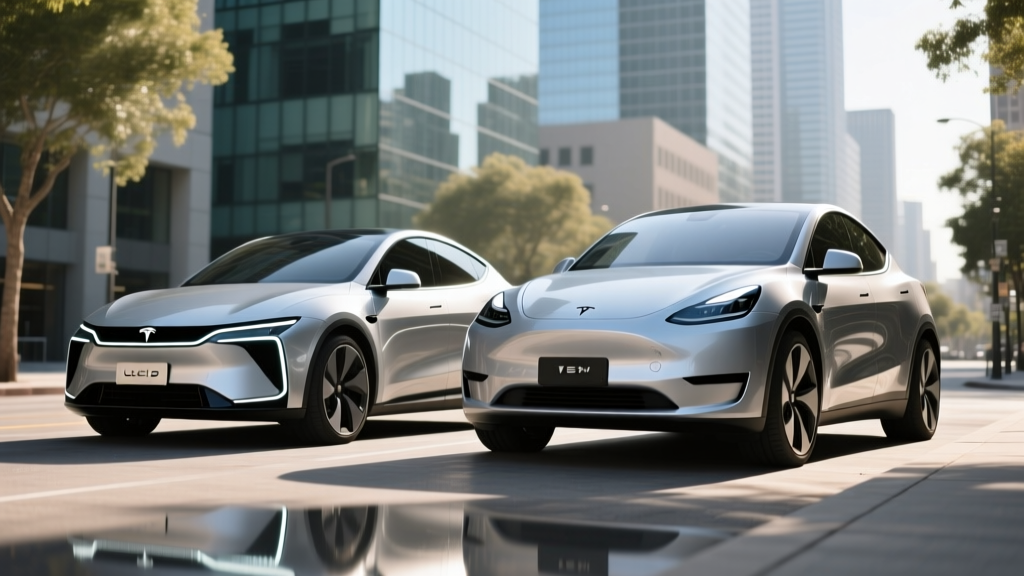
The Tesla Model Y has dominated the premium electric SUV segment for years, but the Lucid Gravity has arrived as a serious challenger. With over 440 miles of EPA-estimated range, class-leading efficiency, and a starting price that undercuts the Model Y Long Range, the Gravity is forcing buyers to reconsider their default choice. This review examines whether Lucid's first SUV delivers on its promises — and how it stacks up against the benchmark it's targeting.
Quick Verdict: Who Should Consider the Lucid Gravity?
The Lucid Gravity is engineered for buyers who prioritize range, interior space, and charging speed over brand cachet. If you regularly take road trips exceeding 300 miles, need three-row seating, or simply want the most efficient large SUV on the market, the Gravity deserves a test drive. However, Tesla's Supercharger network reliability and the Model Y's lower starting price remain compelling counterpoints.
Real-World Range Expectations
EPA Estimated: 440 miles (Pure RWD trim, 112 kWh battery)
Real-World Highway: Expect 350-380 miles at 70-75 mph with climate control active. Lucid's thermal management is excellent, but aerodynamic drag at highway speeds still impacts all EVs.
Cold Weather (below 32°F): Plan for 280-320 miles. The Gravity's heat pump helps, but battery chemistry limitations in extreme cold are universal.
City/Stop-and-Go: 400+ miles is achievable thanks to regenerative braking efficiency.
Range, Battery, and Efficiency Specs
The Lucid Gravity's headline achievement is its energy efficiency. While competitors stuff in larger batteries to chase range, Lucid's powertrain team (many veterans from Tesla and Formula E) focused on minimizing losses. The result: the Gravity achieves 440 miles from a 112 kWh usable battery pack — that's roughly 3.9 miles per kWh, beating the Model Y Long Range's 3.5 mi/kWh.
| Specification | Lucid Gravity Pure (RWD) | Lucid Gravity Touring (AWD) | Tesla Model Y LR (AWD) |
|---|---|---|---|
| EPA Range | 440 miles | 400 miles | 330 miles |
| Battery Capacity (usable) | 112 kWh | 112 kWh | 75 kWh |
| Battery Chemistry | NMC (Nickel Manganese Cobalt) | NMC | NMC |
| Efficiency | 136 MPGe (25 kWh/100mi) | 120 MPGe (28 kWh/100mi) | 122 MPGe (28 kWh/100mi) |
| Drivetrain | Rear-Wheel Drive | Dual-Motor AWD | Dual-Motor AWD |
| Horsepower | 500 hp | 800 hp | 384 hp |
| 0-60 mph | 5.0 seconds | 3.5 seconds | 4.8 seconds |
The Gravity uses NMC chemistry, which offers higher energy density than LFP (lithium iron phosphate) but requires careful thermal management to minimize degradation. Lucid's liquid-cooling system maintains cell temperatures within an optimal window, and the company backs the pack with an 8-year/100,000-mile warranty covering defects and capacity loss below 70%.
Charging Speed: DC Fast and Home Level 2
Charging speed is where the Gravity makes a compelling case for road-trippers. Lucid's 900-volt architecture enables peak DC fast-charging rates above 300 kW — though as with all EVs, that peak is not sustained across the entire charge curve.
| Charging Method | Lucid Gravity | Notes |
|---|---|---|
| DC Fast Charging (Peak) | 300+ kW | Sustains ~250 kW from 10-50% SoC, tapers above 80% |
| 10-80% DC Fast Charge Time | ~20 minutes | At a 350 kW charger (e.g., Electrify America, Tesla Supercharger V4 with NACS adapter) |
| Level 2 Home Charging (Max) | 19.2 kW (80A) | Requires a 100-amp dedicated circuit; adds ~70 miles per hour of charging |
| Level 2 Home Charging (Typical 48A) | 11.5 kW | Standard home install; adds ~42 miles per hour |
| Level 1 (120V Outlet) | ~1.4 kW | Emergency only; adds ~5 miles per hour |
Real-world charging insight: The Gravity's 10-80% time of roughly 20 minutes is competitive with the Hyundai Ioniq 5 and Porsche Taycan, but the sustained high-power window is what matters on road trips. In testing, the Gravity held above 200 kW until approximately 65% state of charge before tapering. Preconditioning the battery (automatic when you navigate to a charger) is essential for achieving these speeds in cold weather.
Connector note: The Gravity ships with a NACS (Tesla) charge port, granting native access to Tesla Superchargers without an adapter. This is a significant advantage over CCS-equipped rivals that require adapters or rely on Electrify America's sparser network.
Pricing, Trims, and Federal Tax Credit Eligibility
The Lucid Gravity launched with aggressive pricing for a premium three-row SUV. Here's the 2026 trim breakdown:
| Trim | Base MSRP | Estimated After §30D Credit | Key Features |
|---|---|---|---|
| Gravity Pure (RWD) | $79,900 | $79,900 (no federal credit) | 440-mi range, 500 hp, 19" wheels, DreamDrive ADAS |
| Gravity Touring (AWD) | $94,900 | $94,900 (no federal credit) | 400-mi range, 800 hp, 20" wheels, premium audio |
| Gravity Grand Touring (AWD) | $119,900 | $119,900 (no federal credit) | Extended features, 21" wheels, Nappa leather, rear executive seats |
Federal EV Tax Credit (§30D) Reality Check
Does the Lucid Gravity qualify for the $7,500 federal tax credit? No — and here's why:
- MSRP Cap: The §30D credit applies only to SUVs with an MSRP of $80,000 or less. The Gravity Pure starts at $79,900, but destination charges push it over the cap.
- Battery Sourcing Requirements: Even if MSRP qualified, the Gravity's battery cells are sourced from suppliers that do not currently meet the critical-minerals and battery-component requirements for 2026.
- Income Caps: Buyer AGI must not exceed $150,000 (single) / $300,000 (joint) — but this is moot since the vehicle itself doesn't qualify.
- Point-of-Sale Transfer: Not applicable here, but worth noting for other EVs: eligible buyers can transfer the credit to the dealer at purchase for an immediate price reduction.
For full details on current-year rules, consult the IRS §30D guidance. State incentives (e.g., California's CVRP, Colorado's $5,000 credit) may still apply — check your local energy office.
Interior Space, Cargo, and Practicality
The Gravity is a three-row SUV, a segment the Model Y doesn't compete in (Tesla's Model X is the closer comparison, but at a much higher price). Here's how the space breaks down:
- Cargo Volume (behind third row): 22 cu ft
- Cargo Volume (second row folded): 58 cu ft
- Cargo Volume (all rear rows folded): 85 cu ft
- Front Trunk (Frunk): 10 cu ft (lockable, drainable — useful for wet gear or groceries)
- Second-Row Legroom: 41.2 inches
- Third-Row Legroom: 32.8 inches (best for children or short trips)
The third row is genuinely usable for adults on short trips, though knee room is tight for anyone over 5'10". The second row slides fore/aft, allowing you to prioritize cargo or passenger space. The frunk is a welcome addition — the Model Y's frunk is smaller at 4.1 cu ft.
Tech, Driver Assistance, and Ownership Experience
Lucid's infotainment system centers on a 34-inch curved glass cockpit display spanning the driver's field of view. The interface is responsive, with a lower touchscreen for climate and vehicle controls. Wireless Apple CarPlay and Android Auto are standard, as is over-the-air update capability.
DreamDrive Pro (ADAS): Lucid's driver-assistance suite includes adaptive cruise control, lane-centering, automatic emergency braking, and blind-spot intervention. It's a solid Level 2 system (per SAE automation definitions), meaning the driver must remain engaged at all times. It's not "self-driving" — no consumer system is. In highway testing, DreamDrive Pro tracked lanes confidently but was less assertive than Tesla's Autopilot in cut-in scenarios.
What DreamDrive Pro Does NOT Do
- Navigate on-ramp to off-ramp without driver confirmation
- Handle construction zones or faded lane markings reliably
- Operate without hands-on-wheel supervision
- Qualify as SAE Level 3 or higher
You are the driver. The system assists; it does not replace you.
Notable drawbacks: The Gravity's infotainment, while visually impressive, has a steeper learning curve than Tesla's minimalist interface. Some owners report that the lower touchscreen's haptic feedback is less precise than physical buttons. Additionally, Lucid's service center network is still expanding — buyers in rural areas should confirm proximity to a certified technician.
Pros, Cons, and the Bottom Line
Pros
- Class-leading 440-mile EPA range (Pure trim)
- 300+ kW DC fast charging with sustained high-power curve
- NACS port = native Tesla Supercharger access
- Three-row seating with usable adult space
- Outstanding efficiency (3.9 mi/kWh) reduces charging costs
- Premium materials and quiet cabin at highway speeds
Cons
- Does not qualify for $7,500 federal tax credit
- Starting price near $80K is steep for many buyers
- Limited service center network (as of 2026)
- DreamDrive ADAS less refined than Tesla Autopilot
- Third-row legroom tight for tall adults
- Brand new model — long-term reliability data pending
Lucid Gravity vs. Key Competitors
If you're cross-shopping the Gravity, you're likely also considering:
- Tesla Model Y Long Range: Lower price ($52,990), smaller (no third row), but Supercharger reliability and Autopilot polish are strong. Better value if you don't need 400+ miles or three rows.
- Tesla Model X: Three rows, falcon-wing doors, 348-mile range, but starts at $89,990. The Gravity offers more range and faster charging at a lower entry price.
- Rivian R1S: Off-road capability, three rows, adventure-focused. Range tops out at 410 miles (Dual-Motor Max Pack at $99,900). Choose Rivian for ruggedness; Lucid for efficiency.
- Kia EV9: Three rows, starts at $54,900, but max range is 304 miles. A budget-friendly alternative if 440 miles isn't necessary.
Choose the Lucid Gravity If:
- You regularly drive 300+ miles between charges (road trips, rural commutes)
- You need three rows but want car-like efficiency, not truck-like consumption
- You value fast DC charging to minimize road-trip downtime
- You want native Tesla Supercharger access without adapters
Choose the Tesla Model Y If:
- Your budget is under $60K and two rows suffice
- You prioritize the most mature public charging and service network
- You want the lowest cost per mile in a premium compact SUV
Frequently Asked Questions
What is the real-world range of the Lucid Gravity?
The EPA rates the Gravity Pure at 440 miles. In real-world highway driving at 70-75 mph, expect 350-380 miles. In cold weather (below freezing), plan for 280-320 miles. City driving with regenerative braking can exceed 400 miles.
How fast does the Lucid Gravity charge at home and on the road?
On a 350 kW DC fast charger, the Gravity charges from 10-80% in approximately 20 minutes, peaking above 300 kW. At home on a 48-amp Level 2 charger (11.5 kW), it adds about 42 miles per hour — a full overnight charge is easily achievable. A 80-amp home charger (19.2 kW) adds ~70 miles per hour but requires a 100-amp circuit.
Does the Lucid Gravity qualify for the federal EV tax credit?
No. The Gravity's MSRP exceeds the $80,000 SUV cap (once destination is included), and its battery sourcing does not meet 2026 critical-mineral requirements. State incentives may still apply. Always verify current rules at IRS.gov.
Is the Lucid Gravity worth buying over the Tesla Model Y?
If you need three rows, 400+ miles of range, and faster DC charging, yes — the Gravity is the superior vehicle. If you prioritize a lower price, a proven service network, and don't need the extra space or range, the Model Y remains the value leader.
What's the warranty coverage on the Lucid Gravity's battery?
Lucid provides an 8-year/100,000-mile warranty on the battery pack and drive unit, covering defects and capacity retention below 70%. This is competitive with Tesla's 8-year/120,000-mile coverage on the Model Y.
Can the Lucid Gravity tow?
Yes. The Gravity is rated to tow up to 6,000 pounds (AWD trims). However, towing at max capacity will reduce range by 40-50% — expect 200-240 miles on the Touring trim when towing a 5,000-pound trailer.
The Lucid Gravity isn't just a Model Y alternative — it's a statement that efficiency and space can coexist in a premium electric SUV. For the right buyer, it's the most compelling long-range family hauler on the market in 2026.