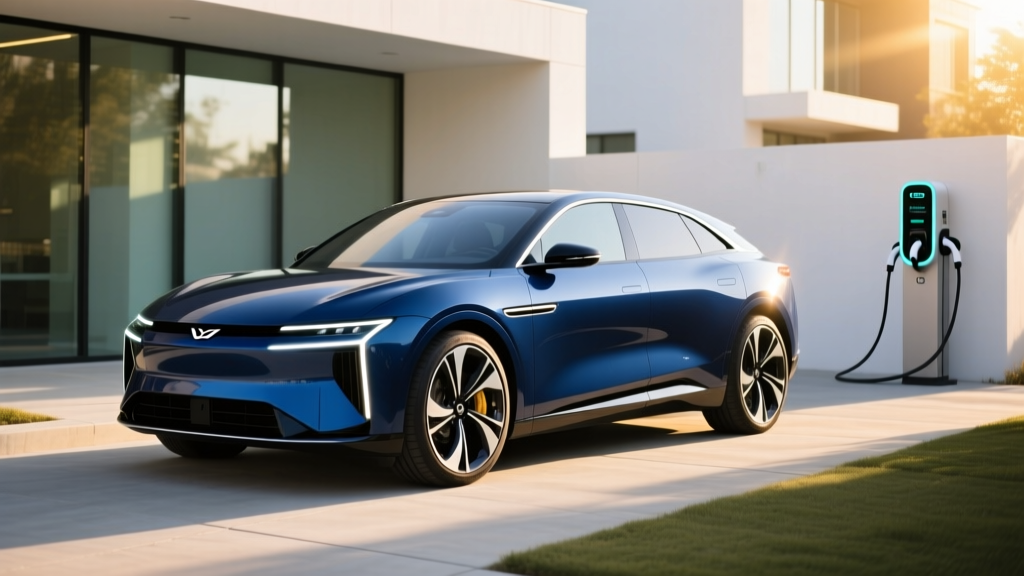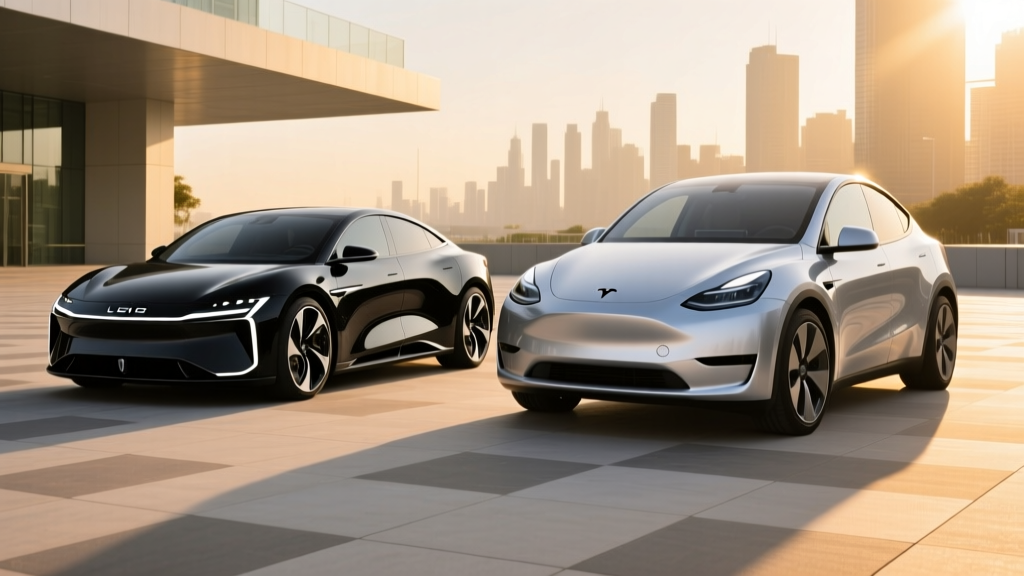
The midsize electric SUV segment is crowded, but few vehicles challenge the Tesla Model Y's dominance with the engineering depth of the 2026 Lucid Gravity. Positioned as a premium three-row family hauler, the Gravity leverages Lucid's miniaturized powertrain tech—first proven in the Air sedan—to deliver class-leading range and efficiency in a practical SUV body. For buyers searching for a credible Lucid Tesla Model Y competitor, the Gravity is the most spec-for-spec formidable challenger on the market.
But specs don't tell the whole story. Charging infrastructure, real-world range, third-row usability, and federal tax credit eligibility all factor into a $80,000+ purchase decision. This review breaks down the 2026 Lucid Gravity with exact numbers, real-world caveats, and a direct comparison to the refreshed Model Y to help you decide which SUV earns your garage space.
Range, Battery, and Real-World Efficiency
The 2026 Lucid Gravity Grand Touring ships with a 123 kWh usable battery pack (126 kWh gross) using NMC (nickel manganese cobalt) lithium-ion cells—prioritizing energy density over the LFP chemistry found in the Tesla Model Y RWD. The result is an EPA-estimated 440 miles of range for the Grand Touring AWD trim, making it the longest-range electric SUV ever sold in the United States.
EPA Estimate: 440 miles (Grand Touring AWD) | 410 miles (estimated, base RWD Pure trim when available)
Real-World Highway (70 mph, moderate climate): ~350–380 miles. Lucid's powertrain efficiency is exceptional, but aerodynamic drag at highway speeds still reduces range by 12–18% versus the EPA combined cycle.
Cold-Weather (20°F, cabin heating): ~300–330 miles. The Gravity uses a heat pump for cabin and battery thermal management, which limits winter range loss to roughly 25–30%—better than resistive-heating EVs but still significant on long winter road trips.
On the efficiency side, the Gravity Grand Touring achieves an EPA-rated 132 MPGe combined (approximately 25 kWh/100 miles). That's remarkably close to the Model Y Long Range AWD's 122 MPGe combined (~28 kWh/100 miles), especially considering the Gravity is substantially larger and heavier. Lucid's proprietary 900V+ architecture and in-house motor design are the key differentiators here.
| Specification | Value |
|---|---|
| EPA Range | 440 miles |
| Battery (Usable / Gross) | 123 kWh / 126 kWh (NMC) |
| Drivetrain | Dual-motor AWD |
| Horsepower | 823 hp |
| 0–60 mph | 3.5 seconds |
| MPGe (Combined) | 132 MPGe (25 kWh/100 mi) |
| Max DC Fast Charge | 300 kW (peak) |
| 10–80% DC Charge Time | ~22 minutes |
| Level 2 Home Charge Rate | 19.2 kW (~75 mi/hr) |
| Seating | 7-passenger (3 rows) |
| Cargo (Behind 3rd / 2nd / 1st Row) | 23 / 62 / 112 cu ft |
| Base MSRP | $79,900 (incl. destination) |
| Battery/Powertrain Warranty | 8 years / 100,000 miles |
Charging Speed: DC Fast, Level 2, and Infrastructure
Charging speed is where the Gravity's 900V architecture pays dividends. The SUV supports a peak DC fast-charge rate of 300 kW, and thanks to a favorable charge curve, it sustains above 200 kW through roughly 50% state of charge before tapering. A 10–80% session takes approximately 22 minutes at a capable 350 kW charger (Electrify America, EVgo, or Tesla Supercharger V4 with NACS adapter).
| Charge Level | Power / Voltage | Miles Added per Hour | Typical Use Case |
|---|---|---|---|
| Level 1 (120V) | 1.4 kW | ~4–5 mi/hr | Emergency / trickle top-off |
| Level 2 (240V, 48A) | 11.5 kW | ~45 mi/hr | Standard home charging |
| Level 2 (240V, 80A) | 19.2 kW | ~75 mi/hr | High-power home / workplace |
| DC Fast (peak) | 300 kW (900V) | ~600+ mi/hr (peak) | Road-trip fast charging |
For home charging, the Gravity's onboard charger accepts up to 19.2 kW on a hardwired 80-amp Level 2 circuit—meaning a full overnight charge from 20% to 100% takes about 9 hours. Most buyers will install a 48-amp wall connector (11.5 kW), which still replenishes ~360 miles overnight and keeps installation costs lower since it doesn't require a panel upgrade in most homes.
Infrastructure note: Lucid provides a NACS adapter for access to the Tesla Supercharger network (17,000+ stalls in the U.S.), which dramatically expands road-trip charging options. The Gravity also uses CCS1 natively, so Electrify America and other open networks work without adapters. Plan your routes accordingly—Superchargers remain the most reliable DC network by a wide margin.
Performance and Driving Dynamics
The Gravity Grand Touring's dual-motor AWD powertrain produces 823 horsepower, launching this 5,700-pound SUV to 60 mph in 3.5 seconds. That's supercar territory from a decade ago, delivered silently and with instant torque. The upcoming Gravity Sapphire (expected late 2026/early 2027) will push past 1,000 hp with a tri-motor setup.
Driving dynamics are composed rather than sporty. The air suspension (standard on Grand Touring) soaks up highway imperfections and offers adjustable ride height for easier entry/exit or added ground clearance. Steering is precise but light—this is a cruiser, not a canyon carver. Compared to the Model Y Performance, the Gravity trades razor-sharp handling for superior ride comfort and isolation, which most three-row SUV buyers will prefer.
Regenerative braking offers multiple levels, including a true one-pedal driving mode that brings the Gravity to a complete stop without touching the brake pedal. The transition between regen and friction braking is among the smoothest in the segment.
Interior, Cargo, and Technology
The Gravity's cabin is where Lucid attempts to justify its premium positioning over the Model Y. The 34-inch curved glass "Clearview" cockpit display spans the dash, replacing a traditional instrument cluster and center screen with a single sweeping panel. A lower touchscreen handles climate and secondary controls. Materials include available bridge-of-weirs leather, open-pore wood, and aluminum accents—a significant step up from Tesla's minimalist vegan-leather interior.
Passenger space is a clear Gravity advantage:
- First row legroom: 41.4 inches
- Second row legroom: 39.8 inches (slides fore/aft)
- Third row legroom: 32.7 inches (usable for children or short-trip adults)
The third row is genuinely usable—a claim the Model Y's optional third row (30.2 inches of legroom, best suited for small children) cannot match. Behind the third row, you get 23 cubic feet of cargo, expanding to 62 cu ft with the third row folded and 112 cu ft with both rear rows down. The front trunk (frunk) adds an additional ~8 cu ft of sealed, drainable storage.
Tech highlights include Lucid's DreamDrive Pro ADAS suite (SAE Level 2—driver must remain engaged at all times), wireless Apple CarPlay/Android Auto, a 21-speaker Surreal Sound system, and over-the-air software updates. DreamDrive Pro uses 32 sensors including lidar, but it does not offer hands-free driving on mapped highways the way GM's Super Cruise or Ford's BlueCruise do. This is a notable gap in the ADAS feature set at this price point.
Pricing, Trims, and Federal Tax Credit Eligibility
The 2026 Lucid Gravity lineup starts at $79,900 for the Grand Touring AWD (the base Pure RWD trim, originally announced at $69,900, has been delayed and is not yet available as of early 2026). A fully loaded Grand Touring with the Surreal Sound package, 22-inch wheels, and premium interior finishes can reach approximately $92,000–$95,000 before incentives.
| Trim | Base MSRP | As-Tested (Typical Options) | Federal §30D Credit | Effective Price |
|---|---|---|---|---|
| Grand Touring AWD | $79,900 | ~$86,000 | Up to $7,500* | ~$72,400–$78,500 |
| Grand Touring (Loaded) | — | ~$93,000 | Up to $7,500* | ~$85,500 |
| Pure RWD (Delayed) | $69,900 (est.) | ~$74,000 | Up to $7,500* | TBD |
*Federal tax credit (§30D) caveats: The Gravity qualifies under the SUV MSRP cap of $80,000. However, eligibility for the full $7,500 credit depends on:
- Buyer income caps: AGI ≤ $300,000 (joint) / $225,000 (head of household) / $150,000 (single)
- MSRP cap: ≤ $80,000 for SUVs/vans/pickups (the base Grand Touring at $79,900 qualifies; optioned models exceeding $80,000 do not)
- Battery sourcing: Critical minerals and battery components must meet phased-in domestic-content thresholds per IRS §30D requirements — Lucid has not publicly confirmed full compliance for all 2026 Gravity battery packs; verify VIN-level eligibility on fueleconomy.gov before purchase
- Point-of-sale transfer: Eligible buyers can transfer the credit to the dealer for an upfront price reduction rather than claiming it at tax time
Always confirm credit eligibility with a tax professional and check the latest IRS qualified vehicle list before signing a purchase agreement. Rules can change, and battery-sourcing compliance varies by production batch.
Lucid Gravity vs. Tesla Model Y: Head-to-Head
| Attribute | Lucid Gravity GT AWD | Tesla Model Y LR AWD |
|---|---|---|
| EPA Range | 440 miles | 330 miles |
| Battery | 123 kWh usable (NMC) | ~78 kWh usable (NMC) |
| Horsepower | 823 hp | 384 hp |
| 0–60 mph | 3.5 sec | 4.8 sec |
| Max DC Charge | 300 kW | 250 kW |
| 10–80% Charge | ~22 min | ~27 min |
| Seating | 7-passenger (3 rows) | 5 (optional 7, very tight 3rd row) |
| Cargo (max) | 112 cu ft | 76 cu ft |
| Base MSRP | $79,900 | $48,990 |
| Federal Credit Eligibility | Partial (MSRP cap risk) | Yes (full $7,500, subject to sourcing) |
| ADAS | DreamDrive Pro (L2) | Autopilot / FSD Supervised (L2) |
| Warranty | 8 yr / 100k mi (battery) | 8 yr / 120k mi (battery) |
- Class-leading 440-mile EPA range
- Fastest charging in segment (300 kW, ~22 min 10–80%)
- Premium interior materials and spacious true 7-seat layout
- Exceptional efficiency (132 MPGe) for a large SUV
- Standard air suspension with adjustable ride height
- NACS adapter included for Supercharger access
- $79,900 starting price—$30,000+ more than Model Y
- Tax credit eligibility uncertain on optioned units (MSRP cap)
- DreamDrive Pro lacks hands-free highway driving capability
- Limited service center network vs. Tesla
- Brand-new model; long-term reliability unproven
- No LFP battery option (NMC only)
Who Should Buy the Lucid Gravity?
The 2026 Lucid Gravity is the right choice if you need a three-row electric SUV with maximum range, value a premium cabin experience, and frequently take road trips where 440 miles of range and 300 kW charging meaningfully reduce stops. It's ideal for families who want genuine third-row space, executives seeking a luxury EV that isn't a Tesla, and early adopters willing to accept the trade-offs of a newer brand.
Choose the Tesla Model Y instead if budget is a primary concern (the price gap is $30,000+), you want the most mature Supercharger-native experience, or you don't need a usable third row. The Model Y remains the rational value pick—less range, less luxury, but dramatically less money and a proven ownership ecosystem.
- You need a genuinely usable third row for family hauling
- 440-mile range eliminates your range anxiety on long trips
- Premium materials and ride quality matter more than lowest price
- You want the fastest-charging large SUV available
- Your budget is under $55,000 and you want maximum value
- You rely on hands-free-capable highway driving (FSD Supervised)
- You prefer the most established service and charging network
- Two rows of seating meet your needs
Warranty and Long-Term Ownership
Lucid backs the Gravity's battery and drive units with an 8-year/100,000-mile warranty, with a guaranteed capacity retention threshold of 70% (industry standard). The limited vehicle warranty covers 4 years/50,000 miles. For context, Tesla offers 8 years/120,000 miles on the Model Y Long Range battery—slightly more mileage coverage.
Long-term battery degradation data for the Gravity doesn't yet exist (the model is in its first production year), but Lucid's Air sedan powertrain uses the same cell suppliers and thermal management architecture. Early Air owners report approximately 3–5% degradation at 30,000 miles, which is consistent with well-managed NMC packs. The Gravity's robust liquid-cooling system and 900V architecture should support similar longevity.
Insurance costs will run higher than the Model Y—expect annual premiums in the $2,800–$3,600 range depending on your profile and state, roughly 15–25% above Model Y rates due to higher repair costs and parts availability for a lower-volume manufacturer.
Frequently Asked Questions
What is the real-world range of the 2026 Lucid Gravity?
The EPA rates the Gravity Grand Touring AWD at 440 miles. In real-world highway driving at 70 mph in moderate temperatures, expect 350–380 miles. In cold weather (below 30°F), range drops to approximately 300–330 miles even with the heat pump active. These figures still lead the SUV segment by a wide margin.
How fast does the Lucid Gravity charge at home and on the road?
On a DC fast charger, the Gravity peaks at 300 kW and charges from 10–80% in approximately 22 minutes. At home on a 48-amp Level 2 charger (11.5 kW), you'll add about 45 miles per hour—enough to fully replenish overnight. On an 80-amp circuit (19.2 kW), that jumps to ~75 miles per hour.
Does the Lucid Gravity qualify for the $7,500 federal EV tax credit?
The base Grand Touring at $79,900 falls under the $80,000 SUV MSRP cap, making it potentially eligible. However, your personal income must fall below IRS thresholds ($300K joint / $150K single), and the battery must meet critical-mineral and component sourcing requirements that vary by production batch. Always verify your specific VIN on fueleconomy.gov and consult a tax professional before relying on the credit.
Is the Lucid Gravity worth buying over the Tesla Model Y?
If you value range (440 vs. 330 miles), charging speed, a usable third row, and premium materials—and you can absorb the $30,000+ price premium—yes. If budget, charging-network maturity, and proven long-term reliability are your priorities, the Model Y remains the more pragmatic choice. They serve different buyers at different price points.
What are the biggest drawbacks of the Lucid Gravity?
The main concerns are the high starting price, uncertain federal tax credit eligibility on optioned units, a driver-assist system that lacks hands-free highway capability, and Lucid's still-growing service center network. As a first-year model, long-term reliability is also an open question.
Can the Lucid Gravity use Tesla Superchargers?
Yes. Lucid includes a NACS adapter with the Gravity, enabling access to the full Tesla Supercharger network. The Gravity also charges natively via CCS1 on Electrify America, EVgo, and other open DC networks.
Sources: EPA fueleconomy.gov, Lucid Motors official specifications, IRS §30D Clean Vehicle Credit.