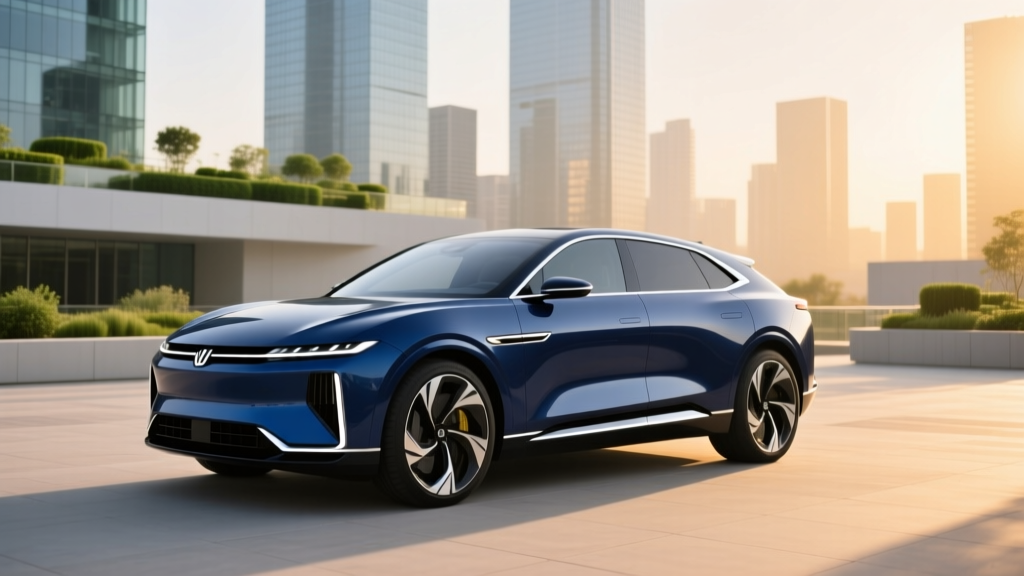
The Lucid Gravity is the luxury electric SUV that proves a three-row family hauler doesn't have to sacrifice range or charging speed for practicality. With an EPA-estimated 440 miles in its top trim, a 900-volt architecture enabling 300 kW DC fast charging, and a starting price that undercuts European rivals by tens of thousands, the Gravity is Lucid's bid to move beyond niche sedan buyer into the high-volume luxury SUV segment. But at $80,000+, financing rates, incentive eligibility, and total cost of ownership are what actually determine whether this SUV lands in your driveway. Here's everything you need to know.
2026 Lucid Gravity Core Specifications at a Glance
| Spec | Pure (Base) | Touring | Grand Touring |
|---|---|---|---|
| Base MSRP | ~$79,900 | ~$95,000 | ~$119,900 |
| EPA Range (est.) | ~390 mi | ~410 mi | ~440 mi |
| Battery Capacity | ~112 kWh usable (NMC) | ~112 kWh usable (NMC) | ~118 kWh usable (NMC) |
| Drivetrain | Dual-Motor AWD | Dual-Motor AWD | Dual-Motor AWD |
| Horsepower | ~600 hp | ~700 hp | ~830 hp |
| 0–60 mph | ~4.5 sec | ~3.8 sec | ~3.5 sec |
| Max DC Fast Charge | 300 kW (900V) | 300 kW (900V) | 300 kW (900V) |
| 10–80% DC Charge | ~20 min | ~20 min | ~22 min |
| Level 2 Home Charging | 19.2 kW (~70 mi/hr) | 19.2 kW (~70 mi/hr) | 19.2 kW (~70 mi/hr) |
| Efficiency (MPGe est.) | ~120 MPGe combined | ~118 MPGe combined | ~115 MPGe combined |
| Seating | 6 or 7 passengers | 6 or 7 passengers | 6 or 7 passengers |
| Towing Capacity | 6,000 lbs | 6,000 lbs | 6,000 lbs |
Note: Specs reflect Lucid's published and projected figures for the 2025/2026 model year. Final EPA certification numbers may vary by trim and wheel option. Always verify at fueleconomy.gov before purchasing.
Real-World Range: What to Actually Expect
Lucid's efficiency advantage comes from its miniaturized drivetrain, low-drag aerodynamics, and 900-volt architecture. In temperate, mixed city/highway driving, hitting 400+ miles on the Grand Touring is realistic if you're not aggressively accelerating. The Pure trim, with a slightly smaller battery and the same dual-motor AWD, will see real-world highway figures closer to 320–350 miles — still exceptional for a three-row SUV weighing over 5,700 pounds.
For road-trippers: at 75 mph on the interstate in summer conditions, the Grand Touring's range drops to roughly 370 miles. That's still enough to cover most single-leg drives (e.g., Los Angeles to San Francisco) without stopping, or to require just one 15-minute DC fast-charge break on longer routes like Chicago to Denver.
Charging Speed: 900V Architecture in Practice
| Charging Level | Power (kW) | Miles Added per Hour | Notes |
|---|---|---|---|
| Level 1 (120V household) | ~1.4 kW | ~4–5 mi/hr | Emergency/trickle only |
| Level 2 (240V home) | Up to 19.2 kW | ~70 mi/hr | Requires 100A circuit; full overnight charge in ~6–7 hrs |
| DC Fast Charge (peak) | Up to 300 kW | ~200+ mi in 15 min | On 350 kW chargers; requires battery preconditioning |
The Gravity's 900-volt electrical architecture is the key to its charging performance. At a 350 kW-capable Electrify America or Tesla Supercharger (with NACS adapter), the Gravity can peak at 300 kW — but like all EVs, it doesn't sustain that rate for the entire session. The charge curve tapers significantly above 80% state of charge (SoC) to protect battery longevity.
A typical 10–80% session takes approximately 20 minutes on a sufficiently powerful charger. However, if you arrive at a 150 kW charger (still common in many networks), expect 10–80% in roughly 35–40 minutes. Always precondition the battery using the navigation-routed charging feature before arriving at a DC fast charger — the Gravity warms the pack to optimal temperature, which can shave 5–8 minutes off your session, especially in cold weather.
Home charging reality: The Gravity's onboard charger supports up to 19.2 kW on Level 2, which is among the fastest in the industry. But this requires a dedicated 100-amp circuit and a hardwired Wall Connector or equivalent. Most homes will need a panel upgrade (200A service minimum) and professional installation. Budget $1,500–$4,000 for the full home charging setup including electrician labor, permits, and equipment, per U.S. Department of Energy guidelines. At 19.2 kW, a depleted battery reaches full in roughly 6–7 hours — plug in at bedtime, wake up to a full charge.
Financing the Gravity: Rates, Monthly Payments, and Incentives
At a base MSRP near $80,000, most buyers will finance or lease the Lucid Gravity. Here's what the financing landscape looks like for 2026:
Typical Financing Parameters
| Term | APR (Est.) | Down Payment | Est. Monthly Payment |
|---|---|---|---|
| 60 months | 5.9–7.5% | $10,000 | ~$1,350–$1,450 |
| 72 months | 6.2–7.9% | $10,000 | ~$1,175–$1,275 |
| 84 months | 6.5–8.5% | $10,000 | ~$1,050–$1,150 |
APR estimates reflect typical luxury EV loan rates through banks, credit unions, and Lucid Financial Services as of early 2026. Rates vary significantly by credit score, lender, and market conditions. Always compare offers from at least three lenders.
Federal Tax Credit (§30D) Eligibility
The Lucid Gravity's eligibility for the $7,500 federal EV tax credit under IRS §30D is limited by the MSRP cap. Current rules cap SUV eligibility at an MSRP of $80,000. This means:
- Gravity Pure (~$79,900 MSRP): May qualify for up to $7,500 if buyer income limits are met and battery sourcing requirements are satisfied. This is a knife-edge situation — any dealer-installed options that push the total MSRP above $80,000 could disqualify the vehicle.
- Gravity Touring (~$95,000) and Grand Touring (~$119,900): Exceed the $80,000 SUV MSRP cap and do not qualify for the §30D new EV credit.
- Vehicle MSRP at or below $80,000 (SUV classification)
- Buyer AGI: ≤$300,000 (joint), ≤$225,000 (head of household), ≤$150,000 (individual)
- Battery critical minerals and component sourcing thresholds (phased percentages per IRS guidance)
- Vehicle assembled in North America
- Point-of-sale transfer available — reduces purchase price at the dealer rather than waiting for tax filing
Rules are subject to change. Always confirm current eligibility at IRS.gov and consult a tax professional before relying on the credit.
State and Local Incentives
Beyond the federal credit, several states offer additional rebates or tax credits for EVs in the $70,000–$100,000 range. California's CVRP program, Colorado's state tax credit, and various utility-company rebates can stack to reduce net cost by an additional $2,000–$7,500 depending on your jurisdiction. Check your state energy office and local utility for current programs — these vary by zip code and change frequently.
Performance, Interior, and Technology
The Gravity's dual-motor AWD powertrain delivers supercar-level acceleration in a package that seats seven. The Grand Touring's 830 horsepower and 3.5-second 0–60 time make it one of the quickest SUVs ever produced, while the Pure's 600 hp and 4.5-second sprint still outpace most gas-powered luxury competitors.
Interior Space and Cargo
| Measurement | Value |
|---|---|
| Cargo (behind 3rd row) | ~30 cu ft |
| Cargo (3rd row folded) | ~62 cu ft |
| Cargo (all rear rows folded) | ~105 cu ft |
| Front Legroom | ~42.0 in |
| 2nd-Row Legroom | ~39.5 in |
| 3rd-Row Legroom | ~33.0 in |
| Frunk (front trunk) | ~7 cu ft |
The Gravity offers genuine three-row usability. The third row accommodates adults on shorter trips, though legroom is tighter than the first two rows. The available second-row captain's chairs reduce seating to six but improve access and comfort. The frunk adds useful grocery or cable-storage space, and the flat load floor with folded rows makes this a viable cargo hauler.
Tech and Driver Assistance
The Gravity features Lucid's 34-inch curved glass cockpit display spanning the dashboard, a 17-speaker Surreal Audio system, and over-the-air update capability. The DreamDrive Pro ADAS suite includes adaptive cruise control, lane centering, automated parking, and highway assist — all classified as SAE Level 2, meaning the driver must remain fully engaged and responsible at all times. This is not autonomous driving.
Notable tech drawbacks: Lucid's infotainment ecosystem, while visually impressive, has a smaller third-party app catalog compared to Tesla or Android Automotive-based systems. Some owners report that the touchscreen-heavy interface requires more glances away from the road than physical-button competitors.
Warranty, Battery Longevity, and Ownership Costs
| Coverage | Term |
|---|---|
| Basic Vehicle | 4 years / 50,000 miles |
| Battery & Powertrain | 8 years / 100,000 miles |
| Battery Capacity Retention | ≥70% over warranty period |
| Roadside Assistance | 4 years / 50,000 miles |
Lucid's battery warranty guarantees at least 70% capacity retention over 8 years or 100,000 miles — standard for the luxury EV segment. The Gravity uses NMC (nickel manganese cobalt) chemistry, which offers higher energy density than LFP but is more sensitive to sustained high SoC. For maximum longevity, Lucid recommends daily charging to 80–90% and reserving 100% charges for road trips.
5-Year Estimated Cost of Ownership: Based on 15,000 miles/year, $0.15/kWh home electricity, and no federal tax credit (Touring trim), expect approximately $6,000–$8,000 in electricity costs over five years. Compare that to $12,000–$15,000 in gasoline for a similarly sized BMW X5 or Mercedes GLE. Insurance premiums for the Gravity run 15–25% higher than comparable gas SUVs — get quotes before committing.
Gravity vs. Key Competitors: Which Should You Choose?
Choose the Lucid Gravity If:
- Maximum range (400+ miles) is your top priority
- You want the fastest DC charging in a 3-row SUV
- You value efficiency and tech over brand cachet
- You'll charge primarily at home and take road trips
Consider a Competitor If:
- Tesla Model X: You need Supercharger network access without adapters and prefer a more mature service network
- BMW iX: You prioritize brand prestige and dealer-service infrastructure over maximum range
- Rivian R1S: You need serious off-road capability and a more rugged adventure focus
- Kia EV9: You want a 3-row EV under $60,000 and can accept ~280 miles of range
Pros, Cons, and Final Verdict
Pros
- Class-leading 440-mile EPA range (Grand Touring)
- 300 kW DC fast charging with 900V architecture
- Genuine 3-row adult seating with strong cargo volume
- 19.2 kW Level 2 onboard charger — fastest in class
- 6,000-lb towing capacity
- Spacious, luxurious interior with premium materials
Cons
- Touring and Grand Touring trims exceed §30D MSRP cap — no federal credit
- Lucid's service center network is still limited vs. legacy brands
- Pure trim's $79,900 MSRP is right at the credit threshold — option carefully
- Infotainment app ecosystem less developed than Tesla or Android Automotive
- Insurance premiums 15–25% above gas competitors
- Third-row legroom tight for tall adults on long drives
Bottom line: The Lucid Gravity is the range-and-charging-speed king of the luxury three-row EV segment. If you can access the Pure trim under the $80,000 MSRP cap and meet §30D income requirements, the effective price drops to roughly $72,400 — a compelling value for 390 miles of range and 300 kW charging. Higher trims sacrifice credit eligibility but deliver extraordinary performance and luxury. For families who road-trip and charge at home, the Gravity is arguably the best electric SUV available.
Frequently Asked Questions
What is the real-world range of the Lucid Gravity?
The Grand Touring's EPA-estimated 440 miles translates to roughly 360–390 miles in real-world highway driving at 70–75 mph in moderate temperatures. In cold weather (below 30°F), expect 300–340 miles. The Pure trim delivers approximately 320–350 real-world highway miles. These are among the best real-world figures of any production SUV.
How fast does the Gravity charge at home and on the road?
On a 350 kW DC fast charger, the Gravity peaks at 300 kW and charges from 10–80% in approximately 20 minutes. At home on a 19.2 kW Level 2 connection, it adds roughly 70 miles per hour and fully charges in 6–7 hours. You'll need a 100-amp dedicated circuit for maximum Level 2 speed.
Does the Lucid Gravity qualify for the $7,500 federal EV tax credit?
Only the Pure trim, at approximately $79,900 MSRP, may qualify — and only if the buyer meets income caps (≤$300,000 joint AGI), battery sourcing requirements are satisfied, and options don't push MSRP above the $80,000 SUV cap. The Touring and Grand Touring exceed the cap and are ineligible. Always verify at IRS.gov before purchasing.
Is the Lucid Gravity worth buying over a Tesla Model X or Rivian R1S?
If range and charging speed are your top priorities, the Gravity outperforms both competitors. The Model X offers a more established Supercharger network and service infrastructure, while the R1S excels at off-road capability. The Gravity is the efficiency and road-trip champion but has a smaller service footprint. Your choice depends on whether you prioritize maximum miles per charge or brand infrastructure maturity.
What are typical financing rates for the Lucid Gravity in 2026?
Expect APRs between 5.9% and 8.5% depending on creditworthiness, loan term, and lender. A 72-month loan with $10,000 down on the Pure trim yields estimated monthly payments of $1,175–$1,275. Lucid Financial Services, major banks, and credit unions all offer EV financing — compare at least three offers to find the best rate.
How much does it cost to charge the Gravity vs. gas?
At $0.15/kWh (national average for home electricity), fully charging the Grand Touring's ~118 kWh battery costs roughly $17.70 for 440 miles — about $0.04 per mile. A comparable gas SUV at 22 MPG and $3.50/gallon costs $0.16 per mile. Over 15,000 miles/year, home charging saves approximately $1,800 annually. Public DC fast charging at $0.40–$0.50/kWh narrows this gap significantly.