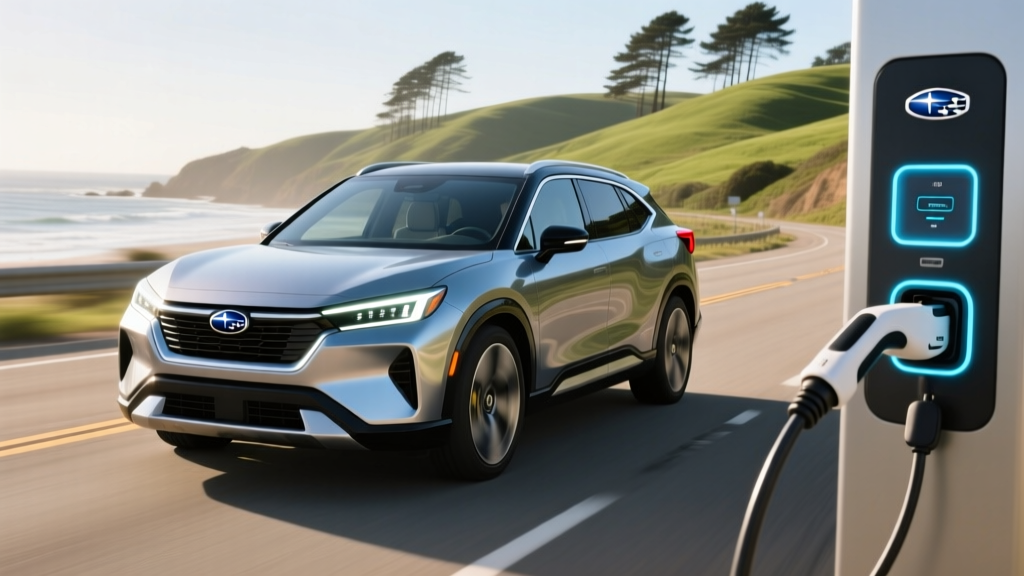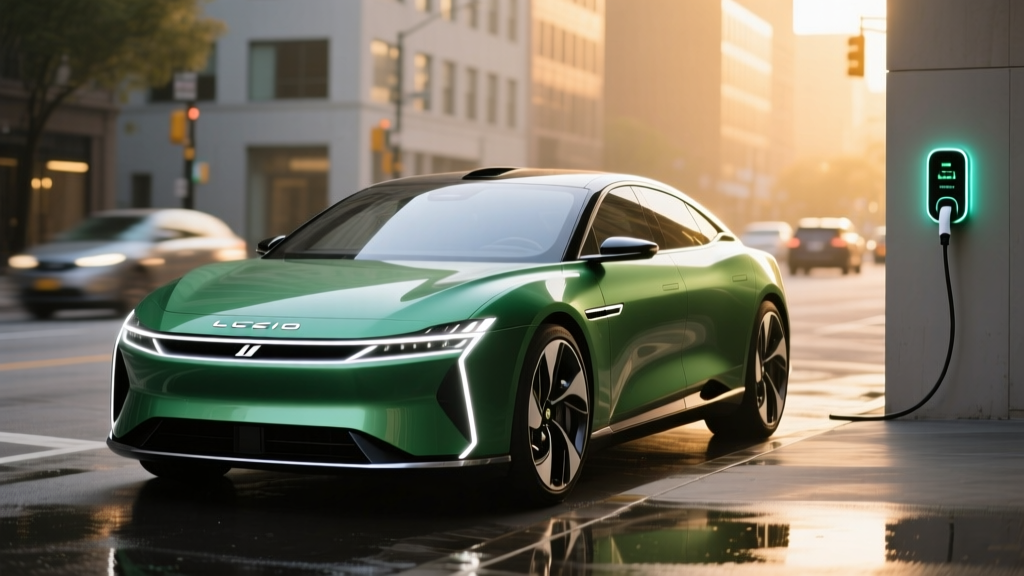
Lucid Motors entered the luxury SUV arena with the Gravity, a three-row electric hauler designed to challenge the Tesla Model X, Rivian R1S, and BMW iX. Now that Lucid Gravity sales have moved beyond initial founder-edition reservations into broader retail delivery, prospective buyers need hard data — not press-release optimism — before committing to a vehicle starting near $80,000.
This review dissects the 2026 Lucid Gravity across every metric that matters: real-world range versus EPA estimates, 800-volt charging performance, interior packaging for seven passengers, federal tax credit reality, and the ownership calculus against its closest rivals.
2026 Lucid Gravity: At-a-Glance Specifications
| Specification | Lucid Gravity Pure (RWD) | Lucid Gravity Grand Touring (AWD) |
|---|---|---|
| EPA Estimated Range | ~440 miles | ~440 miles |
| Battery Capacity (Usable) | ~112 kWh (NMC) | ~112 kWh (NMC) |
| Drivetrain | Rear-Wheel Drive | Dual-Motor AWD |
| Horsepower | ~480 hp | ~828 hp |
| 0-60 mph | ~5.5 sec | ~3.5 sec |
| Peak DC Fast Charge | ~300 kW (800V) | ~300 kW (800V) |
| 10-80% DC Charge Time | ~20 min | ~20 min |
| Level 2 Home Charging | 19.2 kW (~70 mi/hr) | 19.2 kW (~70 mi/hr) |
| MPGe (Combined) | ~110 MPGe | ~105 MPGe |
| Seating | 7-passenger (3 rows) | 7-passenger (3 rows) |
| Cargo (Behind 3rd Row) | ~30 cu ft | ~30 cu ft |
| Max Cargo (3rd Row Folded) | ~75 cu ft | ~75 cu ft |
| Base MSRP | $79,900 | $94,900 |
| Battery/Powertrain Warranty | 8 yr / 100,000 mi | 8 yr / 100,000 mi |
Specs reflect Lucid's published figures and EPA data for the 2025-2026 model year. Final EPA certification numbers may vary slightly by trim and wheel option. Source: fueleconomy.gov, Lucid Motors.
Real-World Range: What the EPA Sticker Doesn't Tell You
Real-World Highway (70-80 mph): ~340-370 miles
Real-World Cold Weather (32°F / 0°C): ~280-320 miles
Mixed Commute (City/Suburban): ~390-420 miles
The Gravity's headline 440-mile EPA figure is genuinely exceptional for a three-row SUV — nothing else in the segment touches it. But EV range is a physics conversation, not a marketing one.
At sustained highway speeds of 75-80 mph, aerodynamic drag increases roughly with the square of velocity. The Gravity is a large, bluff-bodied SUV, and while Lucid's engineering team achieved a remarkably low drag coefficient for the class, expect highway range to settle between 340 and 370 miles in moderate temperatures. That's still best-in-class, but it's a meaningful 15-20% reduction from the sticker.
Cold weather compounds this. Lithium-ion NMC chemistry loses efficiency below freezing, and cabin heating in a vehicle this size draws substantial energy from the pack. In sub-freezing conditions, plan for 280-320 miles of practical range. The Gravity's available heat pump helps mitigate this loss compared to resistive heating, but physics still wins.
For city and suburban driving — where regenerative braking recaptures energy and speeds stay moderate — you'll approach or occasionally exceed the EPA estimate. The Gravity's efficiency of roughly 31-33 kWh/100mi (combined) is impressive for a 5,500+ lb. vehicle.
800-Volt Charging: Speed, Curve, and Reality
| Charging Level | Power / Voltage | Miles Added per Hour | Notes |
|---|---|---|---|
| Level 1 (120V Household) | ~1.4 kW | ~4-5 mi/hr | Emergency/trickle only |
| Level 2 (240V Home) | 19.2 kW | ~70 mi/hr | Requires 100A circuit; full overnight recharge |
| DC Fast Charge (Peak) | ~300 kW (800V) | ~250+ mi in 15 min | Requires 350 kW+ station |
| DC Fast Charge (50 kW) | 50 kW | ~130 mi/hr | Older/slower public stations |
Lucid's 800-volt architecture is the Gravity's most underappreciated advantage. While many competitors still run 400V systems, the Gravity's higher voltage allows it to accept peak charge rates around 300 kW without requiring extreme amperage — reducing heat generation and cable weight.
The charge curve matters more than peak kW. Like all EVs, the Gravity does not sustain its peak rate to 80%. Expect ~300 kW from roughly 10-30% state of charge, tapering to ~200 kW by 50%, and ~150 kW by 65%. A 10-80% session at a capable 350 kW charger (Electrify America, Tesla Supercharger V4 with NACS adapter) takes approximately 20 minutes. That's competitive with the best in the segment.
For home charging, the Gravity's onboard charger supports up to 19.2 kW on Level 2 — one of the highest in any production EV. This means a full 0-100% recharge in roughly 6-7 hours on a properly equipped home station. However, this requires a dedicated 100-amp circuit and hardwired EVSE. Most homes will need an electrical panel assessment; many will require a panel upgrade to 200A or higher. Budget $2,000-$5,000+ for professional installation depending on your home's existing electrical infrastructure.
The Gravity ships with a NACS (Tesla-style) charge port as standard for 2026, granting native access to Tesla's Supercharger network — currently the most reliable DC fast-charging infrastructure in the U.S. with over 25,000 stalls. No adapter needed.
Performance and Drivetrain
The Grand Touring AWD variant produces approximately 828 horsepower from its dual-motor setup, launching this 5,800-lb SUV to 60 mph in roughly 3.5 seconds. That's supercar territory in a vehicle with three rows of seats and a frunk.
The Pure RWD trim, at ~480 hp and a 5.5-second 0-60, is hardly slow — it's quicker than most V6 luxury SUVs and will satisfy everyone except those who need to win stoplight drag races. The RWD configuration also sheds weight and complexity, which is partly how it achieves similar EPA range to the AWD variant.
Lucid's miniaturized drive units — derived from the Air sedan's powertrain — are notably compact, freeing up interior space and contributing to the Gravity's surprisingly good cargo volume. The low center of gravity from the floor-mounted battery pack keeps body roll controlled through corners, though this is a comfort-oriented luxury SUV, not a canyon carver.
Pricing, Trims, and Federal Tax Credit Eligibility
| Trim | Base MSRP | Federal §30D Credit | Effective Price | Notes |
|---|---|---|---|---|
| Gravity Pure (RWD) | $79,900 | Up to $7,500 | ~$72,400 | Subject to MSRP cap, income, sourcing rules |
| Gravity Grand Touring (AWD) | $94,900 | Up to $7,500 | ~$87,400 | SUV MSRP cap is $80,000 — may exceed limit |
| Gravity Grand Touring (Performance) | $109,900+ | Likely ineligible | $109,900+ | Exceeds $80,000 SUV MSRP cap |
Federal tax credit eligibility for the Gravity is not straightforward. Under IRS §30D rules (current for 2026), the following constraints apply:
- MSRP Cap: SUVs/vans/pickups must have an MSRP at or below $80,000. The Gravity Pure at $79,900 squeaks under this threshold; the Grand Touring at $94,900 does not.
- Buyer Income Cap: Adjusted gross income must not exceed $150,000 (single), $225,000 (head of household), or $300,000 (joint filing).
- Battery Sourcing: Critical minerals and battery components must meet phased-in domestic/free-trade-agreement sourcing thresholds. Lucid's supply chain sourcing determines whether the full $7,500 or a partial $3,750 credit applies.
- Point-of-Sale Transfer: Eligible buyers can transfer the credit to the dealer at purchase, reducing the out-of-pocket price immediately rather than waiting for a tax refund.
The Gravity Pure RWD at $79,900 is positioned precisely to qualify for the MSRP cap — a deliberate pricing choice by Lucid. However, battery component and critical-mineral sourcing requirements may reduce the credit to $3,750 or eliminate it entirely depending on the specific build. Always verify current eligibility on IRS.gov and confirm with your tax professional before purchasing.
Higher trims (Grand Touring and above) almost certainly exceed the $80,000 SUV MSRP cap, making them ineligible for the federal credit regardless of buyer income or sourcing. This is a significant factor in the Gravity's value equation versus competitors.
Interior, Cargo, and Technology
The Gravity's cabin is its strongest argument against the Tesla Model X. Lucid's "Space Concept" design philosophy prioritizes interior volume relative to exterior footprint, and it shows:
- Third-row legroom: ~34 inches — usable for adults on shorter trips, a rarity in electric SUVs
- Second-row legroom: ~41 inches — generous, with available captain's chairs or bench
- Cargo behind 3rd row: ~30 cu ft (with a deep under-floor compartment)
- Cargo with 3rd row folded: ~75 cu ft — competitive with midsize luxury SUVs
- Frunk (front trunk): ~10 cu ft — large enough for a charging cable bag and groceries
The centerpiece is Lucid's "Clearview Cockpit" — a 34-inch curved glass display that spans the driver's field of view above the steering wheel, supplemented by a lower touchscreen for climate and secondary controls. The interface is visually striking, but real-world usability is mixed: some owners report that the upper display's distance from the driver makes fine text difficult to read, and the lower screen's haptic feedback lacks the tactile certainty of physical buttons.
The Gravity features a glass canopy roof that floods the cabin with light, and Lucid's Surreal Sound Pro audio system (available on Grand Touring) uses 21 speakers with Dolby Atmos processing.
Driver Assistance: The Gravity comes equipped with Lucid's DreamDrive Pro system — a Level 2 (SAE) driver-assistance suite featuring adaptive cruise control, lane centering, automatic emergency braking, and blind-spot intervention. It is not a hands-free or self-driving system. The driver must remain engaged with hands on the wheel at all times. An upcoming DreamDrive Pro upgrade aims to add hands-free highway driving on mapped roads, but as of early 2026, it requires full driver supervision.
Competitive Comparison: Gravity vs. the Field
The Gravity doesn't exist in a vacuum. Here's how it stacks up against the three-row electric SUV competition on the metrics buyers actually compare:
| Metric | Lucid Gravity GT (AWD) | Tesla Model X LR | Rivian R1S (Dual-Motor Max) | Kia EV9 GT-Line (AWD) |
|---|---|---|---|---|
| EPA Range | ~440 mi | ~335 mi | ~410 mi | ~270 mi |
| Peak DC Charge | ~300 kW | ~250 kW | ~200 kW | ~210 kW |
| 0-60 mph | ~3.5 sec | ~3.8 sec | ~3.5 sec | ~5.0 sec |
| Base MSRP | $94,900 | $79,990 | $84,900 | $73,900 |
| §30D Credit Eligible | No (MSRP cap) | Yes (varies) | Yes (varies) | Yes (varies) |
| Third-Row Usability | Good | Tight | Good | Good |
Choose the Lucid Gravity if: Maximum range is your top priority, you value a premium interior over Tesla's minimalism, you want 800V charging without an adapter, and budget allows for a $80K-$110K SUV without relying on the federal tax credit.
Choose the Tesla Model X if: You want Supercharger-native access with the broadest network, proven over-the-air updates, Falcon Wing doors for tight parking, and a lower starting price with potential tax credit eligibility.
Choose the Rivian R1S if: You need genuine off-road capability, prefer a more rugged/adventure aesthetic, value Rivian's gear tunnel and camp kitchen accessories, and want tax credit eligibility at a lower price point.
Choose the Kia EV9 if: Budget is a primary concern, you want three rows under $55K after credits, and 270 miles of range covers your daily needs with occasional road trips.
Pros, Cons, and Final Verdict
Pros
- Class-leading ~440-mile EPA range
- 800V architecture with ~300 kW peak DC charging
- NACS port standard — native Supercharger access
- Genuinely usable third row for adults
- 19.2 kW Level 2 onboard charging (fastest in class)
- Impressive cargo space with frunk
- Sub-4-second 0-60 in Grand Touring AWD
- Premium materials and distinctive design
Cons
- Grand Touring exceeds $80K MSRP cap — no federal tax credit
- Limited Lucid service center network vs. Tesla or legacy OEMs
- Clearview Cockpit display takes adjustment; not all drivers love it
- DreamDrive Pro is competent but not class-leading in ADAS features
- Brand-new model — long-term reliability data doesn't exist yet
- $80K-$110K+ pricing puts it in Porsche Cayenne/Macan EV territory
- 19.2 kW home charging requires expensive electrical upgrade
Verdict: The Lucid Gravity is the most compelling long-range electric SUV on paper, and early deliveries suggest it delivers on its range promise in real-world conditions. For buyers who prioritize maximum range, fast charging, and a premium three-row cabin — and who don't need the $7,500 federal credit to make the math work — the Gravity earns a strong recommendation. The Pure RWD trim at $79,900 is the value sweet spot, squeezing under the MSRP cap for potential credit eligibility.
The biggest risk is Lucid's service infrastructure. With fewer than 30 service centers nationwide as of early 2026, owners in many metro areas face mobile-service reliance or long drives for warranty work. If you live near a Lucid service hub, this is a minor concern. If you don't, factor it into your decision.
Lucid Gravity Sales: Ownership FAQ
What is the real-world range of the Lucid Gravity?
The EPA estimates ~440 miles for the Gravity. In real-world highway driving at 70-80 mph, expect 340-370 miles. In cold weather (below freezing), plan for 280-320 miles. City and suburban driving will get you closest to the EPA figure, around 390-420 miles.
How fast does the Lucid Gravity charge?
On a 350 kW DC fast charger, the Gravity peaks at ~300 kW and charges from 10-80% in approximately 20 minutes. At home on a 19.2 kW Level 2 charger, it adds ~70 miles of range per hour, with a full charge taking 6-7 hours. Note: the 19.2 kW rate requires a 100A dedicated circuit.
Does the Lucid Gravity qualify for the federal EV tax credit?
The Gravity Pure RWD at $79,900 falls under the $80,000 SUV MSRP cap and may qualify for up to $7,500 under IRS §30D, depending on buyer income limits ($150K single / $300K joint) and battery sourcing requirements. The Grand Touring at $94,900 exceeds the MSRP cap and is almost certainly ineligible. Verify current rules at IRS.gov.
Is the Lucid Gravity worth buying over a Tesla Model X or Rivian R1S?
If range and charging speed are your top priorities, the Gravity wins decisively with ~440 miles and 300 kW charging. If you need the most proven Supercharger network and OTA ecosystem, the Model X is safer. If off-road capability and adventure use matter, the R1S is the better fit. The Gravity is best for luxury-oriented families who road-trip frequently and value range above all.
What is the Lucid Gravity's warranty coverage?
Lucid provides an 8-year/100,000-mile battery and powertrain warranty, with a minimum 70% battery capacity retention guaranteed over that period. The basic vehicle warranty is 4 years/50,000 miles. These terms are competitive with Tesla, Rivian, and BMW.
How is Lucid Gravity sales availability and delivery timing?
As of early 2026, Lucid Gravity sales have expanded beyond initial reservation holders to general retail orders. Delivery timelines vary by configuration — Pure RWD orders typically fulfill faster, while Grand Touring and higher trims may carry 2-4 month wait times depending on demand and production ramp. Check Lucid's configurator for current estimates.
What home charging setup does the Lucid Gravity require?
To take advantage of the Gravity's 19.2 kW onboard charger, you need a hardwired Level 2 EVSE on a dedicated 100-amp, 240-volt circuit. Most homes will require an electrical panel evaluation; a 200A panel upgrade may be necessary. Budget $2,000-$5,000+ for professional installation by a licensed electrician. A standard 48A/11.5 kW setup (60A circuit) works fine but charges more slowly at ~42 mi/hr.