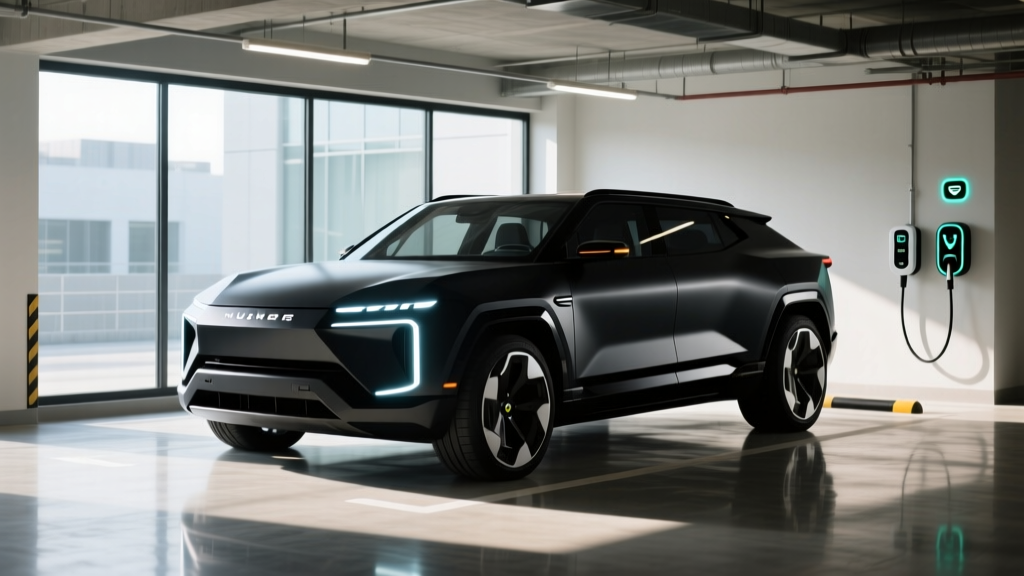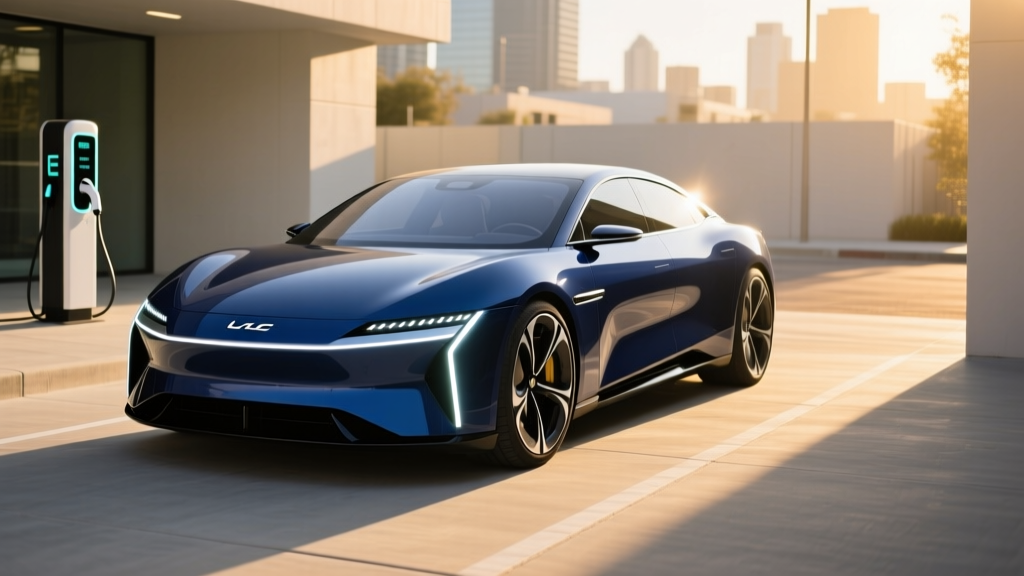
The Lucid Gravity has officially arrived, and with it comes the Lucid Gravity pricing announcement that luxury three-row EV buyers have been waiting for. Lucid Motors confirmed the 2026 model-year lineup, starting at $79,900 for the Pure trim and climbing to $94,900 for the Grand Touring — positioning the Gravity squarely against the Tesla Model X, Rivian R1S, and BMW iX in the premium electric SUV segment. Below, we break down every trim, the real-world range you can actually expect, charging performance, and the nuanced question of federal tax credit eligibility under current IRS §30D rules.
Lucid Gravity Pricing and Trim Levels
Lucid has launched the Gravity with two primary configurations for the 2026 model year. Here is how the pricing stack breaks down before any incentives or destination fees:
| Trim | Drivetrain | EPA Range | 0-60 mph | Horsepower | Base MSRP |
|---|---|---|---|---|---|
| Gravity Pure | Dual-Motor AWD | 440 mi (est.) | 3.8 sec | 600 hp | $79,900 |
| Gravity Grand Touring | Dual-Motor AWD | 440 mi (est.) | 3.5 sec | 800+ hp | $94,900 |
Destination charges add approximately $1,500. Lucid has also hinted at a lower-priced Pure RWD variant arriving later in the 2026 production cycle, potentially starting near $69,900, but that configuration is announced and not yet available for order.
A fully optioned Grand Touring with the Surreal Stealth package, 22-inch wheels, and Lucid's DreamDrive Pro ADAS suite can push the as-tested price past $105,000. Buyers should budget accordingly when configuring.
EPA Range and Real-World Expectations
Lucid's range figures benefit from the company's industry-leading efficiency engineering. The Gravity's powertrain uses a proprietary miniaturized motor and inverter design that reduces losses and weight. Combined with a heat pump for cabin climate control, the Gravity recovers waste heat to warm the cabin and battery — a critical advantage in cold climates where resistive heaters in competing EVs can slash range by 40%.
For context, the Gravity's 440-mile target exceeds the Tesla Model X Long Range (348 miles EPA), the Rivian R1S Dual-Motor Max Pack (410 miles EPA), and the BMW iX xDrive50 (324 miles EPA). Lucid's efficiency advantage is structural, not just a function of packing in a larger battery.
Battery, Chemistry, and Efficiency
The Lucid Gravity Grand Touring uses a 118 kWh usable battery pack built on an NMC (nickel manganese cobalt) chemistry. NMC provides the energy density necessary to achieve 440 miles in a vehicle with a curb weight exceeding 5,800 lbs. The Pure trim is expected to use a slightly smaller pack (approximately 105 kWh usable), though Lucid has not published final chemistry specifications for the Pure as of early 2026.
| Spec | Gravity Pure | Gravity Grand Touring |
|---|---|---|
| Battery Capacity (usable) | ~105 kWh | 118 kWh |
| Chemistry | NMC (est.) | NMC |
| MPGe (combined, est.) | ~120 MPGe | ~124 MPGe |
| kWh/100 mi | ~28 kWh | ~27 kWh |
| Thermal Management | Liquid-cooled, heat pump | Liquid-cooled, heat pump |
The kWh/100 mi figure is where Lucid separates itself. For a three-row SUV weighing nearly three tons, 27 kWh/100 mi is exceptional. By comparison, the Tesla Model X achieves roughly 30 kWh/100 mi, and the Rivian R1S Max Pack sits at about 33 kWh/100 mi. Over a year of 12,000 miles, that efficiency gap translates to roughly 300–400 fewer kWh consumed — real money saved at the charger.
Charging Speed: DC Fast and Home Level 2
Charging performance is where the Gravity makes its most compelling case for road-trip readiness. Lucid's 900-volt electrical architecture enables DC fast-charge rates that rival the best in the industry.
| Charging Level | Power / Rate | Speed / Time | Connector |
|---|---|---|---|
| DC Fast Charge (peak) | 300 kW | 10–80% in ~20 min | NACS (native) |
| DC Fast Charge (sustained avg.) | ~200–220 kW avg. | ~200 mi added in 15 min | NACS |
| Level 2 (home, 48A) | 11.5 kW | ~37 mi/hr | NACS / J1772 adapter |
| Level 2 (home, 80A) | 19.2 kW | ~62 mi/hr | NACS (Lucid home charger) |
| Level 1 (120V outlet) | 1.4 kW | ~4 mi/hr | Standard NEMA 5-15 |
A few critical notes for buyers:
- Peak vs. sustained: The 300 kW figure is a peak, achievable roughly between 10–40% state of charge (SoC). Above 60%, the charge curve tapers significantly. The 10–80% time of approximately 20 minutes reflects this taper — a realistic figure that Lucid achieves thanks to the 900V architecture keeping current (amps) lower, reducing heat and throttling.
- NACS native: The Gravity ships with a native NACS (Tesla-style) charge port. This means direct access to Tesla Supercharger stalls (now open to non-Tesla EVs) without an adapter — a significant practical advantage for road-trip charging infrastructure in 2026.
- Home charging at 80A: Lucid offers an optional home wall connector capable of 19.2 kW on an 80-amp circuit. This requires a 100-amp breaker and likely a panel upgrade in older homes. Budget $1,500–$3,500 for professional installation depending on your electrical panel's capacity. A standard 48A/11.5 kW setup on a 60-amp circuit is more common and costs $800–$1,500 to install.
Performance and Driving Dynamics
The Gravity is not merely efficient — it is fast. The Grand Touring's dual-motor AWD powertrain produces over 800 horsepower, launching this three-row SUV from 0–60 mph in an estimated 3.5 seconds. The Pure trim, with approximately 600 hp, still manages a 3.8-second run — quicker than a Porsche Cayenne S.
| Metric | Gravity Pure | Gravity Grand Touring |
|---|---|---|
| 0–60 mph | 3.8 sec | 3.5 sec |
| Horsepower | 600 hp | 800+ hp |
| Drivetrain | Dual-Motor AWD | Dual-Motor AWD |
| Towing Capacity | 6,000 lbs | 6,000 lbs |
| Top Speed | 135 mph | 155 mph |
Towing is rated at 6,000 lbs for both trims, competitive with the Rivian R1S (7,700 lbs max) and ahead of the BMW iX (not rated for heavy towing). Note that towing any trailer will reduce range by approximately 35–50%, depending on trailer weight and aerodynamics. Plan for 220–280 miles of range when towing near the maximum rating.
Interior, Cargo, and Technology
The Gravity's cabin is designed around a three-row, seven-passenger layout — a first for Lucid. Key interior dimensions and features:
- Cargo volume (behind 3rd row): 28 cu ft
- Cargo volume (3rd row folded): 62 cu ft
- Cargo volume (all rows folded): 112 cu ft
- Frunk (front trunk): 10 cu ft — large enough for two carry-on bags or charging cables
- Second-row legroom: 39.5 inches
- Third-row legroom: 32.0 inches (best suited for children or short-trip adults)
The centerpiece of the dashboard is Lucid's 34-inch curved glass cockpit display, spanning the full width of the driver's zone. It runs Lucid's proprietary infotainment OS with native navigation, over-the-air updates, and streaming app integration. A secondary lower touchscreen handles climate and vehicle settings.
DreamDrive Pro, Lucid's Level 2 driver-assistance system, includes adaptive cruise control, lane centering, automatic lane change, and a 360-degree sensor suite with LiDAR. As with all Level 2 systems per SAE classification, the driver must remain fully engaged — hands on the wheel, eyes on the road. This is not autonomous driving.
Federal Tax Credit Eligibility (IRS §30D)
The question every luxury EV buyer asks: does the Gravity qualify for the $7,500 federal EV tax credit under IRS §30D rules? The answer requires careful attention to three gating criteria:
- MSRP cap: SUVs must have an MSRP at or below $80,000 to qualify. The Gravity Pure at $79,900 clears this threshold by $100. The Grand Touring at $94,900 does not qualify.
- Buyer income cap: Modified adjusted gross income (MAGI) must not exceed $300,000 (joint filers), $225,000 (head of household), or $150,000 (single filers).
- Battery sourcing requirements: The vehicle must meet critical-mineral and battery-component sourcing thresholds that phase up annually. For 2026, 80% of critical minerals and 100% of battery components must be sourced from the U.S. or free-trade-agreement partners. Lucid has not publicly confirmed full §30D compliance for the Gravity Pure's battery supply chain as of early 2026.
| Trim | MSRP | Under $80K Cap? | Credit Eligible? | After Potential Credit |
|---|---|---|---|---|
| Gravity Pure | $79,900 | Yes (barely) | Possible — depends on sourcing compliance | ~$72,400 |
| Gravity Grand Touring | $94,900 | No | No | $94,900 |
Point-of-sale transfer: If the Pure qualifies, buyers can transfer the credit to the dealer at purchase, reducing the transaction price by $7,500 at the point of sale rather than waiting for a tax refund. Confirm eligibility with your tax professional and verify Lucid's current sourcing compliance on the fueleconomy.gov tax credit database before purchasing.
Warranty and Ownership Costs
Lucid backs the Gravity with a warranty package competitive with the luxury EV segment:
- Basic vehicle warranty: 4 years / 50,000 miles
- Battery and powertrain warranty: 8 years / 100,000 miles (minimum 70% capacity retention)
- Roadside assistance: 4 years / 50,000 miles
The 8-year/100,000-mile battery warranty with a 70% retention floor is standard for the segment. For reference, Tesla offers 8 years/150,000 miles on the Model X battery — a slight advantage in mileage coverage. Lucid's NMC pack, managed by an advanced thermal system, should experience minimal degradation in normal use. Industry data suggests NMC packs retain approximately 90–93% capacity after 100,000 miles with proper charging habits (avoiding sustained 100% SoC and frequent DC fast charging above 80%).
Insurance costs for the Gravity are expected to run $2,800–$3,600 annually depending on trim, driving record, and location — roughly 15–25% higher than a comparable ICE luxury SUV. Get quotes before ordering.
Lucid Gravity: Pros and Cons
Pros
- Class-leading 440-mile EPA range estimate
- 300 kW DC fast charging with NACS native port
- Exceptional efficiency (27 kWh/100 mi) for a three-row SUV
- Spacious cabin with genuine third-row seating and frunk
- 900V architecture for sustained charging performance
- 6,000-lb towing capacity
Cons
- Grand Touring trim exceeds $80K MSRP cap — no tax credit
- Pure trim barely qualifies; battery sourcing compliance uncertain
- Lucid's service center network is still limited vs. Tesla/BMW
- Third-row legroom tight for adults on long trips
- Insurance premiums above segment average
- DreamDrive Pro is Level 2 only — no hands-free driving
Who Should Buy the Lucid Gravity?
- Choose the Gravity Pure if you need a three-row family EV with maximum range, want Supercharger access via NACS, and your household income is under the §30D cap. The Pure's $79,900 price (potentially $72,400 after credit) makes it the value play in the luxury EV SUV space.
- Choose the Gravity Grand Touring if performance is a priority, you frequently tow or take long road trips where the 800+ hp and 440-mile range provide tangible benefits, and you are not dependent on the federal tax credit.
- Look at the Rivian R1S instead if you need more serious off-road capability, higher towing capacity (7,700 lbs), or a more established service network.
- Look at the Tesla Model X instead if you want the broadest Supercharger network guarantee, falcon-wing rear doors for tight parking, or a longer-established service infrastructure.
Frequently Asked Questions
What is the real-world range of the Lucid Gravity?
The EPA-estimated range is approximately 440 miles for the Grand Touring with 19-inch wheels. In real-world highway driving at 70–75 mph, expect 350–380 miles. In cold weather (below freezing), plan for 310–350 miles. The Pure trim's real-world range will be slightly lower, roughly 330–370 miles highway.
How fast does the Lucid Gravity charge at home and on the road?
On a DC fast charger, the Gravity peaks at 300 kW and charges from 10–80% in approximately 20 minutes. At home on a 48-amp Level 2 charger (11.5 kW), you'll add roughly 37 miles of range per hour — enough to fully recharge overnight. An optional 80A Lucid home charger adds up to 62 miles per hour but requires a 100-amp breaker.
Does the Lucid Gravity qualify for the $7,500 federal tax credit?
The Gravity Pure ($79,900 MSRP) is under the $80,000 SUV cap and may qualify, provided the buyer meets income limits and Lucid's battery supply chain meets 2026 critical-mineral and component sourcing rules. The Grand Touring ($94,900) does not qualify. Always verify on fueleconomy.gov and consult a tax professional.
Is the Lucid Gravity worth buying over the Tesla Model X or Rivian R1S?
The Gravity wins on efficiency and range (440 miles vs. 348 for Model X, 410 for R1S Max). It also offers NACS-native Supercharger access. However, Tesla has a more mature service network, and the R1S offers better off-road capability and higher towing. If range and efficiency are your top priorities, the Gravity is the strongest choice in the segment.
How much does it cost to charge a Lucid Gravity?
At the national average electricity rate of $0.16/kWh, fully charging the Grand Touring's 118 kWh battery from empty costs approximately $18.88 — equivalent to roughly $0.05 per mile. By comparison, a gas SUV averaging 20 MPG at $3.50/gallon costs $0.175 per mile. Over 12,000 miles annually, the Gravity saves approximately $1,500 in fuel costs.
What is the Lucid Gravity's battery warranty?
Lucid covers the battery and powertrain for 8 years or 100,000 miles, whichever comes first, with a minimum 70% capacity retention guarantee. If the battery degrades below 70% within that period, Lucid will repair or replace it at no cost.