The Lucid Gravity is the luxury electric SUV that promises Air-sedan efficiency in a three-row package — but at a base MSRP pushing $80,000, buyers need hard numbers before signing. Below is a complete breakdown of every 2025 Lucid Gravity price point, real-world range expectations, charging performance, and the federal tax-credit rules that may (or may not) apply to your purchase.
Lucid Gravity Price by Trim: What You'll Actually Pay
Lucid launched the Gravity in late 2024 with a single well-equipped trim, expanding the lineup for the 2025 model year. Here is the current MSRP structure before any incentives or destination charges:
| Trim | Base MSRP | Drivetrain | EPA Range | Horsepower | 0-60 mph |
|---|---|---|---|---|---|
| Gravity Grand Touring | $79,900 | Dual-Motor AWD | 440 mi | 828 hp | 3.5 sec |
| Gravity Grand Touring (20" Aero wheels) | $79,900 | Dual-Motor AWD | 440 mi | 828 hp | 3.5 sec |
| Gravity Grand Touring (22" wheels) | $81,400 (est.) | Dual-Motor AWD | ~400 mi | 828 hp | 3.5 sec |
| Gravity Sapphire (upcoming) | ~$120,000+ | Tri-Motor AWD | TBA | 1,200+ hp | <2.5 sec |
Destination and documentation fees add approximately $1,500–$2,000. Lucid frequently bundles its Lucid DreamDrive Pro ADAS suite into the Grand Touring price, but confirm with your delivery specialist — packaging has shifted between model years.
EPA Sticker: 440 miles (Grand Touring, 20" Aero wheels)
Highway (70–75 mph, 70°F): Expect ~350–380 miles. Lucid's powertrain efficiency is exceptional — the Gravity achieves roughly 115 MPGe combined — but aerodynamic drag at sustained highway speeds still trims roughly 15–20% off the sticker.
Cold Weather (20–30°F, highway): Plan for ~270–310 miles. Battery chemistry resistance increases and cabin heating loads (even with the standard heat pump) reduce usable capacity.
City / Suburban (mixed, mild weather): 400–430 miles is achievable thanks to aggressive regenerative braking and lower average speeds.
Battery, Chemistry, and the 112 kWh Pack
The Lucid Gravity Grand Touring uses a ~112 kWh usable battery pack built on Lucid's 900-volt architecture. The chemistry is nickel-manganese-cobalt (NMC), chosen for its high energy density — critical for fitting 440 miles of range into a vehicle with a flat floor and three rows of seats.
NMC packs offer superior range-per-kilogram versus LFP (lithium iron phosphate), but they carry different long-term care requirements. Lucid recommends keeping daily charge limits at 80% for NMC longevity, reserving 100% for road trips. The battery management system (BMS) includes a top-end and bottom-end buffer, so the 112 kWh figure is usable capacity, not gross.
| Spec | Value |
|---|---|
| Usable Battery Capacity | ~112 kWh (NMC) |
| Architecture | 900V nominal |
| EPA Efficiency (combined) | ~115 MPGe |
| Energy Consumption | ~29 kWh / 100 mi |
| Heat Pump | Standard |
Charging Speed: DC Fast Charge and Home Level 2
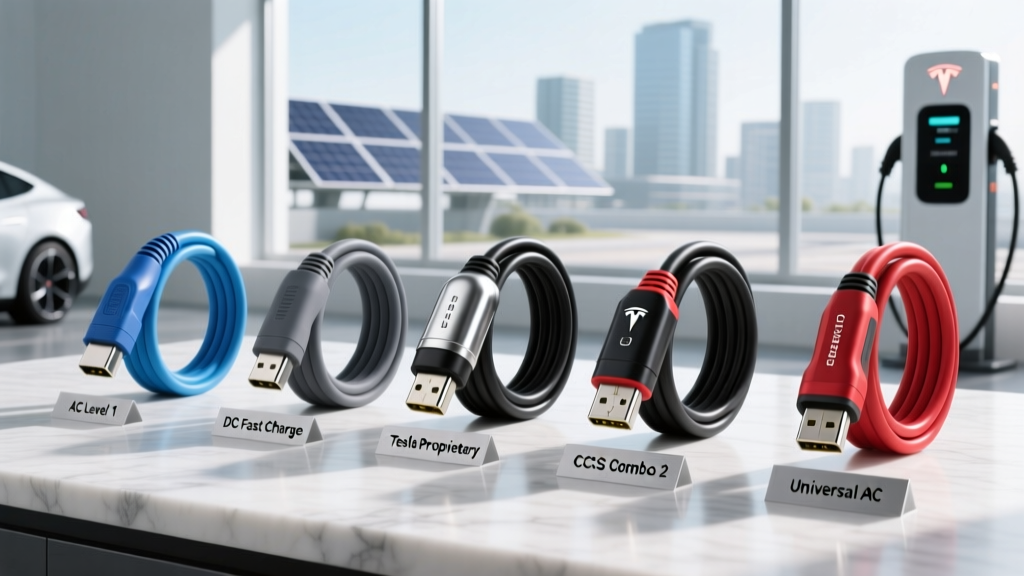
Charging speed is where Lucid's 900V architecture pays dividends. The Gravity supports peak DC fast charging at approximately 300 kW on compatible chargers (350 kW-class stations from Electrify America or Tesla Supercharger V4 with NACS adapter).
| Charging Level | Power (kW) | Speed / Time | Notes |
|---|---|---|---|
| DC Fast Charge (peak) | ~300 kW | 10–80% in ~20 min | Requires 350 kW-class charger; curve tapers sharply above 80% |
| DC Fast Charge (sustained 10–50%) | ~250–280 kW avg | ~200 mi added in 10 min | 900V system sustains higher rates longer than 400V rivals |
| Level 2 (home, 48A / 11.5 kW) | 11.5 kW | ~36 mi/hr; full charge in ~11 hr | Requires NEMA 14-50 or hardwired 60A circuit |
| Level 2 (80A / 19.2 kW capable) | 19.2 kW | ~60 mi/hr; full charge in ~6.5 hr | Gravity onboard charger supports up to 19.2 kW AC |
| Level 1 (120V) | ~1.4 kW | ~4 mi/hr | Emergency / trickle only |
Charging curve reality: Peak 300 kW is available roughly between 10–35% state of charge (SoC). The rate steps down to ~180 kW around 50% and further to ~90 kW by 70%. Plan road-trip stops to charge from 10–80% rather than topping off — that last 20% can take as long as the first 70%.
Home charging note: The Gravity's onboard charger supports up to 19.2 kW AC, which is among the highest in any production EV. To exploit this, you'll need a hardwired Level 2 station rated for 80 amps and a 100-amp dedicated circuit. Most homes will require a panel evaluation — budget $800–$2,500 for a standard 48A/11.5 kW install, or $2,000–$4,500 if a panel upgrade to 200A service is needed. Consult a licensed electrician for your specific situation.
Performance and Drivetrain
The Grand Touring's dual-motor all-wheel-drive powertrain produces 828 horsepower, delivering a 0–60 mph time of 3.5 seconds. That places the Gravity in supercar-SUV territory alongside the Tesla Model X Plaid and Porsche Cayenne Turbo E-Hybrid, but with substantially more EPA range.
Lucid's miniaturized permanent-magnet motors are among the most compact and power-dense in production. The result is a flat floor with no drivetrain tunnel hump, enabling genuine three-row seating and a front trunk (frunk) — something not every three-row EV can claim.
Towing capacity is rated at up to 6,000 pounds (braked, with the factory tow package). Expect range to drop roughly 30–40% when towing near maximum capacity at highway speeds.
Cargo, Passenger Space, and Interior
The Gravity seats up to seven adults across three rows. Key interior dimensions:
- Cargo behind 3rd row: ~24 cu ft
- Cargo behind 2nd row (3rd row folded): ~62 cu ft
- Cargo behind 1st row (all rear rows folded): ~105 cu ft
- Frunk (front trunk): ~12 cu ft
- 2nd-row legroom: ~42 inches
- 3rd-row legroom: ~34 inches (usable for adults on short trips; best for children on long drives)
The 34-inch third-row legroom is tighter than the Rivian R1S (38.9 inches) but competitive with the Kia EV9. The frunk adds meaningful grocery or charging-cable storage that ICE three-row SUVs simply cannot match.
The interior centers on a 34-inch curved glass cockpit display (Lucid calls it the "Clearview Cockpit") spanning the driver's sightline, paired with a lower 17-inch central touchscreen for climate, media, and navigation. Apple CarPlay and Android Auto are wireless. Over-the-air (OTA) updates are continuous.
Driver Assistance and Smart Features
Lucid's DreamDrive Pro suite is standard on the Grand Touring. It includes:
- Adaptive cruise control with stop-and-go
- Lane-centering assist
- Blind-spot monitoring with rear cross-traffic alert
- Automatic emergency braking (front and rear)
- 360-degree surround-view camera
- Highway assist (hands-on-wheel, lane-centering + ACC combined)
DreamDrive Pro is a Level 2 driver-assistance system. The driver must remain fully engaged — hands on or near the wheel, eyes on the road — at all times. This is not autonomous or "self-driving" capability. Lucid has not announced a hands-free highway system comparable to GM's Super Cruise or Ford's BlueCruise as of this writing.
Notable tech gaps: Lucid does not currently offer a hands-off-wheel highway driving mode, which competitors like BMW (Highway Assistant on the iX) and Mercedes-Benz (Drive Pilot, Level 3 in limited conditions) have begun deploying. If hands-free highway cruising is a priority, test-drive those alternatives.
Federal Tax Credit and Incentive Eligibility
The Lucid Gravity's eligibility for the federal EV tax credit under IRS §30D requires careful navigation. Here are the key rules for 2025 purchases:
| Requirement | Rule | Gravity Status |
|---|---|---|
| Vehicle MSRP Cap (SUVs/vans/pickups) | ≤ $80,000 | ⚠️ Grand Touring base: $79,900 — qualifies, but adding options or 22" wheels may push MSRP above $80,000 and disqualify |
| Buyer Income Cap (Modified AGI) | ≤ $300k joint / $225k HOH / $150k single | Varies by buyer — verify with tax professional |
| Battery Component Manufacturing (North America) | Must meet annual threshold | ⚠️ Lucid assembles in Arizona, but battery cell sourcing must meet yearly escalating thresholds — verify on fueleconomy.gov before purchase |
| Critical Minerals Sourcing | Must meet annual threshold (FHA-partner countries) | ⚠️ Verify current-year compliance — rules tighten annually through 2030 |
| Point-of-Sale Transfer | Buyer may elect to transfer credit to dealer for upfront discount | Available if eligible — reduces out-of-pocket at delivery |
Bottom line: The Gravity Grand Touring at $79,900 base MSRP squeezes under the $80,000 SUV cap — but only just. Any factory-installed options, special paint, or larger wheel packages that push the MSRP to $80,001 or above will disqualify the vehicle entirely. Buyers should confirm the exact MSRP on their build sheet, check battery-sourcing compliance on fueleconomy.gov, and consult a tax professional before relying on the credit.
State and local incentives (e.g., California's CVRP, Colorado's state credit, utility rebates) may stack on top — check your jurisdiction's current programs.
Warranty Coverage
| Coverage | Term |
|---|---|
| Basic (bumper-to-bumper) | 4 years / 50,000 miles |
| Battery & Powertrain | 8 years / 100,000 miles |
| Battery Capacity Retention | ≥ 70% over 8 yr / 100,000 mi (typical Lucid guarantee) |
| Roadside Assistance | 4 years / 50,000 miles |
| Corrosion Perforation | 12 years / unlimited miles |
The 8-year/100,000-mile battery warranty is industry-standard for premium EVs, matching Tesla, BMW, and Mercedes-Benz. Lucid's 70% capacity retention guarantee means that if the pack degrades below 70% of its original usable capacity within the warranty period, Lucid will repair or replace it. Real-world NMC degradation data from Lucid Air owners suggests most packs retain 90%+ capacity after 50,000 miles with proper charge-habit management (80% daily limit, avoiding prolonged 100% SoC storage).
Lucid Gravity vs. Key Competitors
| Spec | Lucid Gravity GT | Tesla Model X LR | Rivian R1S (Dual Max) | Kia EV9 GT-Line AWD |
|---|---|---|---|---|
| Base MSRP | $79,900 | ~$79,990 | ~$83,900 | ~$73,900 |
| EPA Range | 440 mi | ~335 mi | ~400 mi | ~270 mi |
| 0-60 mph | 3.5 sec | 3.8 sec | ~3.5 sec | 5.0 sec |
| Peak DC Charge | ~300 kW | ~250 kW | ~220 kW | ~238 kW |
| 3rd-Row Legroom | ~34 in | ~32 in | ~39 in | ~32 in |
| §30D Credit Eligible | ⚠️ MSRP borderline | ⚠️ MSRP borderline | ⚠️ Over cap | ✅ Likely eligible |
Choose the Lucid Gravity if: Maximum EPA range is your top priority, you value sedan-like efficiency in an SUV body, and you primarily need the third row for children or occasional adult passengers.
Choose the Rivian R1S if: You need genuine adult-sized third-row space, serious off-road capability, and a more adventure-oriented platform — and don't mind paying above the §30D MSRP cap.
Choose the Tesla Model X if: You want the Supercharger network native access (though NACS adoption is closing this gap), falcon-wing rear doors, and a mature software ecosystem — and can accept its aging interior design.
Choose the Kia EV9 if: Budget matters most, you want strong §30D eligibility, and you're willing to trade range for a lower entry price and more mainstream dealer support.
Pros and Cons
- Class-leading 440-mile EPA range
- ~300 kW peak DC fast charging — among the fastest in production
- 19.2 kW onboard AC charger enables fast home Level 2 fills
- 828 hp with 3.5-second 0-60 in a 7-seat SUV
- 900V architecture for sustained fast-charge performance
- Genuine frunk plus 3-row flexibility
- Standard heat pump for cold-weather efficiency
- Third-row legroom (~34 in) is tight for adults on long trips
- No hands-free highway driving mode (Level 2 only)
- MSRP sits $100 under the §30D cap — option carefully or lose credit
- Limited Lucid service-center footprint vs. Tesla or legacy brands
- NACS adapter required for Tesla Supercharger access (included, but adapter dependency)
- Brand-new model — long-term reliability data is thin
Who Should Buy the Lucid Gravity?
The Gravity is best suited for:
- Range-priority families who want 400+ real-world miles on a charge for road trips without frequent stops
- Tech-forward buyers who value Lucid's powertrain engineering, 900V charging, and efficiency leadership
- Commuters with home charging who can exploit the 19.2 kW onboard charger for overnight fills
- Light tower — the 6,000-lb tow rating handles a small boat or utility trailer, though range drops significantly under load
It is less ideal for buyers who regularly fill all three rows with adults (look at the Rivian R1S or wait for the upcoming Gravity long-wheelbase variant), those who prioritize hands-free highway driving (BMW iX, Mercedes EQS SUV), or anyone who needs extensive dealer-network service convenience.
Frequently Asked Questions
What is the real-world range of the Lucid Gravity?
The EPA rates the Gravity Grand Touring at 440 miles. In real-world mixed driving at moderate temperatures, expect 380–420 miles. Sustained highway driving at 75 mph trims that to roughly 350–380 miles, and cold weather (below 32°F) can reduce range to 270–310 miles on the highway. The Gravity's exceptional efficiency (~29 kWh/100 mi) helps it outperform most rivals in real-world conditions.
How fast does the Lucid Gravity charge?
On a 350 kW-class DC fast charger, the Gravity peaks at approximately 300 kW and charges from 10–80% in about 20 minutes. At home on a 48-amp Level 2 station (11.5 kW), it adds roughly 36 miles per hour, completing a full charge in about 11 hours. With an 80-amp hardwired station (19.2 kW), a full charge takes approximately 6.5 hours — one of the fastest AC charge rates available in any production EV.
How much does the Lucid Gravity cost after tax credits?
The Gravity Grand Touring starts at $79,900 MSRP. If your build stays at or below $80,000 MSRP and you meet the IRS §30D income and battery-sourcing requirements, the federal credit can reduce your effective cost by up to $7,500 — bringing the net to approximately $72,400. However, adding options that push MSRP above $80,000 disqualifies the vehicle entirely. State incentives may provide additional savings. Always verify eligibility on fueleconomy.gov and with a tax professional before purchase.
Does the Lucid Gravity qualify for the federal EV tax credit?
It may — but eligibility is conditional and tight. The base Grand Touring at $79,900 falls just under the $80,000 MSRP cap for SUVs under §30D. However, you must also meet modified adjusted gross income limits ($300,000 joint / $225,000 head of household / $150,000 single), and the vehicle's battery components and critical minerals must meet annual sourcing thresholds that tighten each year. Check the current status on fueleconomy.gov before committing to a build.
Is the Lucid Gravity worth buying vs. the Tesla Model X or Rivian R1S?
If your top priority is maximum range and charging speed, the Gravity's 440-mile EPA rating and ~300 kW DC fast charging are unmatched in the three-row luxury EV segment. The Model X offers native Supercharger access and a more mature software ecosystem but trails in range (335 mi) and interior freshness. The R1S provides superior third-row space and off-road capability but costs more and sits above the §30D MSRP cap. Test-drive all three and weigh which trade-offs matter most for your use case.
What are the biggest drawbacks of the Lucid Gravity?
The most significant limitations are third-row legroom (~34 inches, tight for adults), the absence of a hands-free highway driving mode, a thin service-center network compared to legacy brands, and the razor-thin margin between the base MSRP and the $80,000 federal tax credit cap. Long-term reliability data is also limited given the model's late-2024 launch.
Can the Lucid Gravity use Tesla Superchargers?
Yes, via the included NACS (North American Charging Standard) adapter. Lucid provides a CCS-to-NACS adapter, allowing Gravity owners to access the Tesla Supercharger network. Native NACS port integration is expected on future model-year updates.
Sources: EPA fuel-economy data via fueleconomy.gov; Lucid Motors official specifications; IRS §30D clean vehicle credit guidance at irs.gov. All pricing and specifications reflect 2025 model-year information available at time of publication and are subject to change. Verify tax-credit eligibility with a qualified tax professional.