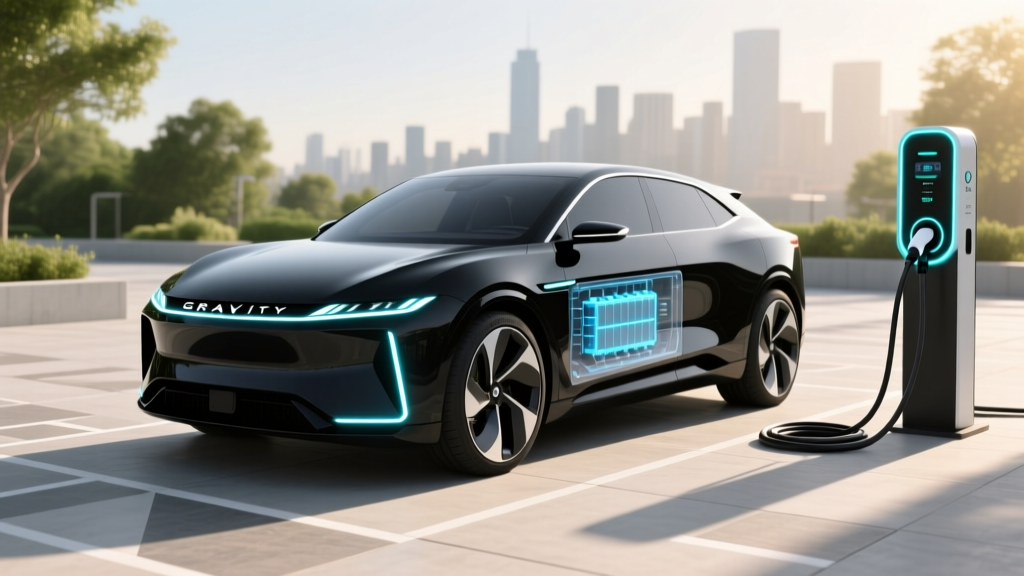
If you've been tracking the luxury electric SUV segment, you've likely noticed a surge of interest around Lucid Gravity orders as deliveries expand through the 2026 model year. Lucid's second production vehicle — a three-row, seven-passenger SUV built on the same advanced electric architecture as the Air sedan — promises to translate the brand's efficiency and range dominance into a practical family hauler. But does the real-world performance match the spec sheet? We've compiled everything buyers need to know about range, charging, pricing, tax-credit eligibility, and how the Gravity stacks up against the Tesla Model X, Rivian R1S, and BMW iX.
Lucid Gravity at a Glance: 2026 Specifications
Before we get into the ownership nuances, here are the numbers that matter. The 2026 Lucid Gravity is offered in three primary configurations: the Pure (RWD), the Touring (AWD dual-motor), and the Grand Touring (AWD dual-motor, full battery). All trims share the same basic exterior dimensions and interior layout, but the powertrain and battery options create meaningful differences in range, acceleration, and price.
| Specification | Gravity Pure (RWD) | Gravity Touring (AWD) | Gravity Grand Touring (AWD) |
|---|---|---|---|
| EPA Est. Range | ~440 miles | ~390 miles | ~440 miles |
| Battery (Usable) | ~112 kWh (NMC) | ~112 kWh (NMC) | ~118 kWh (NMC) |
| Horsepower | ~480 hp | ~620 hp | ~830 hp |
| 0–60 mph | ~5.5 sec | ~4.5 sec | ~3.5 sec |
| Drivetrain | RWD (single motor) | AWD (dual motor) | AWD (dual motor) |
| Max DC Fast Charge | ~300 kW | ~300 kW | 300+ kW |
| 10–80% DCFC Time | ~22 min | ~22 min | ~20 min |
| Level 2 Charge Rate | 19.2 kW (AC) | 19.2 kW (AC) | 19.2 kW (AC) |
| Efficiency | ~130 MPGe | ~116 MPGe | ~120 MPGe |
| Base MSRP | $79,900 | $94,900 | $119,900 |
Note: Lucid has updated trims and pricing throughout the 2025–2026 production ramp. Always confirm exact specs on Lucid's official Gravity page before ordering, as battery capacity and range figures may shift slightly with software and cell-supplier changes.
Real-World Range: What to Expect Beyond the EPA Sticker
- Highway (75 mph, moderate temps): Expect ~370–390 miles before needing a charge. Lucid's industry-leading efficiency (around 3.0–3.3 kWh/mile) helps, but sustained highway speeds cut into any EV's range.
- City / mixed driving: 400–430 miles is achievable, especially with generous regenerative braking recapturing energy in stop-and-go traffic.
- Cold weather (below 32°F): Plan for a 20–30% reduction, bringing effective range to ~300–340 miles. The Gravity's heat pump and thermal management system mitigate losses, but physics still applies to all lithium-ion packs in freezing conditions.
- Towing (max 6,000 lb rating): Range drops significantly — expect roughly 200–250 miles depending on trailer weight and terrain. This is typical for electric SUVs towing near capacity.
Lucid's efficiency advantage stems from its proprietary drive units, which use permanent-magnet motors with optimized inverter switching and a 900-volt electrical architecture. That architecture is the same one that gave the Air sedan its record-breaking efficiency, and it translates directly into fewer charging stops on road trips. For comparison, the Rivian R1S (Large Pack) achieves roughly 2.4–2.6 miles/kWh, while the Gravity approaches 3.0+ miles/kWh in mixed driving — a meaningful gap over 400 miles.
Charging Speed: DC Fast Charging and Home Setup
Charging speed is where the Gravity's 900V architecture truly shines. Most competitors in this segment operate on 400V systems (or 800V in the case of Hyundai/Kia), but Lucid's higher-voltage platform enables faster sustained charging with less heat generation — which means the charge curve stays flatter for longer.
| Charging Level | Power / Voltage | Speed (Miles Added) | Notes |
|---|---|---|---|
| Level 1 (120V) | ~1.4 kW | ~4–5 mi/hr | Emergency/trickle only; not practical for daily use |
| Level 2 (240V, 80A) | 19.2 kW | ~58–62 mi/hr | Requires hardwired Wall Connector or equivalent; 0–100% in ~6.5 hrs |
| Level 2 (240V, 48A) | 11.5 kW | ~35 mi/hr | Standard NEMA 14-50 outlet; 0–100% in ~11 hrs |
| DC Fast Charge | Up to 300+ kW | ~200 mi in ~15 min | 10–80% in ~20 min (Grand Touring); tapers sharply above 85% |
Charging curve reality check: The Gravity's peak 300+ kW rate is sustained from roughly 10% to 50% state of charge. Beyond 80%, the rate tapers significantly — as it does with all lithium-ion packs — to protect cell longevity. If you're road-tripping, plan your stops around 10–80% increments for the fastest turnaround. Charging from 80–100% on DC can add another 15–20 minutes, which is why Lucid's navigation system (and most savvy EV owners) targets 80% for en-route stops.
Home charging note: To unlock the Gravity's full 19.2 kW Level 2 capability, you'll need a hardwired charger on a dedicated 100-amp circuit. Most homes with 200-amp electrical panels can accommodate this, but older homes or those with high existing loads may require a panel upgrade ($1,500–$3,000+). Always consult a licensed electrician for final installation specs. The Gravity ships with a NACS (Tesla-style) charge port for 2026, giving native access to the Tesla Supercharger network — the most extensive DC fast-charging network in the U.S. — without an adapter.
Performance, Cargo, and Interior Space
The Grand Touring's 3.5-second 0–60 mph time puts it in supercar territory, which is almost absurd for a 5,500-pound three-row SUV. But straight-line speed is only part of the story. The Gravity's dual-motor AWD system provides precise torque vectoring, and its air suspension (standard on Touring and Grand Touring) adjusts ride height for comfort, sport handling, or up to 6,000-pound towing.
Interior dimensions and cargo:
- Passenger capacity: 7 (standard) or 6 (optional second-row captain's chairs)
- Second-row legroom: ~41.5 inches — competitive with the BMW iX and significantly more than the Tesla Model X
- Third-row legroom: ~33.5 inches — usable for adults on short trips, best for children on longer drives
- Cargo behind 3rd row: ~22 cu ft
- Cargo behind 2nd row (3rd row folded): ~56 cu ft
- Max cargo (all rear seats folded): ~92 cu ft
- Front trunk (frunk): ~12 cu ft — large enough for a carry-on or charging cables
The Gravity's flat floor (enabled by the compact drive units and absence of a driveshaft tunnel) creates genuinely usable third-row space — a weakness in many electric and gas three-row SUVs. The glass canopy roof floods the cabin with light without the weight and complexity of a mechanical sunroof, and the 34-inch curved OLED "clearview" display spans the driver zone, running Lucid's latest Sapphire OS with native route planning, preconditioning scheduling, and over-the-air updates.
Driver assistance: The Gravity ships with Lucid's DreamDrive Pro suite — a Level 2 (SAE) driver-assist system using lidar, radar, and cameras. It includes adaptive cruise, lane-centering, automatic emergency braking, and blind-spot intervention. As of 2026, it is not a hands-free system like GM's Super Cruise or Ford's BlueCruise; the driver must remain engaged with hands on the wheel. Lucid has announced plans for future hands-free capability via OTA updates, but current functionality requires active supervision.
Pricing, Trims, and Federal Tax Credit Eligibility
The Gravity's pricing positions it firmly in the luxury SUV segment, competing with the Tesla Model X ($79,990+), Rivian R1S ($75,900+), BMW iX ($87,250+), and Mercedes EQS SUV ($104,400+). Here's how the lineup breaks down before incentives:
| Trim | Base MSRP | Est. Destination | As-Tested Range | §30D Federal Credit |
|---|---|---|---|---|
| Gravity Pure (RWD) | $79,900 | $1,800 | $81,700–$89,000 | Up to $7,500 (see eligibility) |
| Gravity Touring (AWD) | $94,900 | $1,800 | $96,700–$109,000 | Eligibility varies |
| Gravity Grand Touring (AWD) | $119,900 | $1,800 | $121,700–$140,000+ | Exceeds MSRP cap (see below) |
Does the Lucid Gravity Qualify for the Federal EV Tax Credit?
This is where things get nuanced. Under IRS §30D rules (current for 2026), the new clean vehicle credit provides up to $7,500 — but several caps apply:
- MSRP Cap: SUVs, vans, and pickups must have a base MSRP at or below $80,000. This means the Gravity Pure ($79,900) qualifies on MSRP, but the Touring ($94,900) and Grand Touring ($119,900) exceed the cap and are not eligible for the new-vehicle §30D credit.
- Buyer Income Cap: Modified adjusted gross income must not exceed $300,000 (joint filers), $225,000 (head of household), or $150,000 (single).
- Battery Sourcing: The $7,500 credit is split into two halves — $3,750 for critical-minerals sourcing and $3,750 for battery-component manufacturing. Lucid sources cells from multiple suppliers, and the exact credit amount for the Gravity Pure depends on the specific battery pack installed and current-year sourcing rules. Confirm with your tax professional.
- Point-of-Sale Transfer: As of 2024, buyers can transfer the credit to the dealer at purchase, effectively reducing the purchase price by up to $7,500 at the point of sale — rather than waiting to claim it on their tax return.
Bottom line: Only the Gravity Pure is realistically eligible for the full or partial $7,500 federal credit, and only if the buyer meets income requirements and the battery sourcing criteria are satisfied. For the latest rules, consult IRS.gov's clean vehicle credit page and verify with a tax professional before ordering.
Warranty Coverage and Battery Longevity
Lucid backs the Gravity with a warranty package competitive for the luxury EV segment:
- Basic vehicle warranty: 4 years / 50,000 miles
- Battery and drive unit warranty: 8 years / 100,000 miles (whichever comes first), with a guaranteed minimum capacity retention of 70% over that period
- Roadside assistance: 4 years / 50,000 miles
The 8-year/100,000-mile battery warranty is standard for the segment and aligns with the federal minimum required for an EV to qualify for the §30D credit. Lucid's NMC (nickel-manganese-cobalt) cells are managed by an advanced thermal system that preconditions the pack during charging and driving, which should support long-term state-of-health. Based on Air sedan data from early adopters (some exceeding 80,000 miles), degradation has been modest — typically 5–8% over the first 60,000 miles — though the Gravity's heavier weight and potential towing use could accelerate wear slightly.
For buyers concerned about battery replacement cost out of warranty: a full pack replacement for a 112–118 kWh NMC battery is estimated at $18,000–$25,000 in 2026, though individual module replacement (if available) would be significantly less. No Lucid owner has needed a full replacement to date.
How the Gravity Compares to Key Competitors
The three-row electric SUV segment has matured considerably. Here's how the Gravity stacks up on the metrics that matter most:
| Metric | Lucid Gravity GT | Tesla Model X LR | Rivian R1S (Large) | BMW iX xDrive50 |
|---|---|---|---|---|
| EPA Range | 440 mi | 335 mi | 352 mi | 324 mi |
| Battery | 118 kWh NMC | ~100 kWh | 128.9 kWh (usable ~122) | 105.2 kWh |
| 0–60 mph | 3.5 sec | 3.8 sec | 3.5 sec (Tri) | 4.4 sec |
| Max DCFC | 300+ kW | 250 kW | 200+ kW | 200 kW |
| 3rd Row | Yes (7-seat) | Yes (optional 6/7) | Yes (7-seat) | No (5-seat only) |
| Towing | 6,000 lb | 5,000 lb | 7,700 lb | 3,500 lb |
| Base Price | $79,900 | $79,990 | $75,900 | $87,250 |
Pros, Cons, and Who Should Order the Gravity
Pros
- Class-leading EPA range (440 miles Grand Touring; 440 miles Pure RWD)
- Industry-best efficiency (~3.0+ mi/kWh) means fewer and shorter charging stops
- 300+ kW DC fast charging with a flat charge curve — 200 miles in ~15 minutes
- Genuinely usable third row with flat floor and ample headroom
- NACS port standard — native Tesla Supercharger access without adapters
- 19.2 kW Level 2 AC charging (fastest home charging in the segment)
- Striking design with glass canopy roof and premium interior materials
- Air suspension standard on Touring and Grand Touring
Cons
- Only the Pure trim qualifies for the §30D federal tax credit (MSRP cap)
- Grand Touring pricing exceeds $120,000 — steep for an SUV regardless of efficiency
- DreamDrive Pro is competent but not hands-free (no Level 2+ on highway)
- Limited service center network compared to Tesla — may require mobile service or travel for repairs
- Brand-new model — first-year build quality and software bugs are a risk
- Towing range drops to ~200–250 miles under heavy loads
- Resale value unproven vs. established luxury brands
Who Should Order the Lucid Gravity?
Choose the Gravity if: You prioritize maximum range and charging speed in a three-row SUV, frequently take road trips over 300 miles, value a usable third row, and want the most efficient large EV on the market. It's ideal for families who do a mix of daily commuting (where you'll rarely charge more than once a week) and long-distance travel (where 440 miles of range eliminates most range anxiety).
Look elsewhere if: You need serious off-road capability (Rivian R1S), want a hands-free highway driving system (GM Super Cruise or Ford BlueCruise vehicles), need maximum towing range (R1S or wait for heavier-duty electric trucks), or are on a tighter budget where the R1S Standard or a used Model X provides better value. If tax-credit eligibility is critical to your purchase math, only the Pure trim qualifies — and even then, confirm battery sourcing rules with your tax advisor.
Ordering Process and Delivery Timeline
As of early 2026, Lucid Gravity orders are being fulfilled in phases. Reservation holders who placed deposits ($1,000 refundable) are being invited to configure and finalize orders in waves, with priority given to earlier reservation dates and higher-trim selections. Typical wait times from order confirmation to delivery have been 8–16 weeks, though this varies by trim, color, and options.
To place an order, buyers configure their Gravity on Lucid's website, select a delivery center (or at-home delivery in select metro areas), and complete financing or lease arrangements. Lucid offers direct-to-consumer sales — there are no franchised dealers — which simplifies pricing but means you won't have a traditional dealer lot to visit for test drives. Lucid has been expanding its studio and service center footprint, with locations in major metros including California, Texas, Florida, New York, and the Midwest.
Frequently Asked Questions
What is the real-world range of the Lucid Gravity?
The EPA rates the Gravity Grand Touring and Pure RWD at approximately 440 miles. In real-world highway driving at 75 mph in moderate temperatures, expect 370–390 miles. In cold weather (below freezing), plan for 300–340 miles. City driving with regenerative braking can approach or even match the EPA estimate.
How fast does the Lucid Gravity charge?
On a 350 kW DC fast charger, the Gravity peaks at 300+ kW and charges from 10–80% in approximately 20 minutes (Grand Touring). At home on a hardwired Level 2 charger (19.2 kW, 80A), it adds roughly 60 miles of range per hour and charges fully in about 6.5 hours. On a standard 48A Level 2 (11.5 kW), a full charge takes about 11 hours.
How much does the Lucid Gravity cost after tax credits?
The Gravity Pure starts at $79,900 and may qualify for up to $7,500 in federal §30D credits if the buyer meets income caps ($300K joint / $150K single) and battery-sourcing requirements — potentially bringing the effective price to ~$72,400–$74,200. The Touring ($94,900) and Grand Touring ($119,900) exceed the $80,000 SUV MSRP cap and do not qualify for the new-vehicle federal credit. State and local incentives may apply separately — check afdc.energy.gov for your area.
Is the Lucid Gravity worth buying vs. the Tesla Model X or Rivian R1S?
The Gravity wins on range (440 vs. 335–352 miles), charging speed (300+ kW vs. 200–250 kW), and efficiency. The Model X wins on Supercharger network maturity and hands-free-capable FSD hardware (though FSD remains Level 2 supervised). The R1S wins on off-road capability, towing capacity (7,700 lb), and adventure-oriented design. If range and road-trip efficiency are your top priorities, the Gravity is the strongest choice in the segment.
Does the Lucid Gravity have a NACS or CCS charge port?
The 2026 Lucid Gravity comes equipped with a NACS (North American Charging Standard) port — the Tesla-style connector. This gives it native access to Tesla Superchargers without an adapter, as well as compatibility with the growing number of NACS-equipped chargers from Electrify America, EVgo, and other networks transitioning to NACS through 2026.
What battery chemistry does the Gravity use?
The Lucid Gravity uses NMC (nickel-manganese-cobalt) lithium-ion cells. NMC offers higher energy density than LFP (lithium iron phosphate), which is essential for packing 112–118 kWh of usable capacity into an SUV-sized platform while maintaining the 440-mile range target. The trade-off is that NMC cells are more sensitive to sustained 100% state-of-charge storage — Lucid recommends daily charging to 80–90% and reserving 100% for road trips.
Can the Lucid Gravity tow, and what happens to range?
Yes. The Gravity is rated to tow up to 6,000 pounds (with the factory tow package). When towing near capacity, expect range to drop to approximately 200–250 miles depending on trailer weight, aerodynamics, and terrain. This is a significant reduction but in line with all electric SUVs under heavy tow loads. Plan charging stops accordingly on towing trips.
Sources: Lucid Motors official Gravity specifications, U.S. EPA fueleconomy.gov, IRS §30D Clean Vehicle Credit guidelines. All specifications reflect 2026 model-year data available at time of publication and are subject to change. Verify final pricing, range, and credit eligibility with Lucid and a qualified tax professional before purchasing.