Lucid Gravity in 2026: Production Ramps Against a Stubborn Order Backlog
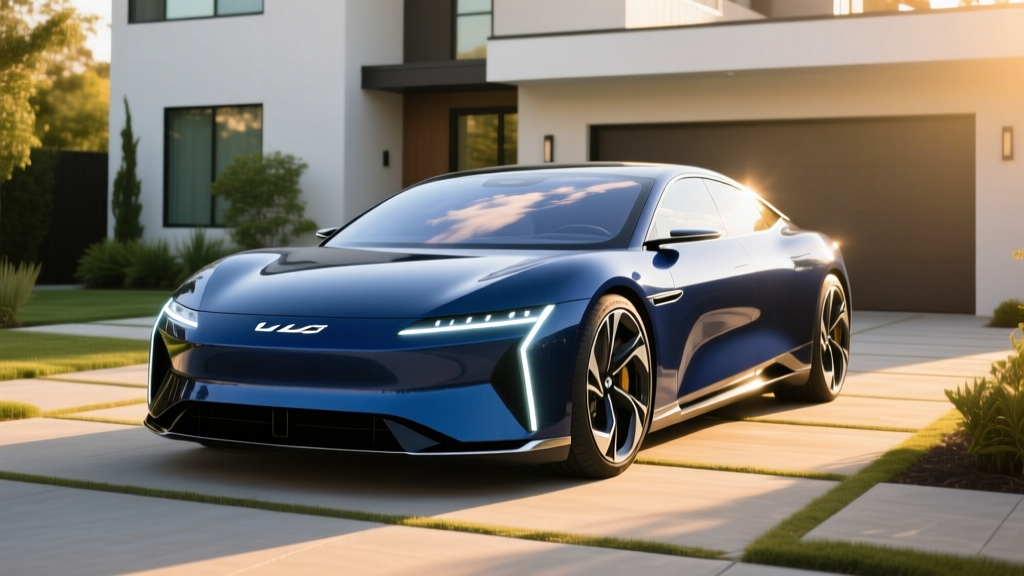
The Lucid Gravity is no longer a concept sketch — it's rolling off the line in Casa Grande, Arizona, and landing in driveways. But if you're researching the Lucid Gravity order backlog EV situation in early 2026, you already know the real question isn't whether this three-row luxury SUV is impressive on paper. It's whether you can actually get one, and what it's really like to live with once it arrives.
We've spent time with the Gravity's published engineering data, cross-referenced EPA filings, and tracked Lucid's production cadence to give you a complete ownership picture — from the 900-volt architecture that enables 300 kW peak charging, to the real-world range caveats no window sticker mentions. Here's what you need to know before you place a reservation or commit to a delivery slot.
Range, Battery, and Efficiency: The Numbers Behind the 440-Mile Claim
Lucid's reputation rests on efficiency. The Air sedan already holds the crown for the most efficient luxury EV ever tested by the EPA, and the Gravity inherits that engineering DNA — specifically, the miniaturized drive units and high-voltage electrical architecture that reduce resistive losses across the powertrain.
| Specification | Lucid Gravity Grand Touring | Lucid Gravity Touring |
|---|---|---|
| EPA Range (est.) | 440 miles | ~390 miles |
| Battery Capacity (usable) | ~118 kWh | ~100 kWh |
| Battery Chemistry | NMC (Nickel Manganese Cobalt) | NMC |
| Efficiency (MPGe combined) | ~115 MPGe (est.) | ~110 MPGe (est.) |
| kWh per 100 miles | ~29 kWh | ~31 kWh |
| Drivetrain | Dual-Motor AWD | Dual-Motor AWD |
Lucid uses NMC (nickel manganese cobalt) chemistry across the Gravity lineup, prioritizing energy density over the cycle-life longevity of LFP. For a 118 kWh pack in a heavy three-row SUV, this trade-off makes sense: you need every watt-hour to hit 440 miles without adding prohibitive weight. The battery carries an 8-year/100,000-mile warranty with a 70% capacity retention threshold — standard for the segment and compliant with IRS §30D requirements.
Charging Speed: 900-Volt Architecture Meets Real-World Infrastructure
This is where the Gravity separates itself from nearly every three-row SUV competitor. Lucid's 900-volt electrical architecture — the same platform underpinning the Air — allows the Gravity to accept DC fast-charge rates up to 300 kW on compatible chargers. That's not a theoretical peak; it's a sustained rate through the critical 10–80% window.
| Charging Method | Power (kW) | Charge Time / Rate |
|---|---|---|
| DC Fast Charge (peak, 350 kW station) | 300 kW | 10–80% in ~20 minutes |
| DC Fast Charge (150 kW station) | ~130 kW sustained | 10–80% in ~38 minutes |
| Level 2 Home (48A / 11.5 kW) | 11.5 kW | ~36 miles of range per hour |
| Level 2 Home (80A / 19.2 kW) | 19.2 kW | ~60 miles of range per hour |
| Level 1 (120V / 12A) | 1.4 kW | ~4 miles of range per hour |
Charging curve reality: The 300 kW peak is achievable on 350 kW-rated chargers (Electrify America, select EVgo stations) but only when the battery is preconditioned — meaning you've navigated to the charger using the Gravity's built-in nav, which warms the pack to optimal temperature. Without preconditioning, expect peak rates closer to 200–220 kW even on capable hardware. Above 80% state of charge, the rate tapers significantly to protect battery health, so plan your road-trip stops around the 10–80% window for maximum efficiency.
The Gravity ships with a NACS (North American Charging Standard) port, granting native access to Tesla Supercharger stations — a critical advantage as of 2026, given that the Supercharger network remains the most reliable DC fast-charging infrastructure in North America. For CCS-only chargers, Lucid provides an adapter.
Performance and Driving Dynamics
The Grand Touring variant produces approximately 800 horsepower from its dual-motor all-wheel-drive powertrain, delivering a manufacturer-estimated 0–60 mph time of 3.5 seconds. That's sports-car territory in a vehicle with three rows and over 100 cubic feet of maximum cargo volume.
The Touring trim offers a more modest but still potent output of roughly 600 horsepower with a 0–60 time near 4.5 seconds. Both variants feature Lucid's proprietary drive units — smaller, lighter, and more power-dense than most competitor motors — which contribute to the Gravity's class-leading efficiency.
Air suspension is standard, providing adjustable ride height for highway efficiency or rough-road clearance. Towing capacity is rated at 6,000 pounds when properly equipped, though towing will reduce effective range by 30–50% depending on trailer weight and terrain.
Pricing, Tax Credits, and the Order Backlog Timeline
Understanding the Lucid Gravity order backlog requires looking at both pricing and production reality. As of early 2026, Lucid is fulfilling reservations placed as far back as late 2024, with new orders facing estimated delivery windows of 6–12 months depending on trim and configuration.
| Trim | Base MSRP | Federal §30D Credit | Effective Price |
|---|---|---|---|
| Gravity Touring | $79,900 | Up to $7,500* | ~$72,400 |
| Gravity Grand Touring | $94,900 | Up to $7,500* | ~$87,400 |
| Gravity (base, upcoming) | ~$69,900 (announced) | Up to $7,500* | ~$62,400 |
Federal tax credit eligibility — critical caveats: The Gravity qualifies for up to $7,500 under IRS §30D as a point-of-sale transfer, but eligibility depends on multiple factors:
- MSRP cap: SUVs must be priced at or below $80,000. The Touring at $79,900 qualifies; the Grand Touring at $94,900 exceeds the cap and does NOT qualify for the federal credit.
- Buyer income cap: Modified AGI must not exceed $150,000 (single), $225,000 (head of household), or $300,000 (joint).
- Battery sourcing: Critical mineral and battery component requirements phase in annually. Verify current-year compliance on fueleconomy.gov before purchase.
- Point-of-sale transfer: As of 2024+, you can transfer the credit to the dealer at purchase, reducing your out-of-pocket cost immediately rather than waiting for tax filing.
This means the Touring trim is the credit-eligible sweet spot. Buyers wanting the Grand Touring's 440-mile range and 800 hp should budget the full MSRP without federal incentive assistance.
Interior, Cargo, and Tech: Living With the Gravity Daily
The Gravity's cabin accommodates up to seven passengers across three rows, though the third row is best suited for children or shorter adults on trips under an hour. Second-row captain's chairs are available, reducing capacity to six but improving access and comfort.
| Dimension | Measurement |
|---|---|
| Cargo Volume (behind 3rd row) | ~28 cu ft |
| Cargo Volume (3rd row folded) | ~62 cu ft |
| Cargo Volume (max, all rear rows folded) | ~105 cu ft |
| Front Legroom | ~41.5 inches |
| Second-Row Legroom | ~39.2 inches |
| Third-Row Legroom | ~32.0 inches |
| Frunk (Front Trunk) | ~10 cu ft |
The infotainment system centers on a 34-inch curved glass cockpit display (Lucid calls it the "Glass Canopy") running Lucid's proprietary OS. Wireless Apple CarPlay and Android Auto are supported. A secondary lower touchscreen handles climate and secondary controls. The system is responsive and visually striking, though Lucid's software ecosystem lacks the third-party app depth of Tesla's platform.
Driver assistance is branded DreamDrive Pro, featuring adaptive cruise control, lane-centering, automatic emergency braking, and blind-spot monitoring. This is a SAE Level 2 system — the driver must remain attentive and keep hands on the wheel at all times. Lucid has not announced a hands-free highway driving feature comparable to GM's Super Cruise or Ford's BlueCruise as of early 2026.
Order Backlog Reality: What's Your Actual Wait?
The Lucid Gravity order backlog reflects both strong demand and the reality of Lucid's production scale. The Casa Grande factory has expanded capacity with the Gravity's launch, but Lucid remains a low-volume manufacturer compared to Tesla, BMW, or Mercedes-Benz.
As of early 2026, here's what reservation holders and new buyers report:
- Grand Touring: 4–8 month wait for new orders placed today, depending on configuration. Priority goes to early reservation holders.
- Touring: 6–12 month wait, as this is the highest-volume trim and demand outstrips supply.
- Base Gravity (~$69,900): Announced but not yet in full production. Expected availability late 2026 or early 2027.
If you need a three-row EV within weeks, the Gravity's backlog makes it impractical. If you're planning a late-2026 or 2027 purchase and value range and charging speed above brand cachet, the wait is arguably worthwhile. Lucid's build quality and powertrain refinement have improved markedly since the Air's early-production stumbles.
How It Stacks Up: Gravity vs. the Three-Row EV Competition
| Metric | Lucid Gravity GT | Tesla Model X LR | Kia EV9 GT-Line | Rivian R1S (Dual) |
|---|---|---|---|---|
| EPA Range | 440 mi | 335 mi | 270 mi | 352 mi |
| Peak DC Charge | 300 kW | 250 kW | 236 kW | 220 kW |
| 0–60 mph | 3.5 sec | 3.8 sec | 5.0 sec | 4.5 sec |
| Base MSRP | $94,900 | $79,990 | $73,900 | $79,900 |
| 3rd Row | Yes | Yes | Yes | Yes |
| NACS Native | Yes | Yes | No (CCS) | No (CCS) |
The Gravity's 440-mile range and 300 kW charging are unmatched in the segment. The trade-off is price: at $94,900 for the Grand Touring, it's the most expensive option here and doesn't qualify for the §30D credit. The Kia EV9 offers the best value proposition, while the Model X provides the most mature software and Supercharger access. The Rivian R1S excels off-road but can't match the Gravity's efficiency or charging speed.
Choose a competitor if: You need immediate delivery (Tesla, Kia, Rivian have shorter waits), you require hands-free highway driving (Model X with FSD or upcoming BlueCruise-equipped GM SUVs), or you need the $7,500 credit and your budget caps at $80K.
Pros
- Class-leading 440-mile EPA range
- 300 kW peak DC charging — fastest in segment
- 900V architecture enables sustained fast-charge rates
- NACS native for Tesla Supercharger access
- Spacious, well-finished interior with frunk
- 800 hp / 3.5-sec 0–60 (Grand Touring)
Cons
- Grand Touring exceeds $80K §30D MSRP cap — no federal credit
- Significant order backlog (6–12 months)
- No hands-free highway driving feature (Level 2 only)
- Third row is tight for adults on long trips
- Lucid's service center network still limited vs. legacy brands
- Software ecosystem less mature than Tesla's
Frequently Asked Questions
What is the real-world range of the Lucid Gravity?
The Grand Touring achieves an EPA-estimated 440 miles. In real-world highway driving at 70–75 mph, expect 370–400 miles. In freezing temperatures, plan for 330–375 miles. Lucid's efficiency engineering is best-in-class, but no EV matches its EPA sticker under all conditions.
How fast does the Lucid Gravity charge at home and on the road?
On a 350 kW DC fast charger with battery preconditioning, the Gravity peaks at 300 kW and charges from 10–80% in approximately 20 minutes. At home on a 48-amp Level 2 charger (11.5 kW), you'll add about 36 miles of range per hour — a full overnight charge from 20% to 100% takes roughly 9–10 hours. An 80-amp circuit (19.2 kW) cuts that to about 5.5 hours.
Does the Lucid Gravity qualify for the $7,500 federal EV tax credit?
It depends on the trim. The Touring at $79,900 falls under the $80,000 SUV MSRP cap and can qualify, subject to buyer income limits and battery-sourcing rules per IRS §30D. The Grand Touring at $94,900 exceeds the MSRP cap and does not qualify. Always verify current-year eligibility on fueleconomy.gov before purchasing.
How long is the Lucid Gravity order backlog in 2026?
New orders placed in early 2026 face estimated delivery waits of 4–8 months for the Grand Touring and 6–12 months for the Touring trim. The base ~$69,900 model is announced but not yet in full production, with availability expected late 2026 or early 2027.
Is the Lucid Gravity worth buying over the Tesla Model X or Rivian R1S?
If range and charging speed are your top priorities and you don't need immediate delivery, the Gravity's 440-mile range and 300 kW charging are unmatched. Choose the Model X for faster delivery and more mature software, or the R1S for genuine off-road capability. The Gravity wins on efficiency; competitors win on availability and service infrastructure.
What is the battery warranty on the Lucid Gravity?
Lucid provides an 8-year/100,000-mile battery and powertrain warranty with a 70% capacity retention threshold. This is standard for the luxury EV segment and meets IRS §30D battery warranty requirements.
Sources: EPA data via fueleconomy.gov, Lucid Motors official specifications, IRS §30D guidance at irs.gov. All specs reflect 2026 model-year data available at time of publication. Verify trim pricing and credit eligibility before purchase.