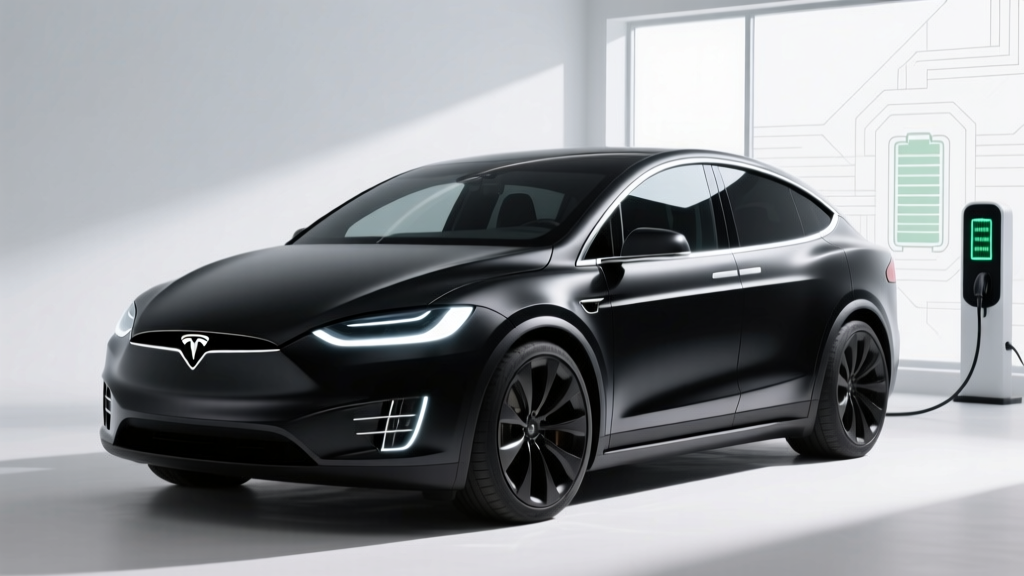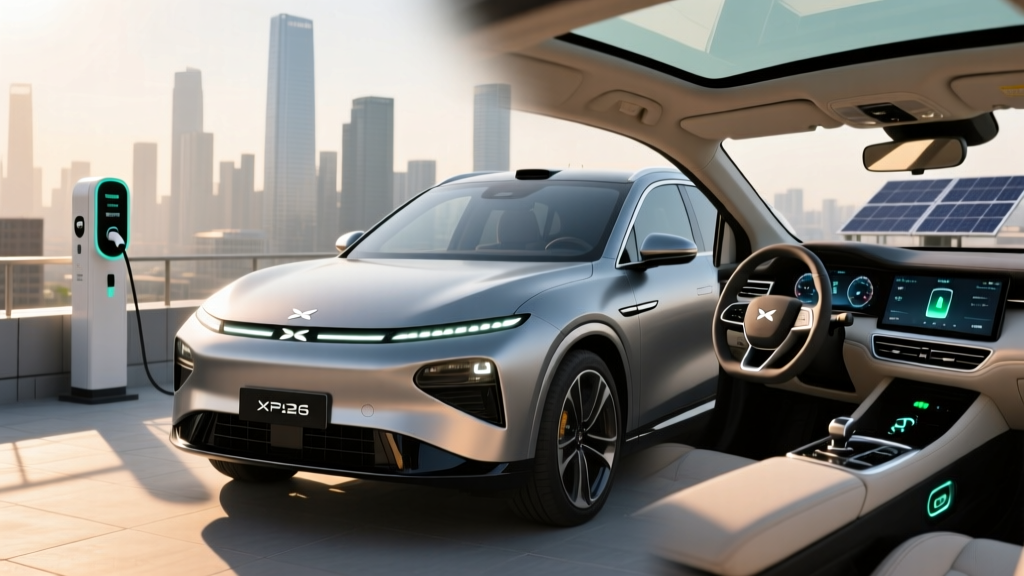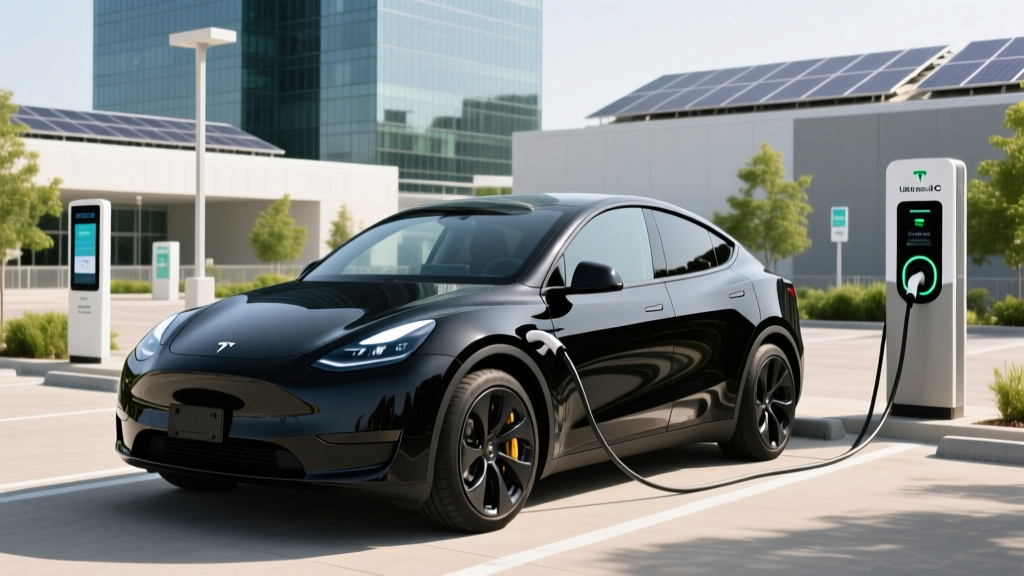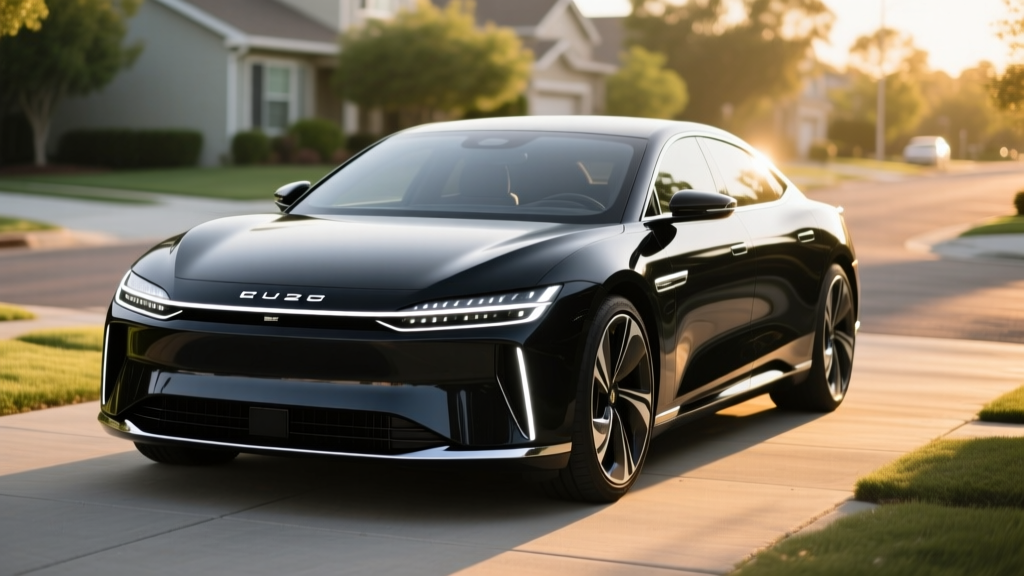
The Lucid Gravity is the luxury electric SUV that attempts something rare: combining a three-row family hauler with the kind of efficiency and charging speed usually reserved for smaller sedans. Built on the same advanced electric platform as the Air sedan, the Gravity enters the premium SUV segment with an EPA-estimated range that outpaces nearly every rival and a 900-volt architecture that makes DC fast charging remarkably quick. But at a starting MSRP pushing $80,000, buyers need to know exactly what they're getting — and where the real-world compromises live.
In this review, we break down the Lucid Gravity MSRP across every trim, map its real-world range against the EPA sticker, analyze charging speeds at home and on the road, and determine whether this EV qualifies for federal tax credits under current IRS §30D rules.
Lucid Gravity MSRP and Trim-Level Pricing
The 2026 Lucid Gravity is offered in three primary configurations. Pricing reflects Lucid's current MSRP before any destination charges or applicable incentives:
| Trim | MSRP | Drivetrain | EPA Range | 0–60 mph |
|---|---|---|---|---|
| Gravity Pure (RWD) | $79,900 | Rear-Wheel Drive | ~440 mi (est.) | ~5.5 sec |
| Gravity Touring (AWD) | $94,900 | Dual-Motor AWD | ~400 mi (est.) | ~3.5 sec |
| Gravity Grand Touring (AWD) | $119,900 | Dual-Motor AWD | ~440+ mi (est.) | ~3.0 sec |
Destination fees add approximately $1,500. The Pure trim is the volume play and the most likely candidate for incentive eligibility, while the Grand Touring pushes into Porsche Cayenne EV and Mercedes EQS SUV territory on price.
EPA Range vs. Real-World Expectations
Lucid's efficiency engineering is the brand's signature. The Air sedan already holds records for real-world miles-per-kWh, and the Gravity leverages the same motor and inverter technology in a larger, heavier package.
Real-World Expectations:
- Highway (70–75 mph): Expect ~350–380 miles in moderate temperatures. The SUV profile creates more drag than the Air sedan, reducing high-speed efficiency.
- City / Mixed Driving: ~400–430 miles is achievable thanks to strong regenerative braking and Lucid's efficient drivetrain.
- Cold Weather (below 32°F): Plan for a 20–30% range reduction, bringing the Pure to roughly ~310–350 miles. The Gravity's available heat pump helps mitigate losses compared to resistive heating systems.
Lucid has historically beaten EPA estimates in independent testing with the Air, but the Gravity's higher weight (estimated 5,800–6,200 lbs depending on configuration) and less aerodynamic profile mean buyers should expect a slightly wider gap between sticker and reality, particularly on road trips at sustained highway speeds.
Battery Capacity, Chemistry, and Efficiency
The Gravity uses Lucid's proprietary battery pack architecture. While Lucid has not published exact usable kWh figures for every trim, the platform shares DNA with the Air's ~112 kWh usable pack (NMC lithium-ion chemistry). The Grand Touring is expected to use the largest pack, while the Pure may use a slightly smaller pack optimized for cost and efficiency.
| Spec | Details |
|---|---|
| Battery Chemistry | NMC (Nickel Manganese Cobalt) |
| Estimated Usable Capacity | ~112 kWh (Grand Touring); smaller pack possible on Pure |
| Voltage Architecture | 900V (enables ultra-fast DC charging) |
| Thermal Management | Active liquid cooling + heat pump |
| Efficiency (est.) | ~30–33 kWh/100 mi |
NMC chemistry offers high energy density — critical for fitting 440+ miles of range into an SUV — but it trades some cycle-life longevity versus LFP (lithium iron phosphate). Lucid's battery management system and thermal controls are designed to mitigate degradation, backed by a robust warranty (detailed below).
Charging Speed: DC Fast Charging and Home Level 2
The Gravity's 900-volt architecture is one of the highest in production, enabling charging speeds that rival the Porsche Taycan and Hyundai Ioniq 5. Here's what buyers can expect:
| Charging Level | Power | Speed / Time |
|---|---|---|
| DC Fast Charge (Peak) | Up to ~300+ kW | 10–80% in approximately 15–20 minutes (preconditioned) |
| DC Fast Charge (Sustained) | ~200–250 kW average | Charge curve tapers significantly above 80% SoC |
| Level 2 (Home/Public AC) | Up to 19.2 kW (80A) | ~55–70 miles of range per hour of charging |
| Level 1 (120V Outlet) | ~1.4 kW | ~3–4 miles per hour (emergency/trickle only) |
Charging curve reality check: The peak 300+ kW rate is only achievable between roughly 10–40% state of charge on a compatible 350 kW charger (such as Electrify America or Tesla Supercharger V4 stalls). Above 60%, the rate tapers, and above 80%, it drops substantially to protect battery health. A 10–80% session in 15–20 minutes requires battery preconditioning — the Gravity's navigation system initiates this automatically when a DC fast charger is set as your destination.
Home charging: At 19.2 kW (requiring a hardwired 100-amp circuit and compatible Level 2 charger like the ChargePoint Home Flex or Tesla Wall Connector), the Gravity can recover a full day's driving in just a few hours overnight. Most homes will need a panel upgrade to support a 100A circuit — budget $1,500–$3,500 for the electrical work, plus $500–$700 for the charger itself. Consult a licensed electrician for a site assessment.
Performance and Drivetrain
The Gravity is no slouch, even in its base configuration. Lucid's compact, high-output motors deliver sports-car acceleration in a three-row SUV:
| Trim | Horsepower | 0–60 mph | Drivetrain | Towing Capacity |
|---|---|---|---|---|
| Pure (RWD) | ~480 hp | ~5.5 sec | Rear-Wheel Drive | ~6,000 lbs (est.) |
| Touring (AWD) | ~620 hp | ~3.5 sec | Dual-Motor AWD | ~6,000 lbs (est.) |
| Grand Touring (AWD) | ~800+ hp | ~3.0 sec | Dual-Motor AWD | ~6,000 lbs (est.) |
The dual-motor AWD variants use Lucid's proprietary permanent-magnet motors with silicon-carbide inverters. Regenerative braking is strong enough for near one-pedal driving in most conditions, though Lucid offers adjustable regen levels rather than a strict one-pedal mode.
Ride quality benefits from an available adaptive air suspension that adjusts ride height for highway efficiency or rough-road clearance. The Gravity's low center of gravity (battery pack under the floor) keeps body roll controlled despite the SUV's height.
Interior Space, Cargo, and Technology
The Gravity seats up to seven across three rows, though the third row is best suited for children or short trips. Key dimensions:
- Cargo Volume (behind 3rd row): ~20 cu ft
- Cargo Volume (3rd row folded): ~60 cu ft
- Cargo Volume (all rear rows folded): ~100+ cu ft
- Front Trunk (Frunk): ~12 cu ft — large enough for charging cables and a weekend bag
- Second-Row Legroom: ~40 inches
- Third-Row Legroom: ~30 inches (tight for adults)
Infotainment: The Gravity features Lucid's 34-inch curved glass cockpit display spanning the dashboard, running a custom Android-based OS with native navigation, streaming apps, and over-the-air updates. A lower touchscreen handles climate and secondary controls. Wireless Apple CarPlay and Android Auto are supported.
Driver Assistance: Lucid's DreamDrive Pro system includes adaptive cruise control, lane-centering assist, automated lane changes, and a 360-degree camera system. DreamDrive is an SAE Level 2 system — the driver must remain attentive and keep hands on the wheel at all times. It is not a self-driving system.
Federal Tax Credit Eligibility (IRS §30D)
The federal EV tax credit under IRS §30D offers up to $7,500 for qualifying new EVs, but eligibility is complex and trim-dependent for the Gravity:
- MSRP Cap: SUVs/vans/pickups must have an MSRP at or below $80,000. The Gravity Pure at $79,900 clears this threshold; the Touring ($94,900) and Grand Touring ($119,900) do not qualify.
- Buyer Income Cap: Modified adjusted gross income must not exceed $150,000 (single), $225,000 (head of household), or $300,000 (married filing jointly).
- Battery Sourcing: At least a percentage of critical minerals and battery components must be sourced from the U.S. or free-trade-agreement countries. These thresholds increase annually. Lucid's supply chain compliance varies by model year — confirm with your dealer and check the fueleconomy.gov credit listings before purchasing.
- Point-of-Sale Transfer: Eligible buyers can transfer the credit to the dealer at purchase, reducing the purchase price by up to $7,500 upfront rather than waiting for a tax refund.
- Assembly: The vehicle must undergo final assembly in North America. The Gravity is assembled at Lucid's factory in Casa Grande, Arizona, meeting this requirement.
| Trim | MSRP | §30D Eligible? | Effective Price (with max credit) |
|---|---|---|---|
| Gravity Pure | $79,900 | Potentially (under $80K cap)* | ~$72,400* |
| Gravity Touring | $94,900 | No (exceeds $80K MSRP cap) | $94,900 |
| Gravity Grand Touring | $119,900 | No (exceeds $80K MSRP cap) | $119,900 |
*Credit eligibility depends on buyer income, battery-sourcing compliance, and IRS guidance at time of purchase. Consult a tax professional and verify on irs.gov before relying on credit estimates.
Warranty and Ownership Costs
Lucid backs the Gravity with a warranty package competitive with other luxury EV makers:
| Coverage | Terms |
|---|---|
| Basic Vehicle Warranty | 5 years / 60,000 miles |
| Battery & Powertrain | 8 years / 100,000 miles (minimum 70% capacity retention) |
| Roadside Assistance | 5 years / 60,000 miles |
The 8-year/100,000-mile battery warranty with a 70% capacity retention threshold is standard for the segment. Lucid's NMC pack degradation data is limited given the brand's youth, but the Air sedan's early fleet data suggests modest degradation (~5–8% over the first 50,000 miles under normal use).
Insurance: Expect premiums 15–25% higher than a comparable gasoline luxury SUV. The Gravity's high repair costs (aluminum body, specialized EV components) drive up rates. Get quotes before committing.
Charging cost vs. gasoline: At $0.15/kWh (national average for home charging), the Gravity costs roughly $4.50–$5.00 to "refuel" per 100 miles. A gasoline SUV getting 20 MPG at $3.50/gallon costs $17.50 per 100 miles. Over 15,000 miles/year, that's a savings of roughly $1,875–$1,950 annually on energy alone.
Lucid Gravity vs. Key Competitors
The Gravity competes with the Tesla Model X, BMW iX, Mercedes EQS SUV, Rivian R1S, and the Porsche Cayenne EV. Here's how it stacks up on the metrics that matter:
| Spec | Lucid Gravity Pure | Tesla Model X LR | BMW iX xDrive50 | Rivian R1S Dual-Motor |
|---|---|---|---|---|
| MSRP | $79,900 | ~$79,990 | ~$87,250 | ~$79,900 |
| EPA Range | ~440 mi | ~335 mi | ~324 mi | ~352 mi |
| Peak DC Charge | ~300+ kW | ~250 kW | ~200 kW | ~220 kW |
| 10–80% Time | ~15–20 min | ~25 min | ~31 min | ~25 min |
| Seating | 7 | 5/7 | 5 | 7 |
| 0–60 mph | ~5.5 sec | ~3.8 sec | ~4.4 sec | ~5.0 sec |
The Gravity's range and charging-speed advantages are significant. No competitor in this price bracket comes close to 440 miles EPA, and the 900V charging architecture meaningfully shortens road-trip stops. However, the Tesla Model X benefits from the Supercharger network, the Rivian R1S offers genuine off-road capability, and the BMW iX has a more established dealer and service network.
Pros and Cons
- Class-leading EPA range (~440 mi)
- 900V architecture enables ~300+ kW DC fast charging
- Spacious frunk + flexible three-row interior
- Strong efficiency (low kWh/100 mi)
- Pure trim potentially qualifies for §30D credit
- Arizona-built (North American assembly)
- Available air suspension and premium interior materials
- Third row is tight for adults
- Limited service-center network vs. Tesla/BMW/Mercedes
- High insurance premiums expected
- Touring and Grand Touring trims exceed §30D MSRP cap
- Brand is young — long-term reliability data is limited
- Heavy vehicle (~6,000 lbs) affects tire wear and braking distances
- DreamDrive ADAS trails Tesla FSD and GM Super Cruise in feature breadth
Who Should Buy the Lucid Gravity?
- You need three rows but prioritize range and charging speed above all else
- You frequently take road trips and want minimal charging stops
- You want a luxury EV SUV under $80K that may qualify for the $7,500 federal credit
- You have access to home Level 2 charging (essential for this battery size)
- You need serious off-road capability (Rivian R1S)
- You want the widest public charging network (Tesla Model X + Superchargers)
- You prioritize established dealer service infrastructure (BMW iX, Mercedes EQS SUV)
- You need adult-friendly third-row seating for daily use (consider a minivan or larger SUV)
Frequently Asked Questions
What is the real-world range of the Lucid Gravity?
The EPA-estimated range is up to ~440 miles for the Pure RWD trim. In real-world highway driving at 70–75 mph, expect roughly 350–380 miles. In cold weather (below freezing), plan for 310–350 miles. City driving with regenerative braking can approach the EPA figure.
How fast does the Lucid Gravity charge?
On a 350 kW DC fast charger with a preconditioned battery, the Gravity can peak at 300+ kW and charge from 10–80% in approximately 15–20 minutes. At home on a 19.2 kW Level 2 charger, it adds roughly 55–70 miles of range per hour.
Does the Lucid Gravity qualify for the federal EV tax credit?
The Gravity Pure ($79,900 MSRP) is under the $80,000 SUV cap and may qualify for up to $7,500 under IRS §30D, depending on your income, battery-sourcing compliance, and current IRS guidance. The Touring and Grand Touring trims exceed the MSRP cap and do not qualify. Always verify eligibility on irs.gov and consult a tax professional.
How much does the Lucid Gravity cost after tax credits?
If eligible for the full $7,500 credit via point-of-sale transfer, the Gravity Pure drops to approximately $72,400 before destination fees, taxes, and registration. Higher trims do not qualify for the federal credit.
Is the Lucid Gravity worth buying vs. the Tesla Model X or Rivian R1S?
The Gravity wins on range and charging speed by a wide margin. The Model X offers the Supercharger network and more mature software. The R1S offers off-road capability and a more rugged design. If range and road-trip efficiency are your top priorities, the Gravity is the strongest pick in the segment.
What is the Lucid Gravity's towing capacity?
Lucid estimates the Gravity can tow up to approximately 6,000 pounds when properly equipped. Towing significantly reduces range — expect a 30–50% reduction depending on trailer weight and speed.
Is the Lucid Gravity self-driving?
No. The DreamDrive Pro system is an SAE Level 2 driver-assistance feature. The driver must remain fully engaged, monitor the road, and be ready to take control at all times. It is not autonomous.