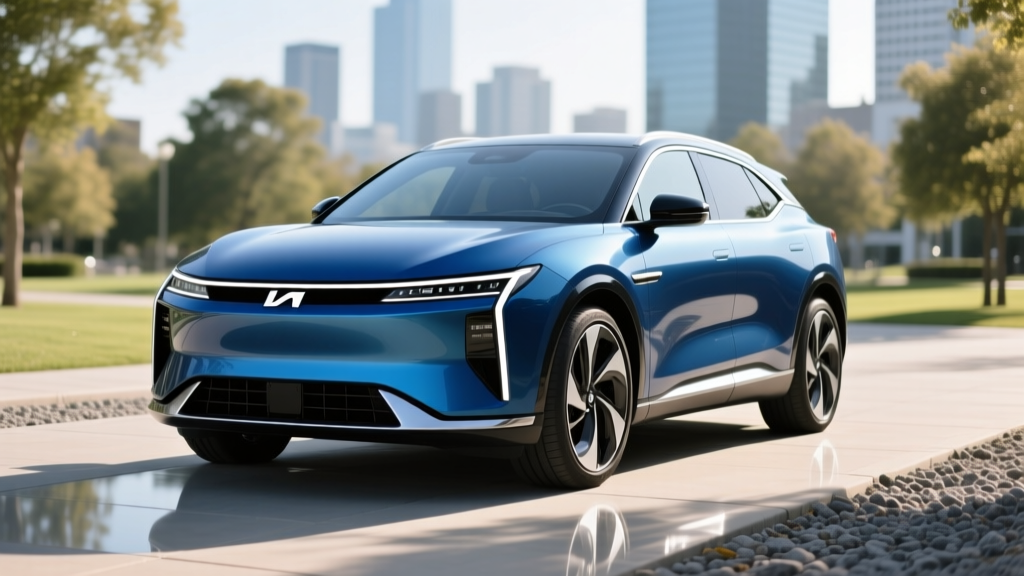
Lucid Motors built its reputation on sedan efficiency, but the automotive market demands crossovers. Enter the Lucid Gravity, a three-row electric SUV that aims to translate the Air's industry-leading powertrain tech into a family hauler. For budget-conscious shoppers, the conversation increasingly turns to the Lucid $50K crossover — a mid-range Gravity trim expected to bring the brand's 900V architecture and class-leading efficiency to a more accessible price point as production scales through 2026.
Below, we break down the Gravity lineup with a focus on the trims approaching that critical $50,000 threshold, examining real-world range, charging behavior, cargo practicality, and whether the federal tax credit can bring the effective price into the mid-$40Ks.
Lucid Gravity Specs at a Glance
| Specification | Gravity Pure (RWD) | Gravity Touring (AWD) | Gravity Grand Touring (AWD) |
|---|---|---|---|
| EPA Range (est.) | ~440 mi | ~390 mi | ~440 mi |
| Battery (usable) | ~82 kWh (NMC) | ~112 kWh (NMC) | ~112 kWh (NMC) |
| Horsepower | ~500 hp | ~620 hp | ~823 hp |
| 0-60 mph | ~5.0 sec | ~4.2 sec | ~3.5 sec |
| Drivetrain | RWD (single motor) | AWD (dual motor) | AWD (dual motor) |
| Max DC Fast Charge | ~300+ kW (900V) | ~300+ kW (900V) | ~300+ kW (900V) |
| 10-80% DC Time (est.) | ~15 min | ~22 min | ~22 min |
| Level 2 Rate | 19.2 kW (~70 mi/hr) | 19.2 kW (~70 mi/hr) | 19.2 kW (~70 mi/hr) |
| MPGe (combined, est.) | ~130 MPGe | ~115 MPGe | ~112 MPGe |
| Base MSRP | ~$79,900 | ~$94,900 | ~$99,900 |
| Battery/Powertrain Warranty | 8 yr / 100,000 mi | 8 yr / 100,000 mi | 8 yr / 100,000 mi |
Note: As of early 2026, the Gravity is ramping production with the Grand Touring trim first. The Pure (RWD) trim is the variant expected to anchor the lineup closer to a lower price point as volume production scales. Specs for unreleased trims are Lucid estimates and subject to EPA certification.
Range and Efficiency: Real-World Expectations
Real-World Expectation: Plan for approximately 350–380 miles on highway road trips at 70-75 mph in moderate weather. In sub-freezing winter conditions, expect a 20-30% reduction, bringing usable range to roughly 280–320 miles. In mixed city/highway commuting, the Gravity's efficiency shines — you may meet or slightly exceed the EPA sticker in stop-and-go driving thanks to aggressive regenerative braking.
Lucid's efficiency advantage is well documented. The Air sedan achieves up to 146 MPGe combined on the EPA's EV testing cycle, and the Gravity leverages the same Wunderbox powertrain architecture with a 900V electrical system that minimizes energy losses. The Gravity's estimated ~5.5 mi/kWh efficiency is remarkable for a 5,000+ lb three-row SUV.
However, physics is physics. The Gravity's large frontal area and taller profile mean highway efficiency drops more noticeably than the Air sedan at sustained speeds above 75 mph. Cold-weather impact is also real: NMC chemistry loses some charge acceptance rate in freezing temperatures, and cabin heating (even with a heat pump) consumes additional energy. Owners in northern climates should budget for 25-30% range reduction in January and February.
Charging Speed: 900V Architecture Advantage
| Charging Level | Power / Rate | Miles Added | Notes |
|---|---|---|---|
| Level 1 (120V household) | ~1.4 kW | ~4 mi/hr | Emergency/trickle only |
| Level 2 (240V, 80A) | 19.2 kW | ~70 mi/hr | Requires hardwired 100A circuit; full overnight charge in ~6 hr |
| DC Fast Charge (peak) | 300+ kW | ~200 mi in 15 min | 900V architecture; requires 350 kW CCS/NACS station |
| DC Fast (150 kW station) | ~150 kW | ~90 mi/hr | Common Electrify America / EVgo rate |
The Gravity's 900V battery architecture is its charging ace. Most competitors run 400V systems that peak around 200-250 kW. Lucid's higher voltage allows the Gravity to sustain charge rates above 300 kW at compatible stations, filling the battery from 10-80% in roughly 15 minutes for the smaller-battery Pure trim and around 22 minutes for the 112 kWh Grand Touring.
Understanding the charge curve is critical: peak kW is not sustained kW. The Gravity will charge fastest between roughly 10-50% State of Charge, then taper progressively. Above 80%, charge speed drops sharply to protect battery longevity — a universal lithium-ion behavior. For road trips, plan stops around 10-80% rather than topping to 100% at each charger.
For home charging, the Gravity supports up to 19.2 kW on Level 2, which is among the fastest in the industry. This requires an 80-amp hardwired EVSE on a dedicated 100-amp circuit. A standard 48-amp Level 2 charger (like a ChargePoint Home Flex or Tesla Wall Connector) on a 60-amp circuit will deliver approximately 11.5 kW — still enough for 40-45 miles of range per hour, easily replenishing a day's driving overnight. Budget $800-$2,500 for a professional Level 2 installation depending on your electrical panel capacity and run distance.
Performance and Drivetrain
The Gravity lineup spans a wide performance envelope:
- Gravity Pure (RWD): A single rear motor producing approximately 500 hp. The 0-60 mph sprint takes roughly 5.0 seconds — brisk for a three-row family SUV and more than adequate for highway merging.
- Gravity Touring (AWD): Dual motors with approximately 620 hp, cutting 0-60 to around 4.2 seconds. All-wheel drive adds confidence in rain and snow.
- Gravity Grand Touring (AWD): Dual motors pushing ~823 hp. The 3.5-second 0-60 time is sports-car territory in a vehicle with three rows of seats.
All trims feature Lucid's miniaturized motor/gearbox/inverter units, which are physically compact enough to allow the Gravity's spacious interior packaging. Regenerative braking is strong across the lineup, enabling near one-pedal driving in city traffic, though Lucid does not offer a full one-pedal stop-and-hold mode like some competitors.
Pricing, Trims, and Federal Tax Credit Eligibility
| Trim | Base MSRP (est.) | §30D Federal Credit | Effective Price (if eligible) |
|---|---|---|---|
| Gravity Pure (RWD) | ~$79,900 | Up to $7,500 | ~$72,400 |
| Gravity Touring (AWD) | ~$94,900 | $0 (over MSRP cap) | ~$94,900 |
| Gravity Grand Touring (AWD) | ~$99,900 | $0 (over MSRP cap) | ~$99,900 |
Here's where the Lucid $50K crossover conversation requires honest context. As of 2026, no Gravity trim starts at $50,000. The most affordable Gravity — the Pure RWD — is anticipated to start near $79,900 before destination charges and options.
However, the federal IRS §30D tax credit can reduce effective cost for eligible buyers. Key rules for 2026:
- MSRP Cap: SUVs/vans/pickups must have an MSRP at or below $80,000. The Gravity Pure (as an SUV) may qualify if its MSRP stays at or under this threshold. Touring and Grand Touring trims exceed the cap.
- Income Limits: Modified AGI must not exceed $150,000 (single), $225,000 (head of household), or $300,000 (joint filers).
- Battery Sourcing: The full $7,500 credit requires meeting both critical-mineral and battery-component sourcing thresholds, which tighten annually. Partial credit ($3,750) may apply if only one requirement is met.
- Point-of-Sale Transfer: Eligible buyers can transfer the credit to the dealer at purchase, reducing the purchase price directly rather than waiting for a tax refund.
The Lucid $50K crossover aspiration likely refers to a future, more compact Lucid model (potentially a mid-size crossover on a smaller platform) or a significantly optioned-down Gravity Pure after maximum incentives, lease pass-through structures, and state-level rebates. Consult a tax professional for personal eligibility.
Interior, Cargo, and Technology
The Gravity's interior is where Lucid's packaging engineering pays dividends:
- Seating: Three rows with seating for up to seven. Second-row captain's chairs or bench configurations available. Third row accommodates adults on shorter trips — a genuine advantage over compact electric crossovers.
- Cargo Volume: Approximately 60+ cu ft behind the second row (seats folded) and over 100 cu ft with both rear rows folded. The front trunk (frunk) adds roughly 10 cu ft of additional sealed storage.
- Legroom: Front legroom exceeds 41 inches; second-row legroom is approximately 38-40 inches, competitive with the Rivian R1S and BMW iX.
The centerpiece of the dash is Lucid's 34-inch curved glass cockpit display, which spans the driver's field of view without a traditional binnacle hood. A lower 17-inch central touchscreen handles infotainment, navigation, and climate. The system supports wireless Apple CarPlay and Android Auto, over-the-air updates, and Lucid's native navigation with real-time charging integration.
On the driver-assistance front, the Gravity comes equipped with Lucid's DreamDrive Pro system — a suite of cameras, radar, and LiDAR sensors providing adaptive cruise control, lane-centering, automatic emergency braking, and blind-spot monitoring. DreamDrive Pro is a SAE Level 2 system, meaning the driver must remain fully engaged with hands on the wheel and eyes on the road at all times. It is not autonomous driving.
Ownership Costs and Warranty
Lucid backs the Gravity with a competitive warranty package:
- Battery & Powertrain: 8 years / 100,000 miles (whichever comes first), covering defects and capacity loss below a specified threshold (typically 70-75% retention).
- Bumper-to-Bumper: 4 years / 50,000 miles.
- Roadside Assistance: Included during the basic warranty period.
The Gravity's 112 kWh NMC battery uses nickel-manganese-cobalt chemistry, which offers high energy density (enabling the 440-mile range) but requires more careful charge management than LFP chemistry. For long-term battery health, Lucid recommends daily charging to 80-90% and reserving 100% charges for road trips. The NMC pack includes a robust thermal management system with liquid cooling and a heat pump for efficient cabin preconditioning and battery temperature regulation.
Insurance costs for the Gravity are likely to be higher than average for the segment, reflecting the vehicle's performance, repair cost structure, and Lucid's relatively limited collision-repair network compared to legacy automakers. Expect annual premiums 15-25% above comparable internal-combustion three-row SUVs.
Pros and Cons
Pros
- Class-leading efficiency (~5.5 mi/kWh) translates to genuine 350+ mile real-world range
- 900V architecture enables 300+ kW DC fast charging — among the fastest SUVs available
- Spacious three-row interior with genuine adult-capable third row and 100+ cu ft cargo
- Frunk adds practical sealed storage for charging cables or groceries
- 19.2 kW Level 2 acceptance rate charges fully overnight on a proper home circuit
- Strong performance across all trims; even the base RWD hits 60 in ~5 seconds
Cons
- No trim currently reaches the $50,000 price point — the Pure starts near $80K
- Only the Pure (RWD) may qualify for the §30D federal credit, and only under the $80K SUV MSRP cap
- Limited service center network compared to Tesla, Ford, or Hyundai
- DreamDrive Pro ADAS is solid but trails Tesla FSD and GM Super Cruise in hands-free highway coverage
- Insurance premiums likely above segment average
- Brand-new nameplate — long-term reliability data is still accumulating
Who Should Buy the Lucid Gravity?
- You need three rows of seating with genuine adult-capable space and over 100 cu ft of cargo volume
- You prioritize real-world range and charging speed above all other EV metrics
- You have access to 350 kW DC fast chargers on your regular routes (the 900V architecture only benefits you if the infrastructure exists)
- You can install a dedicated 100A circuit at home for the full 19.2 kW Level 2 experience
- You want luxury performance without the German-badge premium
- Your hard budget is $50,000 — consider the Tesla Model Y, Hyundai Ioniq 5, or Chevrolet Equinox EV instead
- You need a mature service and charging ecosystem (Tesla's Supercharger network and service density remain unmatched)
- You live in an area without 350 kW charging infrastructure — the Gravity's peak charge advantage is diminished on 150 kW stations
Frequently Asked Questions
What is the real-world range of the Lucid Gravity?
The Gravity targets an EPA-estimated ~440 miles (Pure and Grand Touring trims). In real-world highway driving at 70-75 mph, expect roughly 350-380 miles. In cold weather (below 32°F), budget for a 20-30% reduction, yielding approximately 280-320 miles. City commuting with regenerative braking may meet or slightly exceed the EPA sticker.
How fast does the Lucid Gravity charge?
On a 350 kW DC fast charger, the Gravity peaks above 300 kW, charging from 10-80% in approximately 15-22 minutes depending on battery size. At home on a 19.2 kW Level 2 charger, it adds roughly 70 miles of range per hour, achieving a full overnight charge in about 6 hours. On a standard 48A Level 2 unit (11.5 kW), expect about 40-45 miles per hour of charging.
Does the Lucid Gravity qualify for the $7,500 federal EV tax credit?
Only potentially the Gravity Pure (RWD), and only if its MSRP stays at or below the $80,000 SUV cap set by IRS §30D rules. Touring and Grand Touring trims exceed the MSRP cap and are ineligible. Buyers must also meet income limits ($300K joint, $150K single) and the vehicle must satisfy battery-sourcing requirements, which tighten annually. Always verify current-year eligibility with a tax professional before purchasing.
Is the Lucid Gravity worth buying versus the Rivian R1S or Tesla Model X?
The Gravity's advantage is efficiency and range — it will likely out-travel both the R1S and Model X per kWh. The Rivian R1S offers superior off-road capability and a more established service network. The Tesla Model X provides access to the Supercharger network and falcon-wing rear doors but at a higher starting price and lower efficiency. If your priority is maximum range and fast charging in a three-row luxury package, the Gravity makes a compelling case.
What battery chemistry does the Gravity use?
The Gravity uses NMC (nickel-manganese-cobalt) lithium-ion cells, chosen for their high energy density — necessary to achieve 440 miles of range in an SUV form factor. NMC batteries benefit from daily charge limits of 80-90% and should only be charged to 100% for long trips. This differs from LFP (lithium iron phosphate) chemistry, which tolerates regular 100% charges but offers lower energy density.
When will a Lucid $50K crossover be available?
As of 2026, no Lucid vehicle is priced at $50,000. The Gravity Pure is expected to start near $79,900. Lucid has signaled plans for a more affordable, mid-size crossover in future years, potentially leveraging a smaller platform and LFP battery chemistry to reach lower price points. Until that model is officially announced with confirmed pricing, the $50K Lucid remains aspirational rather than available.