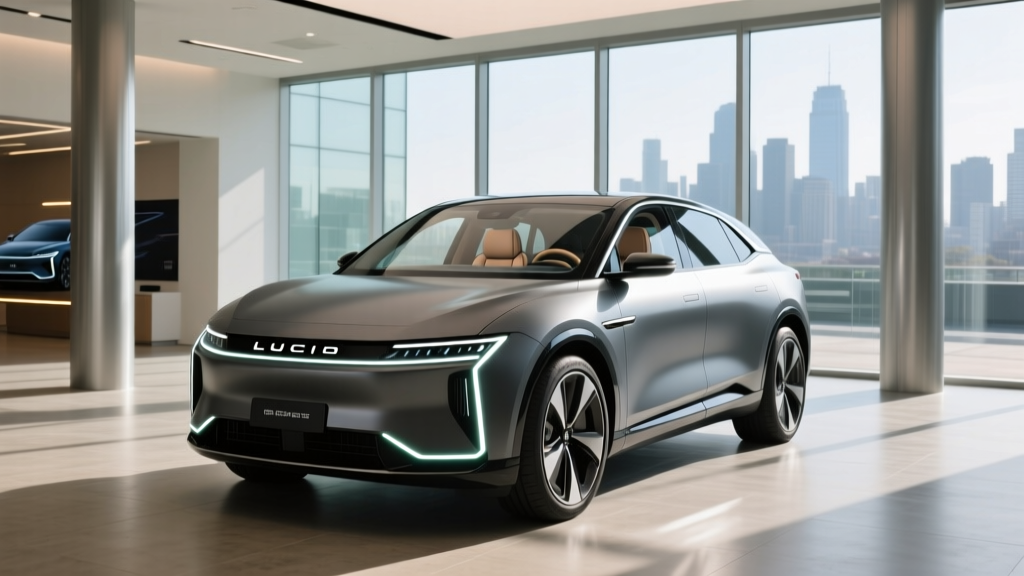
The Lucid Gravity entered the three-row electric SUV market promising flagship-level technology in a family-friendly package. But early production and the ramp into the 2026 model year have surfaced a cluster of Lucid Gravity launch issues that prospective buyers need to understand before signing a purchase agreement. From software instability in the 34-inch Clearview Cockpit glass display to 900-volt architecture teething pains at public DC fast chargers, the Gravity's first year on sale has been a stress test for both the company and its earliest adopters.
This review dissects what has gone wrong, what Lucid has addressed via over-the-air (OTA) updates, and whether the Gravity's underlying hardware — including a claimed 440-mile EPA range and class-leading efficiency — still makes it a compelling buy in 2026 against the Tesla Model X, Rivian R1S, and BMW iX.
2026 Lucid Gravity Spec Sheet at a Glance
| Specification | Grand Touring AWD | Touring AWD |
|---|---|---|
| EPA Range | 440 miles | ~380 miles (est.) |
| Battery (usable) | ~112 kWh, NMC | ~92 kWh, NMC |
| Horsepower | 828 hp | ~620 hp (est.) |
| 0–60 mph | 3.5 seconds | ~4.5 seconds (est.) |
| Drivetrain | Dual-motor AWD | Dual-motor AWD |
| Peak DC Fast Charge | 300+ kW (900V) | 300+ kW (900V) |
| 10–80% DC Charge | ~20 minutes | ~18 minutes |
| Level 2 Home Rate | 19.2 kW / ~70 mi/hr | 19.2 kW / ~70 mi/hr |
| Efficiency | ~120 MPGe / ~28 kWh/100mi | ~115 MPGe (est.) |
| Cargo (behind 3rd row) | ~30 cu ft | ~30 cu ft |
| Cargo (max, seats folded) | ~100 cu ft | ~100 cu ft |
| Base MSRP | $96,490 | $81,490 |
| Battery Warranty | 8 yr / 100,000 mi | 8 yr / 100,000 mi |
Lucid Gravity Launch Issues: What Owners Have Reported
Tracking owner forums, NHTSA early complaint filings, and automotive press drive impressions from late 2025 through early 2026, several recurring Lucid Gravity launch issues have emerged:
Software and Infotainment Instability
The Gravity's signature 34-inch curved Clearview Cockpit glass display — a floating OLED panel spanning the driver's field of view — has been the source of the most visible complaints. Early owners reported intermittent screen blackouts, sluggish navigation response, and phantom touch inputs. Lucid has issued multiple OTA patches (most notably software versions 3.2 and 3.4 through early 2026) addressing display driver memory leaks and improving boot times. Most reviewers who drove post-patch vehicles noted substantial improvement, though isolated reports of lag persist when running navigation plus streaming media simultaneously.
DC Fast Charging Handshake Failures
The Gravity's 900-volt electrical architecture enables class-leading charge speeds, but it also requires compatible station firmware. Several owners documented CCS connector handshake failures at older Electrify America and third-party 400V stations. The vehicle's charge controller expects a clean protocol negotiation that some legacy dispensers fail to complete. Lucid's OTA updates have expanded the list of compatible station firmware versions, and the company has published a support page listing verified compatible networks. The transition to NACS (Tesla Supercharger access via adapter) has partially mitigated this, though adapter availability and throughput at V2 Superchargers (capped at 150 kW) undercuts the Gravity's native capability.
Build Quality Inconsistencies
As with any startup automaker ramping a new nameplate, panel gap variation, interior trim alignment, and tailgate sealing issues have appeared in early-build vehicles. Lucid's Arizona factory has tightened tolerances through the 2026 model year, and the company has offered goodwill service visits for affected early adopters. This pattern mirrors Tesla's early Model X production arc — first-year build quality is rarely a startup's strongest suit.
ADAS Calibration Drift
The Gravity ships with Lucid's DreamDrive Pro ADAS suite (a Level 2 system requiring continuous driver supervision). Some owners reported lane-centering wander and inconsistent following-distance behavior in early software builds. OTA refinements to the sensor fusion stack — leveraging the vehicle's 32 sensors including lidar — have improved stability, but NHTSA's guidance on Level 2 systems remains relevant: this is not autonomous driving, and the driver must remain engaged at all times.
Real-World Range and Efficiency: Beyond the EPA Sticker
EPA Estimated Range: 440 miles (Grand Touring) / ~380 miles (Touring)
Real-World Expectation: Plan for 340–390 miles in mixed highway driving at 70–75 mph. In cold weather (below 32°F), expect a 15–25% reduction, bringing effective range to approximately 280–340 miles depending on cabin heating use and terrain. City driving with regenerative braking recovers closer to the EPA figure.
Lucid's efficiency engineering is arguably the Gravity's strongest asset. The company's miniaturized drive units and 900V architecture deliver energy consumption figures that embarrass heavier competitors. At roughly 28 kWh per 100 miles (Grand Touring), the Gravity sips electrons at a rate closer to a mid-size sedan than a 6,000-pound three-row SUV.
For context, the Rivian R1S (Dual-Motor, Large Pack) consumes approximately 42–48 kWh/100mi, and the Tesla Model X Long Range sits around 34–38 kWh/100mi. The Gravity's efficiency advantage translates directly into fewer charging stops on road trips and lower electricity costs per mile — a point that matters more as public DC charging prices climb above $0.40/kWh on many networks.
Lucid's heat pump system, standard on all trims, helps mitigate cold-weather range loss compared to resistive heating, though no EV is immune to lithium-ion chemistry limitations below freezing. Preconditioning the battery via the Lucid app before fast charging remains essential for achieving peak charge rates in cold conditions.
Charging Performance: 900V Architecture in Practice
| Charge Level | Power (kW) | Miles Added per Hour | Notes |
|---|---|---|---|
| Level 1 (120V household) | ~1.4 kW | ~3–4 mi/hr | Emergency/trickle only |
| Level 2 (240V, 48A home) | 11.5 kW | ~42 mi/hr | Standard home setup |
| Level 2 (240V, 80A Wallbox) | 19.2 kW | ~70 mi/hr | Requires 100A circuit; fastest home option |
| DC Fast (350 kW station) | 300+ kW peak | ~1,200 mi/hr (peak) | 10–80% in ~20 min; tapers above 80% |
| DC Fast (Tesla V3 Supercharger via adapter) | ~150 kW | ~550 mi/hr | Limited by V3 station, not vehicle |
The Gravity's 900-volt architecture is its most future-proof feature. When connected to a 350 kW-capable station (Electrify America's newest dispensers, IONITY in Europe, or upcoming high-power networks), the vehicle can accept over 300 kW — adding roughly 200 miles of range in under 10 minutes under ideal conditions.
However, the charge curve is not flat. Peak rate is sustained from roughly 10% to 50% State of Charge (SoC), after which thermal management begins tapering the rate. By 80% SoC, expect the rate to drop to approximately 100–120 kW. This is normal for NMC chemistry at high charge rates, but it means the advertised "10–80% in 20 minutes" figure assumes optimal battery temperature and station availability.
Home charging at 19.2 kW (requiring an 80-amp hardwired Level 2 station and a 100-amp dedicated circuit) delivers a full overnight replenishment. Most owners will find 11.5 kW on a 48-amp circuit perfectly adequate — a 10-hour overnight session adds roughly 420 miles, covering the full battery.
Pricing, Trims, and Federal Tax Credit Eligibility
| Trim | Base MSRP | Federal §30D Credit | Effective Price |
|---|---|---|---|
| Touring AWD | $81,490 | See eligibility notes | $81,490 (credit unlikely) |
| Grand Touring AWD | $96,490 | See eligibility notes | $96,490 (credit unlikely) |
The IRS §30D federal tax credit is a moving target for luxury EVs, and the Gravity faces structural headwinds:
- SUV MSRP Cap: The §30D credit caps eligible SUVs at $80,000 MSRP. The Gravity Touring at $81,490 exceeds this threshold by $1,490 before any options, making it ineligible in most configurations.
- Buyer Income Limits: Even if MSRP qualified, buyers must fall under $300,000 (joint), $225,000 (head of household), or $150,000 (single) modified adjusted gross income.
- Battery Sourcing Requirements: The credit phases based on critical mineral and battery component sourcing from FTA-partner countries. Lucid's supply chain has been evolving, and buyers should verify current-year eligibility on the fueleconomy.gov tax credit lookup before relying on the credit.
- Point-of-Sale Transfer: If eligible, the credit can be transferred to the dealer at purchase, reducing the out-of-pocket price directly rather than waiting for a tax return.
Bottom line: Most Gravity buyers should plan to pay full MSRP. Consult a tax professional to confirm eligibility for your specific situation, and check the IRS source-of-origin requirements for the current tax year.
Interior Space, Technology, and Daily Usability
The Gravity's cabin is designed around the concept of "space in motion." With seating for up to seven (standard second-row bench; optional captain's chairs reduce capacity to six), the vehicle offers:
- Front legroom: ~42 inches
- Second-row legroom: ~39 inches
- Third-row legroom: ~33 inches (usable for children or short-trip adults)
- Cargo behind 3rd row: ~30 cu ft
- Cargo with 2nd and 3rd rows folded: ~100 cu ft
- Frunk (front trunk): ~10 cu ft — fits a carry-on or charging cables
The 34-inch Clearview Cockpit glass display sits high on the dashboard, projecting information near the base of the windshield to reduce eye refocus. Below it, a secondary 17-inch touchscreen handles infotainment, climate, and vehicle settings. Wireless Apple CarPlay and Android Auto are standard, as is a 21-speaker Surreal Sound audio system by Mark Levinson on the Grand Touring.
The Gravity's glass canopy roof (a Lucid design hallmark) floods the cabin with light but has drawn complaints about solar heat gain in southern climates. Lucid includes a powered sunshade, and the glass uses infrared-rejecting coatings, but owners in Arizona and Texas have noted the cabin still requires more HVAC effort in peak summer.
Driver Assistance: DreamDrive Pro
SAE Automation Level: Level 2 — The driver must remain fully engaged, with hands on or near the wheel and eyes on the road. DreamDrive Pro is a driver-assist system, not autonomous driving. Lucid's use of lidar (a roof-mounted unit) provides redundancy beyond camera-only systems, but the operational design domain remains limited to well-marked roads and moderate weather conditions.
DreamDrive Pro includes adaptive cruise control, lane-centering, automatic emergency braking, blind-spot intervention, and a highway driving assist feature. It does not currently support hands-free driving on mapped highways (unlike GM's Super Cruise or Ford's BlueCruise). Lucid has signaled future OTA expansion, but as of early 2026, the system requires active supervision.
Who Should Buy the Lucid Gravity — and Who Shouldn't
Choose the Lucid Gravity if:
- You prioritize range and efficiency above all else in a three-row SUV — 440 EPA miles is unmatched in the segment.
- You have reliable home Level 2 charging and road-trip routes served by 350 kW-capable DC fast chargers.
- You value a distinctive, tech-forward interior and are willing to tolerate first-year software maturation.
- Your budget comfortably accommodates an $80,000–$110,000 vehicle without relying on the federal tax credit.
Look elsewhere if:
- You need a proven, mature software platform today — the Rivian R1S (second generation) and Tesla Model X have longer track records.
- You require hands-free highway driving assist — GM's Super Cruise on the Cadillac Escalade IQ or Ford BlueCruise on the Explorer EV may suit better.
- You depend on the $7,500 federal tax credit to make the math work — the Gravity's MSRP likely disqualifies it.
- You live in a region with sparse DC fast-charging infrastructure and cannot install Level 2 at home.
Lucid Gravity vs. Key Competitors
| Vehicle | EPA Range | Peak DC Charge | 0–60 mph | Base MSRP |
|---|---|---|---|---|
| Lucid Gravity Grand Touring | 440 mi | 300+ kW | 3.5 sec | $96,490 |
| Tesla Model X Long Range | 348 mi | 250 kW | 3.8 sec | $79,990 |
| Rivian R1S (Dual-Motor, Large) | 352 mi | 220 kW | 4.5 sec | $79,900 |
| BMW iX xDrive50 | 324 mi (2-row) | 200 kW | 4.4 sec | $87,250 |
| Cadillac Escalade IQ | ~450 mi (est.) | ~350 kW | ~3.5 sec | ~$130,000 |
The Gravity occupies a unique position: it delivers the highest range and fastest charging in its price band, but at the cost of brand maturity and service-center density. Tesla's Supercharger network and service infrastructure remain unmatched. Rivian offers a more rugged, adventure-oriented identity with a growing owner community. BMW and Cadillac bring dealer networks but sacrifice range.
Pros and Cons
Pros
- Segment-leading 440-mile EPA range (Grand Touring)
- Best-in-class efficiency (~28 kWh/100mi)
- 300+ kW DC fast charging on 900V architecture
- Spacious three-row cabin with ~100 cu ft max cargo
- Distinctive design and premium materials
- 8-year/100,000-mile battery warranty
- OTA update capability for continuous improvement
Cons
- Software instability in early production (improving via OTA)
- DC charging handshake issues at legacy 400V stations
- MSRP exceeds §30D tax credit SUV cap
- Limited service center footprint vs. Tesla/BMW/Cadillac
- No hands-free highway driving assist (yet)
- Glass roof heat gain in hot climates
- First-year build quality variability
Frequently Asked Questions
What is the real-world range of the Lucid Gravity?
The Grand Touring achieves an EPA-estimated 440 miles. In real-world highway driving at 70–75 mph, expect 340–390 miles. Cold weather (below 32°F) can reduce this to 280–340 miles. City driving with regenerative braking recovers closer to the EPA figure.
How fast does the Lucid Gravity charge?
On a 350 kW DC fast charger, the Gravity peaks above 300 kW and charges from 10–80% in approximately 20 minutes. At home on a 19.2 kW Level 2 station, it adds roughly 70 miles per hour, achieving a full charge overnight. On legacy 400V stations, speeds may be lower due to handshake compatibility.
How much does the Lucid Gravity cost after tax credits?
The Touring starts at $81,490 and the Grand Touring at $96,490. Because the §30D federal tax credit caps eligible SUVs at $80,000 MSRP, most Gravity configurations do not qualify. Plan on paying full MSRP unless future IRS guidance or pricing adjustments change eligibility. Always verify current-year rules at irs.gov.
Is the Lucid Gravity worth buying vs. the Tesla Model X or Rivian R1S?
If range and charging speed are your top priorities, the Gravity is the clear technical leader. If you need a mature software platform, widespread service centers, and hands-free driving assist, the Model X or R1S may be safer first-year choices. The Gravity is best suited for buyers who value efficiency engineering and are comfortable with a maturing software experience.
Does the Lucid Gravity qualify for the federal EV tax credit?
Under current §30D rules, the Gravity's MSRP exceeds the $80,000 SUV cap, making it unlikely to qualify regardless of buyer income or battery sourcing. Rules change annually — verify on fueleconomy.gov and consult a tax professional before purchase.
What are the biggest Lucid Gravity launch issues?
The primary reported issues include infotainment screen instability (addressed via OTA updates), DC fast charging handshake failures at legacy stations (partially resolved via firmware patches and NACS adapter access), first-year build quality variation, and ADAS calibration inconsistencies. Most are typical of startup automaker ramps and are being addressed iteratively.
How does the Lucid Gravity handle towing?
The Gravity is rated to tow up to 6,000 pounds when properly equipped. Towing significantly reduces range — expect a 30–50% reduction depending on trailer weight and aerodynamics. For frequent heavy towing, a body-on-frame EV like the Rivian R1S or a PHEV may be more practical.