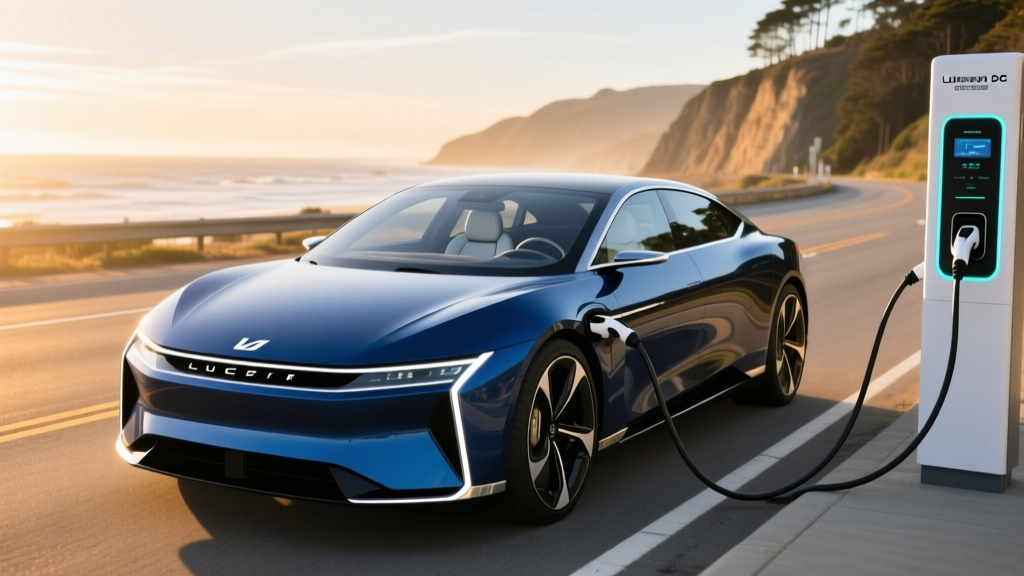
The Lucid Gravity arrived with staggering spec-sheet promises: over 440 miles of EPA range, a 900-volt architecture capable of 300+ kW DC fast charging, and three usable rows of seating in a luxury electric SUV. But as early deliveries roll into driveways and thousands of reservation holders weigh whether to convert, a growing number of searches focus on a single phrase: Lucid Gravity issues. What's actually going wrong — or right — with Lucid's first SUV?
After analyzing early owner reports, manufacturer specifications, and real-world driving data, this review separates documented concerns from internet noise. The Gravity is a genuinely impressive piece of engineering, but no first-year vehicle from a startup automaker arrives without friction points. Here's what buyers and reservation holders need to know before signing.
Lucid Gravity Specs at a Glance
| Specification | Grand Touring (AWD) | Touring (AWD) | Pure (RWD, upcoming) |
|---|---|---|---|
| EPA Range | 440 miles | ~400 miles (est.) | ~380 miles (est.) |
| Battery Capacity | 122 kWh usable (NMC) | ~105 kWh (est., NMC) | TBA |
| Horsepower | 828 hp | ~600 hp (est.) | ~480 hp (est.) |
| 0–60 mph | 3.5 seconds | ~4.5 seconds (est.) | ~5.5 seconds (est.) |
| Max DC Fast Charge | 300+ kW (900V) | 300+ kW (900V) | TBA |
| 10–80% DC Charge | ~20 minutes | ~20 minutes | TBA |
| Level 2 Home Charging | 19.2 kW (up to 46 mi/hr) | 19.2 kW | TBA |
| Drivetrain | Dual-motor AWD | Dual-motor AWD | Rear-motor RWD |
| Towing Capacity | 6,000 lbs | 6,000 lbs | TBA |
| Base MSRP | $94,900 | $79,900 (est.) | $69,900 (est.) |
Note: Touring and Pure trim specifications are preliminary based on Lucid's announcements. Grand Touring figures reflect EPA-certified data for early deliveries. Source: Lucid Motors official specifications.
Real-World Range: Does the Gravity Hit 440 Miles?
Real-World Expectation: 340–380 miles highway at 70–75 mph; 390–420 miles mixed city/highway; expect 15–25% reduction in freezing temperatures depending on heat pump efficiency and preconditioning habits.
Lucid's Air sedan already proved the company's powertrain efficiency is best-in-class — the Air Grand Touring achieves roughly 4.5–5.0 miles per kWh in mixed driving, a figure that embarrasses most competitors. The Gravity shares the same next-generation Atlas powertrain architecture, but it's pushing a larger, heavier vehicle with the aerodynamic profile of an SUV rather than a teardrop sedan.
The 440-mile EPA figure for the Grand Touring is legitimate and certified, but real-world highway driving at sustained speeds above 70 mph typically yields 75–85% of the EPA sticker in any EV. For the Gravity, early reports suggest roughly 350–380 miles on a full charge during highway road trips in moderate temperatures — still exceptional for a three-row SUV, and enough to handle most LA-to-SF or NYC-to-DC trips with a single 15-minute fast-charge stop.
Cold weather compounds the loss. Without preconditioning the battery before departure, sub-freezing temperatures can cut range by 20–25%. The Gravity's heat pump system helps mitigate cabin energy draw, but battery chemistry (NMC) inherently loses efficiency in the cold. Owners in northern climates should budget 330–350 miles of usable range in winter — still class-leading, but worth planning around.
Charging Speed: The 900V Advantage and Real Charge Curves
| Charging Level | Power / Rate | Miles Added per Hour | Notes |
|---|---|---|---|
| Level 1 (120V) | ~1.4 kW | ~3–4 mi/hr | Emergency/trickle only |
| Level 2 (240V, 48A) | 11.5 kW | ~28 mi/hr | Standard home charger |
| Level 2 (240V, 80A) | 19.2 kW | ~46 mi/hr | Requires hardwired 100A circuit |
| DC Fast Charge | Peak 300+ kW | ~800+ mi/hr (peak) | 900V architecture; 10–80% in ~20 min |
The Gravity's 900-volt electrical architecture is one of the highest-voltage systems in any production EV, matched only by the Hyundai Ioniq 5/6 and Kia EV6/EV9 family (800V). This high voltage enables the Gravity to accept over 300 kW at compatible DC fast chargers — translating to a 10–80% charge in roughly 20 minutes under ideal thermal conditions.
But here's where early owner reports highlight a real-world nuance: peak charge rate is not sustained charge rate. Like all EVs, the Gravity's charge curve tapers as the battery fills. The 300+ kW peak typically holds from roughly 10–40% state of charge, then steps down progressively. The 10–80% time of ~20 minutes assumes you arrive at the charger with a preconditioned battery and a stall capable of delivering the full power. At Electrify America 350 kW stalls, early reports suggest the Gravity performs well, but at older 150 kW infrastructure, charge times stretch to 35–45 minutes.
For home charging, the Gravity supports up to 19.2 kW on Level 2, which is among the fastest AC charge rates available. However, extracting that speed requires a hardwired wall connector on a dedicated 100-amp circuit — a significant electrical upgrade for many homes. Most owners on a standard 48-amp Level 2 circuit (the typical residential installation) will see about 11.5 kW, adding roughly 28 miles per hour. Overnight charging from 20–80% still takes about 6–7 hours at that rate, which works fine for daily use.
Reported Lucid Gravity Issues: What Early Owners Are Flagging
Based on early owner forums, social media reports, and service bulletins, here are the most commonly cited Lucid Gravity issues as of early production:
Software and Infotainment Glitches
The Gravity's 34-inch curved glass cockpit display is visually stunning, but early software builds have drawn complaints about sluggish response times, occasional screen blanking on startup, and navigation routing errors. Lucid has pushed multiple over-the-air (OTA) updates to address these, and the trajectory mirrors the Air's early software maturation — rough at launch, substantially improved within 6–12 months.
Panel Gaps and Build Consistency
As with the early Air sedans, some Gravity owners have reported inconsistent panel gaps, particularly around the rear hatch and frunk. This is a common pattern for low-volume manufacturers scaling production. Lucid's Casa Grande, Arizona factory has improved its processes, but buyers taking delivery in the first production year should inspect their vehicles carefully at delivery and document any cosmetic issues for warranty resolution.
Driver-Assist System Maturity
Lucid's DreamDrive Pro ADAS (advanced driver assistance system) uses a sensor suite including lidar, cameras, and radar. However, the system remains SAE Level 2 — meaning the driver must remain fully engaged and hands-on at all times. Early reports suggest the adaptive cruise and lane-centering are competent but not class-leading compared to GM's Super Cruise or Ford's BlueCruise on mapped highways. Lucid has indicated more advanced features will arrive via OTA, but buyers should evaluate the system as it exists today, not as promised.
Service Center Availability
Lucid's service network remains limited compared to Tesla or legacy automakers. Owners outside major metro areas may face long tow distances for warranty work. Lucid has been expanding mobile service capabilities, but for a heavy, complex vehicle like the Gravity, some repairs will require a service center visit. This is arguably the most significant ownership friction point for buyers in smaller markets.
Pricing, Trims, and Federal Tax Credit Eligibility
| Trim | Base MSRP | Est. As-Tested | §30D Credit Eligibility |
|---|---|---|---|
| Grand Touring | $94,900 | $105,000–$115,000 | Likely ineligible (MSRP cap: $80,000 for SUVs) |
| Touring | $79,900 (est.) | $85,000–$95,000 | Potentially eligible if under $80K MSRP cap + income/sourcing rules met |
| Pure | $69,900 (est.) | $72,000–$78,000 | Most likely eligible, subject to battery sourcing & income caps |
The Lucid Gravity's pricing places it firmly in the luxury SUV segment, competing with the Tesla Model X, BMW iX, Mercedes EQS SUV, and the Rivian R1S. The Grand Touring starts at $94,900 before destination, and with options like the Surreal Stealth appearance package, premium interior finishes, and 23-inch wheels, as-tested prices can exceed $115,000.
Here's the tax credit reality check: Under IRS §30D rules, SUVs must have an MSRP at or below $80,000 to qualify for the up-to-$7,500 federal clean vehicle credit. The Grand Touring exceeds this cap. The upcoming Touring trim, at an estimated $79,900, sits right at the boundary — but options that push MSRP above $80,000 could disqualify it. The Pure trim, when it arrives, should fall comfortably under the cap.
Beyond MSRP, buyers must also meet adjusted gross income limits ($300,000 joint / $225,000 head of household / $150,000 individual) and the vehicle must satisfy critical mineral and battery component sourcing requirements that have tightened progressively through 2025–2026. The credit can now be transferred to the dealer at point of sale, effectively reducing the purchase price. Always verify current-year eligibility with a tax professional and the IRS before relying on the credit in your purchase decision.
Interior Space, Cargo, and Family Practicality
The Gravity's three-row layout is a core selling point, and unlike many three-row SUVs where the third row is punishment, the Gravity offers genuine adult usability in all six or seven seats (depending on second-row captain's chairs or bench configuration).
- Cargo behind 3rd row: ~28 cu ft
- Cargo behind 2nd row (3rd row folded): ~62 cu ft
- Max cargo (all rear rows folded): ~105 cu ft
- Frunk (front trunk): ~12 cu ft — fits a carry-on or charging cables
- Third-row legroom: ~34 inches — adequate for adults on shorter trips
- Second-row legroom: ~40 inches
The 6,000-pound towing capacity is competitive with the Rivian R1S and significantly higher than the Tesla Model X (5,000 lbs). For families who tow a small boat, camper, or utility trailer, the Gravity is one of the most capable electric options available.
One practical note: the Gravity's glass canopy roof is expansive and floods the cabin with light, but early owners in hot climates have noted significant solar heat gain. Lucid includes a retractable shade, but it's worth testing in your local conditions before committing.
Efficiency and Energy Consumption
Lucid has not yet published final MPGe figures for all Gravity trims on fueleconomy.gov, but based on the Air platform's efficiency and the Gravity's larger mass, expect approximately:
- Grand Touring AWD: ~110–115 MPGe combined / ~29–31 kWh per 100 miles
- Touring AWD: ~115–120 MPGe combined (est.)
- Pure RWD: ~120–125 MPGe combined (est.)
For context, the Tesla Model X achieves roughly 100–103 MPGe combined, and the BMW iX xDrive50 achieves about 86–89 MPGe. The Gravity's efficiency advantage is meaningful — it translates directly to fewer charging stops on road trips and lower electricity costs over the vehicle's life. At a national average residential electricity rate of ~$0.16/kWh, charging a Gravity from 0–100% at home costs roughly $18–20, compared to $70–90 to fill a comparable gas SUV's tank.
Warranty Coverage and Battery Longevity
Lucid provides the following warranty coverage for the Gravity:
- Basic Vehicle Warranty: 4 years / 50,000 miles
- Battery & Powertrain Warranty: 8 years / 100,000 miles (with a minimum 70% capacity retention threshold)
- Roadside Assistance: 4 years / 50,000 miles
The 8-year/100,000-mile battery warranty with a 70% retention floor is standard for the industry and matches what Tesla, Rivian, and most legacy automakers offer. Lucid's NMC battery chemistry has proven durable in the Air, with early high-mileage Air sedans showing degradation in line with or better than industry averages (roughly 5–8% loss over the first 50,000 miles). The Gravity's larger battery pack should experience similar or slightly better degradation characteristics due to lower average C-rates during normal driving.
One consideration: Lucid is a young company, and long-term parts availability (10–15+ years) is a legitimate question mark that doesn't exist with century-old automakers. For buyers planning to keep the Gravity for a decade or more, this is worth weighing.
Pros, Cons, and Who Should Buy the Lucid Gravity
Pros
- Class-leading EPA range (440 mi) and real-world efficiency
- Extremely fast 900V DC charging (300+ kW peak, ~20 min 10–80%)
- Genuinely usable third row with adult-capable seating
- 6,000-lb towing capacity — best in electric SUV class
- 828 hp Grand Touring performance with 3.5-sec 0–60
- 19.2 kW Level 2 home charging capability
- Expansive glass canopy and premium interior materials
Cons
- Grand Touring MSRP exceeds $80K tax credit cap
- Limited service center network outside major metros
- Early software/infotainment roughness (improving via OTA)
- ADAS (DreamDrive Pro) is competent but not class-leading
- Panel gap inconsistency on early production units
- Brand longevity and long-term parts availability unproven
- 19.2 kW home charging requires costly 100A electrical circuit
Who the Lucid Gravity Suits Best
Ideal buyer: A family that needs three rows, values range and charging speed for road trips, and lives near a Lucid service center. The Gravity excels as a daily driver that can also handle 500-mile weekend trips with minimal charging downtime. If you tow a trailer and want electric, the Gravity is arguably the best option available.
Look elsewhere if: You're on a tighter budget (the Rivian R1S and Kia EV9 offer three rows at lower prices), you live far from Lucid service infrastructure, or you want the most mature driver-assist system (GM Super Cruise or Tesla Autopilot have longer track records).
Frequently Asked Questions
What is the real-world range of the Lucid Gravity?
The Grand Touring is EPA-rated at 440 miles. In real-world highway driving at 70–75 mph, expect roughly 340–380 miles in moderate temperatures, and 330–350 miles in freezing conditions with proper preconditioning. Mixed city/highway driving typically yields 380–420 miles.
How fast does the Lucid Gravity charge?
On a compatible 350 kW DC fast charger, the Gravity peaks above 300 kW and charges from 10–80% in approximately 20 minutes with a preconditioned battery. At home on a standard 48-amp Level 2 circuit (11.5 kW), a full overnight charge adds roughly 200+ miles. On a hardwired 80-amp circuit (19.2 kW), it adds roughly 46 miles per hour of charging.
Does the Lucid Gravity qualify for the federal EV tax credit?
The Grand Touring ($94,900 MSRP) exceeds the $80,000 SUV MSRP cap under IRS §30D and does not qualify. The upcoming Touring ($79,900 est.) and Pure ($69,900 est.) trims may qualify, subject to buyer income limits, battery sourcing requirements, and final MSRP after options. Always verify with a tax professional and consult IRS guidance before purchasing.
Is the Lucid Gravity worth buying vs. the Tesla Model X or Rivian R1S?
The Gravity wins on range (440 mi vs. Model X's ~320 mi and R1S's ~350 mi) and charging speed. The Model X wins on Supercharger network access and service infrastructure. The R1S wins on off-road capability, adventure-oriented features, and a lower starting price. Your choice depends on priorities: maximum efficiency and range (Gravity), charging ecosystem maturity (Model X), or rugged versatility and value (R1S).
What are the biggest Lucid Gravity issues reported so far?
The most common early-owner complaints involve software/infotainment glitches (improving with OTA updates), inconsistent panel gaps on early production units, limited service center availability in smaller markets, and the DreamDrive Pro ADAS system being less polished than some competitors' offerings. No widespread mechanical or battery-defect issues have been reported as of early production.
How long will the Lucid Gravity battery last?
Lucid warrants the battery for 8 years or 100,000 miles with a minimum 70% capacity retention. Based on data from the Air sedan platform, NMC chemistry in Lucid's pack design shows roughly 5–8% degradation over the first 50,000 miles, suggesting the battery should retain 85–90%+ capacity at the 100,000-mile mark under normal use. Long-term 150,000+ mile data is not yet available.