Lucid Gravity Dimensions: The Full-Size Electric SUV Measured
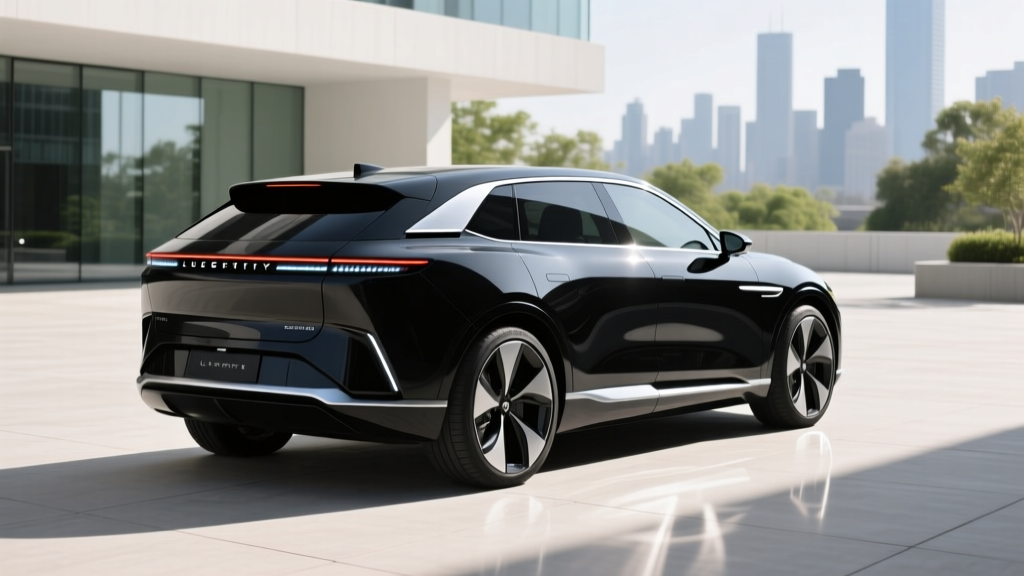
If you're researching three-row electric SUVs, the Lucid Gravity dimensions tell a specific story: this is a full-size luxury hauler designed to compete directly with the Tesla Model X, Rivian R1S, and BMW iX while prioritizing interior volume and aerodynamic efficiency. Lucid Motors began delivering the Gravity in late 2024, and the 2025/2026 model years have solidified its position as one of the most space-efficient electric SUVs on the market. Below, we break down every critical measurement — exterior footprint, interior passenger space, cargo capacity — alongside the real-world range, charging, and ownership data you need before committing to a $80,000+ EV.
| Spec | Gravity Pure (RWD) | Gravity Touring (AWD) | Gravity Grand Touring (AWD) |
|---|---|---|---|
| Length | 203.1 in (5,159 mm) | ||
| Width (w/ mirrors) | 85.3 in (2,167 mm) | ||
| Width (mirrors folded) | 78.6 in (1,996 mm) | ||
| Height | 65.4 in (1,661 mm) | ||
| Wheelbase | 120.5 in (3,061 mm) | ||
| Curb Weight | ~5,600 lbs | ~5,800 lbs | ~5,950 lbs |
| EPA Range | ~450 mi (est.) | ~440 mi | ~440 mi |
| Battery (usable) | ~118 kWh, NMC | ||
| Peak DC Charge | ~300 kW (900V+ architecture) | ||
| 10–80% DC Time | ~20 min (peak conditions) | ||
| Level 2 Charge Rate | 19.2 kW (~80 mi/hr) | ||
| 0–60 mph | ~5.5 sec | ~3.8 sec | ~3.5 sec |
| Horsepower | ~500 hp | ~620 hp | ~800+ hp |
| Drivetrain | RWD | Dual-Motor AWD | Dual-Motor AWD |
| Towing Capacity | 6,000 lbs | ||
| Ground Clearance | Up to 8.5 in (adaptive air suspension) | ||
Interior Volume: Where Lucid Gravity Dimensions Shine
The headline number is 130.1 cubic feet of total interior volume, which Lucid claims makes the Gravity one of the most spacious vehicles in its class — six-seat or seven-seat configurations included. That figure accounts for passenger space plus cargo behind the first row with seats folded. Here's how the dimensions break down across rows:
- First row headroom: ~40.5 in | legroom: ~41.8 in
- Second row headroom: ~39.6 in | legroom: ~40.2 in
- Third row headroom: ~37.8 in | legroom: ~32.5 in
- Cargo (behind 3rd row): ~28 cu ft
- Cargo (behind 2nd row, 3rd folded): ~62 cu ft
- Cargo (max, all rear seats folded): ~102 cu ft
- Front trunk (frunk): ~10.5 cu ft
The 120.5-inch wheelbase — longer than the Rivian R1S (121.1 in is close, but the Gravity is more car-like in packaging) — allows Lucid to push the wheels to the corners and maximize cabin length. The second row is where the Gravity earns its keep for families: nearly 40 inches of legroom means adults can sit behind adults without compromise. The third row is best suited for children or occasional use, which is typical for unibody three-row SUVs. The available six-seat configuration replaces the second-row bench with captain's chairs and a center pass-through, improving third-row access.
For comparison, the Tesla Model X offers about 88 cu ft of max cargo volume and a tighter third row, while the Rivian R1S provides roughly 105 cu ft max but with a more truck-like upright seating position. The Gravity's glass canopy roof (standard on Touring and Grand Touring) adds to the perceived spaciousness, though it does reduce headroom slightly versus a solid roof.
EPA Range vs. Real-World Expectations
EPA Estimated Range: Up to 440 miles (Grand Touring AWD) / ~450 miles (Pure RWD, estimated)
Real-World Expectation: Plan for 340–380 miles on highway road trips at 70–75 mph; 280–330 miles in sustained cold weather (below 32°F) with cabin heating. City driving with regenerative braking can approach or match EPA figures.
Lucid's efficiency engineering is the brand's defining trait. The Air sedan achieves up to 520 miles EPA on a similar battery pack, and the Gravity leverages the same 900V+ electrical architecture, silicon-carbide inverters, and miniaturized drive units. The Gravity's drag coefficient is estimated at ~0.24 Cd — remarkably low for a three-row SUV — which is why a 440-mile EPA rating is achievable despite a 5,800+ lb curb weight.
However, real-world physics still applies. In EPA testing, the combined cycle blends city and highway driving at moderate temperatures. On a 70-degree day at 65 mph, you'll likely see 380–400 miles from a full charge. Push to 80 mph on the interstate, and aerodynamic drag cuts that to roughly 330–360 miles. In winter conditions (20–30°F), expect a 20–30% reduction due to battery heating demand and cabin climate load — bringing the usable range to roughly 280–330 miles. This is still class-leading, but plan charging stops accordingly on sub-freezing road trips.
The Gravity's 118 kWh (usable) NMC (nickel-manganese-cobalt) battery pack provides substantial buffer. Lucid typically reserves a top and bottom buffer to protect long-term battery health, so the total pack capacity is slightly higher than the usable figure. For daily driving, Lucid recommends charging to 80–90% and only using 100% for long trips — standard NMC best practice.
Charging Speed: 900V Architecture in Practice
| Charge Level | Power / Rate | Miles Added | Notes |
|---|---|---|---|
| Level 1 (120V outlet) | ~1.4 kW | ~5 mi/hr | Emergency/trickle only |
| Level 2 (240V, 48A) | 11.5 kW | ~48 mi/hr | Standard home charger |
| Level 2 (240V, 80A) | 19.2 kW | ~80 mi/hr | High-power wall connector |
| DC Fast (peak) | ~300 kW | ~200+ mi in 15 min | Requires 350 kW+ station |
| DC Fast (10–80%) | Avg ~220 kW | ~300 mi in 20 min | Preconditioned battery |
The Gravity's 900V+ electrical architecture (shared with the Air) is one of the highest-voltage platforms in production, enabling peak DC fast-charge rates approaching 300 kW at compatible 350 kW stations. In practice, the charge curve peaks early — roughly 280–300 kW between 10–30% State of Charge — then tapers progressively. Expect an average rate of ~220 kW across the 10–80% session, which takes approximately 20 minutes when the battery is properly preconditioned.
Preconditioning is critical. If you navigate to a DC fast charger using the Gravity's built-in navigation, the thermal management system will warm or cool the battery to optimal charging temperature before you arrive. Skipping preconditioning (e.g., arriving at a charger with a cold-soaked battery) can add 5–10 minutes to your session and reduce peak kW significantly.
At home, the Gravity supports up to 19.2 kW on Level 2 AC charging (80 amps, 240V). This requires a hardwired wall connector and a dedicated 100-amp circuit — something most homes don't have without an electrical panel upgrade. A more typical 48-amp Level 2 installation (like the ChargePoint Home Flex) delivers 11.5 kW, adding roughly 48 miles of range per hour. An overnight charge from 20% to 80% takes about 7–8 hours at 11.5 kW, which is more than sufficient for daily use.
The Gravity uses the NACS (North American Charging Standard) connector, giving it native access to Tesla Supercharger stations — the most reliable and extensive DC fast-charging network in the US. This is a significant advantage over CCS-equipped competitors that require adapters for Supercharger access.
Performance, Efficiency, and Drivetrain
The Gravity lineup spans from efficient single-motor RWD to dual-motor AWD performance. The Pure trim (RWD, ~500 hp) targets maximum range and a sub-$80,000 entry point. The Touring (dual-motor AWD, ~620 hp) balances performance and range for most buyers. The Grand Touring (dual-motor AWD, 800+ hp) is the flagship, delivering supercar-rivaling acceleration in a three-row SUV.
Efficiency figures are projected at roughly 100–105 MPGe combined (approximately 32–34 kWh per 100 miles) for AWD trims, with the RWD Pure potentially reaching 110+ MPGe. For context, the Rivian R1S Dual-Motor achieves about 73 MPGe combined, and the Tesla Model X Long Range lands around 102 MPGe. Lucid's efficiency edge comes from lower aerodynamic drag, higher-voltage power electronics, and smaller, more efficient drive units.
Standard adaptive air suspension adjusts ride height across a range of roughly 2.5 inches. At highway speeds, the Gravity automatically lowers for reduced drag; in Off-Road mode, it rises to 8.5 inches of ground clearance for rough terrain or deep snow. The 6,000-lb towing capacity covers most boat and camping trailer needs, though towing will reduce range by 30–50% depending on trailer weight and speed.
Pricing, Trims, and Federal Tax Credit Eligibility
| Trim | Base MSRP | As-Tested (typical) | §30D Credit Eligibility |
|---|---|---|---|
| Gravity Pure (RWD) | ~$79,900 | $82,000–$85,000 | Partial or $0 — see below |
| Gravity Touring (AWD) | ~$94,900 | $98,000–$105,000 | $0 (exceeds SUV MSRP cap) |
| Gravity Grand Touring (AWD) | ~$119,900 | $125,000+ | $0 (exceeds SUV MSRP cap) |
Under current IRS §30D rules, the federal clean vehicle credit offers up to $7,500 for qualifying new EVs. However, SUVs (including the Gravity, classified as an SUV by the IRS) face an $80,000 MSRP cap. Only the base Gravity Pure RWD, starting around $79,900, could potentially qualify — and only if the buyer's adjusted gross income falls within limits ($150,000 single / $300,000 married filing jointly) and the vehicle meets battery critical-mineral and component sourcing requirements.
As of the 2025–2026 tax year, Lucid's battery sourcing has been in flux due to evolving DOE guidance on foreign entities of concern (FEOC). Buyers should verify current eligibility with their tax professional before relying on the credit. The credit can now be transferred to the dealer at point of sale as an instant discount, but only if all requirements are met. Touring and Grand Touring trims exceed the $80,000 MSRP cap and do not qualify for the new-vehicle credit regardless of income or sourcing.
Destination charges, optional paint, the Surrender glass canopy roof, premium interior packages, and the DreamDrive Pro ADAS suite can add $5,000–$15,000 to the sticker price, pushing even the Pure trim above the credit threshold in many configurations.
Technology, Driver Assistance, and Drawbacks
The Gravity's centerpiece is a 34-inch curved Glass Cockpit display that spans the upper dash, supplemented by a lower 17-inch touchscreen for climate, navigation, and media controls. The infotainment system runs Lucid's proprietary OS with native Apple CarPlay and Android Auto (wireless), over-the-air updates, and integrated trip planning with charging stop optimization.
DreamDrive Pro is Lucid's Level 2 (SAE) driver-assistance suite, featuring adaptive cruise control, lane-centering, automatic emergency braking, blind-spot monitoring, and a 360-degree camera system. This is not autonomous driving. The driver must remain engaged with hands on the wheel and eyes on the road at all times. Unlike GM's Super Cruise or Ford's BlueCruise, Lucid does not yet offer a hands-free driving mode on mapped highways — a notable gap versus some competitors in this price range.
ADAS Limitation Notice: DreamDrive Pro is a Level 2 driver-assist system per SAE classification. It does NOT enable self-driving. The driver is legally and physically responsible for vehicle control at all times. Hands-off operation is not supported.
Notable drawbacks include:
- No hands-free driving mode — competitors like the BMW iX (Driving Assistant Pro) and Rivian R1S (Enhanced Highway Assist) offer limited hands-free capability on mapped roads.
- Third-row accessibility — while usable, the Gravity's third row requires second-row seat tumbling for entry, which is less convenient than the Rivian R1S's wider opening.
- Limited service center network — Lucid's service footprint is still expanding, and owners in rural areas may face long travel distances for warranty repairs.
- No rear wiper — the Gravity's steeply raked rear glass accumulates rain and road spray with no wiper to clear it, relying on aerodynamic flow that isn't always sufficient at low speeds.
Pros
- Class-leading 440-mile EPA range
- 130+ cu ft interior volume in a sleek form factor
- ~300 kW DC fast charging with NACS native access
- Best-in-class energy efficiency (32–34 kWh/100 mi)
- 6,000-lb towing capacity with air suspension
- Spacious second row for adult passengers
Cons
- Tax credit unlikely on most trims (MSRP cap)
- No hands-free Level 2+ driving mode
- Service center network still limited
- High starting price vs. Rivian R1S and Tesla Model X
- Third row best for children only
- No rear wiper on steep glass hatch
Warranty and Battery Longevity
Lucid provides a competitive warranty package for the Gravity:
- Basic vehicle warranty: 4 years / 50,000 miles
- Battery & powertrain warranty: 8 years / 100,000 miles
- Battery capacity retention: Lucid warrants that the battery will retain at least 70% of its original usable capacity over the 8-year/100,000-mile period
The NMC chemistry in the Gravity offers high energy density (enabling the 440-mile range in a manageable pack size) but is slightly more sensitive to long-term degradation than LFP (lithium iron phosphate). Lucid's thermal management system actively cools and heats the pack to minimize calendar and cycle degradation. Based on Air sedan data, owners can expect roughly 90–95% capacity retention after 50,000 miles with normal use (avoiding repeated 100% charges and DC fast-charging exclusively). The 70% retention threshold at 100,000 miles is conservative — most owners report significantly better retention in practice.
Who Should Buy the Lucid Gravity?
Choose the Lucid Gravity if:
- You need genuine three-row seating with adult-comfortable second row
- Maximum range is your top priority (440 mi EPA beats all competitors)
- You road-trip frequently and value 20-minute DC fast-charge stops
- You want NACS native access to Tesla Superchargers without adapters
- Energy efficiency and low per-mile electricity cost matter to you
Consider alternatives if:
- You need hands-free highway driving (BMW iX, Rivian R1S)
- Budget is under $75,000 (Rivian R1S Standard, Tesla Model X used)
- You live far from a Lucid service center
- You need maximum third-row cargo utility (Rivian R1S has a boxier, more practical rear)
Frequently Asked Questions
What are the exact Lucid Gravity dimensions?
The Lucid Gravity measures 203.1 inches long, 85.3 inches wide (with mirrors), 65.4 inches tall, on a 120.5-inch wheelbase. Total interior volume is 130.1 cubic feet. Max cargo volume behind the first row is approximately 102 cu ft, with 28 cu ft behind the third row and a 10.5 cu ft frunk.
What is the real-world range of the Lucid Gravity?
The EPA rates the Gravity Grand Touring AWD at approximately 440 miles. Real-world highway driving at 70–75 mph yields roughly 340–380 miles. In cold weather (below 32°F), expect 280–330 miles. City driving with regenerative braking can approach the EPA figure.
How fast does the Lucid Gravity charge?
On a 350 kW DC fast charger with a preconditioned battery, the Gravity peaks near 300 kW and charges from 10–80% in approximately 20 minutes. At home on a 48-amp Level 2 charger (11.5 kW), a full overnight charge adds roughly 48 miles of range per hour of charging.
Does the Lucid Gravity qualify for the federal EV tax credit?
Only the base Gravity Pure RWD (MSRP ~$79,900) could potentially qualify, and only if it falls under the $80,000 SUV MSRP cap, the buyer meets income limits ($150,000 single / $300,000 joint), and the battery meets critical-mineral sourcing requirements per IRS §30D. Touring and Grand Touring trims exceed the MSRP cap and do not qualify. Verify with a tax professional before purchase.
Is the Lucid Gravity worth buying over the Rivian R1S or Tesla Model X?
The Gravity wins on range (440 mi vs. ~400 mi for the R1S Max, ~348 mi for Model X), efficiency, and DC fast-charging speed. The Rivian R1S offers better off-road capability, a more practical boxy cargo area, and a wider service network. The Tesla Model X provides the Falcon Wing rear doors and access to the full Tesla ecosystem. If range and efficiency are paramount, the Gravity is the strongest pick.
Can the Lucid Gravity tow?
Yes. The Gravity is rated to tow up to 6,000 lbs across all trims. Expect a 30–50% range reduction when towing at highway speeds depending on trailer weight and aerodynamics. The adaptive air suspension helps manage tongue weight and maintains ride quality under load.
What connector does the Lucid Gravity use?
The Gravity uses the NACS (North American Charging Standard) connector natively, providing direct access to Tesla Supercharger stations and other NACS-equipped DC fast-charging networks without an adapter.