If you're conducting competitive research on the luxury electric sedan and SUV market, the strengths of Lucid EV for SWOT analysis center on a handful of engineering achievements that no legacy automaker has matched: class-leading efficiency, record-breaking EPA range, and a proprietary 900-volt electrical architecture. But strengths alone don't tell the full story. This profile breaks down the 2026 Lucid Air and the newly launched Lucid Gravity with the exact numbers, real-world caveats, and ownership economics you need for a rigorous evaluation.
2026 Lucid Lineup at a Glance: Air and Gravity
Lucid Motors currently sells two vehicles in the US market. The Lucid Air is a full-size luxury sedan that debuted for the 2022 model year and continues into 2026 with incremental updates. The Lucid Gravity is a three-row luxury SUV that began deliveries in late 2024 and is now in its second full model year. Both vehicles share Lucid's miniaturized electric powertrain technology, 900V+ electrical architecture, and a design philosophy that prioritizes interior volume within compact exterior dimensions.
| Spec | Air Pure (RWD) | Air Grand Touring (AWD) | Gravity Grand Touring (AWD) |
|---|---|---|---|
| EPA Range | 419 mi | 516 mi | 446 mi |
| Usable Battery | 88 kWh (NMC) | 112 kWh (NMC) | 120 kWh (NMC est.) |
| Horsepower | 430 hp | 819 hp | 828 hp |
| 0–60 mph | 5.0 sec | 3.0 sec | 3.5 sec |
| Drivetrain | RWD single motor | AWD dual motor | AWD dual motor |
| Max DC Charge Rate | 220 kW | 300 kW | 300 kW |
| 10–80% DC Time | ~25 min | ~20 min | ~22 min |
| Level 2 Rate | 19.2 kW (AC) | 19.2 kW (AC) | 19.2 kW (AC) |
| MPGe (combined) | 146 MPGe | 131 MPGe | 112 MPGe (est.) |
| kWh/100 mi | 23 kWh | 26 kWh | 30 kWh (est.) |
| Base MSRP | $69,900 | $125,600 | $94,900 |
Range & Efficiency: The Core Lucid Advantage
Range and efficiency represent Lucid's most defensible competitive moat. The Air Grand Touring's 516-mile EPA estimated range remains the highest of any production EV sold in the United States as of the 2026 model year. But the more impressive figure is efficiency: the Air Pure achieves 146 MPGe combined (23 kWh/100 mi), meaning it extracts more miles per kilowatt-hour than any rival sedan, including the Tesla Model S Long Range and the Mercedes-Benz EQS.
EPA Sticker: 516 mi (Air Grand Touring) / 419 mi (Air Pure) / 446 mi (Gravity GT)
Highway (70 mph, 75°F): Expect ~400–440 mi in the Air GT; ~330–360 mi in the Air Pure. Lucid's efficiency advantage holds at speed better than most competitors due to a low drag coefficient (Cd 0.197 for the Air).
Cold Weather (30°F, mixed driving): Plan on a 20–30% reduction. The Air GT drops to roughly 360–410 mi; the Gravity GT to approximately 310–355 mi. Lucid uses a heat pump for cabin and battery thermal management, which mitigates but does not eliminate cold-weather losses.
Key Insight: Lucid's real-world range retention on highway drives is a genuine strength. Where some competitors lose 30%+ at 75 mph vs. their EPA sticker, the Air typically retains 80–85% of its EPA number at sustained highway speeds in temperate conditions.
According to fueleconomy.gov, the Air Grand Touring's combined MPGe rating of 131 places it ahead of the BMW i7 eDrive50 (98 MPGe) and the Mercedes EQS 580 (97 MPGe). This efficiency gap translates directly into lower charging costs and, critically, faster effective road-trip charging — because you need fewer kWh to cover the same distance.
Charging Speed & Infrastructure: 900V Architecture in Practice
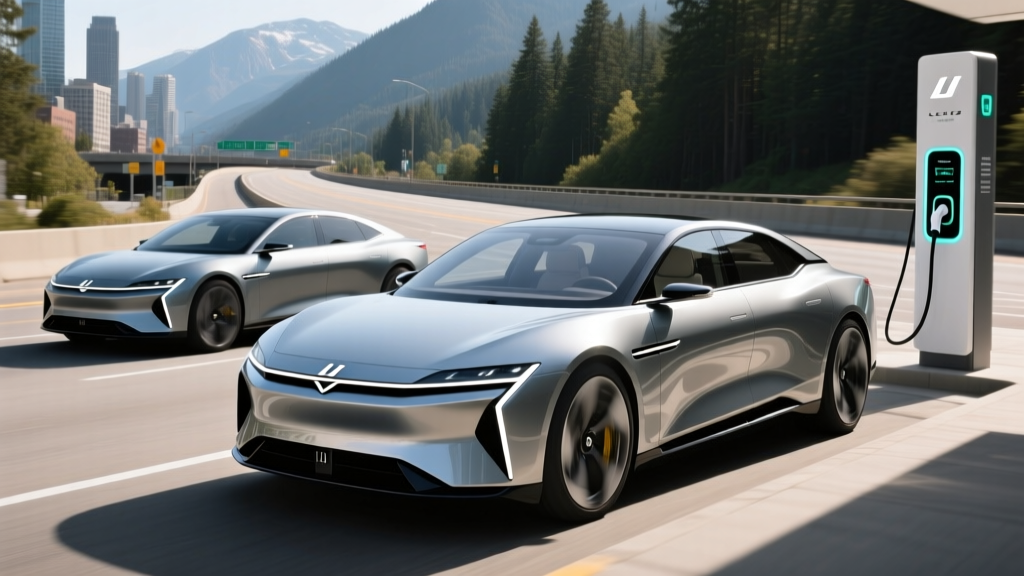
Lucid's 900-volt electrical architecture is the engineering backbone of its charging performance. Higher voltage allows faster charging at lower current, reducing heat and improving sustained charge rates. The Air Grand Touring and Gravity both peak at 300 kW on DC fast chargers, while the Air Pure peaks at 220 kW.
| Charging Level | Power / Voltage | Rate (mi/hr added) | Notes |
|---|---|---|---|
| Level 1 (120V) | 1.4 kW | ~4–5 mi/hr | Emergency/trickle only |
| Level 2 (240V, 80A) | 19.2 kW | ~65–75 mi/hr | Requires hardwired 100A circuit; most home chargers deliver 11.5 kW (48A) for ~40 mi/hr |
| DC Fast Charge (peak) | 300 kW (GT) / 220 kW (Pure) | ~900+ mi/hr at peak | Requires 350 kW CCS or NACS station |
| DC 10–80% (Air GT) | ~20 min | — | Sustains ~250+ kW through 55% SoC before tapering |
| DC 10–80% (Gravity) | ~22 min | — | Larger battery extends session slightly |
Charging curve reality check: The 300 kW peak is not sustained across the full 10–80% session. Lucid's charge curve holds above 250 kW through roughly 55% state of charge (SoC), then tapers progressively. The 10–80% time of approximately 20 minutes for the Air Grand Touring is among the fastest in the luxury EV segment, competitive with the Hyundai Ioniq 5 N and Porsche Taycan, though the Taycan's 800V architecture achieves a slightly faster 10–80% in ideal conditions at ~18 minutes on its 350 kW-capable hardware.
For 2026, Lucid has adopted the North American Charging Standard (NACS) port on new vehicles, granting native access to Tesla's Supercharger network — the most reliable and widespread DC fast-charging network in the US. CCS adapters are available for earlier models. This NACS transition is a significant competitive equalizer, removing one of the historical weaknesses in the Lucid ownership experience.
Performance, Drivetrain & Ride Quality
Lucid's in-house developed electric motors are among the smallest and lightest in the industry — each drive unit weighs roughly 74 lbs and fits in a carry-on-sized enclosure. This miniaturization frees up cabin and cargo space while delivering serious output.
The Air Grand Touring's 819 hp and 3.0-second 0–60 mph time place it in supercar territory, while the Air Sapphire (a limited-performance variant at 1,234 hp) hits 60 mph in under 2.0 seconds. The Gravity Grand Touring delivers 828 hp and a 3.5-second 0–60, remarkable for a three-row SUV with over 7,000 lbs of curb weight.
Ride quality benefits from standard air suspension with adaptive damping. The Air's low center of gravity and near 50/50 weight distribution produce composed handling that reviewers consistently rate above the Tesla Model S and competitive with the BMW i7. The Gravity's air suspension offers up to 9.5 inches of ground clearance for light off-road use and includes a towing mode — the Gravity is rated to tow up to 6,000 lbs.
Interior Space, Cargo & Technology
Lucid's "Space Concept" design philosophy pushes the cabin outward within the wheelbase, producing interior volume that exceeds exterior dimensions suggest.
- Air Sedan: 110.9 cu ft passenger volume; 32 cu ft trunk (with an additional 10 cu ft frunk). Rear legroom is generous at 41.3 inches — more than the Tesla Model S (39.6 in).
- Gravity SUV: Three-row seating for up to seven; estimated 120+ cu ft passenger volume. Cargo space behind the third row is approximately 28 cu ft, expanding to over 80 cu ft with rows folded. A front trunk (frunk) adds additional storage.
The infotainment system runs on a 34-inch curved glass cockpit display that floats above the dashboard. Lucid uses a proprietary software stack rather than Android Automotive or Apple CarPlay — a deliberate choice that enables deep integration with vehicle systems but means no native smartphone mirroring. Wireless phone charging, a 21-speaker Surreal Sound Pro audio system (on Grand Touring), and over-the-air (OTA) updates are standard.
Driver Assistance (SAE Level 2): Lucid's DreamDrive Pro system uses a suite of cameras, radar, and LiDAR (a notable hardware differentiator) for adaptive cruise control, lane centering, and highway assist. This is a Level 2 driver-assist system — the driver must remain engaged and supervising at all times. It is not self-driving. DreamDrive's inclusion of solid-state LiDAR gives it a sensor hardware advantage over Tesla Autopilot and most competitors, though Lucid's software feature set still trails Tesla's FSD (Supervised) and GM's Super Cruise in terms of hands-free operational coverage.
Pricing, Tax Credits & Total Cost of Ownership
Lucid positions itself in the luxury segment, and pricing reflects that. Here's the current lineup with federal tax credit context:
| Model/Trim | Base MSRP | As-Tested (typical) | §30D Credit Eligible? | Est. After Credit |
|---|---|---|---|---|
| Air Pure | $69,900 | $72,000–$75,000 | Unlikely — MSRP cap for sedans is $55,000 | $69,900+ |
| Air Touring | $87,400 | $90,000–$96,000 | No — exceeds $55K sedan MSRP cap | $87,400+ |
| Air Grand Touring | $125,600 | $130,000–$140,000 | No — exceeds $55K sedan MSRP cap | $125,600+ |
| Gravity Pure (est.) | $79,900 | $82,000–$88,000 | Potentially — SUV MSRP cap is $80,000; must meet battery sourcing rules | ~$72,400 (if eligible) |
| Gravity Grand Touring | $94,900 | $100,000–$110,000 | No — exceeds $80K SUV MSRP cap | $94,900+ |
- MSRP Cap: Sedans must be under $55,000; SUVs/pickups under $80,000. This disqualifies nearly all Lucid trims.
- Income Cap: Modified AGI limits — $150K single / $300K joint filers.
- Battery Sourcing: Critical minerals and battery components must meet escalating domestic/free-trade-agreement thresholds. Lucid sources cells from Samsung SDI (South Korea), which may or may not satisfy current-year thresholds depending on the specific supply chain.
The credit can be transferred at the point of sale as a discount. Verify current eligibility on IRS.gov before purchasing. Consult a tax professional for personal eligibility.
Total Cost of Ownership (5-Year Estimate): Even without the federal credit, Lucid's extreme efficiency reduces ongoing charging costs. An Air Grand Touring driven 12,000 miles/year at the US average electricity rate of $0.16/kWh costs approximately $500/year to charge (at 26 kWh/100 mi). A comparable BMW 7 Series (gasoline) at 22 MPG combined and $3.50/gallon costs roughly $1,900/year in fuel. Over five years, that's ~$7,000 in fuel savings — a meaningful offset to the Lucid's premium price. Insurance costs, however, tend to run 15–25% higher than comparable luxury sedans due to repair cost data. Depreciation remains a concern; Lucid's resale values have lagged Porsche and Mercedes in the luxury EV segment.
Warranty Coverage
Lucid provides warranty coverage that is competitive with the luxury EV segment:
- Basic Vehicle Warranty: 4 years / 50,000 miles
- Battery & Powertrain Warranty: 8 years / 100,000 miles (with a capacity retention threshold of 70% of original capacity)
- Roadside Assistance: 4 years / 50,000 miles
The 70% capacity retention threshold is standard for the industry — matching Tesla, BMW, and Mercedes. Lucid's NMC battery chemistry offers high energy density but historically shows slightly faster calendar degradation than LFP chemistry over 8–10 years. However, Lucid's advanced thermal management system (liquid cooling with a heat pump) is designed to mitigate this. Long-term degradation data for Lucid vehicles is still accumulating, as the oldest Airs on the road are now approaching four years of service.
Lucid EV Strengths and Weaknesses for SWOT
- Highest EPA range of any production EV (516 mi, Air Grand Touring)
- Best-in-class efficiency (23 kWh/100 mi, Air Pure) reduces charging cost and time
- 900V architecture enables 300 kW peak DC charging with a strong sustained curve
- Miniaturized motors maximize interior space within compact exterior footprint
- LiDAR-equipped DreamDrive Pro is a hardware differentiator for future ADAS development
- NACS adoption grants native Tesla Supercharger access for 2026+ models
- Gravity SUV brings three-row utility with 6,000-lb towing and 446-mi range
- Air suspension and adaptive damping deliver ride quality above Tesla, competitive with BMW/Mercedes
- Pricing starts at ~$70K; most trims far exceed $100K — inaccessible to mainstream buyers
- Nearly all trims disqualified from the $7,500 federal tax credit due to MSRP caps
- Limited service center network — Lucid relies on mobile service and a small number of physical locations
- No Apple CarPlay or Android Auto; proprietary infotainment limits phone integration
- Resale value / depreciation data remains a concern vs. established luxury brands
- Brand awareness and dealer presence trail legacy competitors significantly
- DreamDrive ADAS features lag Tesla FSD and GM Super Cruise in real-world coverage and hands-free capability
- Long-term battery degradation data is still limited (company founded 2007, first deliveries 2021)
Who Should Buy a Lucid?
- You prioritize maximum range and efficiency above all else in a luxury sedan
- You regularly drive long highway routes (400+ mi real-world highway range is genuinely usable)
- You value interior spaciousness and ride quality over brand cachet
- You have access to home Level 2 charging (19.2 kW AC is a luxury — most homes deliver 11.5 kW on a 48A charger)
- You need three-row seating with electric powertrain and don't want to compromise on range
- You tow up to 6,000 lbs and want electric torque for the task
- The Gravity Pure trim (under $80K MSRP) may qualify for the §30D credit — verify sourcing rules
- You need a budget under $60K — consider the Tesla Model 3, Hyundai Ioniq 6, or Chevrolet Equinox EV
- You prioritize a dense dealer/service network — BMW, Mercedes, and Audi have far more physical locations
- You want hands-free highway driving today — GM Super Cruise or Ford BlueCruise offer more mature hands-free coverage
Frequently Asked Questions
What is the real-world range of the Lucid Air?
The Air Grand Touring's EPA estimate is 516 miles. In real-world highway driving at 70 mph in temperate conditions, expect approximately 400–440 miles. In cold weather (below freezing), plan on 360–410 miles. The Air Pure delivers 419 miles EPA, with real-world highway range around 330–360 miles.
How fast does a Lucid EV charge at home and on the road?
On a DC fast charger, the Air Grand Touring and Gravity peak at 300 kW and charge from 10–80% in approximately 20–22 minutes. At home on a Level 2 charger (240V), the maximum onboard acceptance rate is 19.2 kW (80 amps), adding roughly 65–75 miles of range per hour. Most residential installations use a 48-amp charger (11.5 kW), which adds about 40 miles per hour — sufficient to fully recharge overnight.
Does the Lucid Air or Gravity qualify for the federal EV tax credit?
Most Lucid trims do not qualify for the $7,500 §30D federal tax credit. The MSRP cap is $55,000 for sedans and $80,000 for SUVs, which eliminates the Air lineup entirely and the Gravity Grand Touring. The Gravity Pure, if priced under $80,000, may qualify — but it must also meet battery critical-mineral and component sourcing requirements set by the IRS. Always check current eligibility at IRS.gov.
Is the Lucid Air worth buying vs. the Tesla Model S or Mercedes EQS?
The Lucid Air wins on range (516 vs. 402 mi for the Model S Long Range) and efficiency (131 vs. 120 MPGe). The Model S wins on Supercharger network maturity (though Lucid's NACS adoption closes this gap), software features, and Autopilot/FSD capability. The Mercedes EQS offers a more established dealer network and a more luxurious interior but falls significantly behind on range (371 mi EPA) and efficiency. If maximum range and efficiency are your top priorities, the Air is the segment leader.
What are the biggest risks of owning a Lucid?
The primary risks are limited service infrastructure (few physical service centers, reliance on mobile service), uncertain long-term resale value compared to established luxury brands, and the company's financial stability as a low-volume startup competing against legacy OEMs with vastly greater resources. Battery replacement cost outside of warranty is also a consideration — Lucid has not published official replacement pricing, but industry estimates for a 112 kWh NMC pack range from $20,000–$30,000.
What battery chemistry does Lucid use?
Lucid uses NMC (nickel manganese cobalt) lithium-ion cells supplied primarily by Samsung SDI. NMC chemistry offers higher energy density than LFP (lithium iron phosphate), which is essential for achieving the Air's 500+ mile range in a sedan form factor. The trade-off is that NMC typically shows slightly faster long-term degradation than LFP and requires more careful thermal management — which Lucid addresses with a liquid-cooled system and heat pump.
Sources: EPA fuel economy data via fueleconomy.gov; Lucid Motors official specifications; IRS §30D clean vehicle credit rules at irs.gov. All pricing and specifications reflect 2026 model year information available at time of publication. Verify current pricing and credit eligibility before purchase.