Can You Actually Buy a Lucid Cheaper Car in 2026?
For years, Lucid Motors has been synonymous with luxury: the Air sedan starting near $90,000 and the Gravity SUV pushing past $80,000. But the search for a Lucid cheaper car has intensified as buyers ask whether the brand will ever crack the $50,000 barrier. As of early 2026, the most affordable way into a Lucid is the Air Pure, which starts at $69,900 before destination and incentives. Meanwhile, Lucid's next-generation midsize platform—announced in 2024 and targeted for production in late 2026—promises a starting price near $48,000.
This review focuses on what you can actually buy today: the 2026 Air Pure. We'll also separate confirmed specs from preliminary estimates for the upcoming midsize model, so you know exactly what's available and what's still on the horizon.
2026 Lucid Air Pure: The Entry Point
The Air Pure is the base trim of Lucid's flagship sedan, but "base" hardly does it justice. It shares the same aluminum space-frame architecture and 112.0 kWh (usable) battery pack as the higher trims, just with a single rear motor instead of dual motors. That RWD setup still produces 430 horsepower and delivers the longest EPA-estimated range in the lineup.
| Spec | Value |
|---|---|
| EPA Range | 419 miles |
| Battery (usable) | 112.0 kWh, NMC lithium-ion |
| Drivetrain | Rear-wheel drive (single motor) |
| Horsepower | 430 hp |
| 0–60 mph | 4.0 seconds (mfr. est.) |
| Top Speed | 145 mph |
| EPA Efficiency | 146 MPGe combined / 24 kWh/100 mi |
| Max DC Fast Charge | 220 kW peak |
| 10–80% DC Charge | ~30 minutes |
| Level 2 Home Charge | 19.2 kW (up to 78 mi/hr) |
| Cargo Volume | 32.0 cu ft (trunk + frunk combined) |
| Rear Legroom | 37.3 inches |
| Base MSRP | $69,900 (+ $1,500 destination) |
| Battery/Powertrain Warranty | 8 years / 100,000 miles |
Charging Speed: DC Fast and Home Level 2
Lucid's 900-volt electrical architecture remains one of the fastest-charging platforms in production. The Air Pure can accept a peak 220 kW on a compatible DC fast charger (such as Electrify America's 350 kW stalls or Tesla Superchargers with the included NACS adapter). However, as with all EVs, peak rate is not sustained rate.
| Charging Level | Power | Speed (approx.) |
|---|---|---|
| Level 1 (120V household) | 1.4 kW | ~5 miles per hour |
| Level 2 (240V, 48A) | 11.5 kW | ~46 miles per hour |
| Level 2 (240V, 80A hardwired) | 19.2 kW | ~78 miles per hour |
| DC Fast Charge (peak) | 220 kW | ~200 miles in 15 min (10–50% SoC) |
| DC Fast Charge (10–80%) | Avg ~130 kW sustained | ~30 minutes |
The charge curve is the critical detail most spec sheets hide. The Air Pure pulls close to 220 kW between roughly 10% and 40% state of charge, then tapers progressively. By 70% SoC, you're looking at roughly 100–110 kW, and above 85% it drops further to protect the battery. This is why the 10–80% metric (about 30 minutes) is more honest than the peak kW figure. For road trips, plan stops around the 20–80% window where charging is fastest.
At home on a hardwired 80-amp Level 2 station, the Air Pure's onboard charger can accept up to 19.2 kW—among the highest in the industry. A full overnight charge from 20% to 100% takes roughly 5.5 hours. Most owners on a standard 48-amp circuit (11.5 kW) will see a full charge in about 9 hours, which is still comfortably overnight.
Interior, Tech, and Driver Assistance
Step inside the Air Pure and you'll find a minimalist cabin dominated by a curved 34-inch glass cockpit display that spans the driver's instrument cluster and infotainment. Unlike Tesla's tablet-centric approach, Lucid retains physical buttons for climate and volume—something many buyers specifically seek out.
Notable tech features:
- Lucid's proprietary Wunderbox software platform with over-the-air updates
- Wireless Apple CarPlay and Android Auto
- 21-speaker Surreal Sound Pro audio system (standard on all trims)
- Full panoramic glass roof with electrochromic dimming
- DreamDrive Pro ADAS: adaptive cruise, lane centering, automatic emergency braking, blind-spot monitoring
Drawbacks worth noting: The infotainment system, while visually striking, has drawn criticism for occasional lag and a learning curve with its nested menus. The rear-seat headroom is adequate but not generous for passengers over 6'2", a consequence of the sleek roofline. And the trunk, while offering 32 cu ft total (including the frunk), has a relatively narrow opening that makes loading bulky items less convenient than a hatchback or SUV.
Pricing, Trims, and Federal Tax Credit Eligibility
The 2026 Air Pure starts at $69,900 plus $1,500 destination, for a total of $71,400. The Air Touring (dual-motor AWD, 620 hp) begins at $87,400, and the Air Grand Touring (1,050 hp, 516-mi range) starts at $138,000.
| Trim | Base MSRP | §30D Credit Eligible? | Est. Net Price |
|---|---|---|---|
| Air Pure (RWD) | $69,900 | Depends on sourcing & income* | ~$62,400–$71,400 |
| Air Touring (AWD) | $87,400 | MSRP exceeds sedan cap** | $87,400+ |
| Air Grand Touring | $138,000 | MSRP exceeds sedan cap** | $138,000+ |
Federal tax credit nuances (IRS §30D):
- MSRP cap: Sedans must be priced at or below $55,000 to qualify. The Air Pure at $69,900 exceeds this cap, meaning it does not qualify for the new-vehicle §30D credit based on MSRP alone. (SUVs have an $80,000 cap, which is why the Gravity may qualify in certain trims.)
- Income limits: Modified AGI must not exceed $150,000 (single), $225,000 (head of household), or $300,000 (joint).
- Battery sourcing: Even if MSRP and income qualified, critical mineral and battery component sourcing requirements must be met, per IRS guidance.
- Used EV credit (§25E): A pre-owned Air Pure priced at or below $25,000 could qualify for up to $4,000, but this is unlikely given current residual values.
Bottom line: Most new Air Pure buyers should not expect the $7,500 federal credit due to the MSRP cap for sedans. Consult a tax professional and check the latest IRS eligible vehicle list before purchasing. Some states offer additional rebates that stack regardless of federal eligibility—check your state energy office for details.
Who Should Buy the Air Pure (and Who Shouldn't)
The Air Pure occupies a specific niche: it's a long-range luxury commuter sedan for drivers who prioritize efficiency and range over raw performance or SUV practicality.
✅ Choose the Air Pure If:
- You commute 50+ miles daily and want to charge only 2–3 times per week
- Range is your top priority (419 mi EPA is class-leading)
- You prefer a sedan's driving dynamics over an SUV
- You value 900V fast-charging for occasional road trips
- You have home Level 2 charging access
❌ Look Elsewhere If:
- You need a third row or serious cargo hauling (consider the Gravity or Rivian R1S)
- You want the $7,500 federal credit on a new purchase
- Your budget is firmly under $50,000
- You want hands-free highway driving (Super Cruise or BlueCruise vehicles)
- You frequently tow (Air Pure is not rated for towing)
Competitor Comparison: Air Pure vs. the Field
At roughly $71,400 out the door, the Air Pure competes with the Tesla Model S Long Range, BMW i5 eDrive40, Mercedes EQE 350+, and Porsche Taycan (base). Here's how the key numbers stack up:
| Metric | Lucid Air Pure | Tesla Model S LR | BMW i5 eDrive40 | Mercedes EQE 350+ |
|---|---|---|---|---|
| EPA Range | 419 mi | 402 mi | 295 mi | 305 mi |
| Battery (usable) | 112 kWh | ~100 kWh | 84.3 kWh | 90.6 kWh |
| Efficiency | 146 MPGe | 124 MPGe | 99 MPGe | 98 MPGe |
| 0–60 mph | 4.0 sec | 3.1 sec | 5.7 sec | 6.2 sec |
| Peak DC Charge | 220 kW | 250 kW | 205 kW | 170 kW |
| Base MSRP | $69,900 | $74,990 | $66,800 | $74,900 |
The Air Pure's efficiency advantage is clear: 146 MPGe combined means it uses less electricity per mile than any competitor here, which translates to lower charging costs and more range from a smaller battery. The Tesla Model S is quicker and has a denser Supercharger network, but costs more and offers less range. The BMW i5 is cheaper but sacrifices over 100 miles of range. The Mercedes EQE trails on both range and efficiency.
Per fueleconomy.gov, the Air Pure's 24 kWh/100 mi efficiency means an annual electricity cost of roughly $550–$650 (at $0.16/kWh national average, 15,000 miles/year)—about $1,500–$2,000 less than a comparable gas sedan getting 28 MPG combined at $3.50/gallon.
What About the Upcoming Lucid Midsize Platform?
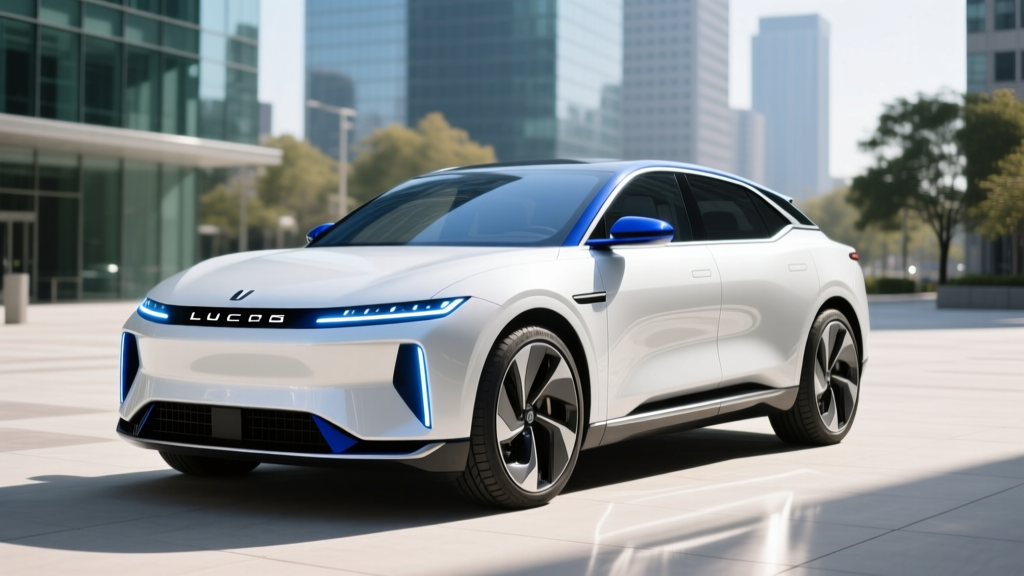
Lucid has confirmed a next-generation midsize platform, internally targeted for production in late 2026 or 2027, with a starting price near $48,000. This vehicle—expected to be a sedan or crossover—is designed to compete directly with the Tesla Model 3 and Model Y, Hyundai Ioniq 5, and BMW iX1.
What we know (from Lucid investor presentations and press statements):
- Smaller, more cost-efficient battery cells (likely NMC, possibly with an LFP option)
- Targeted range of 300+ miles EPA
- Retains 900V architecture for fast charging
- Manufactured at Lucid's AMP-2 facility in Saudi Arabia, with potential U.S. production
- Eligibility for the §30D credit will depend on final assembly location and battery sourcing
Warranty and Long-Term Ownership
Lucid provides an 8-year/100,000-mile battery and powertrain warranty, which covers defects and battery degradation below 70% of original capacity. This matches the industry standard set by most automakers, though some (like Hyundai and Kia) offer 10-year/100,000-mile coverage.
The Air Pure's NMC battery chemistry offers high energy density (enabling that 419-mile range) but historically shows slightly faster degradation than LFP chemistry over many charge cycles. Based on available data from early Air owners and Lucid's thermal management design, expect roughly 8–12% capacity loss over 100,000 miles of mixed use. The large 112 kWh pack means even with 10% degradation, you'd still have roughly 377 miles of EPA-equivalent range—a comfortable buffer.
Maintenance costs are minimal: no oil changes, no transmission fluid, brake pad life extended by regenerative braking. Budget for cabin air filter replacement (~$100–$150 every 2 years), tire rotation, and wiper fluid. Insurance premiums for the Air Pure run $2,800–$4,200/year depending on location and driving record—higher than average due to the vehicle's value and repair costs for the aluminum body and glass roof.
Lucid Cheaper Car: Frequently Asked Questions
What is the cheapest Lucid you can buy new in 2026?
The 2026 Lucid Air Pure at $69,900 MSRP ($71,400 with destination) is the least expensive new Lucid currently available. Certified pre-owned Air models from 2022–2023 can sometimes be found in the $45,000–$55,000 range through Lucid's CPO program or third-party dealers.
Does the Lucid Air Pure qualify for the $7,500 federal EV tax credit?
Most likely not. The IRS §30D credit caps sedan MSRP at $55,000, and the Air Pure starts at $69,900. Even if you meet income requirements (under $150K single / $300K joint), the vehicle's price disqualifies it. Always verify current eligibility on the IRS eligible vehicle list and consult a tax professional.
How fast does the Air Pure charge at home and on the road?
At home on a hardwired 80-amp Level 2 charger, it accepts up to 19.2 kW (about 78 miles of range per hour). On a DC fast charger, it peaks at 220 kW and charges from 10–80% in approximately 30 minutes. Real-world road trip charging is fastest between 20–60% SoC, where sustained rates approach 180–200 kW.
Is the Lucid Air Pure worth it over a Tesla Model S or BMW i5?
If range and efficiency are your top priorities, the Air Pure is the clear winner at 419 miles and 146 MPGe. If you want faster acceleration, a more established service network, or hands-free driving capability, the Model S or a Super Cruise-equipped vehicle may suit you better. The BMW i5 is a strong value pick if 295 miles of range is sufficient for your driving patterns.
When will Lucid release a car under $50,000?
Lucid's midsize platform is targeted for production in late 2026 or 2027, with a starting price near $48,000. This vehicle has not been EPA-certified and is not available for order as of early 2026. Final specs, pricing, and tax credit eligibility remain unconfirmed.