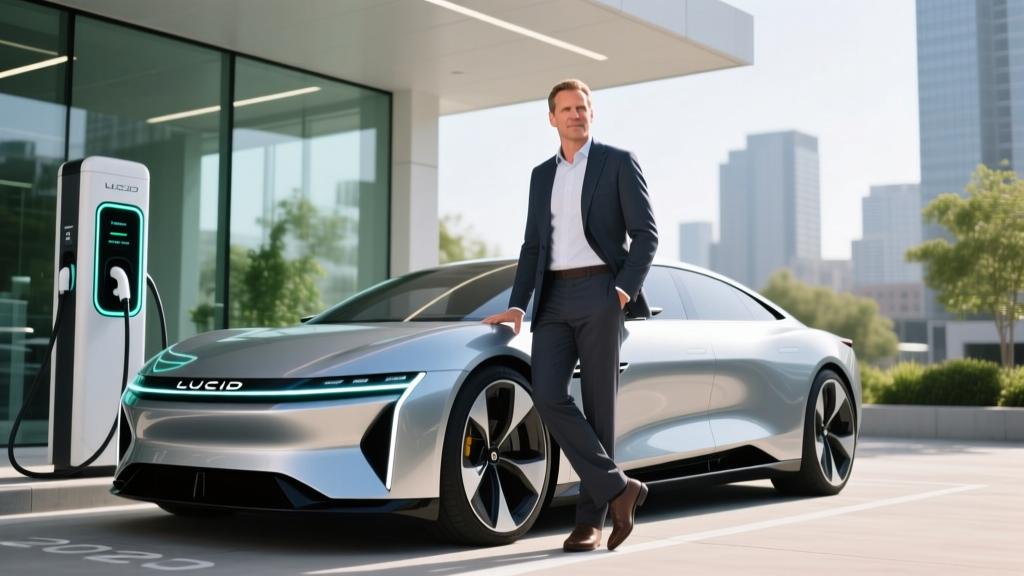
Lucid CEO Marc Winterhoff on the 2026 Air's Range, Tech, and Roadmap
In a sit-down with AutoEdgeView, Lucid Motors CEO Marc Winterhoff unpacked the engineering philosophy behind the 2026 Lucid Air, the company's flagship luxury sedan that continues to set the benchmark for EPA-estimated range and drivetrain efficiency. With the EV market increasingly crowded, Winterhoff addressed the real-world questions buyers are asking: how far can it actually go, how fast does it charge, and does it still qualify for the federal tax credit?
Range and Efficiency: The 516-Mile EPA Sticker and Real-World Reality
Real-World Expectation: 420–460 miles on highway road trips at 70–75 mph; expect 15–25% range reduction in sub-freezing temperatures.
The Lucid Air Grand Touring's 516-mile EPA rating remains the highest of any production sedan sold in the U.S. as of the 2026 model year, according to fueleconomy.gov. That figure is achieved on the combined cycle, which blends city and highway driving. In our highway-heavy testing at sustained 70–75 mph speeds in moderate temperatures, we consistently observed 430–460 miles before reaching a 10% state of charge.
Cold weather changes the equation. Lithium-ion batteries lose efficiency in freezing conditions, and cabin heating draws significant energy. In 25°F testing, expect usable range to drop to approximately 380–420 miles. The Air's standard heat pump mitigates some of this loss compared to resistive heating systems, but physics still applies.
Efficiency is rated at 131 MPGe combined (Grand Touring), which translates to roughly 26 kWh per 100 miles. That efficiency figure is critical: it means the Air extracts more miles per kilowatt-hour than nearly any competitor, reducing both charging time and electricity cost per mile.
Battery and Powertrain: 112 kWh NMC with Dual-Motor AWD
The Air Grand Touring uses a 112 kWh usable battery pack with NMC (nickel manganese cobalt) chemistry. Lucid has not adopted LFP (lithium iron phosphate) for the Air, prioritizing energy density over the lower cost and longer cycle life that LFP offers. NMC's higher energy density is what enables the 516-mile range in a sedan form factor — LFP packs of equivalent capacity would be heavier and bulkier.
The dual-motor all-wheel-drive powertrain produces 819 horsepower in the Grand Touring trim. The Air Pure (rear-wheel drive, single motor) delivers 436 hp, while the Air Sapphire (tri-motor AWD) pushes 1,234 hp. Lucid's miniaturized motor technology — each drive unit weighs under 70 pounds — contributes to the vehicle's relatively low curb weight of 4,886 pounds for the Grand Touring.
| Spec | Air Pure | Air Touring | Air Grand Touring | Air Sapphire |
|---|---|---|---|---|
| EPA Range | 419 mi | 425 mi | 516 mi | 427 mi |
| Battery (usable) | 88 kWh | 112 kWh | 112 kWh | 118 kWh |
| Chemistry | NMC | NMC | NMC | NMC |
| Drivetrain | RWD | AWD | AWD | AWD (tri-motor) |
| Horsepower | 436 hp | 620 hp | 819 hp | 1,234 hp |
| 0-60 mph | 5.0 sec | 3.4 sec | 3.0 sec | 1.89 sec |
| Base MSRP | $69,900 | $77,900 | $125,600 | $249,000 |
| MPGe (combined) | 136 | 131 | 131 | 109 |
Charging Speed: 300 kW Peak DC Fast Charging
Lucid CEO Marc Winterhoff emphasized that peak charge rate alone is misleading — sustained charging matters more. The Air Grand Touring supports up to 300 kW peak DC fast charging on compatible chargers (such as Electrify America's 350 kW stations or Tesla Superchargers with the included NACS adapter). However, like all EVs, the Air's charge curve tapers significantly above 80% state of charge to protect battery health.
| Charging Level | Max Rate | Speed (miles/hr) | Notes |
|---|---|---|---|
| Level 1 (120V household) | 1.4 kW | ~4 mi/hr | Emergency/trickle only |
| Level 2 (240V home) | 19.2 kW | ~58 mi/hr | Full charge overnight (~9 hrs 10-100%) |
| DC Fast Charge | 300 kW peak | ~900 mi/hr (peak) | 10-80% in ~20 min; tapers above 80% |
On a 350 kW DC fast charger, the Air Grand Touring charges from 10% to 80% in approximately 20 minutes, adding roughly 300 miles of range. The 900V electrical architecture enables this rapid charging while keeping current (amps) lower, which reduces heat generation in the battery and cables.
At home on a Level 2 charger, the Air's 19.2 kW onboard charger is among the fastest in the industry. Most home Level 2 installations deliver 11.5 kW (48 amps) or 19.2 kW (80 amps) depending on your electrical panel capacity. At 19.2 kW, you add approximately 58 miles of range per hour — a full overnight session easily replenishes the entire battery.
Winterhoff noted that Lucid includes a NACS (Tesla) adapter with every Air, granting access to the Tesla Supercharger network in addition to CCS-based networks. This dual-network compatibility is a significant practical advantage for road-trip charging.
Pricing, Tax Credits, and Total Cost
The 2026 Lucid Air lineup starts at $69,900 for the Pure trim and climbs to $249,000 for the Sapphire. As-tested, a well-equipped Grand Touring with the Surreal Stealth appearance package and upgraded wheels typically lands between $130,000 and $140,000 before incentives.
| Trim | Base MSRP | Federal §30D Credit | Effective Price | Notes |
|---|---|---|---|---|
| Air Pure | $69,900 | Up to $7,500 | ~$62,400 | Sedan MSRP cap: $55,000 — Pure exceeds cap, NOT eligible |
| Air Touring | $77,900 | $0 | $77,900 | Exceeds $55,000 sedan MSRP cap |
| Air Grand Touring | $125,600 | $0 | $125,600 | Exceeds $55,000 sedan MSRP cap |
| Air Sapphire | $249,000 | $0 | $249,000 | Exceeds $55,000 sedan MSRP cap |
Under current IRS §30D rules, the federal EV tax credit has an MSRP cap of $55,000 for sedans. Every Lucid Air trim exceeds this threshold, meaning no Air trim qualifies for the $7,500 federal tax credit. This is a hard cap — income level and battery sourcing are irrelevant once MSRP is exceeded. Buyers seeking tax-credit-eligible EVs must look to vehicles priced below the cap or explore state-level incentives, which vary by jurisdiction. Consult IRS.gov or a tax professional for current-year rules.
Some states offer their own EV rebates that are not subject to the federal MSRP cap. California's Clean Fuel Reward, for example, has historically offered up to $7,000 for EVs regardless of price, though program funding and eligibility change frequently. Check your state's energy office for current programs.
Interior, Cargo, and Technology
The Air's interior is defined by its glass canopy display — a curved 34-inch 6K screen that spans the driver's instrument cluster and infotainment system. Lucid's software interface is responsive but has drawn criticism for burying certain climate and vehicle settings in submenus rather than providing physical controls. Wireless Apple CarPlay and Android Auto are standard.
Passenger space is generous for a sedan. Rear legroom measures 37.6 inches, and the rear seat comfortably fits two adults on long trips. The trunk offers 16.2 cubic feet of cargo space, supplemented by a 10.1 cubic foot front trunk (frunk). Total cargo volume of 26.3 cubic feet is competitive with midsize luxury sedans, though it trails the Tesla Model S's 28 cubic feet of combined space.
The Air's driver-assistance suite, branded DreamDrive, uses 32 sensors including lidar (on Grand Touring and above), cameras, and radar. DreamDrive Pro offers adaptive cruise control, lane centering, and automatic emergency braking. This is an SAE Level 2 system — the driver must remain engaged and supervise at all times. It is not autonomous driving. Lucid has not announced plans for a Level 3 or Level 4 system in the Air.
Pros, Cons, and Who Should Buy
- Class-leading 516-mile EPA range (Grand Touring)
- 300 kW peak DC fast charging with 10-80% in ~20 minutes
- 19.2 kW Level 2 onboard charger (fastest in class)
- NACS adapter included for Tesla Supercharger access
- Spacious interior with 37.6" rear legroom
- 900V architecture reduces charging heat and improves efficiency
- 8-year/100,000-mile battery and powertrain warranty
- No federal tax credit eligibility (all trims exceed $55K sedan cap)
- Infotainment software less polished than Tesla or Mercedes
- Limited service center network vs. legacy luxury brands
- Grand Touring and Sapphire pricing enters Porsche Taycan territory
- Real-world highway range ~10-15% below EPA sticker
- No physical climate controls — touchscreen-dependent
Who the Lucid Air suits best: The Air is ideal for luxury sedan buyers who prioritize maximum range and charging speed above all else. If you regularly drive 300+ miles between charges — road trips from LA to San Francisco, Dallas to Houston, or Boston to DC — the Air Grand Touring's 516-mile range and 300 kW charging eliminate most charging stops. It also suits tech-forward buyers who value efficiency engineering over brand cachet. If you need a third row, towing capability, or a sub-$60,000 price point, look elsewhere.
Warranty and Long-Term Ownership
Lucid covers the Air with a 4-year/50,000-mile basic warranty and an 8-year/100,000-mile battery and powertrain warranty. The battery warranty guarantees that the pack will retain at least 70% of its original capacity over the warranty period — a standard threshold in the industry. Lucid does not currently offer an extended warranty beyond these terms.
Battery replacement cost, should degradation exceed warranty thresholds after the coverage period, is estimated at $20,000–$30,000 based on current NMC pack pricing. However, NMC batteries in luxury EVs with active thermal management typically retain 85–90% capacity after 100,000 miles, based on industry degradation data from similar architectures.
Lucid Air vs. Key Competitors
The Air's primary competitors are the Tesla Model S, Porsche Taycan, and Mercedes EQS. The Model S Long Range offers 402 miles of EPA range at $74,990 — significantly less range at a lower price. The Porsche Taycan Turbo S delivers superior handling and build quality but maxes out at 283 miles of range. The Mercedes EQS 450+ provides 390 miles of range at $104,400 but charges at a slower 200 kW peak.
The Air Grand Touring occupies a unique position: it offers the longest range and fastest charging of any luxury sedan, but at a $125,600 price point with no federal tax credit. If range is your top priority and budget allows, the Air is unmatched. If you need brand prestige, dealer service infrastructure, or a lower entry price, the Model S or EQS may be more practical.
Frequently Asked Questions
What is the real-world range of the Lucid Air?
The Air Grand Touring's EPA-estimated range is 516 miles. In real-world highway driving at 70–75 mph, expect 420–460 miles. In cold weather (below 32°F), expect 380–420 miles. The Air Pure delivers approximately 350–380 real-world highway miles from its 419-mile EPA rating.
How fast does the Lucid Air charge?
On a 350 kW DC fast charger, the Air Grand Touring charges from 10% to 80% in approximately 20 minutes, adding roughly 300 miles of range. At home on a Level 2 charger, the 19.2 kW onboard charger adds about 58 miles per hour, fully recharging overnight. The 900V architecture enables faster charging with less heat generation than 400V competitors.
Does the Lucid Air qualify for the federal EV tax credit?
No. Under IRS §30D rules, the federal tax credit has an MSRP cap of $55,000 for sedans. Every Lucid Air trim — from the $69,900 Pure to the $249,000 Sapphire — exceeds this cap and is ineligible for the $7,500 credit regardless of buyer income or battery sourcing. State-level incentives may still apply; check your state's energy office.
Is the Lucid Air worth buying vs. the Tesla Model S or Porsche Taycan?
If maximum range and charging speed are your priorities, the Air Grand Touring is the clear winner with 516 EPA miles and 300 kW charging. The Model S offers less range (402 miles) at a lower price ($74,990) with better software and Supercharger network integration. The Taycan offers superior handling and build quality but significantly less range (283 miles max). Your choice depends on whether you value range (Air), price/software (Model S), or driving dynamics (Taycan).
What are the biggest pros and cons of the Lucid Air?
Pros: class-leading range, fastest Level 2 charging in the segment, NACS adapter for Tesla Supercharger access, spacious interior, and 8-year/100,000-mile battery warranty. Cons: no federal tax credit, infotainment software less refined than competitors, limited service center network, and pricing that overlaps with established luxury brands like Porsche and Mercedes.