The Question Every Lucid Shopper Is Asking: Will the Company Survive?
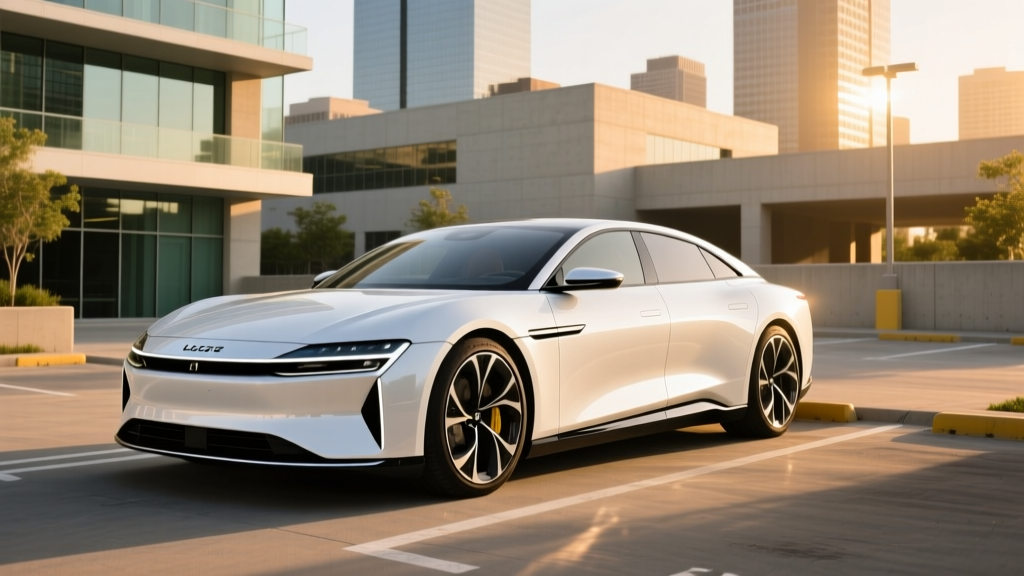
Search interest around the phrase Lucid bankrupt has spiked in early 2026, and it's easy to see why. The Newark, California-based EV maker has burned through billions in cash, posted negative gross margins for most of its history, and required multiple capital injections from its majority backer, Saudi Arabia's Public Investment Fund (PIF). For buyers eyeing the 2026 Lucid Air — still one of the most efficient and longest-range luxury sedans on the market — the financial headlines raise a legitimate question: Is it safe to buy a car from a company that might not be around to honor its warranty?
This review tackles that question head-on while delivering the hard specs, real-world range data, charging performance, and ownership economics you need to decide. We'll separate internet rumor from financial reality and give you a framework for evaluating the risk.
2026 Lucid Air: Core Specifications at a Glance
| Spec | Air Pure | Air Touring | Air Grand Touring |
|---|---|---|---|
| EPA Range | 419 mi | 425 mi | 516 mi |
| Battery (usable) | 88 kWh (NMC) | 112 kWh (NMC) | 112 kWh (NMC) |
| Drivetrain | RWD (single motor) | AWD (dual motor) | AWD (dual motor) |
| Horsepower | 430 hp | 620 hp | 819 hp |
| 0–60 mph | 5.0 sec | 3.4 sec | 3.0 sec |
| Max DC Charge Rate | 220 kW | 300 kW | 300 kW |
| 10–80% DC Time | ~25 min | ~20 min | ~20 min |
| Level 2 Rate (19.2 kW) | ~58 mi/hr | ~58 mi/hr | ~58 mi/hr |
| MPGe (combined) | 140 MPGe | 131 MPGe | 131 MPGe |
| Base MSRP | $69,900 | $87,400 | $125,600 |
All trims use nickel-manganese-cobalt (NMC) lithium-ion cells sourced primarily from LG Energy Solution and Samsung SDI. Lucid does not currently offer an LFP (lithium iron phosphate) option — the NMC chemistry enables the energy density required to hit 516 miles in the Grand Touring, but it also means you should follow the 80% daily charge guideline to minimize long-term degradation.
Real-World Range: What the EPA Number Doesn't Tell You
EPA sticker: 516 miles
Real-world highway (70 mph, 72°F): ~410–440 miles
Real-world cold weather (30°F, mixed driving): ~330–380 miles
Efficiency observed: 23–25 kWh/100 mi highway; 28–32 kWh/100 mi in freezing temps
The Lucid Air Grand Touring's 516-mile EPA figure is real, and it remains the highest EPA-rated range of any production EV sold in the US as of 2026. Lucid's powertrain efficiency is genuinely best-in-class — the Air achieves roughly 4.5 mi/kWh where competitors like the Mercedes EQS 450+ manage closer to 3.5 mi/kWh. This efficiency advantage comes from Lucid's proprietary miniaturized drive units, low rolling-resistance tire tuning, and a drag coefficient (Cd) of 0.20.
But EPA range is a laboratory composite cycle. On a sustained 70 mph highway run in moderate temperatures, expect the Grand Touring to deliver roughly 410–440 miles before needing a plug. That's still extraordinary — enough to drive from Los Angeles to San Francisco on a single charge — but it's 15–20% below the sticker. In freezing weather, lithium-ion internal resistance increases and cabin heating draws significant power (the Air uses a resistive PTC heater, not a heat pump, which is a notable omission at this price point). Plan for 330–380 miles in winter conditions.
The Air Pure with its 88 kWh pack and RWD configuration is slightly more honest to its EPA rating in mixed driving because the lighter single-motor setup loses less energy to drivetrain mass, but highway and cold-weather discounts apply proportionally.
Charging Performance: 900V Architecture Done Right
Lucid's 900V+ electrical architecture gives the Air a genuine advantage at DC fast chargers. The Grand Touring and Touring trims peak at 300 kW on compatible CCS stalls (and via NACS adapter on Tesla Superchargers V4), with a 10–80% charge time of approximately 20 minutes. That's competitive with the Hyundai Ioniq 6 and Porsche Taycan, though the Taycan's sustained charge curve at higher states of charge is marginally better due to its 800V system and more aggressive thermal preconditioning.
| Charging Level | Power / Voltage | Miles Added per Hour | Notes |
|---|---|---|---|
| Level 1 (120V household) | 1.4 kW | ~4 mi/hr | Emergency/trickle only |
| Level 2 (240V, 48A) | 11.5 kW | ~35 mi/hr | Standard home wall connector |
| Level 2 (240V, 80A) | 19.2 kW | ~58 mi/hr | Requires upgraded home circuit (100A breaker) |
| DC Fast Charge (CCS/NACS) | Up to 300 kW (peak) | ~900+ mi/hr (peak) | 10–80% in ~20 min; tapers sharply above 85% |
One practical note: the Air's charge curve tapers noticeably above 80% SoC. If you're road-tripping and need to push past 80%, expect the rate to drop from ~250 kW down to under 50 kW by 95%. Plan your stops to charge from 10–80% and move on — this is standard for NMC packs but it's important to understand for trip planning.
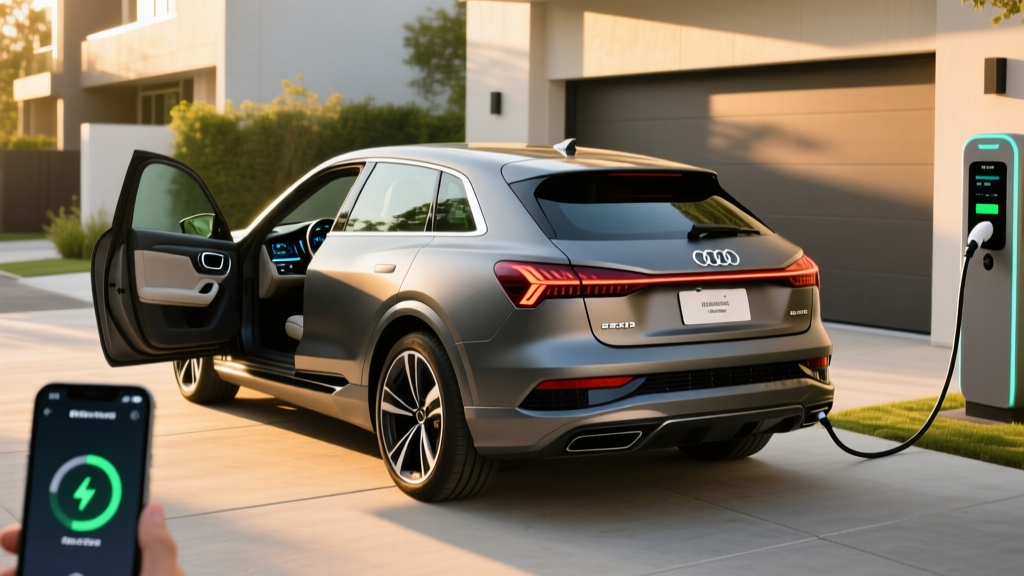
Home charging at the Air's full 19.2 kW onboard rate requires a hardwired wall connector on a 100-amp circuit — something many homes don't have without a panel upgrade. Most owners install a 48-amp Level 2 station (11.5 kW), which adds roughly 35 miles per hour and fully replenishes the Grand Touring's 112 kWh pack in about 11 hours. That's fine for overnight charging but slower than some competitors with larger onboard chargers.
Interior, Tech, and the Air's Notable Drawbacks
The Air's cabin is genuinely spacious. Rear legroom measures 41.3 inches — more than a Mercedes S-Class — thanks to the skateboard platform and Lucid's compact motor packaging. Cargo volume is 32 cu ft combined (17 cu ft trunk + 10 cu ft frunk + under-trunk storage), which is strong for a sedan but obviously less than a crossover like the Tesla Model S (26 cu ft rear + 28 cu ft with seats folded + 5 cu ft frunk).
The 34-inch curved glass cockpit display is visually impressive and responsive. Lucid's in-house infotainment software (Lucid UX) has improved substantially since launch, with wireless Apple CarPlay and Android Auto, native navigation with route-based battery preconditioning, and OTA updates. The available DreamDrive Pro ADAS suite uses 32 sensors including LiDAR and offers adaptive cruise with lane centering, but it remains a SAE Level 2 system — you must keep hands on the wheel and eyes on the road. It is not a hands-free system like GM's Super Cruise or Ford's BlueCruise, and it does not approach Tesla's FSD (Supervised) in feature breadth, though many owners report it performs competently for highway cruising.
Notable drawbacks:
- No heat pump. The Air uses resistive cabin heating, which draws significantly more energy in cold weather than a heat-pump-equipped rival (Tesla Model S, Hyundai Ioniq 5).
- Service center access. Lucid has fewer than 20 service centers nationwide as of early 2026. Mobile service handles minor issues, but body repair and major diagnostics can require shipping the car long distances or long wait times.
- No Apple CarPlay/Android Auto on early 2022–2023 models without a retrofitted software update; 2024+ models include it natively.
- Insurance costs. Average annual premiums for the Air run $3,200–$4,500 depending on trim and state, driven by expensive body panels, limited parts availability, and low production volume.
Pricing, Tax Credits, and Total Cost of Ownership
| Trim | Base MSRP | Federal §30D Credit Eligible? | Est. Net Price (if eligible) |
|---|---|---|---|
| Air Pure | $69,900 | No (sedan MSRP cap is $55,000) | $69,900 |
| Air Touring | $87,400 | No (exceeds $55K sedan cap) | $87,400 |
| Air Grand Touring | $125,600 | No (exceeds $55K sedan cap) | $125,600 |
Here's the bottom line on incentives: no Lucid Air trim qualifies for the federal §30D new EV tax credit. Under current IRS rules, sedans must have an MSRP at or below $55,000 to be eligible, and the Air Pure starts nearly $15,000 above that threshold. The buyer income caps ($150K single / $300K joint AGI) and critical-mineral/battery-component sourcing rules are moot — the MSRP cap disqualifies the Air before those factors come into play.
Some buyers may qualify for state-level incentives (California's CVRP, for example, or Colorado's state credit), but these vary by jurisdiction and income. Check your state's energy office for current programs.
On total cost of ownership, the Air's electricity cost is remarkably low thanks to its efficiency. At the national average of $0.17/kWh, driving the Grand Touring 12,000 miles per year costs approximately $500–$550 in electricity — compared to roughly $1,800–$2,200 for a BMW 5 Series on premium gasoline. Over five years, fuel savings can offset $7,000–$9,000 of the Air's price premium over a gas rival, but depreciation remains a wildcard (more on that below).
So — Is Lucid Actually Going Bankrupt?
As of early 2026, Lucid is not bankrupt and has not filed for Chapter 11 or any insolvency proceeding. The company continues to produce vehicles at its Casa Grande, Arizona factory and has announced the upcoming Gravity SUV and a next-generation mid-size platform. However, the financial picture is genuinely strained:
- Cash burn: Lucid has reported cumulative losses exceeding $10 billion since 2018. Quarterly vehicle deliveries have remained in the low thousands, well below the volumes needed for gross-margin positivity.
- PIF lifeline: Saudi Arabia's Public Investment Fund owns approximately 60% of Lucid and has injected capital multiple times, most recently through a $1.5 billion convertible note in late 2024. The PIF views Lucid as a strategic asset for Saudi Vision 2030 and has shown willingness to continue funding operations.
- Production and demand: Lucid produced roughly 8,000–9,000 vehicles in 2025, far below its factory's theoretical capacity of 150,000+. Demand, not production capacity, is the bottleneck.
- Warranty risk: The Air carries an 8-year/100,000-mile battery and powertrain warranty and a 4-year/50,000-mile bumper-to-bumper warranty. If the company were to cease operations, honoring these warranties would depend on successor arrangements — a real risk that buyers should price in.
The honest assessment: Lucid's survival through 2027–2028 likely depends on the Gravity SUV launch driving meaningful volume and continued PIF support. The company is not in imminent bankruptcy, but it is not financially secure in the way that Tesla, Hyundai, or BMW are. Buyers should treat the purchase as carrying moderate company-risk — similar to buying from Fisker before its 2024 collapse or from any low-volume luxury automaker.
Lucid Air vs. Key Competitors: Is It Worth the Risk?
- Class-leading EPA range (516 mi Grand Touring)
- Best-in-class energy efficiency (4.5 mi/kWh)
- Exceptional rear-seat space (41.3" legroom)
- 300 kW DC fast charging, 10–80% in ~20 min
- Refined ride quality and low NVH
- Strong 0–60 performance across trims
- Company financial risk — not yet profitable
- No federal tax credit eligibility (MSRP too high)
- No heat pump — cold-weather range loss is significant
- Limited service center network (<20 locations)
- High insurance premiums ($3,200–$4,500/yr)
- DreamDrive Pro is competent but behind Tesla FSD and GM Super Cruise
- Resale value uncertainty given company risk
Choose the Lucid Air if: You prioritize maximum range and efficiency above all else, you have reliable home Level 2 charging, you live near a Lucid service center or are comfortable with mobile service logistics, and you can absorb the financial risk of buying from a low-volume startup. The Grand Touring is the standout trim for road-trippers who want to minimize charging stops.
Choose the Tesla Model S if: You want a proven service network, Supercharger access without adapters, and stronger resale value certainty. The Model S Long Range offers ~402 miles EPA at a lower starting price, though with less rear-seat space and lower efficiency.
Choose the Mercedes EQS 450+ if: You value dealership service infrastructure, brand prestige, and a more traditional luxury ownership experience. The EQS sacrifices ~120 miles of range compared to the Air Grand Touring but comes with zero company-survival risk.
Choose the BMW i5 eDrive40 if: You want a more affordable luxury EV sedan (~$66,900 MSRP), excellent build quality, and a vast dealer network. Range is lower (~295 miles EPA) but the ownership ecosystem is rock-solid.
Frequently Asked Questions
What is the real-world range of the 2026 Lucid Air?
The Grand Touring delivers approximately 410–440 miles on the highway in moderate weather and 330–380 miles in freezing conditions, versus its 516-mile EPA rating. The Air Pure with its smaller 88 kWh pack returns roughly 330–360 highway miles in good weather.
How fast does the Lucid Air charge at home and on the road?
On a DC fast charger, the Touring and Grand Touring peak at 300 kW, charging from 10–80% in about 20 minutes. At home on a standard 48-amp Level 2 station (11.5 kW), you'll add about 35 miles per hour. The Air's full 19.2 kW onboard charger requires an 80-amp circuit and 100-amp breaker, which many homes need a panel upgrade to support.
Does the Lucid Air qualify for the federal EV tax credit?
No. Under current IRS §30D rules, new sedans must have an MSRP at or below $55,000 to qualify. The least expensive Air Pure starts at $69,900, making the entire lineup ineligible regardless of buyer income or battery sourcing. State incentives may still apply — check your local program.
Is buying a Lucid Air risky given the company's finances?
Moderately, yes. Lucid is not bankrupt as of 2026 and continues to be backed by Saudi Arabia's PIF, but the company has not achieved profitability and production volumes remain low. The 8-year/100,000-mile battery warranty is strong on paper, but warranty fulfillment depends on the company's continued operation. Consider a third-party extended warranty and factor in potentially higher service logistics costs.
What's the biggest advantage the Lucid Air has over competitors?
Efficiency and range. The Air Grand Touring achieves 516 EPA miles at 131 MPGe combined — no other production EV matches both figures. This translates directly to fewer charging stops on road trips and lower electricity costs per mile driven. If range is your top priority, the Air is the answer.
How does the Lucid Air handle cold weather?
The Air does not have a heat pump, relying instead on resistive PTC heating. This means cabin warmth draws heavily from the traction battery in cold weather, resulting in 25–35% range reduction in freezing temperatures — more than heat-pump-equipped rivals like the Tesla Model S or Hyundai Ioniq 5. Battery preconditioning for DC fast charging works, but plan for slower winter charging and reduced regenerative braking when the pack is cold.
Sources: EPA fuel economy data via fueleconomy.gov; Lucid Motors official specifications; IRS §30D clean vehicle credit rules via irs.gov.