Quick Verdict: Is the Lucid Air Warranty Worth the Premium?
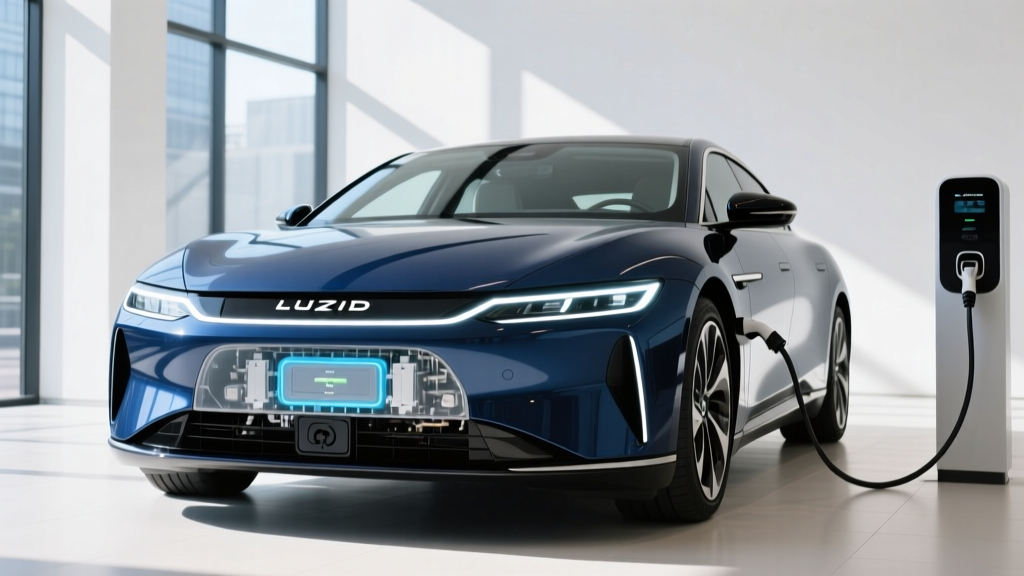
The Lucid Air remains one of the most efficient and longest-range luxury electric sedans on the market, but at a starting MSRP pushing well into six figures, buyers rightly scrutinize what happens after the honeymoon ends. The Lucid Air warranty package pairs an 8-year/100,000-mile battery and powertrain guarantee with a 4-year/50,000-mile basic vehicle warranty — competitive with Tesla and Mercedes-Benz EQS, though it falls short of Genesis and Hyundai's 10-year benchmarks. This review dissects every layer of coverage, pairs it with real-world range and charging data, and helps you decide whether the Air's long-term ownership proposition justifies its price.
| Spec | Pure (RWD) | Touring (AWD) | Grand Touring (AWD) | Sapphire (AWD) |
|---|---|---|---|---|
| EPA Range | 419 mi | 406 mi | 512 mi | 427 mi |
| Battery (usable) | 88 kWh | 112 kWh | 112 kWh | 118 kWh |
| Chemistry | NMC | NMC | NMC | NMC |
| Peak DC Charge | 200 kW | 250 kW | 250 kW | 250 kW |
| 10–80% DC Time | ~30 min | ~25 min | ~25 min | ~25 min |
| Level 2 Rate | 19.2 kW | 19.2 kW | 19.2 kW | 19.2 kW |
| 0–60 mph | 5.2 sec | 3.4 sec | 3.0 sec | 1.89 sec |
| Horsepower | 430 hp | 620 hp | 819 hp | 1,234 hp |
| Drivetrain | RWD single-motor | AWD dual-motor | AWD dual-motor | AWD tri-motor |
| EPA Efficiency | 140 MPGe | 130 MPGe | 131 MPGe | 109 MPGe |
| Base MSRP | $69,900 | $78,900 | $111,900 | $249,000 |
Real-World Range: What the EPA Sticker Doesn't Tell You
The Lucid Air Grand Touring's 512-mile EPA estimate is the highest of any production sedan sold in the United States, per fueleconomy.gov. But EPA numbers are derived from controlled laboratory cycles that don't fully replicate sustained highway driving, cold-weather commutes, or mountain passes.
EPA Sticker: 512 miles (Grand Touring AWD, 112 kWh pack)
Real-World Highway (70 mph, 68°F): ~380–420 miles
Cold Weather (32°F, mixed driving): ~310–360 miles
City/Commuter (stop-and-go with regen): ~460–500 miles
Lucid's industry-leading efficiency — the Grand Touring achieves roughly 4.0 miles per kWh — helps cushion the real-world penalty. The Air's heat pump (standard across all trims) recovers waste heat from the drivetrain to warm the cabin, reducing the range hit in winter compared to EVs relying solely on resistive PTC heaters. Still, plan for a 20–30% reduction in freezing temperatures, particularly on highway trips above 65 mph where aerodynamic drag dominates.
The Pure RWD trim's 419-mile EPA figure is remarkable for a base model. In real-world mixed driving, owners typically report 330–370 miles before needing a charge — still enough to cover most daily commutes for a full work week without plugging in.
Lucid Air Warranty: Complete Coverage Breakdown
Understanding the Lucid Air warranty structure is essential for a vehicle at this price point. Here's what Lucid covers, what it doesn't, and how it compares to the luxury EV competition.
| Coverage Type | Lucid Air | Tesla Model S | Mercedes EQS | Genesis Electrified G80 |
|---|---|---|---|---|
| Basic (bumper-to-bumper) | 4 yr / 50,000 mi | 4 yr / 50,000 mi | 4 yr / 50,000 mi | 5 yr / 60,000 mi |
| Battery & Powertrain | 8 yr / 100,000 mi | 8 yr / 120,000 mi | 8 yr / 100,000 mi | 10 yr / 100,000 mi |
| Battery Capacity Retention | ≥70% at 8yr/100k mi | ≥70% at 8yr/120k mi | ≥70% at 8yr/100k mi | ≥70% at 10yr/100k mi |
| Corrosion Perforation | 5 yr / unlimited mi | 4 yr / 50,000 mi | 4 yr / 50,000 mi | 7 yr / unlimited mi |
| Roadside Assistance | 4 yr / 50,000 mi | 4 yr / 50,000 mi | 4 yr / 50,000 mi | 5 yr / unlimited mi |
Battery and Drive Unit Coverage
The heart of the Lucid Air warranty is its 8-year/100,000-mile battery and drive unit protection. If the NMC lithium-ion pack degrades below 70% of its original usable capacity within that window, Lucid will repair or replace it at no cost. This 70% threshold is the industry standard, matching Tesla, Mercedes, and most other OEMs.
Lucid uses a 21700-format NMC cell architecture in a structural pack. NMC (nickel manganese cobalt) chemistry delivers the high energy density needed for 500+ mile range, but it is more sensitive to sustained high state-of-charge and extreme heat than LFP (lithium iron phosphate). To preserve long-term health, Lucid's battery management system includes an active liquid thermal management loop and recommends daily charging limits around 80–90% for routine use.
What the Warranty Doesn't Cover
Expect standard exclusions: wear items (tires, brake pads, wiper blades, cabin filters), cosmetic damage, misuse (track use on non-Sapphire trims, commercial fleet abuse), aftermarket modifications to the electrical system, and damage from flooding or collisions. The 12V auxiliary battery is covered under the basic 4-year warranty, not the 8-year traction battery warranty.
Transferability and Resale Impact
The Lucid Air battery and powertrain warranty is fully transferable to subsequent owners with no fee or paperwork required — a meaningful advantage for resale value. A 2025 Air with 30,000 miles still carries roughly 5 years and 70,000 miles of battery coverage for the second owner.
Charging Speed: DC Fast Charging and Home Level 2
Lucid equips the Air with a 900V electrical architecture, enabling exceptionally fast DC charging. On a 350 kW-capable Electrify America or Ionity station, the Grand Touring and Touring peak at approximately 250 kW, adding roughly 200 miles of range in 12 minutes under ideal conditions.
| Charging Level | Power (kW) | Miles Added per Hour | Notes |
|---|---|---|---|
| Level 1 (120V household) | ~1.4 kW | ~5 mi/hr | Emergency/trickle only |
| Level 2 (240V, 48A home) | ~11.5 kW | ~46 mi/hr | Typical home wall connector |
| Level 2 (240V, 80A) | 19.2 kW | ~76 mi/hr | Max onboard charger capacity |
| DC Fast Charge (peak) | 200–250 kW | ~900+ mi/hr equivalent | 10–80% in ~25 min (GT/Touring) |
A critical real-world note: the Air's charge curve tapers meaningfully above 80% state-of-charge. The peak 250 kW rate is sustained roughly from 10% to 50% SoC, after which the battery management system progressively reduces current to protect cell longevity. Charging from 80% to 100% on DC can add another 15–20 minutes. For road trips, plan your stops around the 10–80% window for maximum time efficiency.
At home, the Air's 19.2 kW onboard charger is among the most powerful in the industry. If your electrical panel supports an 80A dedicated circuit (requires a 100A breaker), you can replenish roughly 76 miles of range per hour — enough to fully recharge a depleted Grand Touring overnight in about 7 hours. Most homes will need a panel upgrade to support this; a standard 48A/11.5 kW installation is more common and still adds ~46 miles per hour of charging.
Pricing, Trims, and Federal Tax Credit Eligibility
The 2025 Lucid Air lineup spans four trims, from the value-oriented Pure to the hypercar-rivaling Sapphire. Here's how pricing breaks down and where the federal tax credit fits in.
| Trim | Base MSRP | Sedan MSRP Cap (§30D) | Income Cap (Modified AGI) | Est. Credit |
|---|---|---|---|---|
| Pure RWD | $69,900 | $55,000 | $150K single / $300K joint | Does NOT qualify (MSRP exceeds cap) |
| Touring AWD | $78,900 | $55,000 | $150K single / $300K joint | Does NOT qualify (MSRP exceeds cap) |
| Grand Touring AWD | $111,900 | $55,000 | $150K single / $300K joint | Does NOT qualify (MSRP exceeds cap) |
| Sapphire AWD | $249,000 | $55,000 | $150K single / $300K joint | Does NOT qualify (MSRP exceeds cap) |
Under IRS §30D rules, new clean vehicle credits are capped at $55,000 MSRP for sedans. Every Lucid Air trim exceeds this threshold, meaning no new Lucid Air currently qualifies for the $7,500 federal tax credit. Additionally, battery critical-mineral sourcing and component manufacturing requirements further restrict eligibility for many luxury EVs.
Buyers can explore two alternative paths: the used EV credit (up to $4,000 or 30% of sale price, whichever is lower, on a qualifying pre-owned Air priced under $25,000 — unlikely given current resale values) or leasing, where the lessor may capture the commercial clean vehicle credit and pass savings through as a capitalized cost reduction. Always consult a tax professional and review current IRS guidance before making purchase decisions based on incentives.
Interior, Cargo, and Technology
The Air's cabin is minimalist in the Tesla tradition, dominated by a 34-inch curved glass cockpit display that floats above the dashboard. A retractable lower touchscreen handles climate and media controls, folding flush into the dash when not in use. The software is responsive, though some owners note the absence of Apple CarPlay and Android Auto — Lucid relies entirely on its proprietary infotainment stack.
Passenger space is generous for a luxury sedan:
- Front headroom: 38.1 inches
- Rear legroom: 37.4 inches
- Trunk (rear): 22.1 cu ft
- Frunk (front): 7.1 cu ft
- Total cargo: 29.2 cu ft
The frunk is notably smaller than the Tesla Model S (which offers ~25 cu ft combined) due to the Air's compact front motor and structural packaging. Rear-seat comfort is excellent for two adults, though the sloping roofline limits headroom for passengers over 6'2".
DreamDrive ADAS
Lucid's DreamDrive Pro driver-assistance suite uses 32 sensors including LiDAR (on Grand Touring and above), radar, and cameras. It provides adaptive cruise control, lane centering, automatic emergency braking, and blind-spot intervention.
SAE Automation Level: Level 2
DreamDrive Pro is a driver-assist system, not a self-driving system. The driver must remain engaged, hands on or near the wheel, and eyes on the road at all times. Lucid does not currently offer a hands-free highway driving feature comparable to GM's Super Cruise or Ford's BlueCruise.
Who Should Buy the Lucid Air?
Choose the Lucid Air if:
- You prioritize maximum EPA range and efficiency above all else — the Grand Touring's 512 miles is unmatched
- You want a luxury sedan with genuine sports-car acceleration (Sapphire: 1.89s 0–60)
- You have access to home Level 2 charging and can install a high-amperage circuit
- You value a spacious rear seat and premium ride quality for long-distance touring
Look elsewhere if:
- You need the federal tax credit — the Air's MSRP disqualifies every trim
- You want hands-free highway driving (consider the BMW i5 with Highway Assistant or Mercedes EQS with Drive Pilot in approved areas)
- Service center proximity matters — Lucid's service network is still sparse outside major metros
- You need SUV cargo versatility or towing capacity (the Air is not rated for towing)
Pros and Cons at a Glance
Pros
- Class-leading 512-mile EPA range (Grand Touring)
- Industry-best efficiency (~4.0 mi/kWh)
- 250 kW peak DC fast charging with 900V architecture
- 19.2 kW onboard Level 2 charger (fastest in class)
- Spacious rear seat and 29.2 cu ft total cargo
- Standard heat pump for cold-weather range preservation
- Fully transferable 8-year battery warranty
Cons
- No federal §30D tax credit eligibility (MSRP cap)
- No Apple CarPlay or Android Auto
- Limited service center network vs. Tesla/BMW/Mercedes
- DreamDrive ADAS lacks hands-free highway capability
- Small frunk relative to competitors
- NMC battery chemistry requires mindful charging habits
- High insurance premiums typical of luxury EVs
Frequently Asked Questions
What is the real-world range of the Lucid Air?
The Grand Touring achieves an EPA-estimated 512 miles, but expect roughly 380–420 miles on sustained highway drives at 70 mph and 310–360 miles in freezing conditions. The Pure RWD's 419-mile EPA figure translates to approximately 330–370 real-world miles in mixed driving. Lucid's exceptional efficiency helps mitigate the gap between sticker and reality.
How fast does the Lucid Air charge at home and on the road?
On a 350 kW DC fast charger, the Touring and Grand Touring peak at 250 kW, reaching 10–80% in approximately 25 minutes. At home on a 240V/80A circuit, the Air's 19.2 kW onboard charger adds roughly 76 miles of range per hour — the fastest Level 2 acceptance rate in its class. Most residential installations use a 48A circuit for ~46 miles per hour.
Does the Lucid Air qualify for the federal EV tax credit?
No. Under current IRS §30D rules, sedans must have an MSRP at or below $55,000 to qualify. Every Lucid Air trim exceeds this cap. Additionally, buyers must meet income thresholds ($150,000 single / $300,000 joint filing) and the vehicle must satisfy battery critical-mineral and component sourcing requirements. Leasing may offer an indirect path to savings if the lessor passes through commercial credit benefits.
Is the Lucid Air worth buying over the Tesla Model S or Mercedes EQS?
If maximum range and efficiency are your top priorities, the Air Grand Touring is objectively superior — 512 EPA miles versus the Model S Long Range's ~402 miles and the EQS 450+'s ~350 miles. However, the Model S offers access to the Supercharger network (though NACS adapters are expanding access for Lucid owners), a more mature service network, and hands-free-capable Autopilot/FSD. The EQS counters with a more traditional luxury interior and available hands-free driving in approved zones. The right choice depends on your tolerance for Lucid's smaller service footprint versus its range advantage.
What happens if the Lucid Air battery degrades significantly?
Under the 8-year/100,000-mile battery warranty, Lucid will repair or replace the pack if usable capacity drops below 70% of original. Real-world NMC degradation data from early Lucid owners (2022–2024 models) suggests typical annual loss of 1.5–2.5% with proper charging habits (avoiding sustained 100% SoC, minimizing DC fast-charge frequency above 80%). At this rate, most packs should retain 82–88% capacity at the 8-year mark, well within warranty thresholds.
Does the Lucid Air warranty cover the LiDAR sensor?
Yes, the LiDAR unit (standard on Grand Touring and Sapphire, optional on Touring) is covered under the basic 4-year/50,000-mile bumper-to-bumper warranty as an electronic component. After that period, replacement would be an out-of-pocket expense unless covered by an extended service contract. LiDAR units in the EV industry typically cost $1,000–$2,500 to replace if damaged outside warranty.