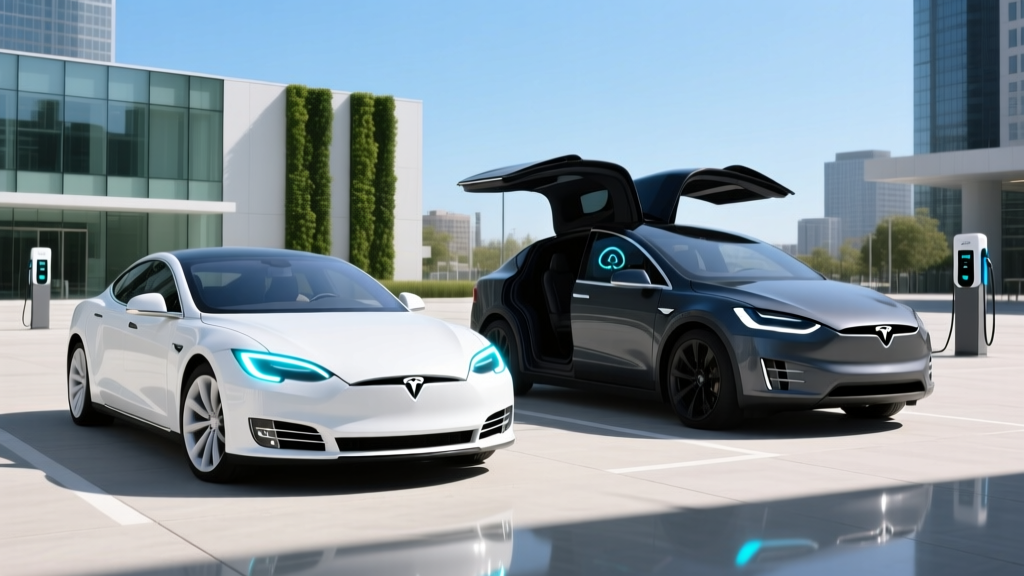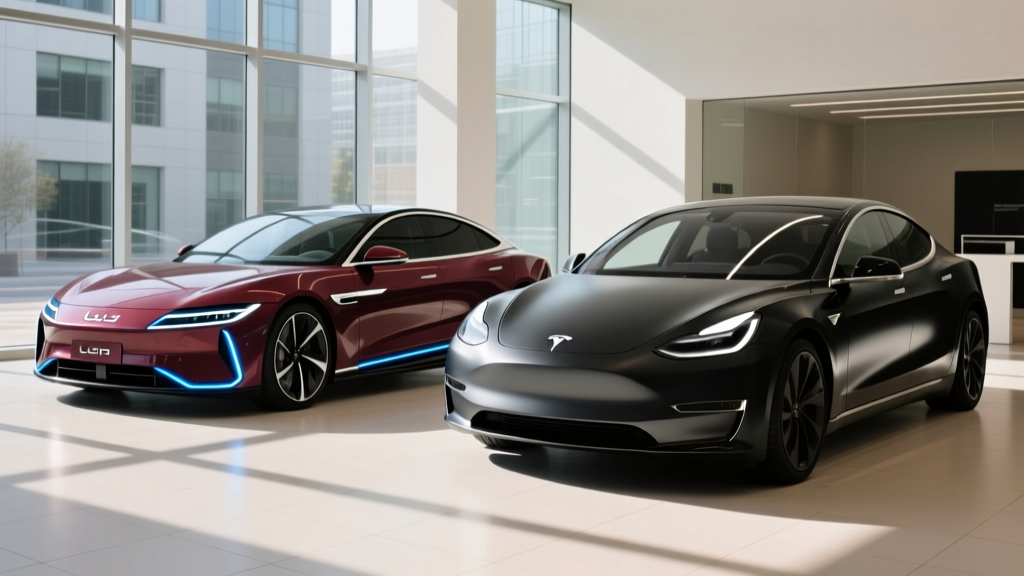
Choosing between Lucid and Tesla means picking between two fundamentally different philosophies of luxury electric sedans. Tesla's Model S is the established benchmark — a proven platform with the industry's best charging network and a tech-forward cabin. The Lucid Air is the efficiency king — squeezing more miles per kilowatt-hour than anything else on the road, with a spacious interior that makes the Model S feel cramped. Both are compelling, but they serve different buyers.
This head-to-head review covers the 2026 Lucid Air (Pure, Touring, and Grand Touring trims) against the 2026 Tesla Model S (Long Range and Plaid). We'll look past the marketing and into real-world range, charging curves, true ownership costs, and the tax-credit math that could swing your decision by thousands of dollars.
Quick Verdict: Lucid or Tesla in 2026?
Choose the Lucid Air if: You prioritize real-world range above all else, value interior space and ride comfort, prefer a more traditional luxury sedan feel, and want the most efficient powertrain in production. The Air Grand Touring's 516-mile EPA estimate is unmatched.
Choose the Tesla Model S if: You rely on the Supercharger network for frequent road trips, want the most mature over-the-air software ecosystem, value hatchback cargo versatility, and prefer the performance-per-dollar of the Plaid's 1,020 hp at ~$89,990.
Side-by-Side Spec Comparison
| Specification | 2026 Lucid Air Pure | 2026 Lucid Air Grand Touring | 2026 Tesla Model S Long Range | 2026 Tesla Model S Plaid |
|---|---|---|---|---|
| EPA Range | 419 mi | 516 mi | 402 mi | 396 mi |
| Battery (usable) | 88 kWh (NMC) | 112 kWh (NMC) | ~100 kWh (NMC) | ~100 kWh (NMC) |
| Drivetrain | RWD (single motor) | AWD (dual motor) | AWD (dual motor) | AWD (tri-motor) |
| Horsepower | 430 hp | 819 hp | 670 hp | 1,020 hp |
| 0–60 mph | 5.0 sec | 3.0 sec | 3.1 sec | 1.99 sec |
| Efficiency (MPGe) | 146 MPGe | 131 MPGe | 124 MPGe | 116 MPGe |
| Efficiency (kWh/100 mi) | 23 | 26 | 28 | 30 |
| Max DC Fast Charge | 200 kW | 300+ kW | 250 kW | 250 kW |
| 10–80% DCFC Time | ~30 min | ~22 min | ~28 min | ~28 min |
| Level 2 Home Rate | 19.2 kW (~80 mi/hr) | 19.2 kW (~80 mi/hr) | 11.5 kW (~44 mi/hr) | 11.5 kW (~44 mi/hr) |
| Cargo Volume | 32 cu ft (trunk + frunk) | 32 cu ft | 28 cu ft (hatch + frunk) | 28 cu ft |
| Base MSRP | $69,900 | $125,600 | $74,990 | $89,990 |
| Battery Warranty | 8 yr / 100,000 mi | 8 yr / 100,000 mi | 8 yr / 150,000 mi | 8 yr / 150,000 mi |
Real-World Range: EPA Sticker vs. What You'll Actually Get
Lucid Air Grand Touring: EPA 516 miles. Expect ~430–460 miles in mixed real-world driving at 70 mph highway speeds. In freezing temperatures (below 32°F), plan for 350–390 miles due to cabin heating demands and increased battery resistance. City driving with regen braking can push closer to the EPA figure.
Tesla Model S Long Range: EPA 402 miles. Expect ~330–360 miles at sustained highway speeds. Cold weather drops this to approximately 270–310 miles. Tesla's heat pump is effective, but the Model S's higher drag coefficient and heavier weight work against it on long runs.
The Lucid Air's efficiency advantage isn't just marketing — it's physics. Lucid's miniaturized drive units and 900V+ electrical architecture reduce energy losses throughout the powertrain. The Air Pure achieves 23 kWh/100 mi, which translates to roughly 4.3 miles per kWh. The Model S Long Range returns about 3.6 miles per kWh. Over a year of 12,000 miles, that efficiency gap means the Lucid uses approximately 400 fewer kWh — roughly $60–$80 in electricity savings depending on your local rates.
According to fueleconomy.gov, the Air Pure's combined MPGe of 146 places it among the most efficient vehicles of any type ever rated by the EPA. The Model S Long Range's 124 MPGe is strong but trails by a meaningful margin.
Charging Speed: Home and DC Fast Charging Compared
| Charging Level | Lucid Air (all trims) | Tesla Model S (all trims) |
|---|---|---|
| Level 1 (120V / 12A) | ~1.4 kW — ~4 mi/hr | ~1.4 kW — ~3 mi/hr |
| Level 2 (240V / 48A) | 11.5 kW — ~48 mi/hr | 11.5 kW — ~44 mi/hr |
| Level 2 (240V / 80A, Lucid) | 19.2 kW — ~80 mi/hr | N/A (onboard charger capped at 11.5 kW) |
| DC Fast Charge (peak) | 200–300+ kW (trim dependent) | 250 kW (V3 Supercharger) |
| 10–80% DCFC (typical) | 22–30 min | ~28 min |
| Connector | CCS (NACS adapter available) | NACS (native) |
Lucid's 19.2 kW onboard charger is a significant home-charging advantage. With a properly wired 100-amp circuit and a Lucid home charger, you can add roughly 80 miles of range per hour — enough to fully replenish even the Grand Touring's 112 kWh battery overnight in about 6 hours. The Model S, capped at 11.5 kW, needs closer to 9–10 hours for a full charge on the same 240V circuit. For most owners who plug in nightly and rarely drain below 30%, this difference is negligible. But if you regularly deplete the battery on long trips and need a fast turnaround at home, Lucid's faster onboard charger matters.
On the road, both vehicles accept DC fast charging at competitive rates, but the charging curve tells the real story. The Lucid Air Grand Touring can peak above 300 kW at a low state of charge, but like all EVs, it tapers significantly above 80%. The Model S peaks at 250 kW on Tesla's V3 Superchargers and follows a similar taper curve. The practical difference: 10–80% times are close, but Lucid's larger battery means you're adding more total miles in that window.
A critical note on network access: Tesla's Supercharger network remains the gold standard for reliability and coverage. Lucid owners using the CCS standard can access Electrify America, EVgo, and other networks, and Lucid offers a NACS adapter for Supercharger access. However, Tesla's Supercharger network still leads in uptime and seamless plug-and-charge experience. If road-trip charging reliability is your top priority, Tesla retains an edge here.
Performance and Drivetrain
The performance spectrum across these four trims is enormous — from the Air Pure's adequate 430 hp to the Model S Plaid's staggering 1,020 hp tri-motor setup.
Lucid Air Pure (RWD, 430 hp, 5.0 sec 0–60): A single rear motor delivers smooth, linear acceleration. It's quick by any normal standard, and the RWD layout gives it a lighter, more agile feel through corners. This is the efficiency-optimized pick.
Lucid Air Grand Touring (AWD, 819 hp, 3.0 sec 0–60): Dual-motor AWD with torque vectoring. The acceleration is ferocious but the real story is the composure — the air suspension and low center of gravity make it feel planted at any speed.
Tesla Model S Long Range (AWD, 670 hp, 3.1 sec 0–60): Dual-motor setup provides confident passing power and all-weather traction. The adaptive air suspension is standard and offers a comfortable highway ride.
Tesla Model S Plaid (AWD tri-motor, 1,020 hp, 1.99 sec 0–60): The tri-motor Plaid is a physics-defying machine. The carbon-sleeved rotors enable sustained high-RPM output without power fade. Track mode and active cooling allow repeated hard launches. Nothing else in production touches its straight-line performance at this price point.
Pricing, Trims, and Federal Tax Credit Eligibility
| Trim | Base MSRP | Federal §30D Credit | Effective Price | Notes |
|---|---|---|---|---|
| Lucid Air Pure | $69,900 | Up to $7,500 | ~$62,400 | Under $55k sedan cap? No — exceeds MSRP cap for sedans. Verify current eligibility. |
| Lucid Air Touring | $87,400 | $0 | $87,400 | Exceeds $55,000 sedan MSRP cap |
| Lucid Air Grand Touring | $125,600 | $0 | $125,600 | Exceeds $55,000 sedan MSRP cap |
| Tesla Model S Long Range | $74,990 | $0 | $74,990 | Exceeds $55,000 sedan MSRP cap |
| Tesla Model S Plaid | $89,990 | $0 | $89,990 | Exceeds $55,000 sedan MSRP cap |
Here's the uncomfortable truth about the §30D federal EV tax credit for these vehicles: most trims of both the Lucid Air and Tesla Model S do not qualify. The IRS imposes a $55,000 MSRP cap for sedans (the cap is $80,000 for SUVs, vans, and trucks). Since every Model S trim and most Air trims exceed $55,000, the credit is unavailable for the vast majority of configurations.
The Lucid Air Pure, at $69,900, also exceeds the sedan cap. As of 2026, no trim of either vehicle qualifies for the new-vehicle §30D credit. Buyers should verify the latest rules at IRS.gov, as classification and pricing can shift with model-year updates.
Additional §30D requirements (relevant if any trim ever dips under the cap or if rules change):
- Buyer AGI must not exceed $150,000 (single) / $300,000 (joint)
- Battery critical minerals and components must meet phased sourcing thresholds
- Vehicle must be assembled in North America (both Lucid and Tesla qualify on this point)
- Credit is non-refundable but can be transferred to the dealer at point of sale for an upfront discount
Don't overlook state and local incentives. California's CVRP, Colorado's innovative motor vehicle credit, and various utility rebates can offset $2,000–$7,500 depending on your location and income. Check your state energy office and local utility for current programs.
Interior Space, Cargo, and Daily Practicality
This is where the Lucid Air pulls decisively ahead for sedan buyers who need space.
Lucid Air: 32 cu ft total cargo (trunk + frunk). Rear legroom measures 41.7 inches — limousine-level space that outclasses nearly every sedan in its price range. The flat floor and compact drive units create an airy, open cabin. The glass canopy roof floods the interior with light. The 34-inch curved Glass Cockpit display is visually stunning, though some owners note the lack of a traditional HUD and the learning curve of the touchscreen-heavy interface.
Tesla Model S: 28 cu ft total cargo, but the hatchback design gives it a much wider opening and easier loading for bulky items. Rear legroom is 35.4 inches — adequate but noticeably tighter than the Air. The minimalist interior with the 17-inch center touchscreen and yoke steering (optional) polarizes buyers. Build quality has improved significantly since 2023, but panel gaps and interior material quality still trail the Lucid's luxury execution.
Notable tech differences:
- Tesla's Autopilot (standard) and FSD Supervised ($8,000 option) remain the most widely deployed Level 2 driver-assist systems. Neither is self-driving — you must keep hands on the wheel and eyes on the road at all times.
- Lucid's DreamDrive Pro uses 32 sensors including LiDAR, offering robust highway assist and parking features. It's competent but has a smaller user base and fewer OTA refinement cycles than Tesla's system.
- Tesla's OTA update cadence is unmatched — regular feature drops, UI improvements, and performance tweaks keep the car feeling current years after purchase.
- Lucid offers Apple CarPlay integration (wireless), which Tesla still does not support.
Automation Level Reminder: Both Tesla Autopilot/FSD (Supervised) and Lucid DreamDrive Pro are SAE Level 2 driver-assist systems. The driver must remain fully engaged, monitor the road, and be prepared to take over instantly. These are not autonomous or "self-driving" systems.
Pros and Cons
Lucid Air — Pros
- Best-in-class EPA range (516 mi Grand Touring)
- Industry-leading efficiency (23 kWh/100 mi on Pure)
- Class-leading rear legroom (41.7 in)
- 19.2 kW onboard charger — fastest home charging in the segment
- Refined luxury interior with premium materials
- 900V+ architecture enables fast DC charging
Lucid Air — Cons
- No federal tax credit (exceeds $55k sedan MSRP cap)
- Smaller service center network vs. Tesla
- DreamDrive Pro ADAS trails Tesla's feature breadth
- No hatchback — trunk opening is narrower than Model S
- Higher trims are very expensive ($125k+ Grand Touring)
- Resale value less proven than Tesla
Tesla Model S — Pros
- Supercharger network — best public charging experience
- Plaid tri-motor: 1,020 hp / 1.99 sec 0–60 at under $90k
- Hatchback cargo versatility (28 cu ft, wide opening)
- Mature OTA update ecosystem
- FSD Supervised has the largest real-world data fleet
- Stronger resale value track record
- Battery warranty: 8 yr / 150,000 mi (vs. Lucid's 100k)
Tesla Model S — Cons
- No federal tax credit (exceeds $55k sedan MSRP cap)
- Lower efficiency than Lucid (28–30 kWh/100 mi)
- Tighter rear seat (35.4 in legroom)
- 11.5 kW onboard charger — slower home charging
- Minimalist interior not universally loved
- No Apple CarPlay or Android Auto
- Platform aging — current generation dates to 2021 refresh
Who Should Buy Which?
The Lucid Air is the better pick for: Long-distance commuters who want maximum range per charge, luxury sedan buyers who prioritize rear-seat comfort and ride quality, efficiency-focused owners who want to minimize electricity costs, and those who charge primarily at home and value the 19.2 kW onboard charger for fast replenishment.
The Tesla Model S is the better pick for: Frequent road-trippers who depend on the Supercharger network's reliability, performance enthusiasts who want Plaid-level acceleration at a relative bargain, tech-forward buyers who value Tesla's software ecosystem and OTA updates, and practical families who benefit from the hatchback cargo layout.
Frequently Asked Questions
What is the real-world range of the Lucid Air and Tesla Model S?
The Lucid Air Grand Touring's 516-mile EPA estimate translates to roughly 430–460 miles in real-world highway driving and 350–390 miles in cold weather. The Air Pure's 419-mile EPA figure yields about 350–380 miles on the highway. The Tesla Model S Long Range's 402-mile EPA estimate delivers approximately 330–360 real-world highway miles and 270–310 in freezing conditions. City driving with regenerative braking typically returns results closer to the EPA sticker for both vehicles.
How fast do the Lucid Air and Tesla Model S charge?
On DC fast chargers, the Lucid Air Grand Touring peaks above 300 kW and charges from 10–80% in approximately 22 minutes. The Air Pure peaks at 200 kW with a 10–80% time of about 30 minutes. The Tesla Model S peaks at 250 kW on V3 Superchargers, achieving 10–80% in roughly 28 minutes. At home on Level 2, the Lucid's 19.2 kW onboard charger adds up to ~80 miles per hour, while the Tesla's 11.5 kW limit provides ~44 miles per hour.
Does either vehicle qualify for the federal EV tax credit?
As of 2026, no. Both the Lucid Air and Tesla Model S exceed the IRS §30D MSRP cap of $55,000 for sedans. Even the base Lucid Air Pure at $69,900 and the base Model S Long Range at $74,990 are above the threshold. Buyers should check IRS.gov for any rule changes and explore state-level incentives that may apply regardless of MSRP.
Is the Lucid Air worth it over the Tesla Model S?
If your priorities are range, efficiency, interior space, and ride comfort, the Lucid Air delivers a stronger package — particularly the Grand Touring's unmatched 516-mile EPA range and the Pure's 146 MPGe efficiency. If your priorities are charging-network convenience, software maturity, hatchback practicality, and extreme performance value (Plaid), the Model S remains the better fit. Neither is objectively superior; they optimize for different ownership patterns.
What are the biggest drawbacks of each?
The Lucid Air's main drawbacks are its smaller service network, less mature driver-assist software, and limited resale-value track record. The Tesla Model S's main drawbacks are its aging platform (refreshed in 2021 but fundamentally older architecture), lower efficiency, tighter rear seat, and slower home charging rate. Neither qualifies for the federal tax credit.
How do the warranties compare?
Tesla covers the Model S battery and drive unit for 8 years or 150,000 miles, whichever comes first, with a minimum 70% capacity retention threshold. Lucid covers the Air's battery and powertrain for 8 years or 100,000 miles. Tesla's 50,000-mile advantage on the battery warranty is meaningful for high-mileage drivers. Both include a 4-year/50,000-mile basic vehicle warranty.
Both the Lucid Air and Tesla Model S represent the top tier of electric luxury sedans in 2026. Your decision should come down to whether you value Lucid's range and efficiency dominance or Tesla's charging infrastructure and technology ecosystem. Test-drive both, run the charging math for your commute, and check your state incentive eligibility before signing.