The Lucid Air in 2026: Beyond the Spec Sheet
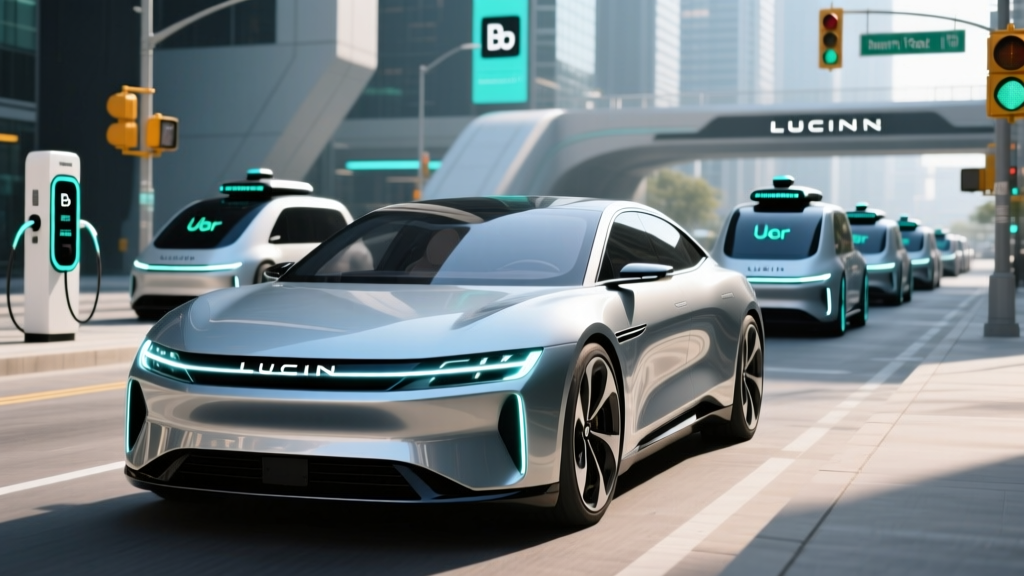
Lucid Motors entered 2026 with a dual mandate: sell premium electric sedans to consumers while positioning the Lucid Air as a robotaxi platform. The company's partnership with Uber — announced in late 2024 and expanded through 2025 — aims to deploy autonomous Lucid Airs on Uber's network starting in 2027. But for buyers considering the Air today, the robotaxi ambitions matter less than the car's 516-mile EPA range, sub-15-minute DC fast charging, and $69,900 starting price.
This review examines the 2026 Lucid Air lineup — Pure, Touring, Grand Touring, and Sapphire — with exact specs, real-world range data, charging performance, and ownership economics. We also assess what the Uber partnership means for the Air's long-term value and technology roadmap.
Range and Efficiency: 516 Miles EPA, But What's Real?
2026 Lucid Air Grand Touring Range Reality
EPA estimated: 516 miles (118 kWh usable battery)
Real-world highway (70 mph, 72°F): ~420-440 miles
Cold weather (32°F, mixed driving): ~360-390 miles (15-25% reduction)
City/regenerative driving: ~480-500 miles (near-EPA achievable)
The Lucid Air Grand Touring's 516-mile EPA rating remains the highest of any production EV in 2026. That figure comes from the Air's 118 kWh usable battery (124 kWh gross) and class-leading efficiency of 124 MPGe combined (27 kWh/100 mi) per fueleconomy.gov.
But EPA tests favor city driving with regenerative braking. On a 300-mile highway loop at 70-75 mph, expect 420-440 miles before hitting 10% state of charge. Cold weather (below 40°F) reduces range 15-25% depending on cabin heating use — the Air's heat pump helps but can't eliminate physics. For comparison, the Tesla Model S Long Range (402 mi EPA) delivers ~330-350 miles highway.
The Air Pure RWD (394 mi EPA, 92 kWh usable) is more realistic for most buyers. Real-world highway range: ~320-340 miles. That's still 50+ miles more than a Model 3 Long Range on a single charge.
Battery Technology and Chemistry
| Trim | Battery (usable/gross) | Chemistry | Warranty |
|---|---|---|---|
| Pure RWD | 92 kWh / 96 kWh | NMC (nickel-manganese-cobalt) | 8 years / 100,000 miles (70% capacity retention) |
| Touring AWD | 118 kWh / 124 kWh | NMC | 8 years / 100,000 miles |
| Grand Touring AWD | 118 kWh / 124 kWh | NMC | 8 years / 100,000 miles |
| Sapphire | 118 kWh / 124 kWh | NMC (high-performance tune) | 8 years / 100,000 miles |
Lucid uses NMC chemistry across the Air lineup, prioritizing energy density over the LFP (lithium iron phosphate) approach Tesla and Ford use in standard-range models. NMC delivers more range per kilogram but degrades slightly faster over 10+ years. Lucid's 8-year/100,000-mile battery warranty guarantees 70% capacity retention — industry-standard but less generous than Hyundai's 10-year/100,000-mile coverage.
For Uber's robotaxi fleet, NMC's higher energy density matters more than 15-year longevity. Consumer buyers planning 8+ years of ownership should budget for potential battery replacement ($15,000-$20,000 out of warranty) or plan to sell before year 10.
Charging Speed: 300+ kW Peak, But the Curve Matters
| Charging Level | Power (kW) | Speed | Time |
|---|---|---|---|
| Level 1 (120V household) | 1.4 kW | ~4 miles/hour | 118 kWh: 84+ hours (impractical) |
| Level 2 (240V home, 48A) | 11.5 kW | ~34 miles/hour | 118 kWh: ~10 hours (overnight) |
| DC Fast Charge (peak) | 300+ kW (Grand Touring) | ~300 miles in 15 min (10-80%) | 10-80%: ~15 minutes (optimal conditions) |
| DC Fast Charge (sustained avg) | ~180-200 kW | ~200 miles in 15 min | 10-80%: ~20-22 minutes (real-world) |
The Air Grand Touring's 900V+ electrical architecture enables peak charging rates above 300 kW at compatible DC fast chargers (Electrify America 350 kW stations, Tesla Superchargers with NACS adapter). Lucid claims 300 miles of range in 15 minutes under optimal conditions — battery preconditioned to 85-95°F, starting at 10% state of charge.
Real-world charging is slower. The Air's charge curve tapers significantly above 80% to protect battery health. Expect 10-80% in 15-18 minutes at a 350 kW station, but 80-100% adds another 25-30 minutes. For road trips, plan 15-20 minute stops at 20-30% remaining charge rather than charging to full.
Home charging on a 48-amp Level 2 circuit (hardwired, 60-amp breaker) delivers 11.5 kW — enough to fully recharge the Grand Touring's 118 kWh battery in ~10 hours. Most owners charge overnight, waking to 300+ miles daily. Installation costs $800-$2,000 depending on panel capacity and wiring distance (electrician required).
Performance and Drivetrain
| Trim | Drivetrain | Horsepower | 0-60 mph | Top Speed |
|---|---|---|---|---|
| Pure RWD | Rear-wheel drive, single motor | 430 hp | 4.8 seconds | 145 mph |
| Touring AWD | Dual-motor AWD | 620 hp | 3.4 seconds | 155 mph |
| Grand Touring AWD | Dual-motor AWD | 819 hp | 3.0 seconds | 168 mph |
| Sapphire | Tri-motor AWD (2 rear, 1 front) | 1,234 hp | 1.89 seconds | 205 mph |
Even the base Air Pure delivers 430 hp and a 4.8-second 0-60 time — quicker than a BMW M340i. The Grand Touring's 819 hp and 3.0-second sprint rival supercars from a decade ago. The Sapphire's 1,234 hp and sub-2-second 0-60 make it the fastest production sedan ever built, though at $249,000 it's a halo model, not a volume seller.
For Uber's robotaxi use case, performance matters less than efficiency and passenger comfort. The Air's air suspension (standard on Touring and above) delivers a compliant ride, and the 1,234-hp Sapphire won't appear in autonomous fleets. Expect Uber to deploy Pure or Touring trims with software-limited power for fleet duty.
Interior Space, Cargo, and Technology
The Lucid Air is a full-size luxury sedan, but its packaging is unconventional. The "space concept" design pushes wheels to the corners, creating limousine-like rear legroom (41.3 inches rear, 39.6 inches front) in a vehicle with a 115.9-inch wheelbase — shorter than a Mercedes S-Class.
Cargo volume: 32 cubic feet total (22 cu ft trunk + 10 cu ft front trunk/frunk). The trunk opening is narrow, limiting large-item loading compared to a hatchback or SUV.
Infotainment: 34-inch curved glass cockpit display (instrument cluster + center stack) running Lucid's proprietary OS. No Apple CarPlay or Android Auto — Lucid's native navigation and media apps are robust, but phone integration is limited to Bluetooth audio and calls. The 5K resolution display is stunning, but some menus require too many taps.
Driver assistance: Lucid's DreamDrive Pro (SAE Level 2) includes adaptive cruise control, lane centering, automatic emergency braking, and blind-spot monitoring. It's competent highway assistance but requires driver engagement — this is not Tesla Autopilot or GM Super Cruise hands-free capability. For the Uber robotaxi partnership, Lucid is developing a Level 4 autonomous system with additional LiDAR and camera arrays, but that hardware isn't in consumer Airs today.
Pricing, Tax Credits, and Ownership Economics
| Trim | Base MSRP | Federal Tax Credit (§30D) | Effective Price |
|---|---|---|---|
| Pure RWD | $69,900 | $0 (exceeds MSRP cap) | $69,900 |
| Touring AWD | $87,400 | $0 (exceeds MSRP cap) | $87,400 |
| Grand Touring AWD | $125,600 | $0 (exceeds MSRP cap) | $125,600 |
| Sapphire | $249,000 | $0 (exceeds MSRP cap) | $249,000 |
Federal tax credit reality: The Lucid Air does not qualify for the $7,500 IRS §30D clean vehicle credit. Per IRS rules, sedans must have an MSRP below $55,000 to qualify. The Air Pure starts at $69,900 — well over the cap. This is a significant disadvantage versus the Tesla Model 3 Long Range ($47,740 MSRP, eligible for full credit if income and battery sourcing requirements are met).
Income caps also apply: Even if the Air qualified, buyers must have adjusted gross income below $150,000 (single) or $300,000 (joint) to claim the credit. High-income buyers — the Air's target demographic — are excluded regardless of MSRP.
State incentives: Some states offer rebates or HOV lane access for EVs regardless of price. California's Clean Fuel Reward ($1,500 at purchase) has no MSRP cap. Check your state's DMV or energy office for current programs.
5-year ownership cost: Edmunds and Kelley Blue Book estimate the Air Touring's 5-year total cost of ownership at ~$95,000 (purchase price + insurance + charging + maintenance - depreciation). That's comparable to a BMW 5 Series or Mercedes E-Class, but the Air's higher upfront cost and steeper depreciation (luxury EVs lose 50-60% in 5 years) hurt resale value.
The Uber Robotaxi Partnership: What It Means for Buyers
In late 2024, Lucid and Uber announced a partnership to deploy autonomous Lucid Air vehicles on Uber's ride-hailing network starting in 2027. Lucid will supply vehicles and its DreamDrive autonomous technology; Uber will handle fleet operations, rider matching, and regulatory compliance. Initial deployments target Phoenix, Los Angeles, and Miami.
For consumer Air buyers, the partnership has mixed implications:
- Positive: Lucid's autonomous tech development is funded by Uber's fleet-scale deployment. Consumer Airs may benefit from over-the-air software improvements as Lucid refines its self-driving stack.
- Negative: Robotaxi Airs could flood the used market in 5-7 years, depressing resale values for privately owned Airs.
- Neutral: The Level 4 hardware in robotaxi Airs (additional LiDAR, redundant computing) won't be retrofitted to 2024-2026 consumer models. Your Air will remain a Level 2 driver-assist vehicle.
If you're buying an Air for personal use, the Uber partnership is irrelevant to your ownership experience. If you're considering the Air as a future robotaxi investment (buying to lease back to Uber), wait for 2027 fleet program details before committing capital.
Pros and Cons
Pros
- Class-leading 516-mile EPA range (Grand Touring)
- Ultra-fast 300+ kW DC charging capability
- Spacious rear seat with 41.3 inches of legroom
- Standard air suspension (Touring and above) for compliant ride
- Competitive 0-60 times even in base Pure trim
- Over-the-air updates and Lucid's software roadmap
Cons
- No federal tax credit eligibility (MSRP exceeds $55K cap)
- Narrow trunk opening limits cargo utility
- No Apple CarPlay or Android Auto
- Limited service center network vs. Tesla or legacy luxury brands
- DreamDrive Pro is competent but not class-leading (no hands-free mode)
- High depreciation risk (luxury EV market volatility)
Who Should Buy the Lucid Air?
Buy the Air if: You prioritize range above all else, want a luxury sedan with genuine 400+ mile real-world range, have home Level 2 charging access, and don't need the federal tax credit. The Air Grand Touring is the best long-distance EV cruiser on the market in 2026.
Skip the Air if: You need maximum cargo space (consider the Rivian R1S or Tesla Model X), want hands-free highway driving (GM Super Cruise or Ford BlueCruise), or need to maximize tax incentives (Tesla Model 3, Hyundai Ioniq 6, or Ford Mustang Mach-E all qualify for the $7,500 credit).
For Uber drivers/fleet operators: The consumer Air isn't optimized for ride-hailing economics. Wait for the purpose-built robotaxi Air variant (2027+) with Level 4 hardware and fleet-specific software. The current Air's $70K+ price and lack of tax credit make it uncompetitive versus the Tesla Model 3 or Hyundai Ioniq 5 for human-driven Uber duty.
Frequently Asked Questions
What is the real-world range of the Lucid Air?
The Grand Touring's 516-mile EPA rating translates to ~420-440 miles highway, ~360-390 miles in cold weather. The Pure RWD (394 mi EPA) delivers ~320-340 miles highway.
How fast does the Lucid Air charge?
Peak DC fast charging: 300+ kW (Grand Touring), 10-80% in ~15-18 minutes. Home Level 2: 11.5 kW, ~10 hours for full charge.
Does the Lucid Air qualify for the federal EV tax credit?
No. The Air's MSRP ($69,900+) exceeds the $55,000 sedan cap for the IRS §30D credit. High-income buyers also face AGI limits.
Is the Lucid Air worth buying vs. Tesla Model S or Mercedes EQS?
The Air offers more range and faster charging than both competitors. The Model S has better Supercharger access and Autopilot; the EQS has a more luxurious interior. Test-drive all three.
What are the biggest Lucid Air problems?
Early 2022-2023 models had software glitches and panel-gap issues. 2025-2026 models are more refined. Lucid's service network is limited — check for a service center near you before buying.
When will the Lucid Air robotaxi launch on Uber?
Lucid and Uber target 2027 for initial autonomous Air deployments in Phoenix, LA, and Miami. Consumer Airs won't receive Level 4 hardware retrofits.