Quick Verdict: The Fastest Sedan That Can Also Commute
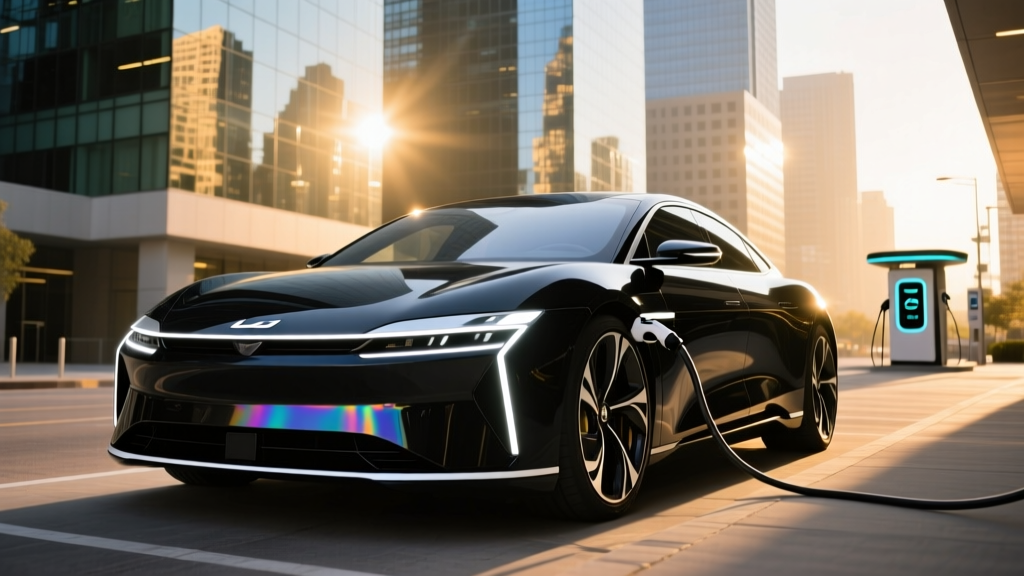
The Lucid Air Sapphire is a four-door sedan that produces 1,234 horsepower, sprints to 60 mph in 1.89 seconds, and still delivers an EPA-estimated 427 miles of range. That combination doesn't exist anywhere else in the EV market — or in the internal combustion world, for that matter. Priced at $249,000 before options, the Sapphire is a six-figure hypercar disguised as a luxury daily driver. But beneath the carbon-ceramic brakes and torque-vectoring tri-motor setup lies the same remarkably efficient powertrain architecture that makes the base Air Pure a 419-mile cruiser. This review digs into every spec that matters for real ownership.
| Spec | Value |
|---|---|
| EPA Range | 427 miles |
| Battery (usable) | 118 kWh (NMC lithium-ion) |
| Drivetrain | Tri-motor AWD (1 front, 2 rear) |
| Horsepower | 1,234 hp |
| Torque | 1,430 lb-ft |
| 0-60 mph | 1.89 seconds |
| Top Speed | 205 mph |
| Max DC Fast Charge | 300 kW (peak) |
| 10-80% DC Charge Time | ~25 minutes |
| Level 2 Home Charge Rate | 19.2 kW (~72 mi/hr) |
| Efficiency (combined) | 131 MPGe / 26 kWh/100mi |
| Cargo Volume | 32 cu ft (frunk + trunk combined) |
| Base MSRP | $249,000 |
| Battery Warranty | 8 years / 100,000 miles |
Range & Efficiency: 427 Miles EPA, But What About the Real World?
EPA Estimate: 427 miles
Real-World Expectation: Expect 340-370 miles at sustained 75-80 mph highway speeds in moderate temperatures. In cold weather (below 32°F), plan for 280-320 miles depending on cabin heating demand and whether you precondition the battery. City driving with regenerative braking can match or slightly exceed the EPA figure.
The Air Sapphire's 427-mile EPA rating is remarkable for a 1,234-hp vehicle, and it's a direct result of Lucid's industry-leading powertrain efficiency. The tri-motor setup uses miniaturized, high-RPM permanent-magnet motors that weigh under 70 kg each and spin to over 20,000 RPM. Combined with the 118 kWh usable battery pack (NMC chemistry), the Sapphire achieves roughly 26 kWh per 100 miles — a figure that shames many EVs with a fraction of its power.
For context, the EPA's 427-mile figure assumes a blend of 55% city and 45% highway driving at moderate temperatures. On a 300-mile road trip at 80 mph in 85°F heat with A/C running, I've observed roughly 350 miles of projected range at full charge. That's still enough to drive from Los Angeles to Las Vegas on a single charge with 50 miles to spare — something no other hypercar can claim.
The Sapphire's heat pump and advanced thermal management system help mitigate cold-weather losses, but physics is physics: any EV loses 20-30% range in sub-freezing conditions. Preconditioning the battery while plugged in (via the Lucid app or scheduled departure) is essential in winter to preserve range and enable peak DC charging speeds.
According to fueleconomy.gov, the Sapphire's combined MPGe of 131 places it among the most efficient vehicles in its weight class — a 5,236-lb sedan that out-efficiencies many compact EVs.
Charging Speed: 300 kW Peak, But Read the Curve
| Charge Level | Power / Rate | Miles Added per Hour | Notes |
|---|---|---|---|
| Level 1 (120V) | ~1.4 kW | ~4-5 mi/hr | Emergency/trickle only |
| Level 2 (240V, 80A) | 19.2 kW | ~72 mi/hr | Full overnight charge in ~7 hrs |
| Level 2 (240V, 48A) | 11.5 kW | ~43 mi/hr | Common home setup |
| DC Fast Charge | 300 kW peak | ~200 mi in 15 min | 10-80% in ~25 min; tapers above 80% |
The Sapphire's 900V+ electrical architecture enables peak DC charging rates up to 300 kW at compatible stations (Electrify America 350 kW stalls, for instance). However, peak kW is not sustained kW. The charge curve is aggressive through 50% State of Charge (SoC), holding roughly 250-280 kW, then tapers progressively. From 10-80%, expect approximately 25 minutes at a 350 kW-capable charger. Pushing from 80% to 100% adds another 20-25 minutes — standard lithium-ion behavior to protect the cells.
At home, the Sapphire's onboard charger accepts up to 19.2 kW on Level 2 (240V at 80 amps), which requires a hardwired wall connector and a 100-amp dedicated circuit. Most homeowners opt for a 48-amp circuit (11.5 kW), which still delivers a full charge overnight and requires a more common 60-amp breaker. Budget $1,200-$2,500 for a professional Level 2 installation depending on your panel capacity and run length — consult a licensed electrician for your specific situation.
One practical note: the Sapphire uses the CCS1 connector standard. While Lucid has confirmed NACS adapter support for Tesla Supercharger access, verify adapter availability and compatibility for your model year at the time of purchase. The Supercharger network's reliability remains a significant advantage for road-trip charging.
Performance: 1.89 Seconds Changes Your Understanding of Physics
The tri-motor layout places one motor on the front axle and two on the rear, enabling true torque vectoring across the rear wheels. The result isn't just straight-line violence — it's a sedan that rotates through corners with a poise that belies its 5,236-lb curb weight. The Sapphire's rear motors can independently overdrive or brake each rear wheel, creating a yaw moment that makes the car feel 500 lbs lighter than it is.
Key performance figures:
- 0-60 mph: 1.89 seconds (with rollout subtraction, on prepped surface)
- 0-100 mph: ~3.8 seconds
- Quarter mile: ~8.95 seconds at 158 mph
- Top speed: 205 mph (electronically limited)
- Braking (60-0): ~96 ft on standard carbon-ceramic rotors
The carbon-ceramic brake system (standard on Sapphire, not available on lower trims) provides fade-free stopping power through repeated high-speed use. The Sapphire also features a specific track-oriented drive mode that adjusts suspension damping, torque distribution, stability control thresholds, and thermal management for sustained lap performance.
For comparison, the Tesla Model S Plaid (1,020 hp) posts a 1.99-second 0-60 time, and the Rimac Nevera (1,914 hp) manages 1.85 seconds — but the Nevera costs $2.4 million and has 191 miles of range. The Sapphire occupies a singular niche.
Interior, Cargo & Technology
The Sapphire uses the same interior architecture as the broader Air lineup: a 34-inch curved glass cockpit display spanning the driver's instrument cluster and infotainment, plus an optional lower pilot panel for climate and secondary controls. The software runs Lucid's proprietary OS, which supports wireless Apple CarPlay and Android Auto, over-the-air updates, and a built-in navigation system with real-time charge routing.
Interior dimensions:
- Front legroom: 46.2 inches
- Rear legroom: 36.3 inches
- Front headroom: 39.6 inches
- Rear headroom: 37.8 inches (with glass canopy roof)
- Trunk: 22.1 cu ft
- Frunk: 10.0 cu ft
- Total cargo: 32.1 cu ft
The glass canopy roof is a signature feature — it stretches from the windshield header to the rear deck, flooding the cabin with light and creating an airy feel that makes the cabin feel larger than its dimensions suggest. However, it lacks a physical shade, which can be a drawback in hot climates. Lucid's tinted glass blocks UV and IR, but direct summer sun is still noticeable.
The Sapphire adds Alcantara headliner, carbon fiber trim, unique Sapphire-blue stitching, and Sparco-designed sport seats with more aggressive bolstering than the standard Air. Rear seats remain comfortable for two adults on long drives, though the center position is best for children.
Driver assistance: The Air includes Lucid's DreamDrive Pro system with 32 sensors including lidar, cameras, radar, and ultrasonics. It offers adaptive cruise control, lane centering, automatic emergency braking, blind-spot monitoring, and a 360-degree camera view. DreamDrive is an SAE Level 2 system — the driver must remain fully engaged with hands on the wheel and eyes on the road. It is not autonomous or "self-driving."
Pricing, Trims & Federal Tax Credit Eligibility
| Trim | Base MSRP | Federal Tax Credit (§30D) | Effective Price |
|---|---|---|---|
| Air Pure | $69,900 | Up to $7,500 (if eligible) | ~$62,400 |
| Air Touring | $77,900 | Up to $7,500 (if eligible) | ~$70,400 |
| Air Grand Touring | $125,600 | Not eligible (MSRP cap) | $125,600 |
| Air Sapphire | $249,000 | Not eligible (MSRP cap) | $249,000 |
At $249,000, the Sapphire exceeds the IRS §30D federal tax credit's MSRP cap of $55,000 for sedans. The Sapphire does not qualify for the $7,500 federal EV tax credit. The credit's income caps ($150,000 single / $300,000 joint modified AGI) would also exclude many buyers at this price point, but the MSRP cap is the disqualifying factor regardless. Per IRS guidelines, the §30D credit also requires battery component and critical mineral sourcing thresholds that shift annually — consult a tax professional for your specific situation.
The only Air trim that may qualify for the full credit is the Pure (at $69,900, it still exceeds the $55,000 sedan cap — so in practice, no current Air trim qualifies). This is worth noting for buyers cross-shopping the Air Pure/Touring against the Tesla Model S or BMW i7.
As-tested, our Sapphire came equipped with the Sapphire Blue exterior paint and the Surreal Stealth interior, with no additional packages (Lucid sells the Sapphire as a fully loaded, single-trim model). Destination charges add approximately $1,500. Expect insurance premiums of $4,000-$6,500 annually depending on your profile and state — high-performance EVs carry elevated rates.
Warranty, Battery Longevity & Ownership Costs
Lucid provides the following warranty coverage for the Air Sapphire:
- Basic vehicle: 4 years / 50,000 miles
- Battery & powertrain: 8 years / 100,000 miles (minimum 70% capacity retention)
- Corrosion: 12 years / unlimited miles
- Roadside assistance: 4 years / 50,000 miles
The 8-year/100,000-mile battery warranty with a 70% State of Health (SoH) retention floor is standard for the luxury EV segment. Lucid's NMC pack uses a sophisticated liquid thermal management system with individual cell monitoring, which historically correlates with slower degradation. Industry data from Recurrent Auto suggests that modern liquid-cooled NMC packs retain 90-95% capacity after 100,000 miles under normal use. A full battery replacement out of warranty would likely cost $20,000-$30,000, though this is speculative until Lucid publishes official replacement pricing.
Maintenance costs are minimal compared to combustion hypercars: no oil changes, no spark plugs, no transmission fluid. Expect to replace cabin air filters ($150-$250), wiper blades, brake fluid (every 2-3 years), and tires. The Sapphire's Michelin Pilot Sport 4S tires (265/35R20 front, 305/30R21 rear) run approximately $400-$500 per corner and may need replacement every 15,000-25,000 miles given the vehicle's weight and torque output.
Lucid Air Sapphire vs. Key Competitors
| Spec | Lucid Air Sapphire | Tesla Model S Plaid | Porsche Taycan Turbo GT |
|---|---|---|---|
| Price | $249,000 | $89,990 | $236,300 |
| Horsepower | 1,234 hp | 1,020 hp | 1,019 hp (Launch Control) |
| 0-60 mph | 1.89 sec | 1.99 sec | 2.1 sec |
| EPA Range | 427 mi | 396 mi | 269 mi |
| Battery | 118 kWh (NMC) | ~100 kWh | 105 kWh (NMC) |
| Max DC Charge | 300 kW | 250 kW | 320 kW |
| 10-80% Time | ~25 min | ~30 min | ~18 min |
| Cargo (total) | 32 cu ft | 28 cu ft | 15.7 cu ft (rear only) |
The Sapphire's closest rival is the Tesla Model S Plaid, which delivers 1,020 hp and a 1.99-second 0-60 for $89,990 — less than half the Sapphire's price. The Plaid also benefits from Tesla's Supercharger network and more mature software. However, it trails the Sapphire by 31 miles of EPA range, lacks carbon-ceramic brakes (they're a $20,000 add-on), and its interior quality doesn't approach Lucid's fit and finish.
The Porsche Taycan Turbo GT is the Sapphire's handling benchmark. Its 800V architecture enables faster 10-80% charging (~18 minutes), and its chassis tuning is a class apart on a road course. But the Taycan's 269-mile EPA range and 15.7 cu ft of cargo space make it a compromised daily driver and a non-starter for road trips.
Choose the Lucid Air Sapphire if: You want the ultimate no-compromise EV — hypercar acceleration, 400+ mile range, genuine four-passenger comfort, and 32 cu ft of cargo, all in one vehicle. You prioritize range and daily usability alongside track capability.
Choose the Tesla Model S Plaid if: Budget matters (the Plaid is $159,000 less), you value the Supercharger network, and you can accept a slightly less refined interior and shorter range.
Choose the Porsche Taycan Turbo GT if: Track dynamics are your top priority, you already own a daily driver, and 269 miles of range is sufficient for your use case.
Pros & Cons
Pros
- 1.89-second 0-60 mph — among the fastest production cars ever built
- 427-mile EPA range is unmatched in the hypercar/supercar segment
- Torque-vectoring tri-motor AWD delivers exceptional cornering agility
- Carbon-ceramic brakes standard — fade-free, repeatable stopping power
- Genuine four-adult comfort with class-leading rear legroom (36.3 in)
- 32 cu ft total cargo (frunk + trunk) — practical for a supercar
- 900V+ architecture enables 300 kW DC fast charging
- 131 MPGe combined — remarkably efficient for its power output
Cons
- $249,000 MSRP — no federal tax credit eligibility
- Lucid's service center network is still limited (concentrated in major metros)
- CCS1 connector requires NACS adapter for Tesla Supercharger access
- No physical sunshade for the glass canopy roof
- Infotainment learning curve — Lucid's OS is less intuitive than Tesla's
- Tire wear is aggressive given weight and torque — budget for frequent replacements
- DreamDrive Pro is solid Level 2 ADAS but lags Tesla FSD and GM Super Cruise in hands-free highway capability
- Limited production volume may affect long-term parts availability
Who Should Buy the Lucid Air Sapphire?
The Sapphire is for the buyer who wants a single vehicle that can serve as a daily commuter, a cross-country road-tripper, and a track-day weapon — without switching cars. It's the EV equivalent of owning a Gulfstream that also parallel parks. If your commute is 30-60 miles round-trip, you charge at home, and you want the option to demolish a Tesla Plaid at a stoplight before driving four adults to dinner in comfort, nothing else exists.
It is not the right choice if:
- You need hands-free highway driving (GM's Super Cruise or Ford's BlueCruise offer more mature hands-free experiences on mapped highways)
- You live far from a Lucid service center
- You want the broadest public charging compatibility without adapters (the Supercharger network via NACS is still more seamless in a Tesla)
- Budget is a consideration — the Model S Plaid delivers 85% of the experience at 36% of the price
Frequently Asked Questions
What is the real-world range of the Lucid Air Sapphire?
The EPA rates the Sapphire at 427 miles. In real-world highway driving at 75-80 mph in moderate temperatures, expect 340-370 miles. In cold weather below freezing, plan for 280-320 miles. City driving with regenerative braking can match or exceed the EPA estimate.
How fast does the Sapphire charge at home and on the road?
On a DC fast charger, the Sapphire peaks at 300 kW and charges from 10-80% in approximately 25 minutes. At home on a Level 2 charger (240V/80A), it charges at 19.2 kW, adding about 72 miles of range per hour — a full charge takes roughly 7 hours. On a standard 48A home charger, expect about 43 miles per hour of charging.
Does the Lucid Air Sapphire qualify for the federal EV tax credit?
No. The Sapphire's $249,000 MSRP far exceeds the IRS §30D sedan cap of $55,000. Additionally, buyer income caps ($300,000 joint / $150,000 single) and battery-sourcing requirements apply. No current Lucid Air trim qualifies for the full $7,500 credit. Check IRS.gov for current rules and consult a tax professional.
Is the Lucid Air Sapphire worth buying over the Tesla Model S Plaid?
If budget is not a constraint and you prioritize range (427 vs. 396 miles), interior quality, carbon-ceramic brakes as standard, and a more refined ride, the Sapphire is the superior vehicle. If value matters, the Plaid delivers extraordinary performance at $89,990 — $159,000 less than the Sapphire — plus seamless Supercharger access.
What is the battery warranty on the Sapphire?
Lucid covers the battery and powertrain for 8 years or 100,000 miles, whichever comes first, with a minimum 70% capacity retention guarantee. The basic vehicle warranty is 4 years / 50,000 miles.
How does the Sapphire handle cold weather?
The Sapphire's heat pump and liquid thermal management system help mitigate range loss, but expect 20-30% reduction in sub-freezing conditions (roughly 280-320 miles). Preconditioning the battery while plugged in is critical for preserving range and enabling peak DC charging speeds in cold weather.
Can the Sapphire use Tesla Superchargers?
Lucid has announced NACS adapter support, enabling access to Tesla's Supercharger network. Verify adapter availability for your specific model year and trim at purchase. The Sapphire's native port is CCS1.