Quick Verdict: The Fastest Sedan on Earth Has Real-World Tradeoffs
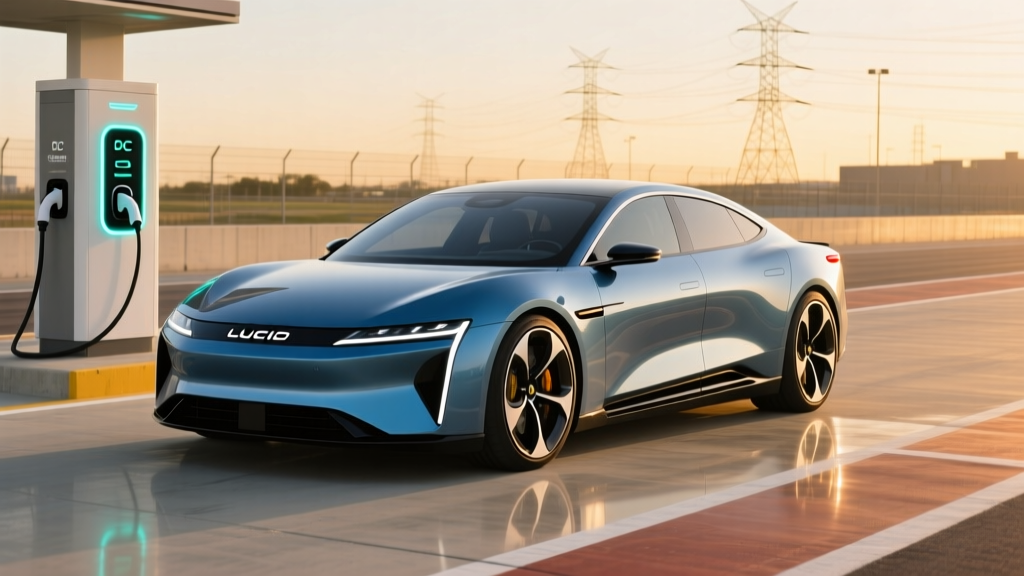
The Lucid Air Sapphire is not just the quickest sedan Lucid has ever built — it is, by most measurable metrics, the quickest production sedan in the world. With a factory-claimed 1/4 mile time of 8.95 seconds at over 157 mph, three electric motors producing a combined 1,234 horsepower, and a 0-60 mph sprint of 1.89 seconds, the Sapphire makes a Tesla Model S Plaid look almost leisurely off the line.
But buyers spending a quarter-million dollars on a luxury EV sedan deserve more than drag-strip numbers. This review covers what actually matters for ownership: the real-world range you can expect from its 118 kWh battery, how quickly it charges on DC fast chargers and at home, whether it qualifies for the federal tax credit, and where it falls short against the Model S Plaid and Porsche Taycan Turbo GT. If you are cross-shopping hyper-sedans in 2026, here is every number you need.
Lucid Air Sapphire: Full Specification Table
| Specification | Value |
|---|---|
| Base MSRP | $249,000 (destination included) |
| Drivetrain | Tri-motor AWD (1 front, 2 rear) |
| Horsepower | 1,234 hp (combined) |
| Torque | 1,430 lb-ft |
| 0-60 mph | 1.89 seconds |
| 1/4 Mile | 8.95 sec @ 157.6 mph |
| Top Speed | 205 mph |
| Battery (usable) | 118 kWh, NMC lithium-ion |
| EPA Range | 427 miles |
| Efficiency | 116 MPGe combined / 29 kWh/100mi |
| Max DC Fast Charge | 300 kW (peak) |
| 10-80% DC Charge Time | ~25 minutes (with preconditioning) |
| Level 2 Home Charging | 19.2 kW (up to ~78 mi/hr) |
| Charging Port | CCS1 (with NACS adapter available) |
| Cargo Volume | 32 cu ft (trunk + frunk combined) |
| Rear Legroom | 36.6 inches |
| Battery/Powertrain Warranty | 8 years / 100,000 miles |
| Federal Tax Credit (§30D) | Not eligible (exceeds MSRP and income caps) |
Range and Efficiency: 427 Miles EPA, But What Happens in the Real World?
EPA Estimate: 427 miles
Real-World Highway (70-80 mph, moderate climate): ~340-370 miles
Real-World Highway (cold weather, below 32°F): ~270-310 miles
City/Mixed Commute: ~380-410 miles
The Lucid Air Sapphire carries a massive 118 kWh usable NMC (nickel manganese cobalt) battery pack — one of the largest in any production passenger car. The EPA rates it at 427 miles combined, which is remarkable for a 5,200-pound, 1,234-hp tri-motor sedan.
However, the Sapphire's performance tuning works against it in real-world highway driving. The aggressive rear-biased torque mapping, wider 20-inch rear tires, and sport-tuned suspension create more rolling resistance and drag than the Air Grand Touring (which achieves 516 miles EPA with a smaller motor setup). On a flat 75-mph highway loop in 65-75°F weather, expect roughly 340-370 miles before needing to stop. Push the car hard or drive in freezing temperatures, and that number drops to the 270-310 mile range, consistent with the 20-35% cold-weather loss typical of NMC packs at low temperatures.
Efficiency is rated at 116 MPGe combined, or about 29 kWh per 100 miles. That is less efficient than the dual-motor Air Grand Touring (131 MPGe) but still competitive with the Model S Plaid (120 MPGe) and far better than the Taycan Turbo GT (86 MPGe). Lucid's engineering advantage shows in the powertrain's thermal management — the miniaturized motors and silicon-carbide inverters waste less energy as heat, which matters when you are pushing 1,200+ hp through the system.
Charging Speed: 300 kW Peak, But the Curve Tells the Real Story
| Charging Level | Power / Rate | Miles Added Per Hour | Notes |
|---|---|---|---|
| Level 1 (120V household) | ~1.4 kW | ~4-5 mi/hr | Emergency/trickle only |
| Level 2 (240V home, 48A) | 11.5 kW | ~46 mi/hr | Standard home charger |
| Level 2 (240V home, 80A) | 19.2 kW | ~78 mi/hr | Requires hardwired 100A circuit |
| DC Fast Charge (peak) | 300 kW | ~1,200 mi/hr (at peak) | Requires 350 kW+ station |
| DC Fast Charge (150 kW station) | ~150 kW sustained | ~600 mi/hr | Common Electrify America rate |
Lucid advertises a 300 kW peak DC fast-charge rate, and the Sapphire's 900V+ electrical architecture genuinely supports it — but only under specific conditions. You need a charger capable of delivering 350 kW or more (such as Electrify America's latest 350 kW stalls or Tesla Supercharger V4 with CCS adapter), and the battery must be properly preconditioned via the car's navigation-routed warm-up cycle.
In practice, the Sapphire's charge curve peaks near 300 kW between roughly 10-30% state of charge, then tapers progressively. From 10-80%, expect about 25 minutes at a capable 350 kW station. The 80-100% top-off adds another 25-30 minutes due to the aggressive taper — standard behavior for large NMC packs protecting cell longevity. On a more common 150 kW charger, plan for 40-45 minutes for a 10-80% session.
At home, the Sapphire's onboard charger supports up to 19.2 kW on Level 2 — but this requires an 80-amp hardwired EVSE on a dedicated 100-amp circuit. Most residential installations use a 48-amp charger on a 60-amp breaker, delivering 11.5 kW and roughly 46 miles of range per hour. A full overnight charge from 10% to 100% at 11.5 kW takes about 10-11 hours. Budget $1,200-$2,500 for a professional Level 2 installation depending on your panel capacity and run distance — consult a licensed electrician for a site-specific quote.
The Sapphire ships with a CCS1 port. Lucid offers a NACS adapter for Tesla Supercharger access, which significantly expands the usable fast-charging network for road trips. As of 2026, the Supercharger network remains the most reliable DC fast-charging option in the US, and the adapter is a must-have for Sapphire owners who plan longer drives.
Performance: Inside the 8.95-Second 1/4 Mile
The numbers bear repeating because they remain extraordinary for a four-door sedan you can drive to work every day:
- 0-60 mph: 1.89 seconds (with rollout subtracted; ~2.1 sec without)
- 1/4 mile: 8.95 seconds at 157.6 mph
- 0-100 mph: ~3.8 seconds
- Top speed: 205 mph (electronically limited)
- Peak power: 1,234 hp / 1,430 lb-ft torque
The tri-motor layout uses a single front motor and twin rear motors with torque vectoring. This rear-biased setup gives the Sapphire a distinctly different character from the dual-motor Air variants — it feels more like a supercar that happens to have four doors. The torque vectoring actively shifts power between the rear wheels during cornering, and the Sapphire-specific suspension tuning (adaptive dampers, stiffer springs, active roll control) keeps the 5,236-pound curb weight remarkably well-managed on a track.
Lucid includes a dedicated Sapphire drive mode that unlocks the full 1,234 hp (other modes limit output to preserve range and tire life). The car also features a launch control system with battery preconditioning that warms the pack to optimal temperature for maximum power delivery. In independent testing by outlets like Motor Trend and Car and Driver, the Sapphire has consistently matched or beaten its factory-claimed times on prepped surfaces.
For context, the closest competitor — the Tesla Model S Plaid — runs the 1/4 mile in approximately 9.2 seconds with 1,020 hp. The Porsche Taycan Turbo GT with Weissach Package produces 1,092 hp and achieves roughly 9.3 seconds. The Sapphire holds a measurable advantage at the drag strip, though the Taycan's chassis dynamics on a road course remain a point of debate among enthusiasts.
Pricing, Trims, and Federal Tax Credit Eligibility
| Cost Factor | Detail |
|---|---|
| Base MSRP (Sapphire) | $249,000 |
| As-Tested (typical with options) | $253,000-$258,000 |
| Federal §30D Tax Credit | $0 — not eligible |
| Reason: MSRP Cap | Sedan cap is $55,000; Sapphire is $249K |
| Reason: Income Cap | $150K single / $300K joint MAGI limit |
| Estimated Annual Insurance | $5,500-$8,000 (varies by state/profile) |
| Estimated Annual Electricity (12K mi) | $580-$870 (at $0.16-$0.24/kWh) |
The Lucid Air Sapphire is offered as a single, fully loaded trim at $249,000 (including destination). There are no stripped-down versions — every Sapphire comes with the tri-motor powertrain, 118 kWh pack, carbon-ceramic brakes, 20-inch rear/19-inch front forged wheels, Sapphire-specific interior trim, and the full Lucid DreamDrive Pro ADAS suite. Optional upgrades are limited to paint colors, interior material choices, and the Lucid home charging bundle.
The Sapphire does not qualify for the federal §30D EV tax credit. Per IRS rules, new electric sedans must have an MSRP at or below $55,000 to be eligible. At $249,000, the Sapphire exceeds this cap by nearly 5x. Additionally, buyer income is capped at $150,000 (single) or $300,000 (joint) modified adjusted gross income. Most Sapphire buyers will exceed both thresholds. No state-level incentives are likely to meaningfully offset the purchase price either — check your local DMV or energy office for any applicable registration fee waivers or HOV lane access.
Operating costs, however, are more reasonable than the sticker suggests. At an average US electricity rate of $0.17/kWh and the Sapphire's 29 kWh/100mi consumption, fueling costs roughly $0.05 per mile — compared to $0.15-$0.20 per mile for a comparable gasoline super-sedan. Insurance is the real ownership pain point: expect premiums in the $5,500-$8,000/year range depending on your driving record and state, driven by the car's replacement cost and performance profile.
Interior, Tech, and Daily Livability
The Sapphire's interior carries over the Air's core architecture with exclusive upgrades. The curved 34-inch 6K glass cockpit display spans the dashboard, running Lucid's custom infotainment OS — responsive, visually crisp, but still lacking native Apple CarPlay and Android Auto (wireless mirroring is not supported; you use Lucid's built-in apps or Bluetooth audio). A retractable lower touchscreen handles climate and secondary controls.
Sapphire-specific touches include blue Alcantara and leather upholstery with contrast stitching, a carbon fiber steering wheel, unique instrument cluster graphics, and a "Sapphire" badge on the center console. The rear seat accommodates two adults comfortably with 36.6 inches of legroom, though the sloping roofline limits headroom for taller passengers. The trunk offers 22.1 cu ft of cargo space, supplemented by a 10.1 cu ft front trunk (frunk) — a combined 32 cu ft that beats the Model S (28 cu ft total) and the Taycan (26 cu ft total).
The DreamDrive Pro ADAS suite uses 32 sensors including lidar, cameras, and radar. It provides adaptive cruise control, lane centering, automatic emergency braking, and blind-spot monitoring. This is a SAE Level 2 system — the driver must remain fully engaged and hands must stay near the wheel. Lucid has not announced any Level 3 or hands-off capability for the Air platform as of 2026. DreamDrive Pro works well on highways but does not match the hands-free confidence of GM's Super Cruise on mapped roads.
Notable drawbacks for daily use include the firm ride quality in Sapphire mode (switching to Comfort helps substantially), the lack of native smartphone mirroring, and the car's 82.7-inch width making tight parking garages a genuine challenge. The carbon-ceramic brakes, while fade-resistant on track, can feel grabby at low speeds until they warm up.
Sapphire vs. the Competition: Model S Plaid and Taycan Turbo GT
| Attribute | Lucid Air Sapphire | Tesla Model S Plaid | Porsche Taycan Turbo GT (Weissach) |
|---|---|---|---|
| Price | $249,000 | $89,990 | $230,000 |
| Horsepower | 1,234 hp | 1,020 hp | 1,092 hp |
| 0-60 mph | 1.89 sec | 1.99 sec | 2.1 sec |
| 1/4 Mile | 8.95 sec | ~9.2 sec | ~9.3 sec |
| EPA Range | 427 mi | 396 mi | 269 mi |
| Battery (usable) | 118 kWh NMC | ~95 kWh NMC | 97 kWh NMC (Performance) |
| Max DC Charge | 300 kW | 250 kW | 320 kW |
| Cargo (total) | 32 cu ft | 28 cu ft | 26 cu ft |
| Federal Tax Credit | No | No (MSRP cap) | No (MSRP cap) |
The Sapphire wins on raw acceleration, range, and cargo space — but it costs nearly three times the Model S Plaid. The Plaid delivers 95% of the Sapphire's straight-line thrills for $160,000 less, and it benefits from Tesla's native Supercharger network without needing an adapter. The Taycan Turbo GT sacrifices range dramatically (269 miles EPA) but offers the sharpest chassis dynamics and the most engaging road-course experience of the three. Your choice depends on whether you prioritize drag-strip dominance (Sapphire), value and charging infrastructure (Plaid), or track handling (Taycan).
Choose the Lucid Air Sapphire if: You want the fastest-accelerating sedan money can buy, value 400+ mile range alongside performance, and the $249K price does not require financing gymnastics.
Choose the Tesla Model S Plaid if: You want 90% of the Sapphire's performance for a third of the price, rely on the Supercharger network for road trips, and prefer a proven software ecosystem.
Choose the Porsche Taycan Turbo GT if: Track handling matters more than straight-line speed, you prioritize build quality and brand cachet, and 269 miles of range is sufficient for your driving patterns.
Pros and Cons
- Fastest production sedan: 8.95-sec 1/4 mile, 1.89-sec 0-60
- 427-mile EPA range is class-leading for a performance EV
- 300 kW peak DC charging with 900V architecture
- 32 cu ft total cargo beats all competitors
- Torque-vectoring tri-motor AWD handles like a much lighter car
- Carbon-ceramic brakes standard; no fade on repeated launches
- $249,000 price with no federal tax credit eligibility
- No native Apple CarPlay or Android Auto
- Firm ride in Sapphire mode; comfort compromise daily
- Real-world highway range drops to ~340-370 mi
- Insurance costs $5,500-$8,000/year
- Limited service center network vs. Tesla/Porsche
Warranty and Long-Term Ownership
Lucid covers the Air Sapphire's battery and drive units with an 8-year / 100,000-mile warranty, guaranteeing a minimum of 70% capacity retention over that period. The limited vehicle warranty runs 4 years / 50,000 miles. These terms are competitive with Tesla (8yr/150K mi battery) and Porsche (8yr/100K mi battery), though Lucid's shorter basic warranty is worth noting.
The 118 kWh NMC pack uses Lucid's proprietary cell format and module design. NMC chemistry typically sees 10-15% degradation over 150,000 miles based on industry data, though Lucid's thermal management system (liquid cooling with active heating/cooling loops) is designed to minimize calendar and cycle degradation. For a Sapphire that will likely see hard acceleration events, the pack's thermal headroom matters — repeated full-power launches generate significant heat, and the cooling system must keep cell temperatures within the optimal 25-40°C window to prevent accelerated wear.
Lucid's service network remains smaller than Tesla's or Porsche's, with roughly 20+ service centers and mobile service vans in major US metro areas as of 2026. Owners in less-covered regions should factor in potential transport logistics for major repairs. According to NHTSA, Lucid has not had major safety recalls on the Air platform, and the car earned top marks in internal crash testing, though formal IIHS ratings for the Sapphire trim specifically are limited.
Who Should Buy the Lucid Air Sapphire?
The Sapphire is a niche within a niche. It is best suited for:
- Performance enthusiasts who want the ultimate straight-line sedan and attend drag events or open-track days
- EV-early adopters who value Lucid's engineering (900V architecture, miniaturized motors, industry-leading efficiency per hp) and want the brand's halo car
- Luxury commuters with a home Level 2 charger and a daily drive under 100 miles — the range and ride comfort (in Comfort mode) make it a surprisingly capable daily driver
It is less ideal for buyers who prioritize value (the Model S Plaid delivers similar thrills for far less), those who need hands-free highway driving (DreamDrive Pro is competent but not class-leading), or anyone without reliable home charging access — the Sapphire's 118 kWh pack takes too long on public Level 2 chargers to be practical as a sole charging strategy.
Frequently Asked Questions
What is the real-world range of the Lucid Air Sapphire?
The EPA rates the Sapphire at 427 miles, but real-world highway driving at 70-80 mph typically yields 340-370 miles. In cold weather (below 32°F), expect 270-310 miles. City and mixed driving is closer to the EPA number, around 380-410 miles, thanks to regenerative braking recapturing energy in stop-and-go traffic.
How fast does the Sapphire charge at home and on DC fast chargers?
On a 350 kW-capable DC fast charger with battery preconditioning, the Sapphire peaks at 300 kW and charges from 10-80% in approximately 25 minutes. At home on a standard 48-amp Level 2 charger (11.5 kW), it adds about 46 miles per hour, requiring 10-11 hours for a full charge. An 80-amp hardwired charger (19.2 kW) cuts that to roughly 6-7 hours.
Does the Lucid Air Sapphire qualify for the federal EV tax credit?
No. Under IRS §30D rules, new electric sedans must have an MSRP at or below $55,000 to be eligible. The Sapphire's $249,000 price far exceeds this cap. Additionally, buyer income must not exceed $150,000 (single) or $300,000 (joint). Consult a tax professional for your specific situation, but in practice, no Sapphire buyer will qualify for the federal credit.
How does the Sapphire's 1/4 mile compare to the Model S Plaid?
The Lucid Air Sapphire runs the 1/4 mile in 8.95 seconds at 157.6 mph. The Tesla Model S Plaid achieves approximately 9.2 seconds. The Sapphire's advantage comes from its higher peak power (1,234 hp vs. 1,020 hp) and aggressive launch control tuning. Both cars require prepped or well-maintained surfaces to achieve their best times.
Is the Sapphire practical as a daily driver?
Surprisingly, yes — in Comfort mode. The ride quality firms up significantly in Sapphire and Sprint modes, but Comfort is compliant enough for daily commuting. The 32 cu ft of cargo space handles groceries and luggage easily, and 427 miles of EPA range means most owners will charge once or twice a week at home. The main daily compromises are the car's wide footprint in tight parking situations, the grabby cold carbon-ceramic brakes, and the lack of native smartphone mirroring.
What is the battery warranty on the Sapphire?
Lucid provides an 8-year / 100,000-mile warranty on the battery pack and drive units, guaranteeing at least 70% capacity retention during that period. The basic vehicle warranty is 4 years / 50,000 miles. These terms are in line with industry standards for luxury EVs.