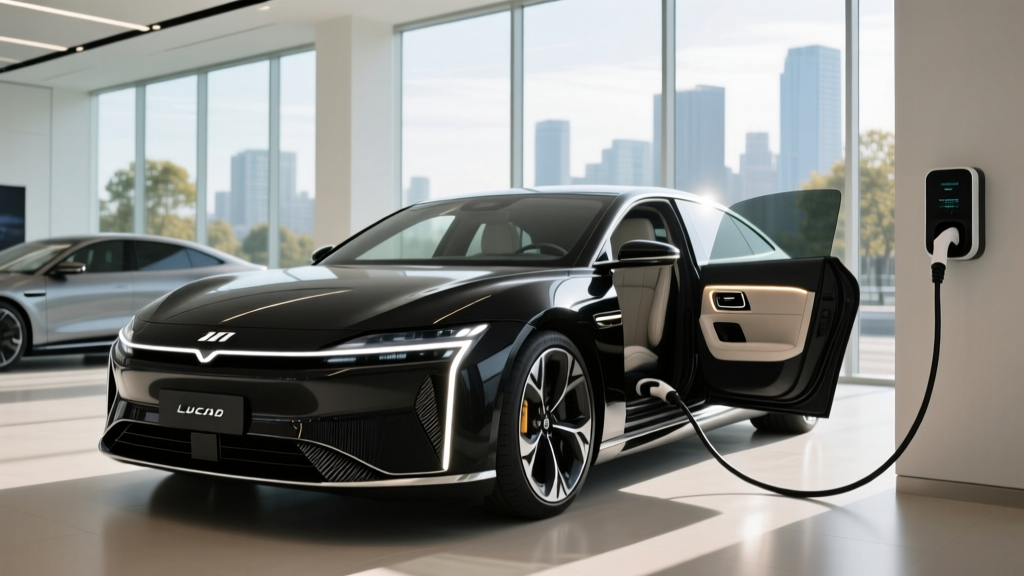
Lucid Motors has carved a niche in the luxury EV sedan market by prioritizing efficiency and range above all else. While Lucid Air sales volumes have historically trailed German rivals, the 2026 lineup—anchored by the newly accessible Pure RWD and the range-topping Sapphire—offers specifications that continue to reset industry benchmarks. For buyers researching whether this low-volume luxury EV is a sound investment, the decision hinges on understanding the gap between its class-leading EPA numbers and the realities of ownership, including tax credit eligibility and charging infrastructure.
2026 Lucid Air Specifications at a Glance
| Specification | Pure RWD | Touring AWD | Grand Touring | Sapphire |
|---|---|---|---|---|
| EPA Range | 419 mi | 425 mi | 516 mi | 427 mi |
| Battery (Usable kWh) | 88 kWh (NMC) | 112 kWh (NMC) | 112 kWh (NMC) | 118 kWh (NMC) |
| Horsepower | 430 hp | 620 hp | 819 hp | 1,234 hp |
| 0-60 mph | 5.0 sec | 3.4 sec | 3.0 sec | 1.89 sec |
| Drivetrain | RWD (Single Motor) | AWD (Dual Motor) | AWD (Dual Motor) | AWD (Tri-Motor) |
| Max DC Fast Charge | 200 kW | 300 kW | 300 kW | 300 kW |
| Base MSRP | $69,900 | $87,400 | $125,600 | $249,000 |
Real-World Range and Efficiency Analysis
The Lucid Air Grand Touring's EPA-estimated 516 miles remains the highest of any production EV sold in the United States. However, buyers analyzing Lucid Air sales data should understand how this translates to daily driving. Lucid's proprietary Wunderbox powertrain and miniaturized motors achieve an industry-leading efficiency of roughly 3.9 to 4.5 miles per kWh, depending on the trim.
- City/Commuter Driving: Expect to meet or slightly exceed EPA estimates (520+ mi on Grand Touring) due to aggressive regenerative braking and low-speed efficiency.
- Highway (75 mph): Range typically drops 12-15% from the EPA sticker. Grand Touring owners report 430-450 miles at sustained interstate speeds.
- Cold Weather (Below 32°F): Expect a 20-30% reduction in range. The Air's standard heat pump mitigates cabin energy draw, but battery chemistry (NMC) still suffers in freezing temperatures without preconditioning.
According to fueleconomy.gov, the Air Grand Touring achieves 146 MPGe combined. For context, this efficiency allows the Air to travel further on 30 kWh of electricity than most competitors can on 40 kWh, a significant advantage for buyers without access to home charging who rely on paid public networks.
Charging Speed: DC Fast and Level 2 Home Setup
The 2026 Lucid Air utilizes a 900V+ electrical architecture, enabling charge speeds that remain among the fastest in the luxury segment. However, peak kilowatt (kW) ratings only tell part of the story; the charge curve—how the vehicle sustains speed as the battery fills—matters more for road-trip planning.
| Charging Level | Power / Rate | Speed / Time | Notes |
|---|---|---|---|
| Level 1 (120V) | ~1.4 kW | ~4-5 mi/hr | Emergency/trickle only. |
| Level 2 (Home 240V/48A) | 11.5 kW | ~46 mi/hr | Full charge in ~10-12 hours. |
| DC Fast (Pure RWD) | Peak 200 kW | 10-80% in ~25 min | Curve tapers significantly after 60%. |
| DC Fast (Touring/GT/Sapphire) | Peak 300 kW | 10-80% in ~16 min | Sustains >200 kW up to ~55% SoC. |
Connector Compatibility: For 2026, Lucid provides vehicles with the NACS (Tesla-style) charge port native on new production models, granting access to the Tesla Supercharger network. For older models or specific CCS networks like Electrify America, Lucid supplies a NACS-to-CCS adapter. Always verify your home charger's connector type; most modern Level 2 units now ship with NACS or offer swappable cables.
Interior Tech, Space, and the Glass Canopy
The Lucid Air's cabin is defined by its "Glass Canopy" roof, which stretches from the windshield to the rear window, creating an airy, open environment that outclasses the Mercedes EQS and BMW i7 in perceived spaciousness. However, the trade-off is a lack of a traditional sedan trunk opening; the Air uses a "frunk" and a rear trunk that, while deep, has a narrow opening that makes loading bulky items like large suitcases more difficult than in a hatchback or SUV.
- Cargo Volume: 32 cu ft (combined trunk and frunk), which is generous for a sedan but less practical than the Tesla Model S (28 cu ft rear + liftback design).
- Rear Legroom: 37.6 inches, suitable for adults on long trips, though the low-slung roofline requires taller passengers to duck slightly upon entry.
- Infotainment: A 34-inch curved glass cockpit display handles navigation and media. While visually striking, some owners report that the lack of physical HVAC controls (managed via touchscreen or lower "Pilot" panel) can be distracting while driving.
ADAS and Driver Assistance: DreamDrive Pro
Lucid's DreamDrive Pro system uses 32 sensors, including lidar (on higher trims), to provide Level 2 driver assistance. It includes adaptive cruise, lane centering, and automated parking.
Pricing, Trims, and Federal Tax Credit Eligibility
Understanding the final cost of a Lucid Air requires navigating the IRS §30D Clean Vehicle Credit. Because the Air is a luxury sedan, its eligibility is strictly limited by MSRP and buyer income caps.
| Trim | Base MSRP | MSRP Cap Status | Estimated Final Price (if eligible) |
|---|---|---|---|
| Pure RWD | $69,900 | Eligible (Under $55k? No — Sedan cap is $55k) | ~$69,900 (No Credit) |
| Touring AWD | $87,400 | Ineligible (Over $55k Sedan Cap) | $87,400 |
| Grand Touring | $125,600 | Ineligible (Over $55k Sedan Cap) | $125,600 |
Tax Credit Reality Check: Under current IRS rules, the MSRP cap for sedans is $55,000. Because the 2026 Lucid Air Pure starts at $69,900, no new Lucid Air models currently qualify for the $7,500 federal tax credit. Buyers looking for a tax-advantaged luxury EV must look toward SUVs (where the cap is $80,000) or the used EV market, where a pre-owned Air might qualify for up to $4,000 under the §25E credit if purchased from a dealer for under $25,000 (unlikely for this model in 2026).
Warranty and Long-Term Ownership
Lucid's warranty coverage is competitive with other luxury EV manufacturers, though it lacks the 10-year/100,000-mile battery coverage offered by Hyundai/Kia.
- Basic Vehicle: 4 years / 50,000 miles.
- Battery & Drive Units: 8 years / 100,000 miles (minimum 70% capacity retention).
- Roadside Assistance: 4 years / 50,000 miles.
For buyers concerned about long-term reliability, Lucid's low sales volume means independent repair data is scarce. Unlike Tesla, which has a vast mobile service fleet, Lucid relies on a smaller network of service centers, primarily in coastal metro areas. If you live outside a major hub, mobile service availability should be verified before purchase.
Pros and Cons
Pros
- Class-leading range and efficiency (MPGe).
- 900V architecture for ultra-fast DC charging (300 kW peak).
- Spacious, light-filled cabin with premium materials.
- Smooth, silent ride quality that rivals Mercedes-Benz S-Class.
Cons
- Does not qualify for the new-vehicle federal tax credit.
- Limited service center footprint outside major cities.
- Infotainment lacks native Apple CarPlay/Android Auto (uses mirroring or proprietary apps).
- Trunk opening is narrow for a vehicle of this size.
Frequently Asked Questions
Why are Lucid Air sales lower than Tesla or Porsche?
Lucid Air sales are constrained by production capacity, a higher starting price point, and a smaller dealership/service network. Additionally, the luxury sedan market is shrinking in favor of SUVs like the Tesla Model X or the upcoming Lucid Gravity.
Does the Lucid Air come with free charging?
Lucid has previously offered complimentary charging credits on the Electrify America network for new buyers, but these promotions vary by model year and trim. Always confirm current incentives with a Lucid advisor.
Is the Lucid Air good in winter weather?
The Air's standard heat pump and battery preconditioning help maintain range and charge speeds in cold weather. However, the low-profile tires and heavy weight (over 5,000 lbs on AWD trims) require dedicated winter tires for safe handling in snow and ice.