Quick Verdict: The Efficiency King With a Service Footprint Catch-Up
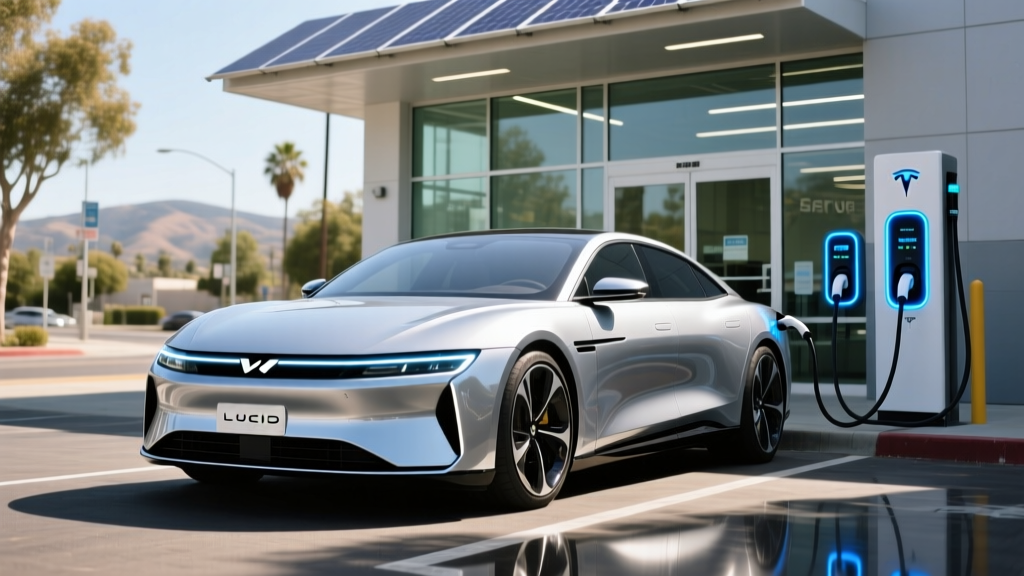
The Lucid Air remains the benchmark for electric sedan efficiency in 2026, squeezing more miles per kilowatt-hour than any rival in its class. The base Air Pure starts at $69,900 and delivers an EPA-estimated 419 miles of range, while the range-topping Air Grand Touring pushes to an extraordinary 516 miles. But ownership satisfaction hinges on service accessibility — and for Bay Area buyers, understanding where and how to get a Lucid serviced near San Jose is as important as the spec sheet.
Lucid Air Lineup at a Glance: Specs, Pricing, and Tax Credits
| Specification | Air Pure | Air Touring | Air Grand Touring | Air Sapphire |
|---|---|---|---|---|
| Base MSRP | $69,900 | $79,900 | $110,900 | $250,500 |
| Drivetrain | RWD (single motor) | AWD (dual motor) | AWD (dual motor) | AWD (tri-motor) |
| Horsepower | 430 hp | 620 hp | 1,050 hp | 1,234 hp |
| 0–60 mph | 5.0 sec | 3.4 sec | 3.0 sec | 1.89 sec |
| EPA Range | 419 mi | 425 mi | 516 mi | 427 mi |
| Battery (usable) | 88 kWh (NMC) | 112 kWh (NMC) | 112 kWh (NMC) | 118 kWh (NMC) |
| Efficiency | 146 MPGe / 23 kWh/100mi | 131 MPGe / 26 kWh/100mi | 131 MPGe / 26 kWh/100mi | 109 MPGe / 31 kWh/100mi |
| Max DC Fast Charge | 220 kW | 300 kW | 300 kW | 300 kW |
| 10–80% DC Time | ~32 min | ~22 min | ~22 min | ~25 min |
| Federal §30D Credit Eligible? | No (MSRP cap exceeded for sedans) | No | No | No |
Source: EPA fueleconomy.gov, Lucid Motors official specifications. The IRS §30D new-vehicle credit caps sedan MSRP at $55,000 — all Air trims exceed this threshold. See IRS §30D guidelines for full rules including income limits and battery-sourcing requirements.
Charging Speed: DC Fast, Level 2, and the 900-Volt Architecture Advantage
Lucid's proprietary 900-volt electrical architecture remains one of the highest-voltage platforms in production, enabling faster charging with lower current and reduced heat generation. Here's what that translates to in practice:
| Charging Level | Power (kW) | Miles Added per Hour | Notes |
|---|---|---|---|
| Level 1 (120V household) | ~1.4 kW | ~4 mi/hr | Emergency/trickle only |
| Level 2 (240V, 48A home charger) | 11.5 kW | ~37 mi/hr | Full overnight charge in ~10 hrs (112 kWh pack) |
| Level 2 (240V, 80A Lucid home charger) | 19.2 kW | ~62 mi/hr | Requires 100A dedicated circuit; full charge in ~6 hrs |
| DC Fast (peak) | Up to 300 kW | ~12 mi/min at peak | Touring/GT only; Pure peaks at 220 kW |
| DC Fast (sustained 10–80%) | ~200–250 kW avg | 10–80% in ~22 min (GT) | Charge curve tapers significantly above 85% |
Charging-curve reality: The 300 kW peak on Touring and Grand Touring trims is achievable at a 350 kW-capable CCS station (with a NACS adapter for Tesla Supercharger access). However, peak rate holds only between roughly 10–40% state of charge. Between 40–80%, the rate ramps down progressively, averaging closer to 200–250 kW. Above 85%, expect a steep taper to under 50 kW — typical for NMC chemistry protecting cell longevity. If you're road-tripping, plan stops around the 10–80% window for fastest turnaround.
Lucid now includes NACS (Tesla) adapter compatibility across the lineup, opening access to the Supercharger network alongside Electrify America, EVgo, and other CCS providers. For Bay Area owners, this dual-network access is significant — Supercharger density in and around San Jose is among the highest in the country.
Interior Space, Technology, and Daily Livability
The Air's cabin is genuinely spacious, rivaling full-size luxury sedans at a fraction of their footprint:
- Front legroom: 45.3 inches
- Rear legroom: 45.5 inches (class-leading — more than a Mercedes S-Class)
- Cargo (trunk): 32 cubic feet
- Frunk (front trunk): 10 cubic feet
- Total cargo: 42 cubic feet — more than many compact SUVs
The 34-inch curved glass canopy display spans the dashboard and runs Lucid's in-house software. It's visually striking, but the interface has drawn criticism for burying climate controls in submenus. Wireless Apple CarPlay and Android Auto are standard, mitigating some frustration. A secondary lower touchscreen handles secondary functions, but physical buttons remain scarce.
Driver assistance: Lucid's DreamDrive Pro system uses 32 sensors including LiDAR — a hardware suite that's among the most robust in production. It delivers adaptive cruise, lane centering, and automatic lane changes on highways. This is a SAE Level 2 system requiring active driver supervision. It is not self-driving. DreamDrive Pro competes with Tesla Autopilot and GM Super Cruise in capability, though Lucid's rollout of advanced features has been slower than its rivals.
Ownership Economics: Warranty, Service Access, and the San Jose Question
Lucid covers the Air with a competitive warranty package:
- Basic vehicle warranty: 4 years / 50,000 miles
- Battery and powertrain: 8 years / 100,000 miles (covers degradation below 70% state of health)
- Roadside assistance: 4 years / 50,000 miles
The service-center question for San Jose buyers: Lucid's service network is still maturing compared to Tesla's established footprint. As of early 2026, Lucid operates a limited number of company-owned service centers in the Bay Area, with the closest dedicated facilities to San Jose located in the broader South Bay and East Bay regions. Lucid also supplements physical locations with mobile service vans for software updates, minor diagnostics, and some hardware repairs that don't require a lift.
For San Jose owners, this means:
- Mobile service handles roughly 40–50% of routine needs (cabin filter replacements, 12V battery issues, software glitches, tire rotations) at your home or office.
- Major hardware work (suspension, drive unit replacement, high-voltage system service) requires a trip to a Lucid-authorized center. Plan for potential loaner vehicle coordination or rideshare if your nearest center is 30–45 minutes away.
- Body repair is handled through Lucid-certified collision partners. Verify that a certified shop exists within a reasonable distance before purchase — aluminum-intensive EV bodies require specialized training.
- Tire availability: The Air uses specific tire sizes (245/40R20 front, 275/35R20 rear on some trims). These are available but not always in stock at every tire shop. Budget $1,200–$1,800 for a full set of replacements.
Compared to Tesla's 15+ service locations within a 30-mile radius of San Jose, Lucid's network is noticeably thinner. This is the most practical ownership trade-off to weigh against the Air's range and efficiency superiority.
Lucid Air vs. Key Competitors: Is It Worth Buying?
Pros
- Best-in-class efficiency — more real-world miles per kWh than any competitor
- Class-leading rear legroom (45.5 in) and 42 cu ft total cargo
- 900V architecture enables genuine 300 kW peak charging
- 516-mile EPA range on Grand Touring is unmatched in production
- NACS adapter included — full Supercharger + CCS access
- LiDAR-equipped DreamDrive Pro is hardware-forward
- Quiet, refined ride quality at highway speed
Cons
- No federal §30D tax credit — all trims exceed $55,000 sedan MSRP cap
- Service center network in the Bay Area remains limited vs. Tesla
- Infotainment UI is less intuitive than competitors; climate controls buried
- Insurance premiums run 15–25% higher than comparable ICE sedans
- DreamDrive feature rollouts lag behind Autopilot/Super Cruise in updates
- Sapphire trim at $250,500 is a low-volume halo, not a practical buy
Air Pure vs. Tesla Model S Long Range: The Model S offers 402 miles EPA at a similar starting price (~$74,990), but consumes more energy per mile (28 kWh/100mi vs. the Air Pure's 23). Over 15,000 annual miles at $0.16/kWh, the Air Pure saves roughly $180/year in electricity. The Model S wins on service network density and Supercharger-native convenience, but the Air's interior space and ride refinement are notably better.
Air Touring vs. BMW i7 eDrive50: The i7 starts at ~$105,700 with 318 miles EPA and far more traditional luxury appointments. It qualifies for no federal credit either. The Air Touring undercuts it by $25,000 while delivering 107 more EPA miles. The i7 wins on dealer service access and brand cachet; the Air wins on value and range.
Air Grand Touring vs. Mercedes EQS 450+: The EQS 450+ lists at ~$104,400 with 390 miles EPA. The Air Grand Touring costs slightly more but delivers 126 additional EPA miles and substantially more horsepower. The EQS has a denser dealer network for service, which matters if you prefer a traditional dealership experience.
Who Should Buy the Lucid Air?
Choose the Air Pure if: You want maximum range per dollar in a luxury sedan, commute 40+ miles daily, have reliable Level 2 home charging, and are comfortable with a thinner service network in exchange for best-in-class efficiency.
Choose the Air Touring if: You need dual-motor AWD for weather or performance, want 300 kW charging for road trips, and value the 112 kWh pack's flexibility without stepping to Grand Touring pricing.
Choose the Air Grand Touring if: Range is your top priority, you regularly drive 300+ mile routes, and you want the longest single-charge range available in any production EV as of 2026.
Look elsewhere if: You need a dense, walk-in service network (consider Tesla Model S or BMW i7), you want federal tax credit eligibility (look at vehicles under the $55,000 sedan MSRP cap), or you prefer physical controls and a more conventional infotainment layout.
Frequently Asked Questions
What is the real-world range of the Lucid Air?
The Air Pure delivers approximately 350–380 miles in real-world highway driving in mild weather, dropping to 310–340 miles in cold conditions. The Grand Touring achieves 430–460 miles highway in mild weather and 370–410 miles when cold. These figures assume 70 mph cruising speeds; aggressive driving or mountain routes will reduce range further.
How fast does the Lucid Air charge at home and on the road?
At home on a 240V/48A Level 2 charger, the Air adds roughly 37 miles of range per hour. With Lucid's optional 80A home charger (requiring a 100A circuit), that increases to about 62 miles per hour. On DC fast chargers, the Touring and Grand Touring peak at 300 kW and can charge from 10–80% in approximately 22 minutes at a 350 kW-capable station. The Air Pure peaks at 220 kW and takes about 32 minutes for the same window.
Does the Lucid Air qualify for the federal EV tax credit?
No. Under current IRS §30D rules, the new-vehicle clean vehicle credit caps sedan MSRP at $55,000. All Lucid Air trims exceed this threshold, starting at $69,900 for the Pure. Buyers may be eligible for state-level incentives — check California's Clean Transportation Incentives and your local air district rebate programs. Always consult a tax professional for your specific eligibility.
How does the Lucid service experience compare in the San Jose area?
Lucid's physical service presence near San Jose is limited compared to Tesla's extensive Bay Area network. Expect to rely on Lucid's mobile service vans for routine maintenance and minor repairs, with major hardware work requiring a drive to a dedicated service center. Mobile service coverage is generally reliable in the South Bay, but appointment wait times can stretch to 2–3 weeks for non-urgent requests. Before purchasing, verify current service-center locations and mobile coverage on Lucid's official website.
Is the Lucid Air worth buying over a Tesla Model S?
The Air wins on energy efficiency, interior space (especially rear legroom), and ride refinement. The Model S wins on service network density, software maturity, and Supercharger-native integration (though the Air's NACS adapter largely closes this gap). If range-per-kWh and cabin comfort are your priorities, the Air is the stronger choice. If service convenience and software ecosystem matter more, the Model S remains compelling.
What battery chemistry does the Lucid Air use, and how long will it last?
All Air trims use NMC (nickel-manganese-cobalt) lithium-ion cells. NMC offers high energy density, which is how Lucid achieves its range figures. Lucid warranties the battery for 8 years or 100,000 miles against degradation below 70% state of health. Real-world data from early 2022–2023 Air owners suggests approximately 5–8% capacity loss over the first 50,000 miles, which is within expectations for NMC packs with active thermal management. Avoid routinely charging to 100% for daily use — setting a daily limit of 80–90% extends long-term cell health.