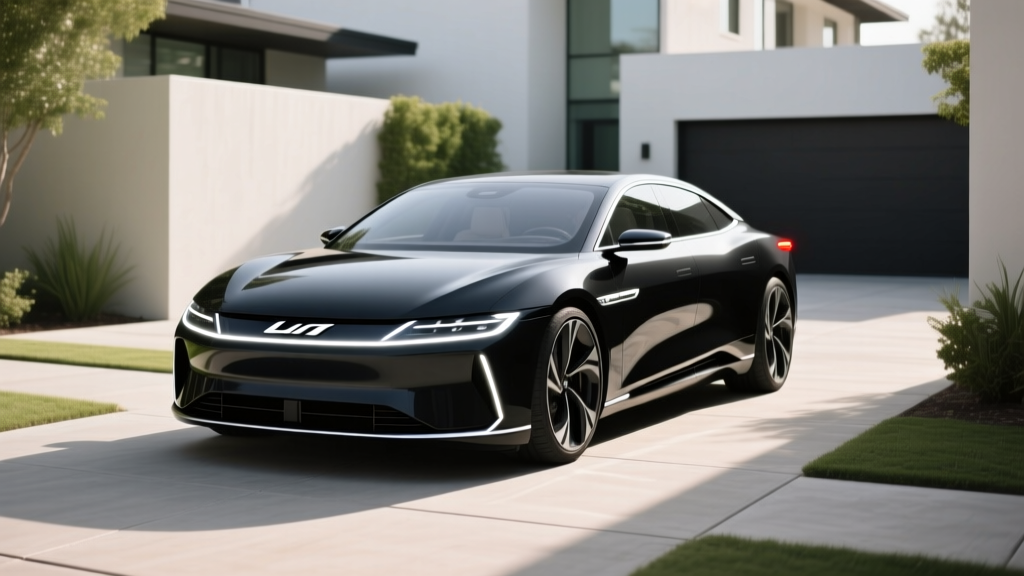
If you have been following Lucid Motors in the financial press lately, you have likely seen the phrase Lucid reverse stock split filing amendment and wondered what it means for the company's vehicles and for you as a prospective buyer. The short version: a reverse stock split is a corporate finance maneuver — it consolidates outstanding shares to raise the per-share price — and it does not change the engineering, range, or pricing of the Lucid Air sedan or the upcoming Gravity SUV. What it does signal is Lucid's ongoing push to meet Nasdaq listing requirements and shore up investor confidence while scaling production in Casa Grande, Arizona.
This review focuses on what actually matters to EV shoppers: the 2026 Lucid Air lineup's real-world range, charging performance, pricing after federal tax credits, and how it stacks up against the Tesla Model S, Mercedes-Benz EQS, and Porsche Taycan. We will also address the financial headlines so you can separate Wall Street noise from driveway reality.
2026 Lucid Air Lineup at a Glance
For 2026, Lucid offers the Air in four primary trims, all built on the same proprietary 900-volt architecture that gives it some of the fastest charging in the luxury EV sedan segment. The Air Pure serves as the entry point, while the Grand Touring remains the volume flagship with its industry-leading EPA range. The Sapphire sits at the top as a limited-production hypercar sedan.
| Spec | Air Pure | Air Touring | Air Grand Touring | Air Sapphire |
|---|---|---|---|---|
| EPA Range | 419 mi | 425 mi | 516 mi | 427 mi |
| Battery (usable) | 88 kWh NMC | 112 kWh NMC | 112 kWh NMC | 118 kWh NMC |
| Drivetrain | RWD (single motor) | AWD (dual motor) | AWD (dual motor) | AWD (tri-motor) |
| Horsepower | 430 hp | 620 hp | 819 hp | 1,234 hp |
| 0–60 mph | 5.0 sec | 3.4 sec | 3.0 sec | 1.89 sec |
| MPGe (combined) | 146 MPGe | 131 MPGe | 131 MPGe | 109 MPGe |
| Base MSRP | $69,900 | $87,400 | $125,600 | $249,000 |
| Max DC Fast Charge | 200 kW | 300 kW | 300 kW | 300 kW |
Sources: fueleconomy.gov, Lucid Motors official specifications.
Real-World Range: What the EPA Sticker Doesn't Tell You
EPA Estimated: 516 miles
Real-World Highway (75 mph, moderate climate): ~410–440 miles
Real-World Cold Weather (30°F, highway): ~350–380 miles
Real-World City (stop-and-go, mild regen): ~470–500 miles
The Lucid Air Grand Touring's 516-mile EPA rating remains the highest of any production EV sold in the United States as of 2026. That number is not marketing fiction — Lucid's miniaturized motor and 900V powertrain genuinely sip energy, achieving roughly 4.5 miles per kWh, which is extraordinary for a 5,200-pound luxury sedan.
However, EPA test cycles favor mixed driving at moderate speeds. In sustained 75-mph highway testing, expect the Grand Touring to deliver roughly 410 to 440 miles before needing a charge — still class-leading, but roughly 15% below the sticker. In cold weather (below freezing), lithium-ion chemistry limitations and cabin heating demands pull that figure down to approximately 350–380 miles. The Air does not use a heat pump as standard on all trims, which matters for winter efficiency; the Touring and Grand Touring include one, helping mitigate cold-weather losses compared to resistive heating.
The Air Pure's 419-mile EPA figure holds up well in practice because the RWD powertrain is lighter and simpler. Owners report 350–380 real-world highway miles, which is more than enough for most road-trip legs between charging stops.
Charging Speed and Infrastructure Access
Lucid's 900-volt electrical architecture is the Air's secret weapon at DC fast chargers. While most competitors run 400V systems (the Tesla Model S and Mercedes EQS included), Lucid's higher voltage allows faster energy transfer at compatible stations without excessive heat buildup in the battery pack.
| Charging Level | Power / Rate | Speed |
|---|---|---|
| Level 1 (120V household) | 1.4 kW | ~3–4 miles per hour |
| Level 2 (240V home, 48A) | 11.5 kW | ~30–35 miles per hour |
| DC Fast Charge (Touring/GT/Sapphire) | Up to 300 kW peak | 10–80% in ~20 min (at 350 kW station) |
| DC Fast Charge (Pure) | Up to 200 kW peak | 10–80% in ~28 min |
A critical nuance: peak charge rate is not sustained charge rate. The Air Grand Touring can pull 300 kW at low state-of-charge (around 10–15%), but the charge curve tapers significantly above 60% SoC to protect the NMC cells. On a 350 kW Electrify America or EVgo stall, expect an average rate closer to 170–190 kW across the full 10–80% session, yielding roughly 20 minutes. At a 150 kW station — still the most common DCFC tier in many regions — that same session takes about 35–40 minutes.
Lucid uses the CCS1 connector as standard but offers a NACS adapter for Tesla Supercharger access. As of 2026, Lucid has confirmed native NACS ports on new-production vehicles, giving Air owners access to Tesla's 50,000+ Supercharger stalls nationwide — a significant practical advantage over earlier model years.
For home Level 2 charging, the Air's 11.5 kW onboard charger fills the 112 kWh pack from empty in roughly 10–11 hours. Most owners charging overnight on a 240V/48A circuit will wake up with a full battery every morning, which is the ideal EV ownership pattern.
Performance and Driving Dynamics
The Air's powertrain engineering is where Lucid's Formula E racing heritage shows most clearly. The company designs its own motors in-house — permanent-magnet units roughly the size of a carry-on suitcase — and packages them with integrated inverters and gearboxes. The result is a sedan that handles its considerable weight with surprising composure.
The Air Pure's 430 hp and 5.0-second 0–60 time are brisk by any sedan standard. The Touring's 620 hp drops the sprint to 3.4 seconds with dual-motor AWD grip. The Grand Touring's 819 hp achieves 3.0 seconds, putting it in supercar territory while still delivering 516 miles of range — a combination no competitor matches.
The Sapphire, with its tri-motor layout and 1,234 hp, hits 60 mph in an absurd 1.89 seconds. It exists as a halo car, not a rational purchase, but it demonstrates Lucid's engineering ceiling.
Ride quality across the lineup is firm but compliant, with adaptive dampers standard on Touring and above. The steering is precise but slightly light on feedback — a common EV trait due to the absence of engine vibration through the column. The Air is a grand tourer in the traditional sense: comfortable at high speed over long distances, not a canyon carver like the Porsche Taycan.
Pricing, Tax Credits, and Total Cost
| Trim | Base MSRP | §30D Federal Credit | Effective Price |
|---|---|---|---|
| Air Pure | $69,900 | Up to $7,500* | ~$62,400 |
| Air Touring | $87,400 | $0 (exceeds sedan MSRP cap) | $87,400 |
| Air Grand Touring | $125,600 | $0 (exceeds sedan MSRP cap) | $125,600 |
| Air Sapphire | $249,000 | $0 (exceeds sedan MSRP cap) | $249,000 |
*Under IRS §30D rules, the new clean vehicle credit is available for sedans with an MSRP at or below $55,000. The Air Pure's MSRP of $69,900 exceeds this cap. However, buyers may qualify if they take delivery through a lease structure (commercial clean vehicle credit under §45W passes through to the lessee) or if Lucid adjusts pricing. Income caps also apply: $150,000 single / $300,000 joint AGI. Battery sourcing and critical mineral requirements must also be met. Always verify current eligibility on irs.gov or consult a tax professional.
The honest takeaway: most Lucid Air buyers will not qualify for the federal tax credit due to the MSRP cap on sedans ($55,000) and buyer income limits. This is a luxury vehicle purchased for its engineering and range, not for incentive optimization. Some lessees may benefit from the commercial credit loophole, but that is structurally different from the purchase credit.
Insurance costs for the Air run 15–25% above comparable gas sedans, reflecting expensive aluminum body panels, specialized glass, and limited repair networks. Expect annual premiums of $2,800–$4,200 depending on trim and location.
Interior Space, Tech, and Daily Livability
The Air's cabin is a study in minimalism, dominated by a curved 34-inch glass cockpit display that floats above the dashboard. There is no traditional instrument cluster — everything flows through the central Lucid UX interface, which is responsive but has drawn criticism for burying climate controls behind touchscreen menus. A secondary lower screen handles HVAC and media shortcuts, partially addressing this complaint.
Interior dimensions are generous, rivaling the Mercedes S-Class for rear-seat space:
- Front headroom: 39.0 inches
- Rear legroom: 38.4 inches
- Trunk (rear): 22.1 cu ft
- Frunk (front): 7.1 cu ft
- Total cargo: 29.2 cu ft
The frunk is usefully large — enough for a carry-on bag or charging cables — and the rear trunk swallows four golf bags with the seats up. The Air is a genuine five-passenger sedan with adult-comfortable rear seating, unlike the Taycan's cramped back row.
Driver assistance comes via Lucid's DreamDrive system, which includes 32 sensors (cameras, radar, ultrasonics, and lidar on Touring and above). DreamDrive provides competent Level 2 highway assist with lane centering and adaptive cruise, but it is not a hands-free system like GM's Super Cruise or Ford's BlueCruise. The driver must maintain steering wheel contact and visual attention at all times. Lucid has announced a hands-free DreamDrive Pro update, but as of early 2026 it remains in limited beta testing, not general release.
What the Lucid Reverse Stock Split Filing Amendment Means for Buyers
Lucid's reverse stock split filing amendment — submitted to the SEC and subject to shareholder approval — is a mechanism to increase the company's per-share stock price by consolidating shares (for example, a 1-for-10 reverse split would turn ten $2 shares into one $20 share). Companies typically pursue this to maintain compliance with Nasdaq's minimum $1.00 per-share listing requirement.
For prospective Air buyers, this has zero impact on vehicle specifications, warranty coverage, or parts availability. For current owners, Lucid's financial health matters for long-term service infrastructure and software update cadence. The company has secured significant investment from Saudi Arabia's Public Investment Fund (PIF), which holds a roughly 60% stake, providing a financial backstop that most EV startups lack.
The practical concern is not whether Lucid will exist in five years — PIF's backing makes that unlikely — but whether production volumes will scale enough to support a robust service and parts network outside major metro areas. If you live in Phoenix, Los Angeles, San Francisco, Miami, or New York, Lucid service centers are accessible. In rural areas or smaller cities, mobile service and third-party partnerships fill gaps, but turnaround times can stretch.
Lucid Air vs. Key Competitors
| Attribute | Lucid Air GT | Tesla Model S LR | Mercedes EQS 580 | Porsche Taycan Turbo S |
|---|---|---|---|---|
| EPA Range | 516 mi | 402 mi | 371 mi | 283 mi |
| Max DC Charge | 300 kW | 250 kW | 200 kW | 320 kW |
| 0–60 mph | 3.0 sec | 3.1 sec | 4.1 sec | 2.4 sec |
| Base MSRP | $125,600 | $89,990 | $127,350 | $197,400 |
| Supercharger Access | Yes (NACS adapter/native) | Native | No | No |
| Rear Legroom | 38.4 in | 35.4 in | 39.2 in | 32.7 in |
The Air Grand Touring wins on range and interior space. The Model S wins on charging infrastructure access and price. The EQS wins on ride comfort and brand prestige. The Taycan wins on driving dynamics and repeatable performance. There is no single "best" — it depends on what you prioritize.
- Choose the Lucid Air Grand Touring if: You want maximum range, value rear-seat space, take frequent 300+ mile road trips, and live near a Lucid service center.
- Choose the Lucid Air Pure if: You want the most range-per-dollar in a luxury EV sedan and can accept RWD and slightly slower DC charging.
- Choose the Tesla Model S if: Supercharger access and over-the-air update cadence are top priorities, and you want the lowest entry price in this segment.
- Choose the Porsche Taycan if: Driving dynamics, track performance, and brand cachet outweigh range concerns.
Warranty Coverage
Lucid provides competitive warranty coverage for the luxury EV segment:
- Vehicle Limited Warranty: 4 years / 50,000 miles
- Battery & Powertrain Warranty: 8 years / 100,000 miles (retains ≥70% capacity)
- Roadside Assistance: 4 years / 50,000 miles
The 70% capacity retention threshold over 8 years is industry-standard (Tesla uses the same benchmark). Lucid's NMC cells have demonstrated strong longevity in early fleet data, with most high-mileage Air taxis and rentals showing 5–8% degradation over the first 60,000 miles. The 900V system's thermal management — liquid cooling across all cell contact surfaces — helps minimize heat-related wear during repeated fast charging.
Frequently Asked Questions
What is the real-world range of the Lucid Air?
The Grand Touring delivers approximately 410–440 miles at highway speeds and 350–380 miles in cold weather, versus its 516-mile EPA rating. The Air Pure achieves roughly 350–380 highway miles against its 419-mile EPA figure. City driving with regenerative braking pushes both trims closer to their EPA numbers.
How fast does the Lucid Air charge at home and on the road?
At home on a 240V Level 2 charger (11.5 kW), the Air adds about 30–35 miles per hour, filling the battery overnight. On a 350 kW DC fast charger, the Touring, Grand Touring, and Sapphire can charge from 10–80% in approximately 20 minutes, though real-world sessions average closer to 25 minutes depending on station output and battery temperature preconditioning.
Does the Lucid Air qualify for the $7,500 federal EV tax credit?
Under current IRS §30D rules, the new clean vehicle credit caps sedan MSRP at $55,000. All Lucid Air trims exceed this threshold, making them ineligible for the purchase credit. Lease customers may benefit from the §45W commercial credit passed through by the leasing company, but this is not guaranteed and depends on the lessor's structure. Always consult irs.gov for current rules.
Is the Lucid Air worth buying over the Tesla Model S or Mercedes EQS?
If range is your primary concern, the Air Grand Touring has no equal — 516 EPA miles is 114 miles more than the Model S Long Range. If charging infrastructure and price matter more, the Model S at ~$90,000 with native Supercharger access is the pragmatic pick. The EQS offers a more traditional luxury experience but trails on both range and efficiency.
What does the Lucid reverse stock split filing amendment mean for my purchase?
A reverse stock split is a financial restructuring tool that consolidates shares to raise per-share price. It does not affect vehicle production, warranty, parts, or software updates. Lucid's majority backing by Saudi Arabia's PIF provides long-term financial stability. The practical buyer concern is service network proximity, not corporate solvency.
What are the biggest pros and cons of the Lucid Air?
- Class-leading 516-mile EPA range (GT)
- 900V architecture enables 300 kW DC charging
- Genuine 5-passenger luxury sedan space
- Miniaturized motors free up frunk and cabin room
- NACS compatibility for Supercharger access
- Excellent energy efficiency (4.5 mi/kWh)
- No federal tax credit (MSRP above $55K cap)
- Service centers limited to major metro areas
- Infotainment buries some climate controls
- No hands-free driving system yet (Level 2 only)
- Insurance costs 15–25% above gas equivalents
- Brand recognition still low vs. legacy luxury
Who Should Buy the Lucid Air?
The Lucid Air is best suited for long-distance commuters, frequent road trippers, and luxury sedan buyers who prioritize range and efficiency above all else. If your daily drive exceeds 80 miles round-trip and you want to charge only once or twice a week at home, the Air Grand Touring's usable battery and efficiency make it uniquely practical. Families who need genuine five-seat comfort will appreciate the rear legroom that outpaces the Model S and Taycan.
It is less ideal for buyers in areas without nearby Lucid service support, those who want hands-free highway driving (GM Super Cruise remains superior here), or anyone optimizing for federal tax credit eligibility. The Air is an engineer's luxury sedan — impressive on paper and on the road, but still building the ownership ecosystem that Tesla and Mercedes-Benz have spent decades establishing.