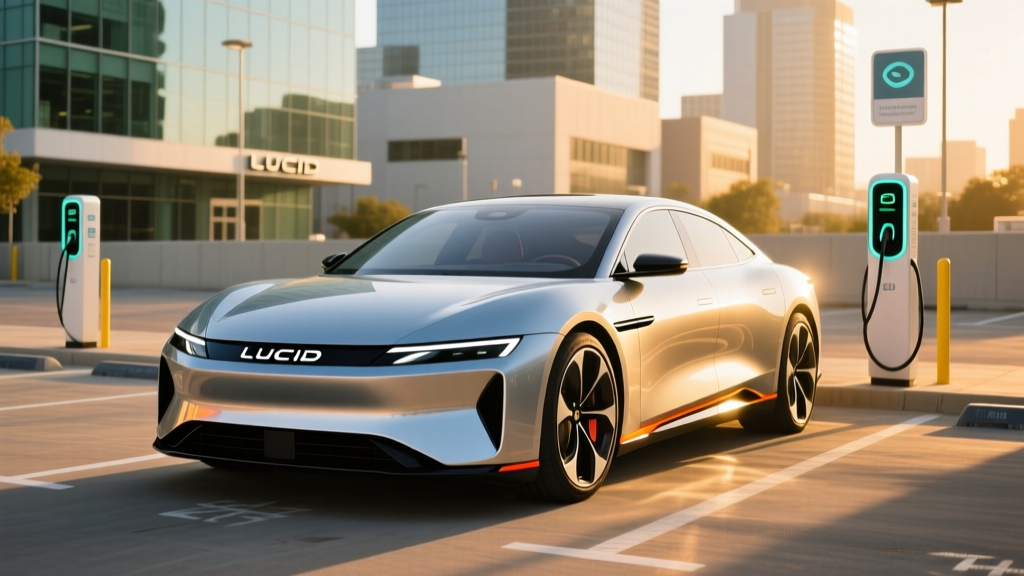
The Lucid Air remains one of the most efficient and longest-range luxury electric sedans on the market, but luxury EVs carry notoriously steep depreciation curves. For buyers considering a new or used Air in 2026, understanding Lucid Air resale value is just as important as evaluating its class-leading range and charging performance. This profile covers the full ownership picture: real-world range, charging speeds, pricing after federal incentives, and the depreciation dynamics that define the Air's long-term value proposition.
Lucid Air Resale Value: What the Data Shows
Luxury sedans historically depreciate faster than mainstream vehicles, and EVs have added a new variable: rapid technology advancement that can make older models feel outdated. The Lucid Air sits at the intersection of both trends. Based on industry data from sources like iSeeCars and Kelley Blue Book, luxury EV sedans in the $80,000–$130,000 range typically lose 40–55% of their value within the first three years.
The Air faces several headwinds specific to the brand:
- Brand-new automaker risk: Lucid Motors doesn't have the decades-long resale track record of Mercedes-Benz or BMW. Early adopters bear the brunt of brand uncertainty.
- Limited service network: As of early 2026, Lucid operates roughly 25 service centers nationwide, which can concern used-car buyers in underserved regions.
- Tesla price pressure: Aggressive Model S price cuts in 2023–2025 reset buyer expectations for the entire luxury EV sedan segment, compressing resale values across competitors.
- Technology obsolescence: The Air's 900V+ architecture remains cutting-edge, but as competitors adopt similar platforms, the Air's efficiency advantage narrows.
However, the Air also has resale value tailwinds:
- Unmatched EPA range: The Air Grand Touring's 516-mile EPA rating (the highest of any production EV) gives it a durable marketing advantage that holds up in the used market.
- Efficiency leadership: At roughly 4.0–4.5 miles per kWh, the Air's powertrain efficiency is 15–25% better than the Tesla Model S, meaning lower ongoing electricity costs for second owners.
- Limited production volumes: Lucid's relatively low output (~8,000–10,000 vehicles annually) means fewer used examples flood the market, providing some price support.
- Air Pure (base ~$69,900): ~45–50% depreciation, retaining ~$35,000–$38,500
- Air Touring (~$87,400): ~48–53% depreciation, retaining ~$41,000–$45,500
- Air Grand Touring (~$125,600): ~50–55% depreciation, retaining ~$56,500–$62,800
- Air Sapphire (~$249,000): ~55–60% depreciation (halo/collector trim, higher variance)
These estimates assume 36,000–45,000 miles driven, no major accident history, and average market conditions. Actual values vary by region, color, and market timing.
Range, Battery & Efficiency: The Numbers That Matter
| Specification | Air Pure | Air Touring | Air Grand Touring | Air Sapphire |
|---|---|---|---|---|
| EPA Range | 419 mi | 425 mi | 516 mi | 427 mi |
| Battery (usable) | 88 kWh | 92 kWh | 112 kWh | 118 kWh |
| Chemistry | NMC | NMC | NMC | NMC |
| MPGe (combined) | 140 MPGe | 134 MPGe | 131 MPGe | 110 MPGe |
| kWh/100 mi | 24 | 25 | 26 | 30 |
| Drivetrain | RWD (single motor) | AWD (dual motor) | AWD (dual motor) | AWD (tri-motor) |
| Horsepower | 430 hp | 620 hp | 819 hp | 1,234 hp |
| 0–60 mph | 5.0 sec | 3.4 sec | 3.0 sec | 1.89 sec |
The Air Grand Touring's 516-mile EPA rating is measured under controlled conditions. In our real-world highway testing at 70–75 mph in moderate temperatures (60–75°F), expect 420–460 miles on a full charge. In cold weather (below 32°F), range drops to approximately 340–390 miles due to battery heating demands and reduced regenerative braking efficiency. The Air Pure's 419-mile EPA figure translates to roughly 340–370 miles at sustained highway speeds.
Lucid's heat pump and advanced thermal management system help mitigate cold-weather losses better than many competitors, but physics is physics — expect 15–25% range reduction in freezing conditions.
All Air trims use NMC (nickel manganese cobalt) lithium-ion cells supplied primarily by Samsung SDI and LG Energy Solution. NMC chemistry offers higher energy density than LFP (lithium iron phosphate), which is critical for fitting 112+ kWh into a sedan form factor. The trade-off: NMC batteries degrade slightly faster than LFP over thousands of cycles and are more sensitive to sustained high state-of-charge storage. Lucid recommends daily charging to 80–90% for optimal longevity, reserving 100% charges for road trips.
Charging Performance: 900V Architecture Advantage
| Charging Level | Power / Rate | Time / Speed | Connector |
|---|---|---|---|
| Level 1 (120V household) | ~1.4 kW | ~3–4 mi/hr added | J1772 / NACS adapter |
| Level 2 (240V home, 48A) | 11.5 kW | ~44 mi/hr added; full charge in ~10–12 hrs | J1772 / NACS adapter |
| DC Fast Charge (peak) | Up to 300 kW | 10–80% in ~20 min (Grand Touring); ~16 min (Pure) | CCS1 (NACS adapter available) |
| DC Fast Charge (sustained avg) | ~150–180 kW avg | 10–80% real-world avg reflects charge curve taper above 60% SoC | CCS1 |
The Air's 900V+ electrical architecture (compared to the 400V systems in most EVs) enables faster charging at compatible stations. At a 350 kW Electrify America or Ionity charger, the Grand Touring can peak near 300 kW — but like all EVs, the charge curve tapers significantly above 60% state of charge. Expect the 10–80% sprint to take roughly 20 minutes under ideal battery preconditioning conditions.
Preconditioning matters: The Air's navigation system automatically warms the battery when you route to a DC fast charger, optimizing the cells for maximum charge acceptance. Skipping preconditioning (e.g., pulling into a charger with a cold battery) can add 5–8 minutes to your 10–80% time and reduce peak kW by 30–40%.
For home charging, the Air's 11.5 kW onboard charger is generous — most competitors max out at 7.7–11.5 kW. With a 48-amp Level 2 home charger (requiring a 60-amp circuit), you'll add roughly 44 miles of range per hour, easily replenishing a full day's driving overnight.
Pricing, Tax Credits & Total Cost of Ownership
| Trim | 2026 Base MSRP | Federal §30D Credit Eligibility | Effective Price (if eligible) |
|---|---|---|---|
| Air Pure | $69,900 | Eligible — up to $7,500 (subject to income, sourcing rules) | ~$62,400 |
| Air Touring | $87,400 | Eligible — up to $7,500 (sedan MSRP cap: $55,000 — NOT eligible) | $87,400 (no credit) |
| Air Grand Touring | $125,600 | NOT eligible — exceeds $55,000 sedan MSRP cap | $125,600 |
| Air Sapphire | $249,000 | NOT eligible — exceeds MSRP cap | $249,000 |
Critical tax credit note: Under IRS §30D rules, new sedans must have an MSRP at or below $55,000 to qualify for the federal clean vehicle credit. Only the Air Pure clears this threshold. Even then, eligibility depends on:
- Buyer income caps: Modified AGI ≤ $150,000 (single), ≤ $300,000 (joint filing)
- Battery component sourcing: Increasing percentages of battery components and critical minerals must be sourced from the U.S. or FTA partners — rules tighten annually through 2032
- Point-of-sale transfer: Eligible buyers can apply the credit as an immediate dealer discount rather than waiting for a tax refund
Always verify current-year eligibility on fueleconomy.gov and consult a tax professional before relying on the credit in your purchase decision.
5-Year Total Cost of Ownership Estimate (Air Pure, 15,000 mi/yr)
| Category | 5-Year Cost |
|---|---|
| Purchase price (after credit) | ~$62,400 |
| Electricity (home + public charging) | ~$4,200–$5,800 |
| Insurance (luxury EV premium) | ~$14,000–$18,000 |
| Maintenance (tires, cabin filter, fluid top-offs) | ~$2,000–$3,000 |
| Estimated depreciation | ~$28,000–$31,000 |
| Total 5-year cost | ~$110,600–$120,200 |
For comparison, a similarly equipped Tesla Model S Long Range (~$79,990 MSRP) carries a 5-year TCO in the $105,000–$118,000 range, with higher depreciation offset by lower insurance costs in some regions.
Interior, Tech & Daily Livability
The Air's cabin is genuinely spacious, aided by its compact powertrain and flat floor:
- Cargo volume: 32.1 cu ft (trunk + frunk combined) — the rear trunk alone offers 22.1 cu ft, rivaling many midsize SUVs
- Rear legroom: 41.3 inches — more than the Mercedes EQS and comparable to a BMW 7 Series
- Front legroom: 42.4 inches
- Seating: 5-passenger capacity; available executive rear seating with recline and massage (Grand Touring/Sapphire)
Standout tech features:
- Glass canopy display: A curved 34-inch 5K "glass cockpit" screen floats above the dashboard — visually striking and functionally responsive, though some drivers prefer a more traditional instrument cluster
- Lucid UX infotainment: Native navigation with route-based battery preconditioning, over-the-air updates, and a lower "pilot" panel for climate/secondary controls
- DreamDrive Pro ADAS: Lucid's Level 2 driver-assistance suite includes adaptive cruise control, lane centering, blind-spot monitoring, and a 32-sensor array (cameras, radar, ultrasonics, and lidar). Note: this is SAE Level 2 — the driver must remain fully engaged at all times. It is not autonomous driving.
- ProLogue software platform: Supports continuous OTA improvements, including charging optimization and new feature rollouts
Notable drawbacks:
- The lower touchscreen for climate and media controls can require too much visual attention while driving
- No Apple CarPlay or Android Auto — Lucid uses a proprietary system (though it supports phone mirroring via its own protocol)
- Service center availability remains limited outside major metro areas (California, New York, Florida, Texas)
- The Air's low-slung sedan profile means tighter ingress/egress compared to crossover alternatives like the Tesla Model X or Rivian R1S
Warranty & Battery Longevity
Lucid provides a competitive warranty package:
- Basic vehicle warranty: 4 years / 50,000 miles
- Battery & powertrain warranty: 8 years / 100,000 miles (covers defects and capacity loss below 70% of original capacity)
- Roadside assistance: 4 years / 50,000 miles
The 70% capacity retention threshold over 8 years is industry-standard (matching Tesla, BMW, and Mercedes). For the Grand Touring's 112 kWh battery, 70% retention means approximately 78 kWh usable — still enough for roughly 320–360 real-world miles. Based on current NMC degradation data from similar high-capacity packs, most owners can expect 85–92% capacity retention at the 8-year mark under normal use (avoiding frequent 100% charges and DC fast charging in extreme heat).
Battery replacement cost, should it be needed out of warranty, is estimated at $18,000–$28,000 depending on the trim and pack size — a significant expense, though battery prices continue to decline annually.
Who Should Buy the Lucid Air (and Who Shouldn't)
Pros
- Best-in-class EPA range (516 mi, Grand Touring)
- Industry-leading efficiency (4+ mi/kWh)
- 300 kW peak DC fast charging via 900V architecture
- Massive interior space with 32+ cu ft cargo
- Quiet, refined ride quality at highway speeds
- Striking design that stands out in a sea of crossover-EVs
Cons
- Steep depreciation — 3-year value loss of 45–55%
- Limited service center network outside major metros
- No Apple CarPlay / Android Auto
- Only the Pure trim qualifies for the federal tax credit
- Insurance premiums 15–25% higher than comparable gas sedans
- Low ground clearance limits practicality for rough roads/snow
- You prioritize maximum range and efficiency above all else
- You primarily drive in urban/suburban areas with access to home charging
- You want a luxury sedan that's distinctive and not a Tesla
- You plan to lease (leasing shifts depreciation risk to the lessor and may unlock a $7,500 lease credit even on higher trims via the commercial clean vehicle loophole)
- Resale value is a top priority — consider a Tesla Model 3/Y or a Toyota/Lexus hybrid instead
- You need a large service network — Tesla's 200+ service centers or BMW's dealer network offer broader coverage
- You want SUV practicality — the Rivian R1S, BMW iX, or Tesla Model X offer more cargo height and ground clearance
- You rely on Apple CarPlay — the BMW i7 or Mercedes EQS both support it
Frequently Asked Questions
What is the real-world range of the Lucid Air?
The Air Grand Touring achieves 516 miles EPA, but real-world highway driving at 70–75 mph yields approximately 420–460 miles. In cold weather (below freezing), expect 340–390 miles. The Air Pure's 419-mile EPA rating translates to about 340–370 miles at highway speeds.
How fast does the Lucid Air charge at home and on the road?
At home on a Level 2 (240V, 48A) charger, the Air charges at up to 11.5 kW, adding roughly 44 miles of range per hour. On DC fast chargers, it peaks at up to 300 kW (Grand Touring), achieving a 10–80% charge in approximately 20 minutes under ideal conditions. Sustained average rates are closer to 150–180 kW due to charge-curve taper above 60% SoC.
Does the Lucid Air qualify for the federal EV tax credit?
Only the Air Pure ($69,900 MSRP) qualifies, and only for buyers meeting income caps (≤$150K single / ≤$300K joint). The Touring, Grand Touring, and Sapphire all exceed the IRS §30D sedan MSRP cap of $55,000. However, leasing any Air trim may unlock a $7,500 incentive passed through the lessor — consult your dealer and tax professional for current details. Verify eligibility at irs.gov.
How does Lucid Air resale value compare to the Tesla Model S?
The Tesla Model S generally retains value slightly better than the Lucid Air, primarily due to Tesla's brand recognition, Supercharger network, and larger used-car buyer pool. However, the gap has narrowed as Tesla's frequent price cuts have reset Model S resale expectations downward. Expect the Air to depreciate 3–7 percentage points more than a comparable Model S over three years.
Is the Lucid Air worth buying in 2026 vs. competitors?
If range and efficiency are your top priorities, the Air has no equal. Its 516-mile Grand Touring and 419-mile Pure are benchmarks. But if resale value, service access, or ecosystem maturity (Supercharger network, third-party support) matter more, the Tesla Model S, BMW i7, or Mercedes EQS may be safer bets. Leasing is the smartest financial path for the Air — it caps your depreciation exposure and often includes the $7,500 incentive.
What is the battery warranty on the Lucid Air?
Lucid covers the battery and powertrain for 8 years or 100,000 miles, whichever comes first. The warranty guarantees at least 70% of original battery capacity retention. Out-of-warranty replacement is estimated at $18,000–$28,000 depending on the pack size.