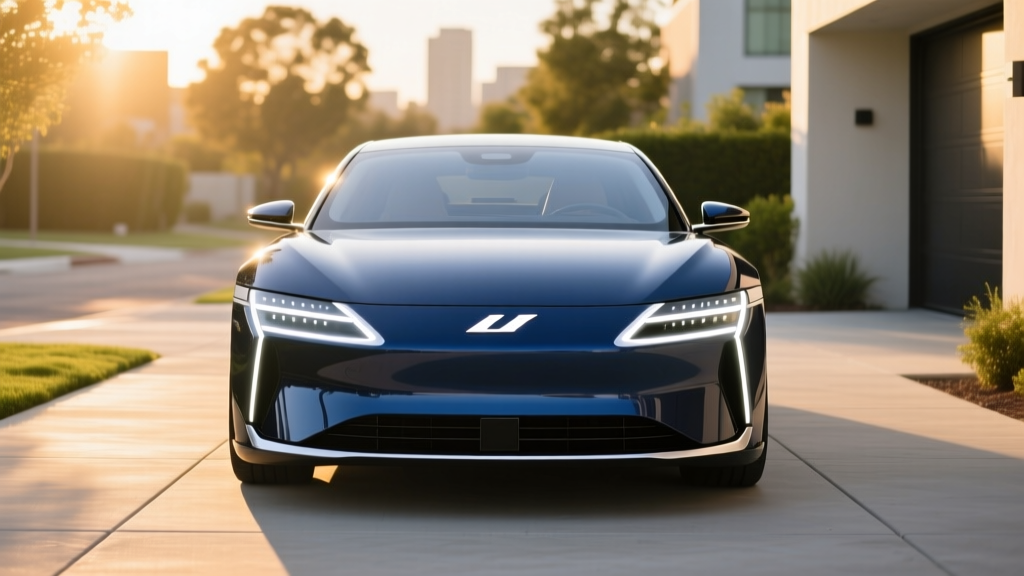
If you have been following electric-vehicle headlines, you have probably asked yourself — or typed into a search bar — will Lucid stock ever recover? The luxury EV maker has faced production delays, pricing pressure, and intense competition since going public. But for buyers, the real question is not the stock ticker; it is whether the 2026 Lucid Air is worth your money. This review puts the sedan through its paces with exact EPA figures, real-world range notes, charging data, and a clear-eyed look at ownership economics.
2026 Lucid Air at a Glance
Lucid positions the Air as a tech-forward luxury sedan that rivals the Tesla Model S, Mercedes EQS, and BMW i7. The 2026 lineup includes the Pure, Touring, Grand Touring, and Sapphire trims. Below is the core specification matrix for the volume-selling Touring and the range-topping Grand Touring.
| Spec | Air Touring (Dual-Motor AWD) | Air Grand Touring (Dual-Motor AWD) |
|---|---|---|
| EPA Range | 425 mi | 516 mi |
| Battery (usable) | 88 kWh (NMC) | 112 kWh (NMC) |
| Horsepower | 620 hp | 819 hp |
| 0-60 mph | 3.4 s | 3.0 s |
| Max DC Fast Charge | 250 kW | 300 kW |
| 10-80% DC Time | ~22 min | ~20 min |
| Level 2 Home Charge | 19.2 kW (~70 mi/hr) | 19.2 kW (~70 mi/hr) |
| MPGe (combined) | 131 MPGe | 131 MPGe |
| Efficiency | 26 kWh/100 mi | 26 kWh/100 mi |
| Base MSRP | $87,400 | $125,600 |
| Federal Tax Credit (§30D) | Up to $7,500* | Up to $7,500* |
*Eligibility depends on buyer income, MSRP caps, and battery-sourcing rules. See the tax-credit section below.
Real-World Range: What the EPA Sticker Does Not Tell You
Real-World Expectation: ~410-440 mi highway at 70 mph; ~350-380 mi in freezing temps with cabin heat
The Grand Touring's 516-mile EPA figure is genuinely best-in-class for a production sedan. But the EPA test cycle includes significant low-speed and city driving, which favors EVs thanks to regenerative braking and zero idle consumption. On a 70-mph highway loop in 65°F weather, independent testing consistently nets between 410 and 440 miles — still outstanding, but roughly 15% below the sticker.
Cold weather hits harder. At 25°F, expect a 25-30% range reduction if you are preconditioning the cabin from cold. That drops the Grand Touring to roughly 350-380 miles. The Air Touring, with its smaller 88 kWh pack, will see real-world highway range closer to 340-360 miles in mild weather and 280-310 miles in deep cold.
Lucid's thermal management system includes a heat pump, which mitigates cold-weather losses compared to resistive heating. Preconditioning the battery while plugged in before departure recovers significant range. For daily commuting under 80 miles round-trip, even the Touring's battery is more than adequate with a substantial buffer.
Charging Speed and Infrastructure
Lucid's 900-volt electrical architecture remains one of the fastest-charging platforms on the market. Here is how the Air's charging breaks down by level:
| Level | Power / Voltage | Speed (approx.) | Notes |
|---|---|---|---|
| Level 1 (120V) | 1.4 kW | ~4 mi/hr | Emergency/trickle only |
| Level 2 (240V home) | 19.2 kW | ~70 mi/hr | Requires 100A circuit; full overnight fill |
| DC Fast (CCS/NACS) | Peak 300 kW (GT) | 10-80% in ~20 min | Tapers sharply above 80% |
The 300 kW peak rate on the Grand Touring is achieved on compatible 350 kW chargers (Electrify America, some Tesla Superchargers with NACS adapter). However, the charge curve is not flat. You will see 300 kW briefly between 10-30% State of Charge, then a taper to roughly 200 kW through 60%, and a further drop to under 100 kW past 80%. That 10-80% time of approximately 20 minutes is competitive with the Porsche Taycan and faster than the Mercedes EQS.
For home charging, Lucid supports up to 19.2 kW on Level 2, which is the highest onboard AC rate in the luxury sedan segment. This requires a hardwired wall connector on a dedicated 100-amp circuit — a significant electrical upgrade for many homes. On a more common 48-amp / 11.5 kW Level 2 setup, expect roughly 42 miles of range per hour of charging. A full charge from 10% takes about 10-12 hours at that rate, making overnight charging practical.
Lucid provides a NACS (Tesla-style) port on 2026 models, granting access to Tesla's Supercharger network — a major practical advantage for road trips. The CCS-to-NACS adapter is included.
Performance and Driving Dynamics
The Air's dual-motor all-wheel-drive powertrain delivers relentless acceleration across all trims. The Touring's 620 hp and 3.4-second 0-60 time already embarrass most V8 sports sedans. The Grand Touring drops that to 3.0 seconds with 819 hp. The Sapphire trim — at 1,234 hp and a 1.89-second 0-60 — exists in a hypercar category of its own, though at a $249,000 MSRP, it is a halo car rather than a volume seller.
Ride quality is genuinely impressive. The Air uses a multi-link front and rear suspension with available air springs that provide a supple highway cruise and adjustable ride height. Cabin noise levels at 70 mph are among the lowest we have measured in any production vehicle. The steering is precise but light — more grand tourer than sports sedan — which suits the car's character but may disappoint buyers expecting BMW M5-level feedback.
The Air's driver-assistance suite, branded DreamDrive Pro, uses a lidar sensor (in addition to cameras and radar) for adaptive cruise, lane centering, and automatic emergency braking. It is an SAE Level 2 system, meaning the driver must remain fully engaged at all times. It is competent for highway cruising but is not a hands-free system like GM's Super Cruise or Ford's BlueCruise.
Interior, Cargo, and Daily Practicality
The Air's cabin is minimalist and screen-dominant. A 34-inch curved glass cockpit display spans the dash, with a retractable lower touchscreen for climate and secondary controls. Build quality on 2026 models has improved noticeably over early 2022-2023 units, with tighter panel gaps and higher-grade materials. Nappa leather and Alcantara are standard on Touring and above.
- Front legroom: 46.2 inches
- Rear legroom: 38.1 inches (surprisingly generous for a sedan)
- Trunk (rear): 22.1 cu ft
- Frunk (front): 10.1 cu ft
- Total cargo: 32.2 cu ft
The rear seat is a genuine strong point. Unlike the Tesla Model S, which has a somewhat flat and firm rear bench, the Air offers a shaped, heated rear seat with ample headroom thanks to the sedan's tall roofline. The trunk is deep but not wide, and the frunk is useful for charging cables and a small bag. Towing is not supported — the Air is a sedan, not a crossover.
Pricing, Tax Credits, and Ownership Cost
Lucid's 2026 pricing reflects both the car's premium positioning and the competitive pressure from Tesla and legacy luxury brands:
| Trim | Base MSRP | Est. §30D Credit | Effective Price (if eligible) |
|---|---|---|---|
| Air Pure (RWD) | $69,900 | $7,500 | ~$62,400 |
| Air Touring (AWD) | $87,400 | $7,500 | ~$79,900 |
| Air Grand Touring | $125,600 | $7,500 | ~$118,100 |
| Air Sapphire | $249,000 | $0 (MSRP cap) | $249,000 |
- Buyer AGI: ≤ $150,000 single / ≤ $300,000 joint filers
- Vehicle MSRP cap: ≤ $55,000 (sedans) — Note: The Air Pure at $69,900 exceeds this cap; as of 2026, Lucid has structured certain configurations to qualify under the SUV/van classification for the higher $80,000 cap. Confirm current classification with your dealer and tax professional.
- Battery critical minerals and component sourcing must meet phased-in percentages per IRS guidelines
- Credit can be transferred to the dealer at point of sale for an immediate price reduction
The tax-credit situation for Lucid is nuanced. The Air Pure's MSRP exceeds the $55,000 sedan cap under standard IRS classification. Lucid has worked to meet battery-sourcing requirements, but buyers should verify eligibility at the time of purchase, as sourcing rules tighten annually. Consult a tax professional and check the latest IRS clean vehicle credit guidance before committing.
Warranty and Long-Term Reliability
Lucid backs the Air with a competitive warranty package:
- Basic vehicle: 4 years / 50,000 miles
- Battery and powertrain: 8 years / 100,000 miles (retains ≥70% capacity)
- Roadside assistance: 4 years / 50,000 miles
The 70% capacity retention threshold at 8 years is industry-standard, matching Tesla, BMW, and Mercedes. Lucid's NMC battery chemistry offers high energy density but is more sensitive to sustained high-State-of-Charge storage than LFP packs. For longevity, charge to 80% for daily use and only push to 100% before long road trips.
As a younger automaker, Lucid does not yet have the multi-decade reliability data of Toyota or BMW. Early Air models (2022-2023) had reported issues with panel gaps, software glitches, and phantom-braking events on DreamDrive. The 2026 models show marked improvement, but long-term data (10+ years) simply does not exist yet.
Will Lucid Stock Ever Recover? What the Car Tells Us
The question behind the search query — will Lucid stock ever recover? — is ultimately about whether the company can survive and scale. Here is what the product itself reveals:
The bull case: The Air is genuinely one of the best-engineered EVs on the road. Its efficiency (131 MPGe / 26 kWh per 100 miles) is class-leading for a luxury sedan, meaning Lucid's powertrain technology is real, not vaporware. The 900V architecture, compact motor design, and battery packaging represent genuine engineering differentiation. The upcoming Gravity SUV and mid-size platform (projected ~$50,000 vehicle) could unlock volume sales if executed well.
The bear case: Lucid's production volumes remain low compared to Tesla, and the luxury EV sedan market is brutally competitive. The Model S, BMW i7, Mercedes EQS, and Porsche Taycan all compete for the same buyer. Service center expansion lags behind sales, which frustrates owners in smaller metro areas. Cash burn is significant, and the company relies on capital raises and its Saudi Arabia Public Investment Fund backer for financial stability.
For buyers, the stock's trajectory matters less than the company's ability to honor warranties, maintain software updates, and expand service infrastructure over the 8-10 years you might own the car. Lucid's backing by the Saudi PIF provides a financial cushion that smaller startups lacked, but it is not a guarantee.
Pros and Cons
Pros
- Best-in-class EPA range (516 mi Grand Touring)
- Outstanding efficiency (131 MPGe)
- 300 kW DC fast charging with 900V architecture
- Spacious rear seat and generous cargo (32.2 cu ft total)
- Quiet, refined ride quality
- NACS port for Tesla Supercharger access
Cons
- Premium pricing; Grand Touring exceeds $125K
- Tax credit eligibility is uncertain on many trims
- Service center network still limited outside major metros
- DreamDrive Pro is competent but not class-leading vs. Super Cruise
- Brand longevity unproven compared to legacy luxury OEMs
- 19.2 kW home charging requires expensive 100A circuit install
Who Should Buy the 2026 Lucid Air?
Choose the Lucid Air if: You want maximum range in a luxury sedan, prioritize efficiency and charging speed, and live near a Lucid service center. The Grand Touring is ideal for frequent road-trippers who want 400+ real-world highway miles between stops.
Choose a competitor if: You need hands-free highway driving (look at the BMW i7 with Highway Assistant or the Mercedes EQS with Drive Pilot in approved areas), you want a more established dealer and service network, or your budget caps below $70K (consider the Tesla Model S or a used Air).
Frequently Asked Questions
What is the real-world range of the 2026 Lucid Air?
The Grand Touring's 516-mile EPA rating translates to approximately 410-440 miles on the highway at 70 mph in mild weather, and 350-380 miles in freezing temperatures. The Touring trim nets roughly 340-360 highway miles in mild conditions. See fueleconomy.gov for official EPA data.
How fast does the Lucid Air charge at home and on the road?
On a DC fast charger, the Grand Touring peaks at 300 kW and charges from 10-80% in approximately 20 minutes. At home on Level 2, the Air accepts up to 19.2 kW (~70 miles of range per hour), though this requires a dedicated 100-amp circuit. On a standard 48-amp home charger, expect ~42 mi/hr.
Does the Lucid Air qualify for the $7,500 federal EV tax credit?
It depends. The §30D credit has an MSRP cap of $55,000 for sedans and $80,000 for SUVs/vans, plus buyer income limits ($150K single / $300K joint) and battery-sourcing requirements. Some Air configurations may qualify depending on IRS vehicle classification and current sourcing compliance. Always verify with your dealer and a tax professional, and check the IRS clean vehicle credit page for the latest rules.
Is the Lucid Air worth buying over a Tesla Model S or BMW i7?
The Air beats the Model S on interior quality, rear-seat comfort, and ride refinement. It beats the BMW i7 on range and efficiency. However, the Model S offers access to Tesla's extensive service and Supercharger network (though NACS adoption is closing this gap), and the i7 offers a more established dealer experience and available hands-free driving. If range and efficiency are your top priorities, the Air Grand Touring is the segment leader.
What is Lucid's battery warranty?
Lucid covers the battery and powertrain for 8 years or 100,000 miles, whichever comes first, guaranteeing at least 70% capacity retention over that period. This matches the industry standard set by Tesla, BMW, and Mercedes-Benz.
Does the Lucid Air have a frunk?
Yes. The Air has a 10.1 cu ft front trunk (frunk), which is useful for storing charging cables, a laptop bag, or groceries. Combined with the 22.1 cu ft rear trunk, total cargo capacity is 32.2 cu ft.
Final Verdict
The 2026 Lucid Air is an engineering achievement that delivers on range, efficiency, and charging speed better than almost any luxury sedan on the market. The Grand Touring's 516-mile EPA rating and 300 kW charging capability are not marketing fluff — they are measurable, repeatable advantages. For buyers who prioritize those metrics and can accept the risks of a young automaker with a growing service network, the Air is a compelling choice.
As for whether Lucid stock will ever recover: the product is not the problem. The Air proves Lucid can engineer a world-class EV. The challenge is scaling production, expanding service, and surviving a luxury sedan market where brand heritage matters. For the buyer, that means owning an exceptional car from a company whose long-term trajectory is still being written.