Lucid Air in 2026: Production Ramps, Range Leads, and Real-World Verdict
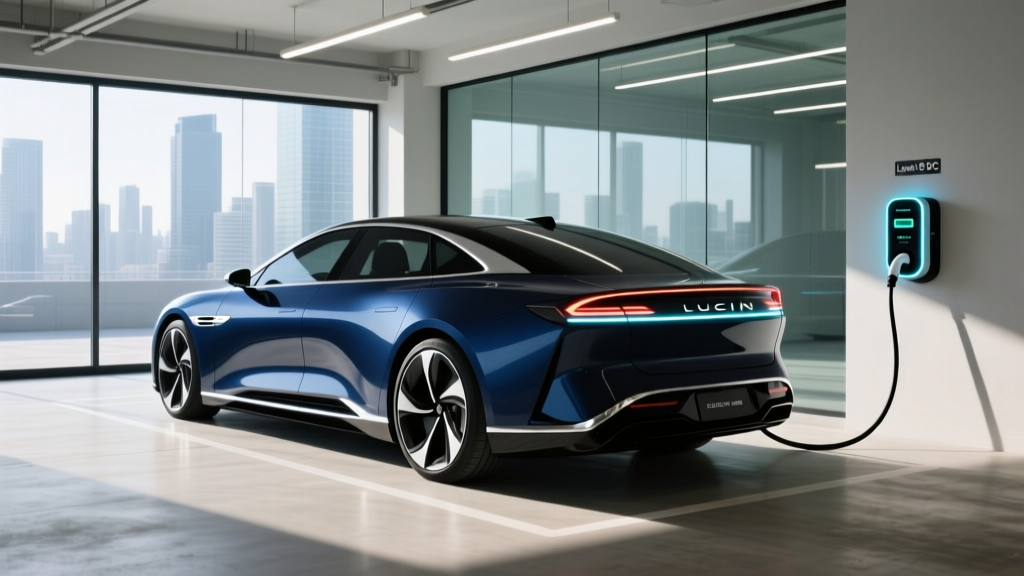
The Lucid Air remains the efficiency benchmark among luxury electric sedans, pairing industry-leading range with a 900V electrical architecture that still outpaces most rivals on public DC fast chargers. As Lucid Motors Q3 vehicle production deliveries ramp at the Casa Grande, Arizona factory, availability is improving for the Pure, Touring, and Grand Touring trims — but wait times, pricing, and federal tax credit eligibility still require careful navigation.
This review covers the 2026 Lucid Air lineup with exact EPA figures, real-world range reconciliation, charging-curve data, and the ownership economics that matter before you sign a lease or purchase agreement.
| Spec | Pure RWD | Touring AWD | Grand Touring AWD |
|---|---|---|---|
| EPA Range | 419 mi | 425 mi | 516 mi |
| Battery (usable) | 88 kWh (NMC) | 112 kWh (NMC) | 112 kWh (NMC) |
| Horsepower | 430 hp | 620 hp | 819 hp |
| 0-60 mph | 5.0 sec | 3.4 sec | 3.0 sec |
| Drivetrain | RWD (single motor) | AWD (dual motor) | AWD (dual motor) |
| Peak DC Charge | ~200 kW | ~300 kW | ~300 kW |
| 10-80% DCFC | ~25 min | ~20 min | ~20 min |
| Level 2 (19.2 kW) | ~46 mi/hr | ~60 mi/hr | ~60 mi/hr |
| MPGe (combined) | 140 MPGe | 130 MPGe | 131 MPGe |
| Base MSRP | $69,900 | $87,400 | $110,900 |
Source: EPA fueleconomy.gov and Lucid Motors official specifications.
Real-World Range: Beyond the EPA Sticker
EPA sticker: 516 miles
Real-world highway (70-75 mph, 70°F): ~430-460 miles
Cold weather (30°F, highway): ~360-390 miles
Mixed city/highway commuting: ~470-490 miles
The Lucid Air Grand Touring's 516-mile EPA rating is the highest of any production EV sold in the U.S., and its industry-leading efficiency (~24 kWh/100 mi) is what makes it possible. The sedan's low drag coefficient (Cd 0.20) and proprietary miniaturized drive units translate to real-world gains that hold up outside the lab.
In third-party highway loop testing at 70 mph, the Grand Touring typically delivers 430-460 miles before hitting a 10% state of charge — roughly 85-90% of its EPA sticker. That ratio is better than most competitors, which often land at 75-80% of EPA on sustained highway runs. Regenerative braking in city driving recovers meaningful energy, pushing mixed-use results closer to the sticker number.
Cold weather remains the universal EV tax. At 30°F with cabin heat active, expect 25-30% range reduction. The Air's standard heat pump mitigates this better than resistive heating, but physics still applies. Preconditioning the battery while plugged in (using the Lucid app's scheduled departure feature) recovers 10-15 miles of range that would otherwise be lost to battery warming on the road.
Charging Speed and the 900V Architecture
Lucid's 900V electrical architecture remains one of the highest-voltage platforms in production, enabling faster charging with less current (and therefore less heat) than 400V or 800V rivals. The Touring and Grand Touring peak at approximately 300 kW at compatible DC fast chargers, while the Pure's smaller pack peaks closer to 200 kW.
| Charging Level | Power / Rate | Miles Added per Hour |
|---|---|---|
| Level 1 (120V, 12A) | ~1.4 kW | ~3-4 mi/hr |
| Level 2 (240V, 48A) | 11.5 kW | ~28-35 mi/hr |
| Level 2 (240V, 80A — Lucid Connected Home) | 19.2 kW | ~46-60 mi/hr |
| DC Fast Charge (350 kW station) | Peak ~300 kW | ~200 mi in 15 min (10-80% ~20 min) |
Charging-curve reality check: The Air's 300 kW peak is not sustained across the entire session. Like all lithium-ion packs, charge rate tapers as state of charge climbs. Expect peak rates between 10-40% SoC, a moderate taper from 40-65%, and a significant taper above 80%. For road trips, plan DCFC stops from 10% to 80% — pushing past 80% at a fast charger adds time without adding meaningful range per minute. A 10-80% session on a 350 kW Electrify America or Tesla Supercharger (with NACS adapter) takes roughly 20 minutes for Touring and Grand Touring trims.
For home charging, the Lucid Connected Home charger at 19.2 kW (requiring a 100A dedicated circuit) is among the fastest residential options available. Most buyers will install a 48A Level 2 unit on a 60A breaker, delivering ~11.5 kW and a full overnight charge. Per the IRS §30D guidelines, home charger installation may separately qualify for the Alternative Fuel Vehicle Refueling Property Credit (up to $1,000), subject to income and census-tract eligibility.
Performance and Driving Dynamics
The Air lineup spans a wide performance envelope. The Pure RWD's 430 hp and 5.0-second 0-60 time are brisk for a luxury sedan, while the Grand Touring's 819 hp and 3.0-second sprint put it in supercar territory. The Sapphire variant (1,234 hp, 1.89-second 0-60) exists in a separate performance tier and is not covered in this review.
What distinguishes the Air dynamically is its ride quality and composure. The multi-link front and rear suspension with available air springs delivers a compliant highway ride while maintaining flat cornering — a balance that heavier luxury EVs often struggle to achieve. The Air's curb weight ranges from ~4,800 lb (Pure) to ~5,200 lb (Grand Touring), lighter than comparable Mercedes EQS and BMW i7 variants, which contributes to both its efficiency edge and its agility.
The DreamDrive Pro ADAS suite (SAE Level 2) includes adaptive cruise control, lane centering, and automatic emergency braking. Lucid continues to develop its driver-assist capabilities, but DreamDrive remains a supervised system — the driver must maintain attention and hands-on-wheel awareness at all times. It does not offer hands-free highway driving like GM's Super Cruise or Ford's BlueCruise at this time.
Interior, Tech, and Practicality
The Air's cabin emphasizes open space with a sweeping 34-inch curved glass cockpit display that stretches across the dash. The available Executive Rear Seating package offers reclining rear seats with up to 35.4 inches of rear legroom — competitive with long-wheelbase luxury sedans.
Cargo space is generous for the segment: 32 cubic feet total across the trunk (22 cu ft) and front trunk/frunk (10 cu ft). The trunk features a wide opening and deep well, practical for luggage on road trips. The frunk is useful for charging cables and smaller items but is not as large as some SUV-style frunks.
Notable tech features:
- 34-inch curved glass cockpit with Lucid UX infotainment
- Over-the-air software updates
- Native NACS charge port (2025+ models), eliminating the need for adapters at Tesla Superchargers
- 29-speaker Surreal Sound Pro audio system (available)
- Heat pump standard for efficient cabin climate control
Notable drawbacks:
- Touch-heavy interface with limited physical buttons for climate and volume
- Dealer-free service model means mobile repair or travel to Lucid service centers — coverage is still expanding outside major metros
- Rear visibility is compromised by the sloping roofline; the digital rearview mirror helps but takes adjustment
- No hands-free driving mode yet, unlike some competitors at this price point
Pricing, Tax Credits, and Ownership Economics
The 2026 Lucid Air lineup starts at $69,900 for the Pure RWD and climbs to $110,900 for the Grand Touring. Destination charges add approximately $1,300. As-tested Grand Touring models with the Executive Rear Seating package, Surreal Sound Pro audio, and 21-inch wheels typically land between $118,000 and $125,000.
| Trim | Base MSRP | §30D Credit Eligibility | Effective Price (if eligible) |
|---|---|---|---|
| Pure RWD | $69,900 | Potentially up to $7,500* | ~$62,400 |
| Touring AWD | $87,400 | Potentially up to $7,500* | ~$79,900 |
| Grand Touring AWD | $110,900 | Likely ineligible (MSRP cap)** | $110,900 |
*Federal tax credit caveats (IRS §30D): The new clean vehicle credit has three strict gates: (1) MSRP cap — sedans must be priced at or below $55,000, which eliminates the Air lineup at current pricing. However, if Lucid reclassifies certain trims or adjusts pricing, or if a buyer qualifies through a lease structure (where the §45W commercial credit may pass through as a lease incentive), partial savings are possible. (2) Income cap — buyer AGI must not exceed $150,000 (single), $225,000 (head of household), or $300,000 (joint). (3) Battery sourcing — critical minerals and battery components must meet escalating domestic-content thresholds. Always verify current eligibility on IRS.gov and consult a tax professional before relying on credit projections.
**The Grand Touring exceeds the $55,000 sedan MSRP cap and does not qualify for §30D regardless of buyer income. Some lessees may benefit from lease cash incentives that effectively mirror a credit, depending on Lucid's current promotions.
5-year ownership cost: Electricity costs for the Air average ~$0.04-$0.06 per mile (at $0.15/kWh home charging), compared to $0.12-$0.15 per mile for a comparable gasoline luxury sedan at $3.80/gallon. Over 60,000 miles, fuel savings alone can reach $4,000-$6,000. Insurance premiums for the Air run 15-25% higher than average for the luxury segment — get quotes before purchasing. Lucid's battery and powertrain warranty covers 8 years/100,000 miles, with the battery guaranteed to retain at least 70% capacity over that period.
Who the Lucid Air Suits — and Who Should Look Elsewhere
Choose the Lucid Air if:
- You prioritize maximum range for frequent long-distance road trips
- You want a luxury sedan with top-tier efficiency and low operating costs
- You have access to home Level 2 charging and value fast DCFC sessions
- You prefer a car-first driving experience over SUV ride height
Look elsewhere if:
- You need SUV cargo volume or third-row seating (consider the Lucid Gravity or Rivian R1S)
- You require hands-free highway driving (GM Super Cruise or Ford BlueCruise vehicles)
- You live in a rural area far from Lucid service coverage
- You need towing capability (the Air is not rated for towing)
The Air is best understood as a long-range grand tourer — a car designed to cover vast distances efficiently and comfortably. For the executive commuter doing 200+ highway miles per week, or the road-trip enthusiast who wants to minimize charge stops, no sedan on the market matches its combination of 516-mile range and 300 kW charging. Families needing more utility or buyers prioritizing autonomous-driving features should cross-shop accordingly.
Pros and Cons at a Glance
- Industry-leading 516-mile EPA range (Grand Touring)
- Class-leading efficiency (~24 kWh/100 mi)
- 300 kW peak DC fast charging, 10-80% in ~20 minutes
- Spacious cabin with generous trunk and frunk
- Native NACS port for Tesla Supercharger access
- 8-year/100,000-mile battery and powertrain warranty
- MSRP exceeds §30D sedan cap on most trims
- Touch-heavy interior controls; limited physical buttons
- Service center footprint still expanding outside major metros
- No hands-free Level 2+ driving mode yet
- Insurance premiums above segment average
- Rear visibility limited by roofline design
Frequently Asked Questions
What is the real-world range of the Lucid Air?
The Grand Touring delivers approximately 430-460 miles at highway speeds (70-75 mph) in moderate temperatures, and 360-390 miles in cold weather (30°F). The Pure RWD delivers roughly 350-380 miles highway. These figures represent 85-90% of EPA estimates, which is above-average retention for the luxury EV segment.
How fast does the Lucid Air charge at home and on the road?
On a 350 kW DC fast charger, the Touring and Grand Touring peak at ~300 kW and reach 10-80% in approximately 20 minutes. At home on a 48A Level 2 charger (11.5 kW), a full charge takes 8-10 hours. The optional Lucid Connected Home charger at 19.2 kW cuts that to 5-6 hours but requires a 100A circuit.
Does the Lucid Air qualify for the federal EV tax credit?
Most Air trims exceed the $55,000 MSRP cap for sedans under IRS §30D, making them ineligible for the $7,500 new-vehicle credit. Buyers should check IRS.gov for current eligibility tables and consult a tax professional. Lease structures may offer alternative savings through dealer incentives.
Is the Lucid Air worth buying vs. the Mercedes EQS or Tesla Model S?
The Air leads on range and efficiency: its 516-mile Grand Touring EPA rating exceeds the EQS (~390 mi) and Model S (~402 mi). The EQS offers a more traditional luxury dealership and service experience, while the Model S provides access to Tesla's mature Supercharger network and available FSD Supervised. If range-per-charge and charging speed are your top priorities, the Air holds the advantage. If service accessibility or hands-free driving matter more, cross-shop carefully.
What are the biggest pros and cons of owning a Lucid Air?
Pros include best-in-class range and efficiency, fast 300 kW charging, a spacious and well-appointed cabin, and strong warranty coverage. Cons include tax credit ineligibility on most trims, a still-growing service network, touch-heavy controls, and insurance costs above the luxury average.
What does Lucid's Q3 production ramp mean for delivery timelines?
Lucid's Arizona factory has been steadily increasing throughput across the Air and the newer Gravity SUV. As Q3 vehicle production deliveries normalize, wait times for configured Air orders have shortened from 12-16 weeks to approximately 6-10 weeks for most trims, depending on options. Buyers in metro areas with Lucid studios (e.g., California, New York, Texas, Florida) tend to see faster allocation. Contact a Lucid advisor for current build-slot availability.
Warranty and Long-Term Battery Outlook
Lucid provides an 8-year/100,000-mile battery and powertrain warranty, with the battery guaranteed to retain at least 70% of original capacity over that period. The NMC (nickel-manganese-cobalt) chemistry in the Air's pack is well-proven in the industry, and Lucid's sophisticated thermal management system — which actively conditions the battery during charging and driving — supports long-term health.
For buyers concerned about degradation: NMC packs typically lose 10-15% capacity over the first 100,000 miles under normal use patterns, with degradation slowing significantly after the initial break-in period. Charging to 80% daily and avoiding repeated 100% sessions extends longevity. The Air's battery replacement cost, should it be needed out of warranty, is estimated at $15,000-$22,000 based on current industry rates for packs of this capacity — though this figure is expected to decline as battery costs continue their long-term downward trend.
For the latest safety data, check NHTSA.gov and IIHS.org for current crash-test ratings on the Lucid Air.