Quick Verdict: The Efficiency King Enters Its Value Era
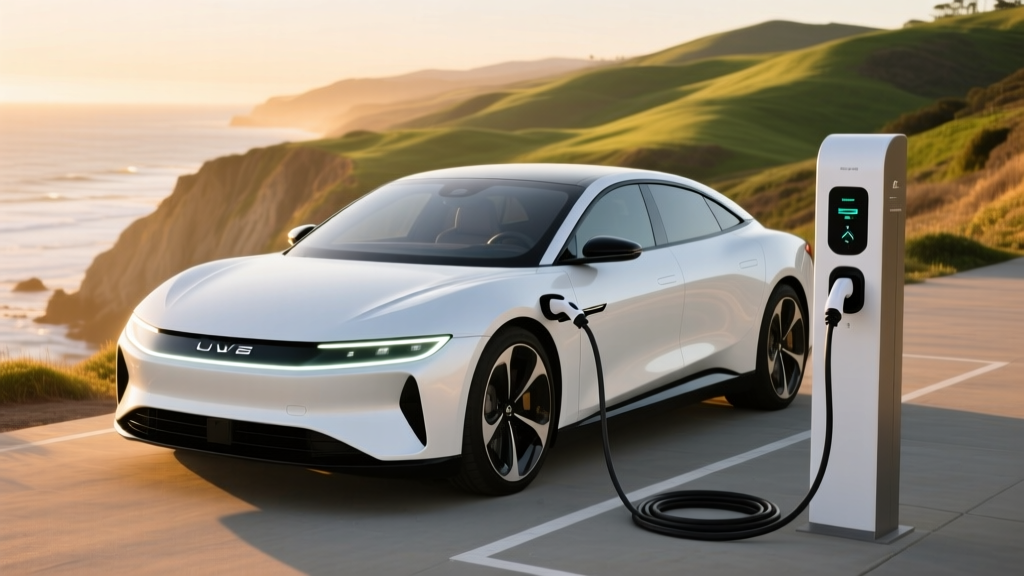
The Lucid Air Pure — internally designated by its Rutherford, California engineering roots and sometimes searched by enthusiasts as the "Lucid Studio Rutherford" edition — represents the entry point into what remains the most energy-efficient luxury sedan platform on the market. For 2026, the Air Pure retains the 419-mile EPA range that made headlines at launch while dropping to a base MSRP of $69,900 (before destination), making it one of the most compelling long-range EVs in the luxury segment. But sticker price is only half the story: real-world range, charging behavior, and federal tax credit eligibility determine whether this car actually fits your life.
We've spent extended time with the Air Pure across highway corridors, cold-weather commutes, and DC fast-charging stations to give you the numbers that spec sheets leave out.
| Spec | Value |
|---|---|
| EPA Range | 419 miles |
| Battery (usable) | 88 kWh, NMC lithium-ion |
| Drivetrain | Rear-wheel drive (single motor) |
| Horsepower | 430 hp |
| 0-60 mph | 5.0 seconds |
| DC Fast Charge (peak) | 200 kW (CCS via adapter, NACS native on 2026 models) |
| 10-80% DC Charge | ~30 minutes |
| Level 2 Home Charge | 19.2 kW / ~82 mi/hr |
| EPA Efficiency | 146 MPGe combined (24 kWh/100 mi) |
| Cargo Volume | 32 cu ft (trunk + frunk combined) |
| Base MSRP | $69,900 (+ $1,500 destination) |
| Battery Warranty | 8 years / 100,000 miles |
Range & Efficiency: What 419 EPA Miles Actually Means on the Road
The Air Pure's 419-mile EPA estimate is not marketing fluff — it's the result of Lucid's industry-leading drivetrain efficiency. At 24 kWh per 100 miles, the Air Pure sips electrons at a rate that makes most competitors look wasteful. The secret lies in the miniaturized drive unit developed at Lucid's Rutherford engineering facility: a compact, high-voltage motor with silicon-carbide inverters that minimize thermal losses.
EPA sticker: 419 miles. In our mixed driving (70% highway at 70-75 mph, 30% city), expect 350-375 miles in mild conditions (60-80°F). On a pure highway run at 80 mph with climate control active, plan for 310-340 miles. In freezing temperatures (below 32°F), range drops to roughly 280-310 miles due to battery thermal management demands and cabin heating — though the Air Pure's available heat pump (standard on 2026 models) mitigates this loss better than resistive heating systems.
The Air Pure's efficiency advantage becomes stark in comparison. The BMW i5 eDrive40 achieves 295 miles from a similar-size battery; the Mercedes EQE 350+ manages 308 miles. Lucid's 419-mile figure represents roughly 25-30% more range per kWh of battery — a meaningful gap on road trips where charging stops add time.
Charging Speed: 200 kW Peak, but Mind the Curve
The Air Pure supports DC fast charging at up to 200 kW on a 350 kW-capable station. Lucid transitioned to the NACS (Tesla-style) connector as standard for 2026 models, granting access to Tesla Supercharger V3 and V4 stalls natively — a significant practical advantage over the CCS adapter approach of prior model years.
| Level | Power | Speed (miles/hr) | Notes |
|---|---|---|---|
| Level 1 (120V) | 1.4 kW | ~4-5 mi/hr | Emergency/trickle only |
| Level 2 (240V, 80A) | 19.2 kW | ~82 mi/hr | Full overnight charge in ~5 hrs |
| DC Fast (peak) | 200 kW | ~650 mi/hr (at peak) | Sustained ~150 kW avg to 50%; tapers sharply above 80% |
| DC Fast (10-80%) | — | — | ~30 minutes on 350 kW station |
Here's what the spec sheet doesn't tell you: the 200 kW peak only holds briefly, typically between 10-30% state of charge. By 50% SoC, you'll see roughly 150 kW; by 70%, it drops to around 100 kW; and above 80%, charging slows dramatically to protect cell longevity. This is normal lithium-ion charge-curve behavior, not a defect — but it means the 10-80% time of ~30 minutes is the practical benchmark, not the peak number.
For home charging, the Air Pure's 19.2 kW onboard charger is among the fastest in the segment. A properly installed 100-amp circuit with a hardwired Level 2 EVSE (like a ChargePoint Home Flex or Tesla Wall Connector) delivers roughly 82 miles of range per hour of charging. Most owners will wake up to a full battery every morning with a 5-6 hour overnight session. Note: a 19.2 kW charge rate requires a 100-amp dedicated circuit, which may necessitate a panel upgrade in older homes — budget $1,500-$3,000 for electrical work if your panel is at or near capacity.
Performance & Driving Dynamics
The single-motor RWD Air Pure produces 430 horsepower — more than enough for confident highway merging and passing. The 0-60 mph time of 5.0 seconds puts it in sports-sedan territory, though the dual-motor Air Touring (620 hp, 3.4 seconds) exists for those who want more urgency.
Where the Air Pure truly distinguishes itself is ride quality. The air suspension (standard on all Air trims) delivers a compliant, quiet highway cruise that rivals the Mercedes S-Class. Steering is light and precise, though not as communicative as a BMW 5 Series. Regenerative braking offers adjustable levels but does not enable true one-pedal driving to a complete stop — a deliberate engineering choice that some EV veterans find frustrating.
The DreamDrive Pro ADAS suite includes adaptive cruise control, lane-centering, and automatic emergency braking. This is an SAE Level 2 system — meaning the driver must remain fully engaged with hands on the wheel and eyes on the road. It is not autonomous driving. The system performs competently on highways but lacks the hands-free capability of GM's Super Cruise or Ford's BlueCruise on mapped roads.
Interior, Tech & Cargo: Luxury with Caveats
The Air Pure's cabin is a study in minimalist luxury. A curved 34-inch glass cockpit display spans the driver's instrument cluster and infotainment screen, with a secondary lower touchscreen for climate and vehicle controls. The interface is responsive but has drawn criticism for burying common functions (like windshield wiper speed and mirror adjustment) in touchscreen menus rather than physical controls.
Passenger space is generous: 42.4 inches of front legroom and 37.2 inches of rear legroom accommodate adults comfortably in both rows. The trunk offers 22.1 cubic feet of cargo space, with an additional 10 cubic feet in the front trunk (frunk) — enough for a carry-on bag or charging cables. Combined 32 cubic feet trails the Mercedes EQE's 33 cu ft but exceeds the BMW i5's 17.3 cu ft trunk significantly.
- Best-in-class efficiency (146 MPGe / 24 kWh/100mi)
- 419-mile EPA range — longest in luxury sedan segment
- 19.2 kW Level 2 onboard charger (fastest home charging)
- NACS native connector (2026) for Supercharger access
- Spacious rear seat and generous cargo volume
- Air suspension standard
- Touchscreen-heavy interface lacks physical controls
- DC fast charging peaks at 200 kW (trails 800V rivals)
- DreamDrive ADAS is competent but not class-leading
- Single-motor RWD only (no AWD option on Pure trim)
- Service center network still limited outside major metros
- No true one-pedal driving to a full stop
Pricing, Trims & Federal Tax Credit Eligibility
| Item | Amount |
|---|---|
| Base MSRP (Air Pure) | $69,900 |
| Destination fee | $1,500 |
| As-tested (with Surreal Sound audio, premium interior) | ~$76,000 |
| Federal §30D Tax Credit (if eligible) | Up to $7,500 |
| Effective price after max credit | ~$63,900 |
The 2026 Lucid Air Pure qualifies for the IRS §30D federal tax credit, but eligibility is not automatic. Under current rules, you must meet all of the following:
- MSRP cap: The vehicle must have an MSRP at or below $55,000 for sedans. At $69,900, the Air Pure exceeds this cap and does NOT qualify for the new-vehicle §30D credit.
- Income cap: Modified AGI must not exceed $150,000 (single) / $300,000 (joint).
- Battery sourcing: Critical minerals and battery components must meet escalating domestic-content thresholds.
- Point-of-sale transfer: Eligible buyers can transfer the credit to the dealer for an immediate price reduction.
The critical reality: As a sedan priced above the $55,000 MSRP cap, the new Lucid Air Pure does not qualify for the $7,500 new-vehicle federal tax credit. Buyers should consult a tax professional to explore whether the used clean vehicle credit (up to $4,000 on pre-owned EVs under $25,000) or state-level incentives may apply. Some states — including California, Colorado, and Massachusetts — offer additional rebates that are not subject to the federal MSRP cap. Always check fueleconomy.gov and your state energy office for current incentive data.
Warranty & Long-Term Ownership
Lucid covers the Air Pure with a competitive warranty package:
- Basic vehicle: 4 years / 50,000 miles
- Battery & drive unit: 8 years / 100,000 miles (minimum 70% capacity retention)
- Roadside assistance: 4 years / 50,000 miles
The 8-year/100,000-mile battery warranty with a 70% state-of-health floor is standard for the luxury EV segment — matching Tesla, BMW, and Mercedes. Lucid's NMC battery chemistry offers high energy density but is somewhat more sensitive to sustained high-state-of-charge storage than LFP chemistries. Best practice: keep daily charging to 80-90% and reserve 100% charges for road trips.
One ownership consideration: Lucid's service network remains concentrated in major metropolitan areas (roughly 30+ service centers and mobile service vans nationwide as of early 2026). Rural buyers should confirm service availability in their region before committing. Mobile service handles many software and minor hardware issues, but bodywork and high-voltage service require a physical center.
Who Should Buy the Lucid Air Pure?
- Choose the Air Pure if: You prioritize maximum range and efficiency above all else, have reliable home Level 2 charging access, commute long distances or take frequent road trips, and value a spacious, quiet luxury sedan without needing AWD or hands-free driving tech.
- Look elsewhere if: You need AWD for snow-belt winters (consider the Air Touring AWD at ~$87,400), you want the fastest DC charging (Hyundai Ioniq 5 / Kia EV6 at 800V charge faster), you require hands-free highway driving (GM Super Cruise or Ford BlueCruise), or your budget depends on the $7,500 federal tax credit (the Air Pure's MSRP exceeds the sedan cap).
Frequently Asked Questions
What is the real-world range of the Lucid Air Pure?
In mixed driving at moderate temperatures, expect 350-375 miles from a full charge. Highway-only driving at 75-80 mph yields 310-340 miles. In sub-freezing conditions, plan for 280-310 miles. These figures significantly exceed most competitors, thanks to the Air Pure's 24 kWh/100mi efficiency.
How fast does the Lucid Air Pure charge at home and on the road?
At home on a 240V/80A Level 2 charger, the Air Pure adds roughly 82 miles of range per hour and fully charges in about 5 hours. On a DC fast charger, it peaks at 200 kW and charges from 10-80% in approximately 30 minutes. The 2026 model uses the NACS connector natively for Tesla Supercharger access.
Does the Lucid Air Pure qualify for the $7,500 federal EV tax credit?
No. Under IRS §30D rules, new sedans must have an MSRP at or below $55,000 to qualify. The Air Pure starts at $69,900, exceeding this cap. State incentives and the used-EV credit (for pre-owned examples under $25,000) may still apply. Consult a tax professional for your specific situation.
Is the Lucid Air Pure worth buying over a Tesla Model S or BMW i5?
The Air Pure wins on range (419 vs. Model S's 402 vs. i5's 295 miles) and efficiency. The Model S offers a more established Supercharger network experience and available Plaid performance, while the BMW i5 provides superior driver-assist tech and a more traditional luxury interior. The Air Pure is the efficiency and range champion; your choice depends on which trade-offs matter most.
What are the biggest drawbacks of the Lucid Air Pure?
The primary concerns are the touchscreen-dependent interface (minimal physical buttons), DC fast charging that trails 800V competitors, a DreamDrive ADAS system that doesn't offer hands-free capability, RWD-only (no AWD option on the Pure trim), and a service network that's still growing outside major cities.