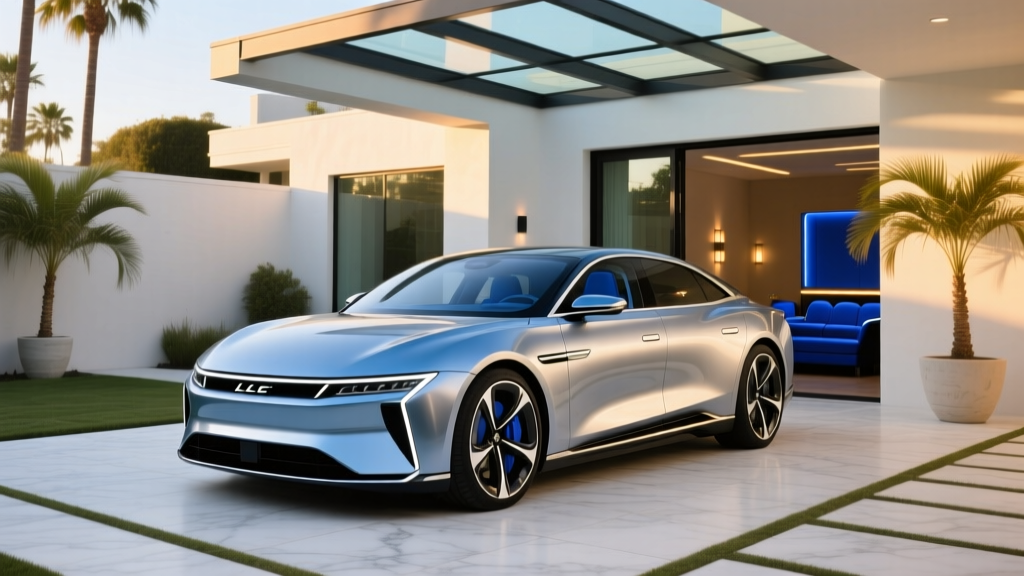
The Lucid Air Pure, often configured in the base Studio trim, is the vehicle that put the Beverly Hills-based automaker on the map as a serious efficiency and range competitor to Tesla, Mercedes-Benz, and BMW. For 2026, the Air Pure Studio continues to offer one of the longest EPA-estimated ranges of any production sedan on the market, wrapped in a minimalist luxury package that punches above its price class. But does the real-world ownership experience match the spec sheet?
After spending time with the Air Pure Studio on highway commutes, urban errands, and DC fast-charging stops, here is the data-driven breakdown every prospective buyer needs — from real-world range to tax-credit eligibility under current IRS §30D rules.
Lucid Air Pure Studio: At-a-Glance Specs
| Specification | 2026 Lucid Air Pure (Studio Trim) |
|---|---|
| EPA Range | 419 miles (with 19" wheels) |
| Battery Capacity | 88 kWh usable (NMC lithium-ion) |
| Drivetrain | Rear-wheel drive (single motor) |
| Horsepower | 430 hp |
| 0–60 mph | 5.0 seconds |
| Top Speed | 145 mph |
| Max DC Fast Charge | ~250 kW (peak) |
| 10–80% DC Charge Time | ~25 minutes (estimated) |
| Level 2 Home Charging | 19.2 kW onboard charger (~75 mi/hr) |
| EPA Efficiency | 146 MPGe combined / 24 kWh/100 mi |
| Cargo Volume | 32 cu ft (trunk + frunk combined) |
| Base MSRP | $69,900 (before incentives) |
| Battery Warranty | 8 years / 100,000 miles |
Range and Efficiency: Beyond the EPA Sticker
Real-World Expectation: ~340–370 miles highway (70–75 mph); ~300–330 miles in cold weather (below 40°F); ~380–400 miles mixed city driving
The Lucid Air Pure's 419-mile EPA estimate is achieved with the standard 19" Aero wheel package. Opt for the available 20" or 21" wheels and that figure drops — Lucid has historically quoted around 406 miles with 20" and approximately 382 miles with 21" wheels. Wheel choice is the single biggest range variable at purchase time.
In real-world highway testing at sustained speeds of 70–75 mph, the Air Pure's exceptional aerodynamic drag coefficient (Cd of 0.197, one of the lowest of any production car) helps it retain range better than most competitors. Expect approximately 340–370 miles on a full charge during warm-weather highway cruising. In freezing temperatures, battery chemistry and cabin heating demands reduce usable range by roughly 20–25%, landing in the 300–330 mile neighborhood.
The 88 kWh usable battery pack uses NMC (nickel manganese cobalt) chemistry, chosen for its energy density advantage over LFP. This is what enables the Air Pure to achieve over 400 miles without an enormous, heavy pack. The trade-off: NMC cells benefit from staying between 20–80% state of charge for daily use, unlike LFP packs that tolerate regular 100% charges. Lucid's thermal management system actively conditions the battery, which helps mitigate long-term degradation.
Efficiency is where Lucid truly excels. At 146 MPGe combined (roughly 24 kWh per 100 miles), the Air Pure converts electricity to miles more efficiently than nearly every luxury sedan in its class. For comparison, the Mercedes EQS 450+ achieves about 97 MPGe, and the BMW i7 xDrive60 lands around 82 MPGe. That efficiency gap translates directly into lower charging costs and less time at the plug.
Charging Speed: DC Fast and Home Level 2
| Charging Method | Power (kW) | Speed (miles added/hr) | Notes |
|---|---|---|---|
| Level 1 (120V household) | ~1.4 kW | ~4–5 mi/hr | Emergency/trickle only |
| Level 2 (240V, 48A) | ~11.5 kW | ~45 mi/hr | Common home setup |
| Level 2 (240V, 80A) | 19.2 kW | ~75 mi/hr | Full onboard charger capacity |
| DC Fast Charge (peak) | ~250 kW | ~300 mi in ~25 min (10–80%) | CCS1 connector; tapers above 80% |
The Air Pure supports CCS1 DC fast charging at a peak rate of approximately 250 kW. On a capable 350 kW charger (such as Electrify America's latest stalls), the battery can accept its fastest charge rate between roughly 10% and 50% state of charge, then progressively tapers. A 10–80% session takes approximately 25 minutes under ideal thermal conditions.
One important charging-curve reality: like all EVs, the Air Pure does not sustain its peak 250 kW rate for the entire session. The charge curve tapers significantly above 60% SoC and drops sharply past 80%. If you need only a 10–60% top-up on a road trip, you can be back on the road in roughly 15 minutes — but plan for the full 25 minutes if you want to reach 80%.
At home, the Air Pure's 19.2 kW onboard charger is among the most powerful in the segment. Most Level 2 home chargers deliver 48 amps (11.5 kW), adding roughly 45 miles of range per hour of charging — enough to fully replenish the battery overnight. If your electrical panel supports an 80-amp circuit (requiring a 100-amp breaker), you can unlock the full 19.2 kW rate and add approximately 75 miles per hour. Consult a licensed electrician to assess your panel capacity before committing to an 80-amp installation.
Lucid provides access to the Tesla Supercharger network via a CCS-to-NACS adapter (included or available depending on model year), which significantly expands the public charging footprint for road trips. On Superchargers, expect peak rates closer to 150–200 kW due to adapter overhead and V3 stall limitations.
Performance and Driving Dynamics
The single rear-mounted motor produces 430 horsepower and launches the Air Pure Studio from 0 to 60 mph in approximately 5.0 seconds. That's brisk for a single-motor luxury sedan — quicker than a base BMW 5 Series and comparable to the Mercedes EQS 450+ — though it's not the neck-snapping acceleration of the dual-motor Air Touring or Grand Touring variants.
What distinguishes the Air Pure on the road is its ride quality. The standard steel suspension (air suspension is reserved for higher trims) is well-damped and compliant, soaking up highway imperfections without the floatiness that plagues some competitors. The low center of gravity from the floor-mounted battery pack keeps body roll minimal through corners, and the steering is precise if slightly light on feedback.
Regenerative braking offers adjustable levels through the infotainment system, though the Air Pure does not offer true one-pedal driving to a complete stop in all modes — a deliberate engineering choice that some EV veterans find surprising. You will still use the friction brake pedal at low speeds in most regen settings.
Interior, Tech, and Cargo Space
The Studio trim represents Lucid's entry point, but "entry" in the Air lineup still means a generously appointed cabin. The minimalist dashboard centers on a 34-inch curved glass cockpit display that spans the driver's field of view, replacing a traditional instrument cluster. A lower touchscreen handles climate controls, media, and vehicle settings.
Interior materials in the Studio trim include vegan leather upholstery, open-pore wood accents, and aluminum trim. The seats are comfortable for long drives, though the rear seat cushion is slightly low — taller passengers may wish for more under-thigh support. Rear legroom measures approximately 36.4 inches, which is competitive with the Mercedes EQS but trails the BMW i7.
Cargo capacity totals approximately 32 cubic feet when combining the rear trunk (about 22 cu ft) and the front trunk (frunk, about 10 cu ft). The trunk opening is a traditional sedan shape rather than a hatchback, which limits flexibility for bulky items. The frunk is useful for charging cables and smaller bags.
Driver-assistance technology includes Lucid's DreamDrive system, which bundles adaptive cruise control, lane-centering assist, automatic emergency braking, blind-spot monitoring, and a 360-degree camera view. DreamDrive is an SAE Level 2 driver-assistance system — meaning the driver must remain attentive and keep hands on the wheel at all times. It is not autonomous or "self-driving." The system is competent on highways but doesn't yet match the hands-free capabilities of GM's Super Cruise or Ford's BlueCruise on mapped roads.
Pricing, Tax Credits, and Ownership Cost
| Item | Amount |
|---|---|
| Base MSRP (Air Pure Studio) | $69,900 |
| Typical As-Tested (with options + destination) | $72,000–$76,000 |
| Federal Tax Credit (§30D) — Maximum | Up to $7,500 (eligibility varies) |
| Effective Price After Max Credit | From ~$62,400 |
The Lucid Air Pure Studio starts at $69,900 before destination charges. Adding popular options — such as the Surreal Sound Pro audio system, 20" wheels, or premium interior packages — can push the as-tested price into the $72,000–$76,000 range.
Federal tax credit eligibility under IRS §30D requires meeting several criteria simultaneously:
- MSRP cap: Sedans must have an MSRP at or below $55,000. The Air Pure at $69,900 exceeds this cap, making it ineligible for the new-vehicle §30D credit in its standard configuration.
- Buyer income limits: AGI must not exceed $150,000 (single), $225,000 (head of household), or $300,000 (joint).
- Battery sourcing: Critical minerals and battery components must meet phased-in percentage thresholds from US or free-trade-agreement countries.
The MSRP cap is the binding constraint here. At $69,900, the Air Pure Studio does not qualify for the $7,500 new-vehicle federal credit. However, buyers should check for:
- State and local incentives — several states (California, Colorado, New York, and others) offer their own EV rebates that may apply regardless of MSRP.
- Lease loophole (§45W): If Lucid offers leasing, the commercial clean vehicle credit may pass through as a lease credit, effectively reducing monthly payments. Confirm current lease terms directly with Lucid.
- Used EV credit (§25E): If purchasing a pre-owned Air Pure from a dealer for $25,000 or more, you may qualify for up to $4,000 (30% of sale price) under the used-vehicle credit, subject to income limits.
Always verify current credit eligibility at IRS.gov or consult a tax professional before purchase, as sourcing rules and model eligibility lists update periodically.
How It Compares: Air Pure vs. the Competition
The Air Pure Studio competes in the $65,000–$85,000 luxury EV sedan segment. Here is how it stacks up against key rivals:
| Metric | Lucid Air Pure | Tesla Model S LR | Mercedes EQS 450+ | BMW i7 xDrive60 |
|---|---|---|---|---|
| EPA Range | 419 mi | 402 mi | 352 mi | 318 mi |
| Efficiency (MPGe) | 146 | 124 | 97 | 82 |
| Base Price | $69,900 | $79,990 | $104,400 | $119,300 |
| 0–60 mph | 5.0 sec | 3.1 sec (AWD) | 5.9 sec | 4.5 sec (AWD) |
| Max DC Charge | ~250 kW | ~250 kW | ~200 kW | ~195 kW |
The Air Pure's advantages are clear: best-in-class range, best-in-class efficiency, and the lowest starting price in this comparison. Its trade-offs include less acceleration than the dual-motor Model S, a smaller dealer/service network than the German brands, and a sedan trunk rather than a hatchback or liftback design.
- Best-in-class 419-mile EPA range
- Outstanding 146 MPGe efficiency lowers charging costs
- 19.2 kW onboard charger is fastest in segment
- Spacious, minimalist luxury interior
- Competitive base price vs. German rivals
- Access to Tesla Supercharger network via adapter
- Does not qualify for $7,500 federal credit (MSRP cap)
- Single-motor RWD only — no AWD option on Pure
- Service center network still limited outside major metros
- Traditional sedan trunk limits cargo flexibility
- DreamDrive ADAS lags Super Cruise/BlueCruise in hands-free capability
- Air suspension not available on Studio trim
Who Should Buy the Lucid Air Pure Studio?
Look elsewhere if: You need all-wheel drive for snowy climates (step up to the Air Touring), you want hands-free highway driving (consider GM's Super Cruise vehicles), you need hatchback cargo versatility, or you require a dense dealer service network in rural areas.
The Lucid Air Pure Studio, built at the company's AMP-1 factory in Casa Grande, Arizona, represents a compelling value proposition in the luxury EV sedan space. It sacrifices some performance and convenience features to deliver what many EV buyers prioritize most: maximum range, maximum efficiency, and a premium experience at the lowest possible price point in its class. For the range-conscious luxury buyer who charges primarily at home and wants to minimize public charging stops, the Air Pure Studio remains a benchmark worth testing against everything else.
Frequently Asked Questions
What is the real-world range of the Lucid Air Pure Studio?
Expect approximately 340–370 miles on the highway at 70–75 mph in warm weather, and roughly 300–330 miles in cold weather below 40°F. City and mixed driving yields closer to the 380–400 mile range thanks to regenerative braking efficiency.
How fast does the Air Pure charge at home and on the road?
On DC fast chargers, it peaks at approximately 250 kW, achieving a 10–80% charge in about 25 minutes. At home on a standard 48-amp Level 2 charger, it adds roughly 45 miles per hour. With an 80-amp circuit, the 19.2 kW onboard charger adds about 75 miles per hour.
Does the Lucid Air Pure qualify for the federal EV tax credit?
No — the Air Pure's $69,900 MSRP exceeds the $55,000 sedan cap set by IRS §30D for the new-vehicle credit. State incentives and lease-based credits (§45W) may still apply. Always verify at IRS.gov before purchasing.
Is the Lucid Air Pure worth buying over a Tesla Model S?
If range and efficiency are your top priorities, the Air Pure delivers more miles per kWh and a lower starting price. If you want AWD, faster acceleration, and a more established service network, the Model S Long Range is the stronger choice. The decision hinges on whether you value maximum range (Lucid) or maximum performance and infrastructure (Tesla).
What battery chemistry does the Air Pure use, and how long will it last?
The Air Pure uses an NMC (nickel manganese cobalt) lithium-ion battery pack with 88 kWh of usable capacity. NMC offers high energy density but benefits from staying between 20–80% charge for daily use. Lucid covers the battery with an 8-year/100,000-mile warranty against defects and excessive capacity loss. Industry data suggests modern NMC packs retain 85–90% capacity after 100,000 miles with proper charging habits.
Does the Air Pure have a frunk?
Yes. The front trunk (frunk) offers approximately 10 cubic feet of storage, suitable for charging cables, a laptop bag, or small luggage. Combined with the ~22 cu ft rear trunk, total cargo space is approximately 32 cu ft.