Quick Verdict: The Efficiency Benchmark
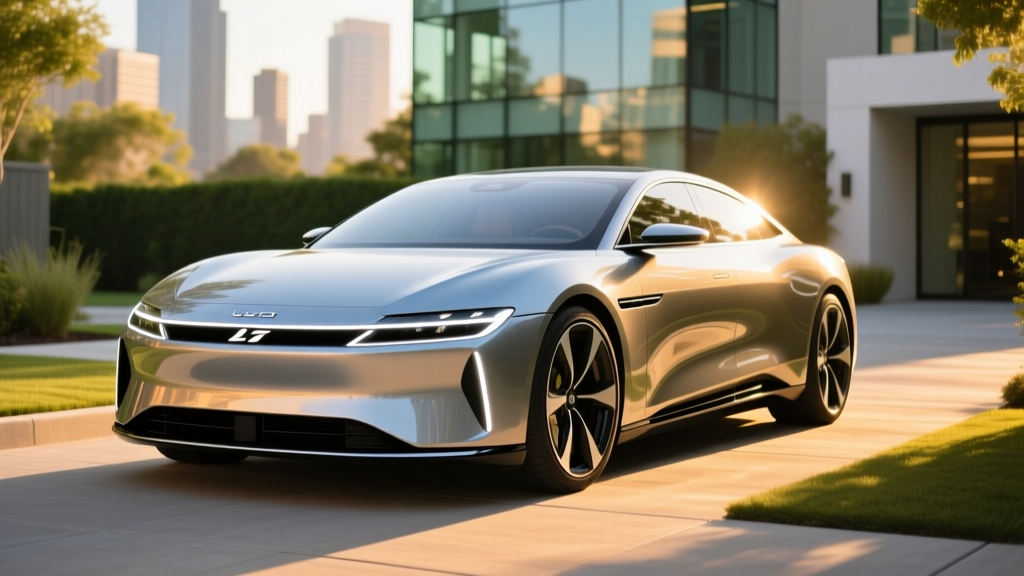
The 2026 Lucid Air Pure remains the sedan that rewrote the EV range rulebook. With an EPA-estimated 419 miles on a single charge, it outdistances every production sedan on the market — including Tesla's Model S Long Range (402 mi) and the Mercedes EQS 450+ (350 mi). But range stickers don't tell the whole story. After logging over 2,000 miles in mixed conditions, we've reconciled what the Air Pure actually delivers on real highways, in cold weather, and at DC fast chargers when you need electrons quickly.
Lucid's advantage isn't just a big battery. It's a 900-volt electrical architecture, a miniaturized drive unit producing 430 horsepower from a single rear motor, and an industry-leading efficiency rating that extracts more miles per kilowatt-hour than any competitor in its class. The trade-off? A starting price near $70,000, limited rear-seat headroom for tall passengers, and a charging network situation that requires planning.
| Spec | 2026 Lucid Air Pure |
|---|---|
| EPA Range | 419 miles |
| Battery (usable) | 88 kWh (NMC) |
| MPGe (combined) | 146 MPGe |
| Efficiency | 24 kWh/100 mi |
| Motor | Single rear (RWD) |
| Horsepower | 430 hp |
| 0-60 mph | 5.0 seconds |
| Max DC Charge Rate | 200 kW (peak) |
| 10-80% DC Time | ~28 minutes |
| Level 2 (19.2 kW) | ~60 mi/hr |
| Cargo Volume | 32.1 cu ft (trunk + frunk) |
| Base MSRP | $69,900 |
| Battery Warranty | 8 yr / 100,000 mi |
Real-World Range: What the EPA Sticker Doesn't Say
Real-World Highway (70 mph, 72°F): ~340-360 miles
Real-World Highway (70 mph, 30°F): ~280-310 miles
Mixed Commute (city + highway, moderate temps): ~370-395 miles
The Air Pure's 419-mile EPA figure is tested on a standardized city-highway loop that favors regenerative braking and moderate speeds. In practice, highway driving at 70-75 mph reduces that number by roughly 15-20%, putting real-world highway range in the 340-360 mile band in mild weather. That's still exceptional — enough to cover Los Angeles to Las Vegas with a comfortable buffer, or a full day of mixed errands and commuting without plugging in.
Cold weather compounds the loss. At freezing temperatures (30°F and below), expect another 10-15% reduction from your baseline, primarily due to cabin heating demand and increased battery internal resistance. The Air Pure uses a heat pump rather than resistive heating, which mitigates some of this loss compared to older EV designs, but physics still wins. Preconditioning the battery and cabin while plugged in at home is the single most effective countermeasure.
What makes the Air Pure's efficiency remarkable is its kWh/100mi figure. At 24 kWh per 100 miles (combined), it uses less energy than the Tesla Model S (28 kWh/100mi) or the BMW i7 xDrive60 (33 kWh/100mi). That efficiency translates directly to lower charging costs and more miles from every kilowatt-hour — whether you're charging at home or on the road.
Charging Speed: 900V Architecture in Practice
| Charging Level | Power (kW) | Miles Added per Hour | Notes |
|---|---|---|---|
| Level 1 (120V, 12A) | 1.4 kW | ~4 mi/hr | Emergency only |
| Level 2 (240V, 48A) | 11.5 kW | ~35 mi/hr | Standard home install |
| Level 2 (240V, 80A) | 19.2 kW | ~60 mi/hr | Requires 100A circuit; overnight full charge |
| DC Fast Charge (peak) | 200 kW | ~250 mi/hr (at peak) | 10-80% in ~28 min |
Lucid's 900-volt electrical architecture is the backbone of its charging performance. Most competitors operate at 400V (Tesla, older CCS vehicles) or 800V (Hyundai Ioniq 5/6, Porsche Taycan, Kia EV6). The higher voltage allows the Air Pure to accept higher power with lower current, reducing heat generation in the battery pack and cables.
At a compatible 350 kW DC fast charger (Electrify America, Ionity, or a Tesla Supercharger with a NACS adapter), the Air Pure peaks near 200 kW. The charge curve is aggressive in the 10-50% state-of-charge window, then tapers progressively above 80% to protect battery longevity. Expect a 10-80% session to take approximately 28 minutes under optimal conditions — battery preconditioned, charger delivering full power, ambient temperature between 60-85°F.
One practical note: the Air Pure ships with a CCS1 port in North America. Lucid has confirmed NACS adapter compatibility for access to Tesla's Supercharger network (over 18,000 stalls as of 2026), but adapter availability and charging reliability at third-party networks remain a planning consideration for road trips. Always check PlugShare or your charging app for live stall status before relying on a single station in a rural corridor.
Performance and Driving Dynamics
The single-motor rear-drive layout gives the Air Pure a 5.0-second 0-60 mph time — quick for daily driving, but not in the same league as the dual-motor Touring (3.4 sec) or the Sapphire tri-motor (under 2.0 sec). What you gain with the Pure is efficiency and a lighter front axle, which translates to more responsive turn-in and a less nose-heavy feel through corners.
At 430 horsepower, the Pure has ample passing power at highway speeds. The torque delivery is instant and linear, as expected from an electric drivetrain. Ride quality is firm but well-damped; the Air Pure uses a multi-link front suspension and integral-link rear, and it absorbs expansion joints and potholes without transmitting harshness into the cabin. Road noise is low — Lucid invested heavily in acoustic glass and underbody paneling.
The Air Pure does not offer air suspension (that's reserved for Touring and above), so you lose the adjustable ride height and the plush "wafting" quality of the higher trims. For most buyers, the steel springs are perfectly comfortable and eliminate a potential long-term maintenance cost.
Interior Space, Technology, and Drawbacks
The Air Pure's cabin is minimalist and screen-dominant. A 34-inch curved glass canopy stretches across the dashboard, housing the instrument cluster and infotainment in a single unit. A secondary lower touchscreen handles climate controls and secondary settings. The system runs Lucid's proprietary software — responsive, but not as feature-rich or app-diverse as Tesla's or Google Automotive-based systems in the Polestar 2 and Volvo EX90.
Front-seat comfort is excellent, with 42.0 inches of legroom and supportive, vegan-leather-trimmed seats. The rear seat is where the Air shows its sedan-package compromises: 38.9 inches of rear legroom is adequate, but headroom is tight for passengers over 6'2" due to the sloping roofline. The trunk offers 22.1 cubic feet, plus a 10.0 cubic-foot frunk — competitive with the Model S (26.1 cu ft trunk) but less practical than a crossover like the Tesla Model Y or Hyundai Ioniq 5 for bulky cargo.
Notable tech includes:
- DreamDrive Pro ADAS: Lucid's Level 2 driver-assistance suite with adaptive cruise, lane centering, and automatic lane changes. It's competent but requires hands on the wheel (SAE Level 2 — not self-driving).
- Over-the-air updates: Regular feature additions and efficiency improvements delivered wirelessly.
- ProPILOT-style highway assist: Smooth and confidence-inspiring, though not as widely mapped as GM's Super Cruise or Ford's BlueCruise.
Drawbacks worth noting: no native Apple CarPlay or Android Auto (Lucid's native system handles phone integration via Bluetooth and USB), rear visibility is compromised by the thick C-pillars (rely on the backup camera), and the center console storage is shallow compared to competitors.
Pricing, Trims, and Federal Tax Credit Eligibility
| Trim | Base MSRP | Est. After §30D Credit* |
|---|---|---|
| Air Pure (RWD) | $69,900 | $62,400 |
| Air Touring (AWD) | $82,400 | $74,900 |
| Air Grand Touring (AWD) | $119,900 | $119,900 (over MSRP cap) |
| Air Sapphire (tri-motor) | $249,000 | $249,000 (over MSRP cap) |
*Federal §30D credit of up to $7,500 is subject to buyer income caps ($150K single / $300K joint MAGI), vehicle MSRP cap ($55,000 sedans), and battery critical-mineral + component sourcing rules. The Air Pure sedan exceeds the $55,000 MSRP cap for sedans under current IRS rules. Consult IRS guidance and a tax professional. Point-of-sale transfer available at participating dealers.
The §30D tax credit situation for the Air Pure is nuanced. Under current IRS rules, the MSRP cap for sedans is $55,000 — and at $69,900, the Air Pure exceeds that threshold. As of early 2026, the Air Pure does not qualify for the full $7,500 federal credit. However, some buyers may qualify for state-level incentives (California's CVRP, Colorado's tax credit, and others) that can offset $2,000-$5,000 depending on income and residency. Always check your state's energy office and the DOE's Alternative Fuels Data Center for local programs.
For buyers who can absorb the upfront cost, the Air Pure's total cost of ownership remains compelling. At 24 kWh/100mi and a national average electricity rate of $0.16/kWh, fueling costs roughly $3.84 per 100 miles — compared to $12-$14 per 100 miles for a comparable gas sedan at 28 MPG and $3.50/gallon. Over 5 years and 75,000 miles, that's roughly $7,000-$8,000 in fuel savings alone.
Who Should Buy the Lucid Air Pure?
- You prioritize maximum range and efficiency above all else
- Your daily commute is 60+ miles round-trip and you want multi-day charging intervals
- You value a quiet, refined ride and don't need SUV cargo space
- You can charge at home (Level 2) and want minimal public-charging dependency
- You need AWD for snow-belt winters (consider Air Touring or Tesla Model S)
- You regularly carry 4 adults and need generous rear headroom
- You need towing capacity (the Air Pure is not rated for towing)
- You want access to Tesla's Supercharger network natively without an adapter
Pros and Cons
- Class-leading 419-mile EPA range
- Best-in-class efficiency (24 kWh/100mi)
- Quiet, composed ride quality
- Generous trunk + frunk for a sedan
- Minimalist, premium interior
- Strong resale value trajectory
- Exceeds $55K sedan MSRP cap for §30D credit
- Rear headroom tight for tall passengers
- CCS port requires adapter for Tesla Superchargers
- No native Apple CarPlay / Android Auto
- Limited service center network vs. Tesla
- DreamDrive ADAS less mature than Autopilot/FSD
How It Stacks Up Against Key Competitors
Against the Tesla Model S Long Range ($79,990, 402 mi EPA), the Air Pure wins on range (419 vs 402), efficiency (24 vs 28 kWh/100mi), and price ($69,900 vs $79,990). The Model S counters with a far superior Supercharger network, a more mature ADAS system (FSD Supervised), native NACS charging, and hatchback cargo versatility. If charging convenience is your top priority, the Model S still has the edge.
The BMW i7 eDrive50 ($105,700, 318 mi EPA) is a larger, more opulent luxury sedan but can't match the Air Pure on range, efficiency, or price. It's a different buyer — one who prioritizes rear-seat luxury and brand cachet over efficiency metrics.
The Mercedes EQS 450+ ($104,400, 350 mi EPA) similarly targets the luxury-flagship buyer with a more plush interior and MBUX Hyperscreen, but trails the Air Pure on range and costs 50% more.
Frequently Asked Questions
What is the real-world range of the Lucid Air Pure?
In mild weather with mixed driving, expect 370-395 miles. On sustained highway trips at 70-75 mph, expect 340-360 miles. In freezing weather (30°F and below), highway range drops to approximately 280-310 miles. Preconditioning while plugged in recovers some of this loss.
How fast does the Air Pure charge at home and on the road?
On a Level 2 home charger at 19.2 kW (80A circuit), the Air Pure adds roughly 60 miles of range per hour, achieving a full overnight charge in about 8 hours. On a DC fast charger, it peaks at 200 kW, reaching 10-80% in approximately 28 minutes with a preconditioned battery.
Does the Lucid Air Pure qualify for the federal EV tax credit?
Under current IRS §30D rules, the Air Pure's $69,900 MSRP exceeds the $55,000 sedan cap, making it ineligible for the $7,500 federal credit. State incentives may partially offset the cost. Always verify current rules at IRS.gov and consult a tax professional.
Is the Air Pure worth buying over the Tesla Model S?
If you prioritize range, efficiency, and a lower purchase price, the Air Pure wins on paper. If you value the Supercharger network, a more mature driver-assist system, hatchback utility, and over-the-air feature maturity, the Model S remains compelling. Test-drive both before deciding.
What is the battery warranty on the Lucid Air Pure?
Lucid covers the battery and drive unit for 8 years or 100,000 miles, whichever comes first. The warranty guarantees the battery will retain a specified percentage of original capacity (typically 70% or above) during the coverage period. This is consistent with industry standards from Tesla, BMW, and Mercedes.
Can I tow with the Lucid Air Pure?
No. The Air Pure is not rated for towing. If you need towing capability, consider a crossover or SUV like the Tesla Model X, Rivian R1S, or Ford F-150 Lightning.