Why the Lucid Motors Air Order Halt Matters Right Now
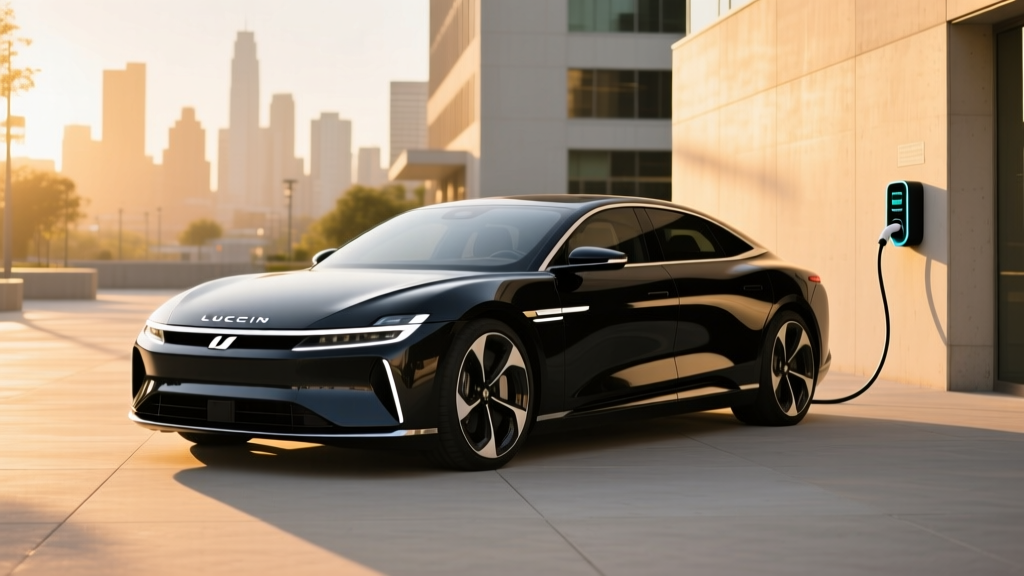
If you've been researching the Lucid Air sedan and noticed configurator delays, shifting delivery estimates, or limited trim availability, you're not alone. The Lucid Motors Air order halt — a periodic pause or restriction in new customer orders for certain trims — has become a recurring friction point for prospective buyers. Lucid, still scaling production at its Casa Grande, Arizona factory, has periodically constrained order flow to match supply-chain realities and production capacity. For 2026, the situation has evolved: some trims are available for order with long lead times, while others remain restricted or are allocated primarily through dealership inventory and direct reservation conversions.
This review breaks down exactly what you can order today, what the Lucid Air delivers in range, charging, and performance, and whether it still makes sense to pursue — or pivot to a competitor — given the current order landscape.
2026 Lucid Air: Current Order Status and Availability
As of early 2026, Lucid's order book operates on a trim-dependent basis:
- Air Pure (RWD): Orders open with estimated 8–14 week delivery windows. This is the volume trim and most consistently available.
- Air Touring (AWD): Orders open, but build slots are limited; expect 12–20 week lead times.
- Air Grand Touring (AWD): Periodically restricted. Lucid opens and closes order windows based on battery cell supply (Lucid uses a mix of Samsung SDI and LG Energy Solution NMC cells).
- Air Sapphire (Tri-Motor AWD): Limited production run largely fulfilled; remaining units available through existing inventory or cancellation slots.
The order halt primarily affects the Grand Touring and Sapphire trims, where demand has historically outpaced the supply of high-nickel NMC battery packs. Lucid has not announced a permanent discontinuation of any trim, but buyers should expect to join a reservation queue rather than configure and order freely for higher-end models.
Range, Battery, and Efficiency: The Numbers That Define the Air
| Spec | Air Pure | Air Touring | Air Grand Touring | Air Sapphire |
|---|---|---|---|---|
| EPA Range | 419 mi | 425 mi | 516 mi | 427 mi |
| Battery (usable) | 88 kWh | 112 kWh | 112 kWh | 118 kWh |
| Chemistry | NMC | NMC | NMC (high-nickel) | NMC (high-nickel) |
| Efficiency | 146 MPGe / 23 kWh/100mi | 134 MPGe / 25 kWh/100mi | 131 MPGe / 26 kWh/100mi | 109 MPGe / 31 kWh/100mi |
| Drivetrain | RWD (single motor) | AWD (dual motor) | AWD (dual motor) | AWD (tri-motor) |
| Horsepower | 430 hp | 620 hp | 819 hp | 1,234 hp |
| 0–60 mph | 5.0 sec | 3.4 sec | 3.0 sec | 1.89 sec |
The Grand Touring's EPA-estimated 516 miles is the highest of any production EV sold in the US. In mixed real-world driving at 70 mph highway speeds, expect approximately 400–440 miles in moderate temperatures. In cold weather (below 32°F), range drops to roughly 340–380 miles due to cabin heating demand and reduced battery chemistry efficiency — still class-leading, but plan charging stops accordingly. The Air Pure's 419-mile EPA figure translates to roughly 330–360 highway miles in real-world conditions.
The Lucid Air's efficiency advantage comes from its proprietary miniaturized drive units and a 900V+ electrical architecture that reduces resistive losses. At 23 kWh/100 miles, the Air Pure uses less energy per mile than a Tesla Model S Long Range (28 kWh/100mi per fueleconomy.gov), making every kWh of battery go further.
Charging Speed: DC Fast Charge and Home Level 2
| Charging Method | Rate / Speed | Details |
|---|---|---|
| DC Fast Charge (Peak) | Up to 300 kW | 900V architecture; Grand Touring peaks at ~300 kW, Pure/Touring at ~220 kW. 10–80% in approximately 15 minutes (GT) or 20 minutes (Pure/Touring) under ideal thermal conditions. |
| DC Sustained Curve | ~200 kW avg (10–80%) | Like all EVs, peak kW is not sustained. Expect the GT to hold above 200 kW through ~55% SoC before tapering. Preconditioning via the navigation-routed battery prep is essential for achieving peak rates. |
| Level 2 Home (240V) | Up to 19.2 kW (80A) | With Lucid's Connected Home charger or equivalent 80A hardwired unit, adds approximately 80–90 miles of range per hour. A full overnight charge (10 hours) restores the entire 112 kWh pack. Requires a 100A dedicated circuit — confirm panel capacity with a licensed electrician. |
| Level 2 (48A / NEMA 14-50) | ~11.5 kW | More common residential setup. Adds ~48 miles/hr. A Grand Touring charges from 10–100% in approximately 10 hours. |
| Level 1 (120V) | ~1.4 kW | Emergency/trickle only. Adds ~5–6 miles/hr. Not practical as a primary charging method for a 112 kWh battery. |
| Connector | NACS (native, 2025+) | 2025+ Lucid Air models ship with a native NACS charge port, granting direct access to Tesla Supercharger V3/V4 stalls (up to 250 kW on V3). CCS adapters available for older inventory or non-Tesla networks. |
The 900V architecture is the Air's charging secret weapon. Most competitors (Tesla Model S, Mercedes EQS) operate on 400V systems that peak at 250 kW. Lucid's higher voltage allows faster electron flow at lower amperage, reducing heat buildup and sustaining higher charge rates deeper into the battery's state of charge. The practical result: a 15-minute stop on a 350 kW Electrify America or Ionity stall genuinely adds 250+ miles of range to a Grand Touring.
Pricing, Tax Credits, and Total Cost
| Trim | Base MSRP | §30D Credit Eligible? | Effective Price (with credit) |
|---|---|---|---|
| Air Pure | $69,900 | Yes — meets MSRP cap ($55,000 sedan cap does NOT apply; sedan cap is $55,000 for sedans per IRS rules) | $69,900 (see note below) |
| Air Touring | $87,400 | Subject to MSRP cap | Varies |
| Air Grand Touring | $125,600 | No — exceeds $55,000 sedan MSRP cap | $125,600 |
| Air Sapphire | $249,000 | No — exceeds $55,000 sedan MSRP cap | $249,000 |
The federal EV tax credit carries a $55,000 MSRP cap for sedans (SUVs/trucks have an $80,000 cap). Since every Lucid Air trim starts at or above $69,900, no new Lucid Air qualifies for the $7,500 federal purchase credit as a sedan. However, buyers should verify the latest classification with IRS.gov, as Lucid has previously petitioned for SUV reclassification on certain configurations. Additionally, income caps apply ($150K single / $300K joint for new vehicles), and critical-mineral/battery-component sourcing requirements must be met. The point-of-sale transfer option allows eligible buyers to apply the credit as a down-payment reduction at purchase — but only if the vehicle itself qualifies. Consult a tax professional for your specific situation.
Interior, Technology, and Daily Livability
The Lucid Air's cabin is designed around its "space concept" — the compact drivetrain components free up interior volume that rivals full-size luxury sedans despite the Air's mid-size exterior footprint.
- Cargo volume: 32 cu ft trunk + 10 cu ft frunk (42 cu ft total) — significantly more than the Tesla Model S (28 cu ft combined) and competitive with the Mercedes EQS.
- Rear legroom: 41.3 inches — generous for adults on long trips, aided by a flat floor with no transmission tunnel.
- Infotainment: 34-inch curved glass cockpit display with Lucid's in-house OS. Supports wireless Apple CarPlay and Android Auto. The interface is responsive but has drawn criticism for burying climate controls in submenus rather than physical buttons.
- DreamDrive Pro (ADAS): A Level 2 driver-assistance suite with 32 sensors including LiDAR (on Grand Touring and above). Includes adaptive cruise, lane-centering, and automatic emergency braking. This is not self-driving — the driver must maintain hands-on-wheel awareness. Lucid's system is competent for highway cruising but does not match GM's Super Cruise for hands-off mapped-highway operation.
- Audio: Surreal Sound by Dolby Atmos with 21 speakers on Touring and above — one of the best factory audio systems available in any vehicle.
- Infotainment learning curve — no physical climate knobs; touchscreen-only HVAC adjustment frustrates some drivers.
- Service center network remains limited outside major metro areas (LA, SF, NYC, Miami, Chicago). Mobile service covers minor issues, but bodywork or drivetrain repairs may require shipping the vehicle.
- No hands-free driving mode (DreamDrive requires hands on wheel at all times).
- Build-quality variability — early-production units had panel-gap inconsistencies; 2025–2026 builds show improvement but buyers should inspect delivery carefully.
Warranty, Reliability, and Ownership Costs
| Coverage | Terms |
|---|---|
| Basic Vehicle | 4 years / 50,000 miles |
| Battery & Drive Unit | 8 years / 100,000 miles (retains ≥70% capacity) |
| Roadside Assistance | 4 years / 50,000 miles |
| Corrosion | 12 years / unlimited miles |
Lucid's 8-year/100,000-mile battery warranty with a 70% capacity retention threshold is standard for the luxury EV segment (matching Tesla and BMW). NMC chemistry in the Air has demonstrated moderate degradation curves in early owner data — approximately 5–8% capacity loss over the first 50,000 miles, after which the curve flattens. The 112 kWh pack's large size provides a degradation buffer: even at 85% state of health after several years, a Grand Touring would still deliver over 430 EPA-equivalent miles.
Lucid Air vs. Key Competitors: Is It Worth Buying?
| Metric | Lucid Air GT | Tesla Model S LR | Mercedes EQS 580 | BMW i7 xDrive60 |
|---|---|---|---|---|
| EPA Range | 516 mi | 402 mi | 371 mi | 318 mi |
| Efficiency | 26 kWh/100mi | 28 kWh/100mi | 33 kWh/100mi | 36 kWh/100mi |
| Peak DC Charge | 300 kW | 250 kW | 200 kW | 195 kW |
| 0–60 mph | 3.0 sec | 3.1 sec | 4.1 sec | 4.5 sec |
| Base MSRP | $125,600 | $79,990 | $125,950 | $119,300 |
| NACS Native | Yes (2025+) | Yes | Adapter required | Adapter required |
- Choose the Air Pure if you want maximum range-per-dollar in a luxury sedan and can tolerate an 8–14 week build wait. At $69,900 with 419 EPA miles, it's the efficiency benchmark.
- Choose the Air Grand Touring if range and fast-charging speed are your top priorities for cross-country road trips, and the $125K price tag fits your budget. Nothing else matches 516 EPA miles + 300 kW charging.
- Choose the Tesla Model S instead if you need immediate delivery, a proven Supercharger network without adapter hassle, or FSD (Supervised) for hands-on highway assist. The Model S also undercuts on price.
- Choose the Mercedes EQS or BMW i7 instead if dealership service infrastructure, traditional luxury materials, and hands-free Level 2 driving (where mapped) matter more than range or efficiency.
Frequently Asked Questions
What is the real-world range of the Lucid Air?
The EPA-estimated range spans from 419 miles (Air Pure) to 516 miles (Air Grand Touring). In real-world highway driving at 70 mph, expect roughly 80–85% of the EPA figure — so about 330–360 miles for the Pure and 400–440 miles for the Grand Touring. In cold weather below freezing, subtract another 10–15%, bringing the GT to approximately 340–380 miles. These are still best-in-class numbers.
How fast does the Lucid Air charge at home and on the road?
On DC fast chargers, the Grand Touring peaks at 300 kW and can charge from 10–80% in approximately 15 minutes under ideal conditions. The Pure and Touring peak around 220 kW with a 10–80% time of about 20 minutes. At home on a 240V/80A Level 2 charger, the Air adds roughly 80–90 miles of range per hour, fully replenishing the battery overnight. On a standard 48A NEMA 14-50 setup, expect ~48 miles/hr.
Does the Lucid Air qualify for the federal EV tax credit?
Under current IRS §30D rules, the federal new clean vehicle credit has a $55,000 MSRP cap for sedans. Since every Lucid Air trim starts at $69,900 or above, no Air trim currently qualifies for the $7,500 federal purchase credit. Income caps ($150K single / $300K joint) and battery-sourcing requirements add further restrictions. Always verify current rules with a tax professional before purchasing.
Is the Lucid Air worth buying over a Tesla Model S or Mercedes EQS?
If maximum range, best-in-class efficiency, and fastest DC charging are your priorities, the Lucid Air Grand Touring has no equal. However, the order halt, limited service network, and lack of a hands-free driving mode are genuine trade-offs versus the Tesla Model S (better infrastructure, Autopilot ecosystem) and Mercedes EQS (traditional luxury service, hands-free Drive Pilot in limited areas). The Air Pure at $69,900 offers the strongest value proposition if you can wait for delivery.
What are the biggest pros and cons of the Lucid Air?
Pros: Class-leading EPA range and efficiency, 900V fast-charging architecture, spacious interior with 42 cu ft total cargo, native NACS on 2025+ models, stunning performance even on the base trim.
Cons: Order halts and long lead times on higher trims, limited service-center footprint, no physical climate controls, DreamDrive ADAS requires hands-on at all times, no federal tax credit eligibility due to MSRP cap.
What should I do if the Lucid Motors Air order halt blocks my preferred trim?
Three strategies: (1) Check Lucid's in-stock and certified pre-owned inventory for pre-built units available immediately. (2) Place a reservation for the Air Pure, which has the most consistent order availability, and upgrade later if a Grand Touring slot opens. (3) Cross-shop the Tesla Model S Long Range or BMW i5 eDrive40, both of which have shorter delivery timelines and may better suit your timeline.
Sources: fueleconomy.gov (EPA range and efficiency data), IRS.gov (§30D clean vehicle credit rules), Lucid Motors official specifications. Pricing and availability reflect 2026 model-year data and are subject to change. Verify all tax credit eligibility with a qualified tax professional.