Why Lucid Motors' European Push Matters for US Buyers
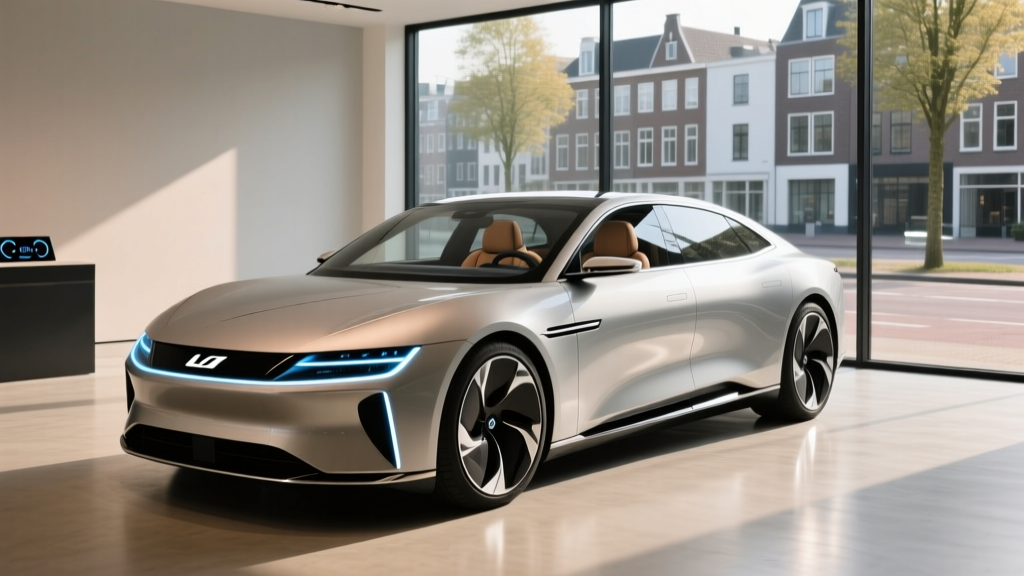
Search interest around Lucid Motors Netherlands EV sales has climbed steadily since the brand opened its first European studio in Amsterdam. The Netherlands — with its dense public charging network, aggressive EV subsidies, and tech-forward buyers — serves as Lucid's beachhead into the EU market. But what does this international expansion signal for American shoppers considering the 2026 Lucid Air?
The short answer: volume. Lucid's Gravity SUV and continued Air sedan production depend on scaling beyond the US. European revenue helps fund the company's next-generation midsize platform (slated for late-2026/2027). For US buyers, that means better parts availability, more service centers, and a brand with stronger long-term viability. Let's break down exactly what the 2026 Lucid Air delivers on American soil — with the numbers that matter.
Range & Efficiency: The Air's Defining Advantage
EPA Estimated Range: Up to 516 miles (Air Grand Touring, 19" wheels)
Real-World Expectation: Expect 430–470 miles on mixed highway driving at 70 mph; roughly 350–390 miles in sustained sub-30°F winter conditions. The Air's heat pump and industry-leading 4.3–4.5 mi/kWh efficiency help mitigate cold-weather losses better than most luxury EVs, but physics still applies.
| Trim | EPA Range | Battery (kWh usable) | Chemistry | MPGe (combined) | 0-60 mph | Horsepower | Drivetrain | Base MSRP |
|---|---|---|---|---|---|---|---|---|
| Pure RWD | 419 mi | 88 kWh | NMC | 140 MPGe | 5.2 sec | 430 hp | RWD | $69,900 |
| Touring AWD | 425 mi | 92 kWh | NMC | 131 MPGe | 3.4 sec | 620 hp | Dual-Motor AWD | $87,400 |
| Grand Touring AWD | 516 mi | 112 kWh | NMC | 131 MPGe | 3.0 sec | 819 hp | Dual-Motor AWD | $125,600 |
| Sapphire | 427 mi | 118 kWh | NMC | 109 MPGe | 1.99 sec | 1,234 hp | Tri-Motor AWD | $249,000 |
The Air's efficiency advantage comes from Lucid's in-house miniaturized drive units — each motor/gearbox/inverter package weighs under 70 kg and fits in a carry-on suitcase. The result is an interior volume that rivals full-size luxury sedans despite a smaller footprint than a Tesla Model S. According to fueleconomy.gov, the Grand Touring's ~4.5 mi/kWh makes it one of the most efficient vehicles in its class, translating to lower charging costs per mile than even some compact EVs.
Charging: 900V Architecture and Real-World Speeds
The Air's 900-voltage electrical architecture is the backbone of its charging performance. While many luxury EVs still run 400V systems, the Air's higher voltage allows faster charging at compatible DC fast chargers without requiring excessive current.
| Charging Level | Power / Rate | Time / Miles Added | Notes |
|---|---|---|---|
| Level 1 (120V household) | ~1.4 kW | ~4–5 mi/hr | Emergency/trickle only |
| Level 2 (240V home, 48A) | 11.5 kW | ~46 mi/hr; full charge in ~10–12 hr | Recommended daily charging |
| DC Fast Charge (peak) | Up to 300 kW | 10–80% in ~20 min (Grand Touring) | Requires 350 kW-rated CCS/NACS station |
| DC Fast Charge (sustained avg) | ~200–220 kW avg | ~200 mi added in 15 min | Charge curve tapers above 60% SoC |
Important kW vs kWh distinction: kW (kilowatts) measures charging power — how fast energy flows into the battery. kWh (kilowatt-hours) measures battery energy capacity — how much total energy is stored. The Air Grand Touring has a 112 kWh battery and can accept up to 300 kW of charging power.
On a Electrify America or Tesla Supercharger (with NACS adapter, now included), the Grand Touring sustains over 250 kW through roughly 50% state of charge before tapering. The Pure and Touring trims peak lower — around 200–220 kW — due to smaller battery packs with different cell configurations. Battery preconditioning activates automatically when you navigate to a charger, warming cells for optimal charge acceptance.
Performance, Interior, and Technology
Even the base Pure RWD hits 60 mph in 5.2 seconds — quick by any sedan standard. The Touring drops that to 3.4 seconds with dual motors and all-wheel drive. The Grand Touring's 3.0-second run and 819 horsepower put it firmly in supercar territory, while the 1,234-hp Sapphire is a bona fide hypercar sedan that out-accelerates most vehicles on the road.
Interior space: The Air offers 32.0 cubic feet of trunk volume (with a 10.0 cu-ft frunk), 41.3 inches of front legroom, and 39.2 inches of rear legroom. The "Space Concept" interior — made possible by the compact drive units — creates a rear-seat experience that genuinely fits adults over 6 feet comfortably on long drives. The available Executive Rear Seating package adds reclining, massaging rear seats with a center console.
Infotainment: The 34-inch curved glass cockpit display dominates the dash, running Lucid's proprietary software with native Apple CarPlay, Android Auto, and over-the-air updates. The 21-speaker Surreal Sound Pro audio system (standard on Grand Touring and above) is among the best in any production car.
Driver Assistance: Lucid's DreamDrive Pro system uses 32 sensors including lidar — a hardware suite more robust than most competitors. However, it remains an SAE Level 2 driver-assist system. The driver must remain fully engaged, with hands on or near the wheel at all times. It is not self-driving.
ADAS Reality Check: DreamDrive Pro is SAE Level 2 automation. It handles highway lane-keeping, adaptive cruise, and automatic lane changes on mapped roads — but you are the driver. Only Level 4 robotaxi services (Waymo, Zoox) operate without a human driver behind the wheel. Lucid has not announced a hands-free Level 3 or Level 4 system for the Air.
Pricing, Tax Credits, and Ownership Cost
| Trim | Base MSRP | As-Tested (typical options) | §30D Federal Credit Eligible? | Est. After-Credit Price |
|---|---|---|---|---|
| Pure RWD | $69,900 | $72,500 | Partial — up to $3,750 (battery sourcing rules apply) | ~$66,150–$68,750 |
| Touring AWD | $87,400 | $92,000 | Yes — up to $7,500 if buyer meets income caps | ~$79,900–$84,500 |
| Grand Touring | $125,600 | $132,000 | No — exceeds $55,000 sedan MSRP cap under §30D | $125,600+ |
| Sapphire | $249,000 | $249,000 | No — exceeds MSRP cap | $249,000 |
Federal tax credit rules (IRS §30D) for 2026: The clean vehicle credit offers up to $7,500, but eligibility hinges on three factors: (1) vehicle MSRP must not exceed $55,000 for sedans ($80,000 for SUVs/vans/pickups), (2) buyer adjusted gross income must fall below $150,000 single / $300,000 joint, and (3) battery components and critical minerals must meet escalating domestic-content and free-trade-agreement sourcing thresholds. Per IRS guidelines, the Grand Touring and Sapphire exceed the sedan MSRP cap and are ineligible. The Pure may qualify for a partial credit depending on battery mineral sourcing compliance for the specific build month. Always verify with a tax professional before purchasing.
Warranty: Lucid provides a 4-year/50,000-mile basic warranty and an 8-year/100,000-mile battery and powertrain warranty, with a capacity retention threshold of 70% over the warranty period. This matches the industry standard set by Tesla and Hyundai.
Pros and Cons: The Honest Assessment
Pros
- Class-leading EPA range (516 mi Grand Touring)
- Best-in-class efficiency (4.3–4.5 mi/kWh)
- Exceptional rear-seat space for a luxury sedan
- 900V architecture enables 300 kW DC fast charging
- Lidar-equipped DreamDrive Pro hardware suite
- Quiet, refined ride quality at highway speeds
- Over-the-air updates add features post-purchase
Cons
- Service center network still limited outside major metros
- Higher trims (GT, Sapphire) ineligible for federal tax credit
- Infotainment learning curve — no traditional knobs for climate
- Insurance premiums run 20–35% above comparable BMW/Mercedes
- Resale/depreciation data still limited vs. established luxury brands
- No hands-free driving mode (Level 2 only, like all competitors)
Is the Lucid Air Worth It vs. the Competition?
The Air competes directly with the Tesla Model S, BMW i7, Mercedes EQS, and Porsche Taycan. Here's how it stacks up on the metrics that matter:
- vs. Tesla Model S: The Air wins on interior quality, rear-seat comfort, and ride refinement. The Model S wins on Supercharger network access (though Lucid now has NACS adapter access) and software polish. Range is comparable at the top trims.
- vs. BMW i7: The i7 offers a more traditional luxury experience with better dealership service infrastructure. The Air offers nearly double the range and a significantly lower starting price.
- vs. Mercedes EQS: The EQS has a more futuristic interior design and better brand prestige. The Air is more efficient, has more rear legroom, and costs $20,000+ less at comparable trims.
- vs. Porsche Taycan: The Taycan handles better and charges nearly as fast (800V architecture). The Air offers far more range and practicality. Different priorities, different buyer.
Choose the Lucid Air if: You prioritize maximum range, rear-seat comfort, and efficiency above badge prestige. You have access to Level 2 home charging and live within reasonable distance of a Lucid service center.
Look elsewhere if: You need a dense dealer/service network in rural areas, want a traditional luxury badge, or plan to trade in within 2–3 years (depreciation uncertainty).
Lucid Motors Netherlands EV Sales: What Europe Means for You
Lucid's European expansion — including Netherlands EV sales through its Amsterdam studio and planned expansion to Germany and Scandinavia — isn't just a corporate footnote. The Netherlands, with over 130,000 public charge points and strong consumer EV adoption, provides Lucid a proving ground for its European-spec vehicles and a revenue stream that supports continued R&D. For US owners, a financially healthier Lucid means better long-term parts availability, more service expansion, and sustained software development. The brand's ability to compete globally directly affects your ownership experience at home.
Frequently Asked Questions
What is the real-world range of the 2026 Lucid Air?
The EPA rates the Grand Touring at 516 miles. In real-world highway driving at 70 mph, expect 430–470 miles. In cold weather (below 30°F), plan for 350–390 miles. The Pure RWD delivers roughly 350–370 real-world highway miles from its 419-mile EPA rating.
How fast does the Lucid Air charge at home and on the road?
At home on a 240V Level 2 charger (48 amps), the Air charges at up to 11.5 kW, adding roughly 46 miles per hour — a full overnight charge. On DC fast chargers, the Grand Touring peaks at 300 kW and charges from 10–80% in approximately 20 minutes. Lower trims peak around 200–220 kW.
How much does the Lucid Air cost after tax credits?
The Pure RWD starts at $69,900 and may qualify for a partial federal credit of up to $3,750, bringing the effective price to roughly $66,150. The Touring at $87,400 may qualify for the full $7,500 credit (income and sourcing rules apply). The Grand Touring ($125,600) and Sapphire ($249,000) exceed the §30D sedan MSRP cap and are ineligible for the federal credit.
Does the Lucid Air qualify for the federal EV tax credit?
It depends on the trim and your income. Under IRS §30D rules, sedans must have an MSRP at or below $55,000 to qualify. Only the Pure RWD and potentially the Touring (depending on how IRS classifies option packages) fall under or near that cap. Buyer income must be below $150,000 (single) or $300,000 (joint). Battery critical-mineral and component sourcing requirements also apply and change annually. Consult IRS.gov or a tax professional before relying on credit eligibility.
Is the Lucid Air self-driving?
No. Lucid's DreamDrive Pro is an SAE Level 2 driver-assistance system, meaning it can manage steering, acceleration, and braking on highways — but the driver must remain fully attentive and ready to take over at any moment. It is comparable to Tesla Autopilot, BMW Driving Assistant Pro, and Mercedes Drive Pilot (in its Level 2 mode). No production Lucid offers Level 3 or Level 4 autonomous driving.
What is the battery warranty on the Lucid Air?
Lucid covers the battery and drive units for 8 years or 100,000 miles, whichever comes first. The warranty guarantees at least 70% battery capacity retention over that period. This aligns with the federal minimum and matches most luxury EV competitors.