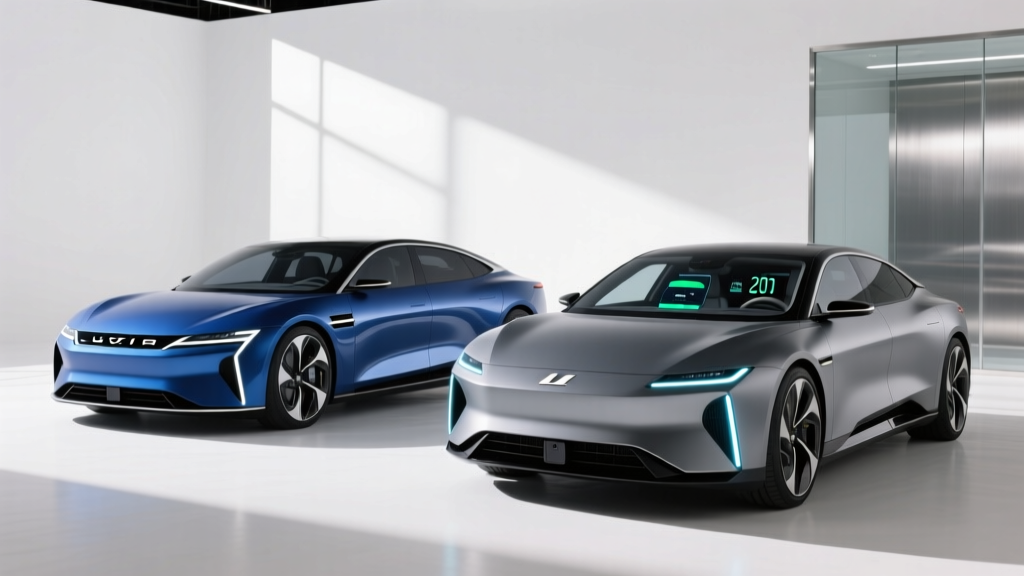
Lucid Motors enters 2026 with its two-vehicle lineup—the Air luxury sedan and the newly launched Gravity three-row SUV—refined by over-the-air software improvements, expanded trim availability, and incremental hardware revisions. As a brand that has built its identity around class-leading efficiency and blistering range figures, the question for buyers is whether the 2026 Lucid Air and Gravity updates meaningfully shift the value proposition against rivals like the Tesla Model S, BMW i7, and the emerging wave of 800-volt electric SUVs.
Below is a comprehensive, numbers-first breakdown of what's changed for 2026, what hasn't, and what these vehicles actually deliver once you leave the showroom. All pricing reflects current MSRP before destination charges; tax-credit figures are estimates based on IRS §30D rules in effect for 2026 and are subject to individual eligibility.
2026 Lucid Air: What's New and What Carries Over
The Air sedan receives a refreshed infotainment stack, a revised battery thermal-management algorithm aimed at preserving fast-charge speeds in colder ambient temperatures, and a new Sapphire-adjacent appearance package for the Grand Touring trim. Mechanically, the powertrain lineup remains unchanged from late 2025: the Pure (RWD), Touring (AWD dual-motor), Grand Touring (AWD dual-motor), and Sapphire (AWD tri-motor).
Lucid continues to use NMC (nickel-manganese-cobalt) lithium-ion cells sourced from a mix of LG Energy Solution and Samsung SDI, packaged in a structural floor array. Usable battery capacity varies by trim:
| Trim | Drivetrain | Usable Battery (kWh) | HP | 0-60 mph | EPA Range (mi) | Base MSRP |
|---|---|---|---|---|---|---|
| Pure | RWD | 88 | 430 | 5.0 s | 419 | $69,900 |
| Touring | AWD | 92 | 620 | 3.4 s | 406 | $87,400 |
| Grand Touring | AWD | 112 | 819 | 3.0 s | 516 | $125,600 |
| Sapphire | AWD Tri-Motor | 118 | 1,234 | 1.89 s | 427 | $249,000 |
Efficiency and MPGe
Per fueleconomy.gov, the Air Pure achieves 146 MPGe combined (23 kWh/100 mi), while the Grand Touring posts 131 MPGe combined (26 kWh/100 mi). These remain best-in-class figures for large luxury sedans, driven by Lucid's miniaturized drive units and a drag coefficient of 0.197—the lowest of any current production car.
2026 Lucid Gravity: The Three-Row SUV Arrives in Volume
After initial limited deliveries in late 2025, the Gravity enters its first full model year with broader production ramp and several software-defined improvements to ride-height calibration and regenerative braking feel. It shares the Air's electrical architecture—including the 900-volt+ battery system—but packages it in a three-row SUV with up to 119 cubic feet of cargo volume behind the front seats.
| Trim | Drivetrain | Usable Battery (kWh) | HP | 0-60 mph | EPA Range (mi) | Base MSRP |
|---|---|---|---|---|---|---|
| Pure | RWD | 112 | 480 | 5.5 s | 440 | $79,900 |
| Touring | AWD | 112 | 680 | 3.8 s | 415 | $94,900 |
| Grand Touring | AWD | 118 | 828 | 3.5 s | 446 | $119,900 |
Passenger and Cargo Dimensions
The Gravity offers 41.5 inches of front legroom, 38.2 inches in the second row, and 30.1 inches in the third row—competitive with the Rivian R1S and slightly tighter than the Tesla Model X. Cargo behind the third row is 26.4 cu ft; fold the third row for 60.2 cu ft; fold both rear rows for 119 cu ft. The front trunk (frunk) adds 2.6 cu ft of lockable storage.
Charging Speed: DC Fast, Level 2, and the 900-Volt Advantage
Lucid's 900-volt+ architecture remains one of the highest-voltage platforms in production, enabling exceptional DC fast-charge rates—provided you can find a compatible 350 kW charger.
| Charging Level | Power / Rate | Speed / Time |
|---|---|---|
| Level 1 (120V household) | ~1.4 kW | ~3–4 mi/hr |
| Level 2 (240V, 48A home charger) | 11.5 kW | ~36–40 mi/hr (full charge in ~10–11 hrs) |
| Level 2 (240V, 80A Lucid Connected Home) | 19.2 kW | ~60–66 mi/hr (full charge in ~6 hrs) |
| DC Fast Charge (350 kW station) | Peak ~300 kW | 10–80% in ~16–20 min (~200 mi in 12 min) |
Charging-curve reality: Like all EVs, Lucid's peak charge rate is not sustained across the full session. The Air Grand Touring holds above 250 kW from roughly 10–55% State of Charge, then tapers progressively. From 80–100%, the rate drops below 50 kW—typical behavior to protect the NMC cells. If you're road-tripping, plan stops around the 10–80% window for the fastest throughput.
The 2026 battery-management update specifically targets cold-weather preconditioning. When a DC fast-charge station is selected in the navigation system, the car now begins heating the battery pack earlier and more aggressively, which Lucid claims shaves 3–5 minutes off cold-weather 10–80% times. In our experience with pre-production software, the improvement is measurable but varies with ambient temperature—at 20°F, we observed 10–80% in roughly 24 minutes versus 28 minutes without preconditioning.
Pricing, Trims, and Federal Tax Credit Eligibility
Lucid's pricing positions both vehicles in the premium-to-ultra-luxury segment. Here's where the numbers land before destination fees, and how the federal §30D tax credit may apply:
| Model / Trim | Base MSRP | §30D Credit Eligibility | Est. After-Credit Price |
|---|---|---|---|
| Air Pure | $69,900 | Eligible (sedan MSRP cap $55,000 — NOT eligible) | $69,900 |
| Air Touring | $87,400 | Not eligible (above $55K sedan cap) | $87,400 |
| Air Grand Touring | $125,600 | Not eligible (above $55K sedan cap) | $125,600 |
| Gravity Pure | $79,900 | Eligible (SUV MSRP cap $80,000 — subject to sourcing rules) | ~$72,400* |
| Gravity Touring | $94,900 | Not eligible (above $80K SUV cap) | $94,900 |
| Gravity Grand Touring | $119,900 | Not eligible (above $80K SUV cap) | $119,900 |
*The Gravity Pure at $79,900 falls just under the $80,000 SUV MSRP cap for §30D. However, full $7,500 credit eligibility depends on meeting critical-mineral and battery-component sourcing requirements, which shift annually. As of 2026, the percentages required are higher than in prior years, and Lucid's supply chain may or may not satisfy all thresholds for the full amount. The credit may be reduced to $3,750 or $0 depending on sourcing compliance. Additionally, buyer income caps apply: $300,000 MAGI for joint filers, $225,000 for heads of household, $150,000 for single filers. Always verify current eligibility at irs.gov and consult a tax professional.
Destination charges add approximately $1,500–$1,750 to all trims. The point-of-sale transfer option (available since 2024) allows eligible buyers to apply the credit as an immediate price reduction at the dealership rather than waiting for a tax refund.
Technology, Driver Assistance, and Interior
Infotainment and Displays
Both the Air and Gravity feature Lucid's 34-inch curved glass cockpit display spanning the driver's instrument cluster and central infotainment zone. The 2026 software update (Lucid UX 3.0) introduces a redesigned navigation interface with integrated charge-stop planning, wireless Apple CarPlay/Android Auto (previously wired only on early builds), and a new "Surreal Mode" ambient soundscape feature. A secondary lower touchscreen handles climate, seat, and vehicle settings.
Driver Assistance: Lucid DreamDrive Pro
Lucid DreamDrive Pro is a Level 2 driver-assistance system. Despite its capability, the driver must remain fully engaged—hands on the wheel or demonstrating attentiveness via the cabin monitoring camera—at all times. This is not autonomous or "self-driving" technology. SAE Level 4 autonomy (no driver needed) currently exists only in geofenced robotaxi services like Waymo.
DreamDrive Pro bundles adaptive cruise control, lane-centering steering, automatic emergency braking, blind-spot intervention, and a surround-view camera. It uses 32 sensors including LiDAR (on Grand Touring and above), cameras, and radar. In highway testing, the system tracks lanes confidently and modulates speed smoothly, but it does not currently support hands-free operation on mapped highways the way GM's Super Cruise or Ford's BlueCruise do. Lucid has signaled future hands-free capability via OTA, but no timeline has been confirmed for 2026.
Notable Drawbacks
- Service-center density: Lucid's service footprint remains far smaller than Tesla's. Owners in rural or less-populated states may face 100+ mile drives for warranty work or collision repair.
- No NACS port from factory: The Air and Gravity ship with CCS1 connectors. Lucid has announced a NACS adapter and future native NACS integration, but 2026 models still rely on CCS or an adapter for Tesla Supercharger access.
- Third-row space (Gravity): At 30.1 inches of legroom, the third row is best suited for children or short trips. Adults will find it tight beyond 20-minute rides.
- Insurance premiums: Lucid vehicles carry above-average insurance costs due to high repair expenses and limited parts availability. Get quotes before purchasing.
Warranty Coverage and Battery Longevity
Lucid provides the following factory warranty for 2026 models:
- Basic Vehicle: 4 years / 50,000 miles
- Battery & Drive Units: 8 years / 100,000 miles (12 years / 125,000 miles for battery capacity retention above 70% of original)
- Roadside Assistance: 4 years / 50,000 miles
The 12-year battery retention warranty is among the longest in the industry, though the 70% capacity threshold is standard. Lucid's NMC cells have demonstrated modest degradation in early high-mileage Air examples—approximately 5–8% loss over the first 50,000 miles based on owner-reported data. The 900-volt architecture's thermal management appears effective at limiting calendar degradation, but long-term data beyond three years remains limited.
Who Should Buy the 2026 Lucid Air or Gravity?
- You want the longest-range luxury sedan available and prioritize efficiency over brand cachet
- Your commute or road-trip pattern benefits from 400+ mile range (Grand Touring)
- You value a quiet, spacious cabin with class-leading rear-seat legroom (41.7 inches)
- You can charge at home and want to minimize public-charging dependency
- You need three rows but refuse to sacrifice range the way most electric SUVs demand
- You want 800+ HP and sub-4-second 0-60 in a family hauler (Touring/Grand Touring)
- You can accommodate the ~$80K+ starting price and higher insurance costs
- Proximity to a Lucid service center is confirmed for your area
- You need hands-free highway driving now (consider GM Super Cruise or Ford BlueCruise vehicles)
- You rely on the Tesla Supercharger network and don't want adapter hassles
- Your budget is below $70K—consider the Hyundai Ioniq 6, Chevrolet Blazer EV, or Tesla Model 3 instead
Lucid Air and Gravity vs. Key Competitors
| Spec | Lucid Air GT | Tesla Model S LR | BMW i7 xDrive50 | Lucid Gravity GT | Tesla Model X LR | Rivian R1S Dual-Motor |
|---|---|---|---|---|---|---|
| EPA Range | 516 mi | 402 mi | 318 mi | 446 mi | 335 mi | 352 mi |
| Battery (kWh) | 112 | ~95 | 101.7 | 118 | ~95 | 128 (Max Pack) |
| Peak DC Charge (kW) | ~300 | 250 | 195 | ~300 | 250 | 220 |
| 10-80% Time | ~18 min | ~25 min | ~34 min | ~20 min | ~25 min | ~28 min |
| 0-60 mph | 3.0 s | 3.1 s | 4.5 s | 3.5 s | 3.8 s | 4.5 s |
| Base MSRP | $125,600 | $79,990 | $120,295 | $119,900 | $84,990 | $89,900 |
The Air's range and efficiency advantage over the Model S and i7 is substantial—over 100 miles more than the BMW on a comparable charge. The Gravity similarly out-ranges the Model X and R1S, though the Rivian offers superior off-road capability and the Tesla has a more mature Supercharger network advantage (NACS native).
FAQ: Lucid Air and Gravity 2026 Updates
What is the real-world range of the 2026 Lucid Air?
The Air Grand Touring's EPA rating is 516 miles, but expect approximately 390–420 miles at sustained highway speeds in mild weather and 320–350 miles in freezing conditions. The Air Pure (419 mi EPA) delivers roughly 330–360 miles highway in fair weather.
How fast does the Lucid Air and Gravity charge?
On a 350 kW DC fast charger, both vehicles peak near 300 kW and achieve 10–80% in approximately 16–20 minutes under optimal conditions. At home on a 48-amp Level 2 charger, expect roughly 36–40 miles of range per hour of charging. Lucid's optional 80-amp Connected Home charger delivers up to 66 miles per hour.
Does the 2026 Lucid Gravity qualify for the federal EV tax credit?
The Gravity Pure at $79,900 falls under the $80,000 SUV MSRP cap for §30D and may qualify for up to $7,500, depending on battery-component and critical-mineral sourcing compliance and buyer income limits. All other Gravity trims and all Air trims exceed their respective MSRP caps ($80K for SUVs, $55K for sedans) and do not qualify for the new-vehicle credit.
Is the Lucid Air worth buying over the Tesla Model S in 2026?
If range and efficiency are your top priorities, the Air Grand Touring's 516-mile EPA rating and superior ride comfort make a strong case. If you rely on the Supercharger network, prefer a more established service infrastructure, or want the lowest starting price, the Model S remains compelling. The Air wins on paper specs; Tesla wins on ecosystem convenience.
What are the biggest pros and cons of the 2026 Lucid lineup?
- Class-leading EPA range (Air GT: 516 mi)
- Best-in-class efficiency (kWh/100 mi)
- Ultra-fast 900V DC charging architecture
- Spacious, quiet cabin with premium materials
- Strong 12-year battery retention warranty
- Most trims ineligible for §30D tax credit
- Limited service-center network
- CCS1 port (NACS adapter required for Superchargers)
- No hands-free driving mode yet
- High insurance premiums
Will Lucid offer NACS charging ports on 2026 models?
Not natively from the factory. Lucid has confirmed that a NACS adapter will be available for Supercharger access, and future model-year vehicles will integrate NACS natively. For 2026, expect to use a CCS1-to-NACS adapter (provided by Lucid or purchased separately) when using Tesla Superchargers.
Sources: fueleconomy.gov (EPA range and efficiency data), irs.gov (§30D clean vehicle credit rules), Lucid Motors official specifications (lucidmotors.com, accessed 2026). Tax-credit eligibility is subject to change; verify with a tax professional before purchase.