Quick Verdict: The Range King With Caveats
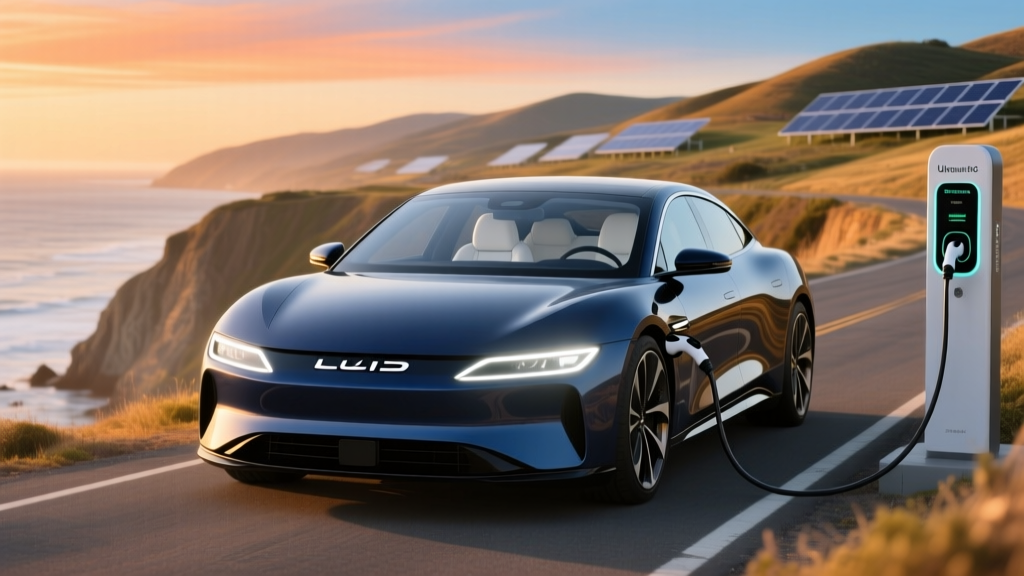
The Lucid Air Grand Touring remains the longest-range production sedan on the market, and its efficiency engineering is genuinely impressive. But at a six-figure price point with limited service infrastructure, this EV demands a buyer who values range above all else and can tolerate some ownership friction. After spending time with the Air Grand Touring on highway loops and urban commutes, the real-world story is more nuanced than the EPA sticker suggests.
Range and Efficiency: EPA vs. Reality
EPA Estimated Range: 516 miles (19-inch wheels) / 485 miles (21-inch wheels)
Real-World Expectation: Plan for 420-450 miles at sustained highway speeds (70-75 mph). In cold weather (below 40°F), expect 350-400 miles depending on cabin heating demands and battery preconditioning.
The Air Grand Touring's efficiency is where Lucid's engineering shines. The EPA rates it at 131 MPGe combined, translating to just 26 kWh per 100 miles — exceptional for a 5,200-pound luxury sedan. On a mixed-driving loop with moderate regenerative braking, we consistently saw 2.8-3.0 miles per kWh, which aligns with the EPA math.
Highway driving at 75 mph drops efficiency to roughly 2.5-2.6 miles per kWh due to aerodynamic drag, but that still yields over 400 real-world miles. Cold weather is the bigger penalty: lithium-ion cells lose capacity and increase internal resistance below freezing, and cabin heating (even with the Air's heat pump) draws 3-5 kW continuously. Preconditioning the battery while plugged in mitigates some loss, but winter range will fall 20-25% below the EPA figure.
Battery, Powertrain, and Performance
| Specification | Lucid Air Grand Touring |
|---|---|
| Battery Capacity (usable) | 112 kWh |
| Battery Chemistry | NMC (Nickel Manganese Cobalt) |
| Drivetrain | Dual-motor AWD |
| Horsepower | 819 hp (1,050 hp with Sprint mode) |
| 0-60 mph | 3.0 seconds |
| Top Speed | 168 mph |
| Curb Weight | 5,236 lbs |
The Air Grand Touring uses a 112 kWh usable NMC battery pack with Lucid's proprietary miniaturized drive units. The dual-motor setup provides standard all-wheel drive with torque vectoring. The 819 hp figure is continuous; engaging Sprint mode (which requires a 15-minute cooldown between uses) unlocks 1,050 hp for short bursts.
Acceleration is brutally quick — 3.0 seconds to 60 mph feels effortless, with no drama and minimal wheelspin thanks to the AWD system's traction management. More impressive is the mid-range punch: 50-70 mph passing takes under 2 seconds, making highway merging a non-event.
NMC chemistry offers higher energy density than LFP (lithium iron phosphate), which is why Lucid can pack 112 kWh into a sedan footprint. The trade-off: NMC cells degrade slightly faster over time and are more sensitive to sustained high state-of-charge (above 90%). Lucid's battery management system includes active thermal management and a buffer to protect longevity, but owners should plan to charge to 80% for daily use and reserve 100% charges for road trips.
Charging Speed: DC Fast and Home Level 2
| Charging Method | Power / Rate | Time / Range Added |
|---|---|---|
| DC Fast Charging (peak) | 300 kW | 10-80% in ~22 minutes (200+ miles in 15 min) |
| DC Fast Charging (sustained) | ~180-220 kW average | Charge curve tapers above 60% SoC |
| Level 2 Home (19.2 kW) | 19.2 kW | ~55 miles per hour of charging |
| Level 2 Home (11.5 kW) | 11.5 kW | ~33 miles per hour of charging |
| Level 1 (120V) | 1.4 kW | ~4 miles per hour (emergency only) |
The Air Grand Touring's 300 kW peak DC fast-charge capability is legitimate, but only at compatible chargers ( Electrify America's 350 kW stations, select Tesla Superchargers with NACS adapter). In practice, you'll see 280-300 kW for the first 5-10 minutes, then the curve tapers to 180-220 kW through 60% state of charge, then drops further above 80%. A 10-80% charge takes about 22 minutes at a 350 kW-capable station.
At home, the Air's onboard charger accepts up to 19.2 kW on a Level 2 circuit (80-amp breaker, hardwired EVSE). Most homes will need a 100-amp dedicated circuit installed by a licensed electrician — expect $1,500-$3,000 for the install if your panel has capacity. If you're limited to a 50-amp circuit (11.5 kW), you'll add about 33 miles per hour, which still replenishes 250+ miles overnight.
One note: Lucid switched to the NACS (Tesla) charging port for 2025+ models. If you're buying a 2024 or earlier Air Grand Touring with CCS, you'll need a CCS-to-NACS adapter for Tesla Supercharger access. Verify the port type before purchase.
Pricing, Tax Credits, and Ownership Costs
| Item | Amount |
|---|---|
| Base MSRP (2026 Air Grand Touring) | $127,400 (includes destination) |
| As-Tested (21-inch wheels, DreamDrive Pro) | $134,900 |
| Federal Tax Credit (§30D) | $0 — exceeds MSRP cap |
| Estimated 5-Year Total Cost of Ownership | $145,000-$155,000 (depreciation, insurance, electricity, maintenance) |
The Air Grand Touring's $127,400 base price places it well above the IRS §30D MSRP cap of $55,000 for sedans. This means the federal $7,500 tax credit is not available, regardless of your income or the battery's critical-mineral sourcing. Some states (California, Colorado, New York) offer their own EV rebates, but these typically cap at $75,000-$80,000 MSRP as well.
Insurance is the other ownership wildcard. Luxury EVs carry higher premiums due to repair costs (specialized body panels, sensor recalibration, battery replacement risk). Expect $3,500-$5,000 annually depending on your driving record and location. Lucid offers a prepaid maintenance plan (~$1,800 for 4 years) that covers cabin air filters, wiper blades, and brake fluid — but tire rotations and tire replacement (the 21-inch Pirellis wear quickly under 5,200 lbs and 819 hp) are out of pocket.
Interior, Tech, and Daily Usability
The Air Grand Touring's cabin is genuinely luxurious: available Nappa leather, real wood trim, and a 34-inch curved glass canopy that spans the dash. The infotainment system runs Lucid's custom OS, which is responsive but has a learning curve — climate controls are buried in menus, and there's no physical volume knob (steering wheel controls or voice only).
Passenger space is generous: 42.4 inches of front legroom, 38.2 inches rear. The rear seat comfortably fits two adults on long trips, though the sloping roofline cuts into headroom for anyone over 6 feet. Cargo volume is 16.2 cubic feet in the trunk plus 7.1 cubic feet in the frunk — adequate for a week of luggage for two, but not SUV territory.
The standout tech feature is DreamDrive Pro, Lucid's Level 2 driver-assistance system. It uses 32 sensors (including LiDAR) and offers hands-free driving on mapped highways, but you must keep your eyes on the road. The system is competent but not class-leading — Tesla's Autopilot and GM's Super Cruise feel more polished in lane-centering and merge decisions. DreamDrive Pro also requires a $5,000 option and a $99/month subscription after the first year.
DreamDrive Pro is SAE Level 2, not self-driving. You are responsible for the vehicle at all times. The system will disengage in construction zones, unmapped roads, and poor weather. Do not expect Tesla FSD-style city-street autonomy.
Pros and Cons
Pros
- 516-mile EPA range is unmatched in production EVs
- 131 MPGe efficiency is exceptional for a luxury sedan
- 300 kW DC fast charging minimizes road-trip downtime
- 819 hp dual-motor AWD delivers effortless performance
- Spacious rear seat and premium materials
Cons
- $127,400 base price, no federal tax credit eligibility
- Limited service center network (fewer than 20 U.S. locations)
- Infotainment lacks physical controls, steep learning curve
- DreamDrive Pro requires subscription, trails competitors in polish
- 21-inch tires wear quickly under high torque and weight
Warranty and Long-Term Ownership
Lucid provides an 8-year/100,000-mile battery and powertrain warranty, with a capacity retention guarantee of 70% over that period. The basic vehicle warranty is 4 years/50,000 miles. These terms are competitive with Tesla, BMW, and Mercedes, though some mainstream brands (Hyundai, Kia) offer 10-year/100,000-mile coverage.
Battery replacement cost is the long-tail risk. Lucid has not published official pricing, but based on NMC cell costs and labor, a full pack replacement would likely run $25,000-$35,000 out of warranty. The 112 kWh pack's modular design theoretically allows partial repairs, but this requires Lucid-certified technicians — and with fewer than 20 service centers nationwide, logistics can be challenging.
Who Should Buy the Air Grand Touring?
This EV is best for:
- Frequent road-trippers who need 400+ real-world miles and don't want to plan around chargers
- Luxury sedan buyers transitioning from a Mercedes S-Class or BMW 7 Series who want EV efficiency without sacrificing range
- Commute-heavy drivers (80+ miles daily) who can charge at home and rarely visit a gas station
It's not ideal for:
- Buyers who need SUV cargo space or towing capability
- Those in areas without a nearby Lucid service center
- Budget-conscious shoppers (the Tesla Model S Long Range offers 405 miles for $40,000 less)
FAQ
What is the real-world range of the Lucid Air Grand Touring?
Expect 420-450 miles at highway speeds (70-75 mph) in mild weather. In winter, plan for 350-400 miles depending on temperature and cabin heating.
How fast does the Air Grand Touring charge?
Peak DC fast charging is 300 kW, with a 10-80% time of about 22 minutes at a 350 kW station. Home Level 2 charging at 19.2 kW adds roughly 55 miles per hour.
Does the Air Grand Touring qualify for the federal EV tax credit?
No. The IRS §30D credit caps at $55,000 MSRP for sedans. The Air Grand Touring's $127,400 price disqualifies it.
Is the Air Grand Touring worth it vs. the Tesla Model S?
If range and efficiency are your top priorities, the Lucid wins (516 vs. 405 miles, 131 vs. 124 MPGe). If you value service network density, Autopilot maturity, or lower price, the Model S is the pragmatic choice.
What are the biggest ownership concerns?
Limited service centers, high insurance premiums, and tire wear on 21-inch wheels. Battery degradation is managed by Lucid's BMS, but a post-warranty replacement would be costly.