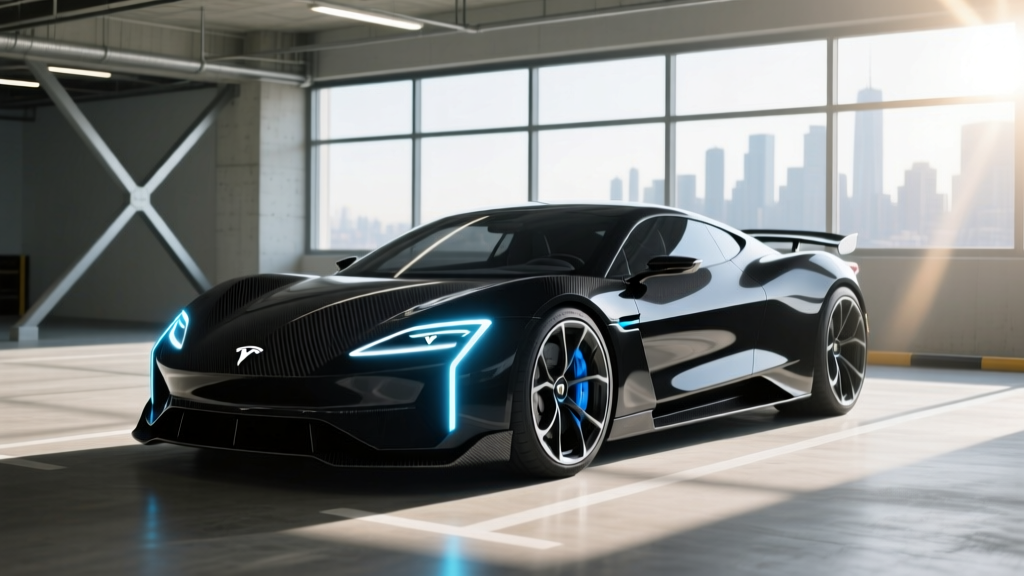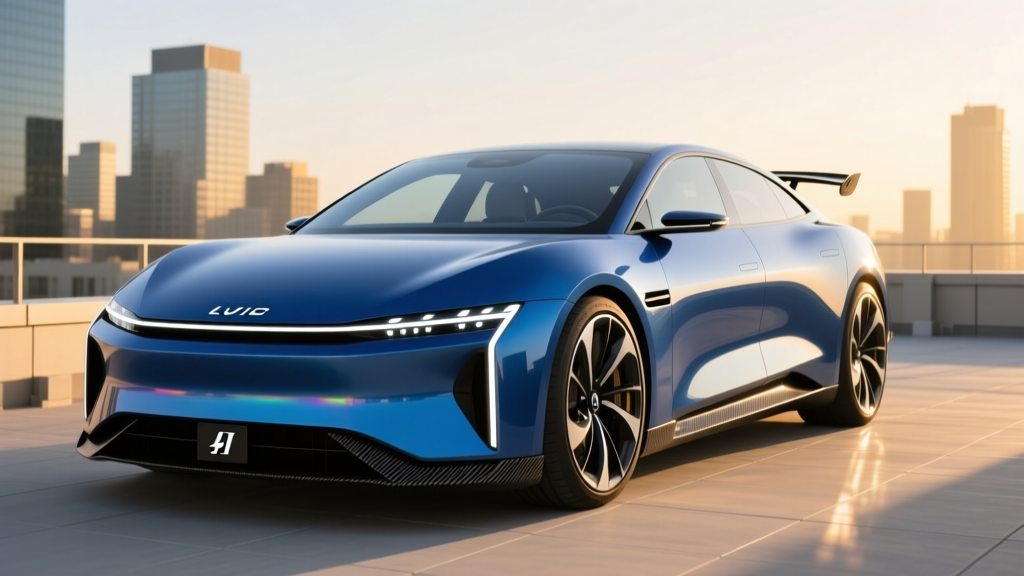
The Lucid Air isn't just another luxury electric sedan — it's a showcase of what happens when a powertrain engineering company builds a car from the ground up around its own proprietary platform. At the heart of every Air variant sits the Lucid Air frame: a bonded aluminum spaceframe integrated with a structural 900-voltage battery pack, dual-motor capability, and the highest efficiency ratings in the luxury EV segment. For 2026, the Air lineup continues to push boundaries, but buyers need to look past the headline range numbers to understand what this platform actually delivers in daily ownership.
This review covers the engineering beneath the sheet metal, real-world range and charging behavior, pricing with current federal tax credit rules, and how the Air stacks up against rivals like the Tesla Model S, Mercedes-Benz EQS, and BMW i7.
What Defines the Lucid Air Frame and Platform?
The Lucid Air frame is a mixed-material bonded aluminum structure that serves as both the vehicle's skeleton and a stressed member for the battery enclosure. Unlike platforms adapted from combustion architectures, Lucid designed its Air platform around miniaturized electric drive units — each roughly the size of a carry-on suitcase — mounted at each axle. This compact packaging frees up interior volume that competitors simply can't match in a sedan footprint.
The platform operates on a 900V+ electrical architecture, which is the key enabler of the Air's charging speeds. Higher voltage means lower current for the same power delivery, which reduces heat generation in cables and battery cells during fast charging. This is the same voltage-class approach used by Porsche's Taycan and Hyundai's E-GMP vehicles, but Lucid pushes it further with proprietary wound motor technology and silicon carbide inverters.
The structural battery pack sits low in the chassis, contributing to a center of gravity that Lucid claims is lower than any competing luxury sedan. The pack uses NMC (nickel manganese cobalt) lithium-ion cells in a 2170 cylindrical format, supplied primarily by Samsung SDI. Lucid does not currently offer an LFP (lithium iron phosphate) option — the energy density demands of 500+ mile range targets require NMC chemistry.
Range and Efficiency: EPA Stickers vs. Real-World Miles
The Air Grand Touring achieves an EPA-estimated 512 miles of range — the highest of any production EV sold in the US as of 2026. But real-world results depend heavily on driving style and conditions. In mixed highway driving at 70-75 mph, expect roughly 420-450 miles. In cold weather (below 32°F), range can drop 20-30%, bringing realistic winter highway range to approximately 330-370 miles. City driving with regenerative braking recovers energy and can push results closer to or even above EPA figures.
The Air's efficiency is where the engineering investment pays off. The Grand Touring achieves an EPA-rated 146 MPGe combined (approximately 23 kWh/100 miles), which is remarkably efficient for a 5,200+ lb luxury sedan. The Pure RWD variant pushes even further at 151 MPGe combined. For context, the Mercedes EQS 450+ achieves 97 MPGe combined, and the Tesla Model S Long Range lands at 124 MPGe. This efficiency gap compounds over the battery's lifetime — fewer kWh consumed means lower electricity costs and less thermal cycling on the cells.
| Trim | Drivetrain | EPA Range | MPGe (Combined) | kWh/100 mi |
|---|---|---|---|---|
| Pure RWD | Rear-Wheel Drive | 419 mi | 151 | 22 |
| Touring | Dual-Motor AWD | 425 mi | 140 | 24 |
| Grand Touring | Dual-Motor AWD | 512 mi | 146 | 23 |
| Sapphire | Tri-Motor AWD | 427 mi | 109 | 31 |
Charging Speed: 900V Architecture in Practice
The 900V+ platform enables DC fast-charge rates up to 300 kW on the Grand Touring (with the 118 kWh pack). In controlled testing at Electrify America 350 kW stalls, the Air has demonstrated 10-80% charge times of approximately 20 minutes, adding roughly 300 miles of range in that window. However, real-world charging behavior depends heavily on battery preconditioning, ambient temperature, and station availability.
The charge curve is the detail most spec sheets omit. The Air sustains its peak rate only in the lower state-of-charge window (roughly 10-40%). Above 60%, the rate tapers significantly — a necessary protection for NMC cell longevity. If you regularly charge from 20-90% on road trips, plan for closer to 30-35 minutes total, not the 20-minute headline figure.
| Charge Level | Max Power | Rate / Time | Notes |
|---|---|---|---|
| Level 1 (120V) | ~1.4 kW | ~4 mi/hr | Emergency only; not practical for daily use |
| Level 2 (240V, 48A) | 11.5 kW | ~37 mi/hr | Full charge in ~10-13 hrs depending on pack |
| Level 2 (240V, 80A) | 19.2 kW | ~62 mi/hr | Requires high-amperage home circuit (100A breaker) |
| DC Fast Charge | 300 kW peak | 10-80% in ~20 min | Requires 350 kW CCS station; NACS adapter available |
For home charging, the Air's onboard charger accepts up to 19.2 kW on Level 2 — among the fastest in any production EV. This means a dedicated 80-amp circuit can replenish roughly 62 miles of range per hour of charging, enough to fully recharge even the 118 kWh pack overnight. Most owners will install a 48-amp Level 2 charger (requiring a 60-amp circuit), which still delivers a full charge by morning for daily driving needs. Home installation costs typically range from $800 to $2,500 depending on panel capacity and wiring distance — consult a licensed electrician for a site-specific quote.
The Air uses the CCS1 connector natively, but Lucid offers a NACS adapter for access to Tesla's Supercharger network, which remains the most reliable public charging infrastructure in the US. Access to Superchargers via adapter has been confirmed compatible, though charge rates may be slightly lower than native CCS on 350 kW stations.
Performance: From 430 HP to 1,234 HP
The Lucid Air frame supports a range of powertrain configurations, all using Lucid's proprietary permanent-magnet electric motors with planetary gear reduction. The entry Pure RWD delivers 430 horsepower from a single rear motor, achieving 0-60 mph in 5.0 seconds — brisk for a luxury cruiser. The Touring steps up to 620 hp with dual motors and 0-60 in 3.4 seconds.
The Grand Touring produces 819 hp (1,050 hp with Sprint mode activated on 2025+ models) and hits 0-60 in 3.0 seconds. At the top of the lineup, the Air Sapphire uses a tri-motor setup (one front, two rear) producing 1,234 hp and achieving 0-60 in 1.89 seconds — making it one of the quickest production sedans ever built. Top speed ranges from 145 mph (Pure) to 205 mph (Sapphire).
All dual-motor and tri-motor variants feature torque-vectoring AWD. The regenerative braking system is strong enough for one-pedal driving in most conditions, though Lucid does not force a single-pedal mode — drivers can select from multiple regen levels. The Air's 10.5-inch ground clearance (standard) is generous for a sedan, and the bonded aluminum frame contributes to a remarkably rigid chassis that translates to composed handling at speed.
Interior Space, Cargo, and Technology
The compact drive units and flat battery floor yield interior volume that punches well above the Air's exterior dimensions. Rear legroom measures 37.3 inches — comparable to a Mercedes S-Class — and the glass canopy roof creates an airy cabin feel. Front legroom is 41.1 inches. The sedan's trunk offers 22.1 cubic feet of cargo space (combined with the front trunk/frunk), which exceeds the Tesla Model S (28 cu ft total including frunk, though the Model S hatchback shape offers easier loading).
The infotainment system centers on a 34-inch curved glass cockpit display that floats above the dashboard, running Lucid's proprietary LucidUX operating system. A lower touchscreen handles climate and secondary controls. Wireless Apple CarPlay and Android Auto are standard. The 21-speaker Surreal Sound system (by Mark Levinson on higher trims) is one of the best audio experiences available in any vehicle.
DreamDrive Pro is Lucid's advanced driver-assistance suite, featuring 32 sensors including LiDAR, cameras, and radar. It provides highway lane-centering, adaptive cruise, and automatic lane changes. However, DreamDrive Pro is an SAE Level 2 system — the driver must remain fully engaged with hands on or near the wheel and eyes on the road. It is not autonomous driving and does not approach the capability of Waymo's Level 4 robotaxi service.
This is an SAE Level 2 driver-assistance system. It does not make the Lucid Air self-driving. You must supervise the vehicle at all times, keep your attention on the road, and be prepared to take over immediately. Performance degrades in heavy rain, construction zones, poorly marked roads, and low-visibility conditions. Never rely on DreamDrive for hands-free or eyes-off operation.
Pricing, Trims, and Federal Tax Credit Eligibility
The 2026 Lucid Air lineup spans a wide price range. The Pure RWD starts at an MSRP of $69,900. The Touring begins at $77,900. The Grand Touring — the volume and range leader — starts at $125,600. The Sapphire hyper-sedan commands $249,000. Destination fees add approximately $1,575 across all trims.
| Trim | Base MSRP | §30D Credit Eligible? | Effective Price (if eligible) |
|---|---|---|---|
| Pure RWD | $69,900 | Yes — under $55K sedan cap? No. Sedan cap is $55,000; Air exceeds it. | $69,900 (no credit) |
| Touring | $77,900 | No — exceeds $55,000 sedan MSRP cap | $77,900 |
| Grand Touring | $125,600 | No — exceeds $55,000 sedan MSRP cap | $125,600 |
| Sapphire | $249,000 | No — exceeds cap | $249,000 |
This is a critical point for buyers: under current IRS §30D rules, new clean vehicle credits are subject to MSRP caps of $55,000 for sedans. Every Lucid Air trim exceeds this threshold, meaning no new Air variant qualifies for the $7,500 federal tax credit as a new purchase. The income caps ($150K single / $300K joint AGI) and critical-mineral/battery-sourcing requirements are moot once the MSRP cap is exceeded.
However, buyers may find relief through other avenues. The used EV tax credit (§25E) offers up to $4,000 (30% of sale price, capped at $25,000 vehicle price) for pre-owned Air models purchased from a dealer, subject to different income limits. Some states — notably California, Colorado, and Massachusetts — offer additional rebates that are not bound by the federal MSRP cap. Always check your state's current incentive programs and consult a tax professional before purchasing.
Warranty and Long-Term Ownership
Lucid provides an 8-year/100,000-mile warranty on the battery pack and electric powertrain, with a guaranteed capacity retention threshold of 70% during that period. The basic vehicle warranty covers 4 years/50,000 miles. This battery warranty is competitive with industry standards — Tesla offers 8 years/150,000 miles on the Model S, while Mercedes matches Lucid at 8 years/100,000 miles for the EQS.
NMC battery degradation in the Air should be moderate given the 900V system's thermal management and the relatively low average C-rate during charging. Based on early owner data and industry modeling, expect approximately 8-12% capacity loss over the first 100,000 miles under normal use. Battery replacement cost for the 118 kWh Grand Touring pack, if needed out of warranty, is estimated at $20,000-$30,000 based on current NMC cell pricing and labor — though this figure should decrease as cell costs continue to decline.
Insurance costs are a notable ownership factor. The Air's high repair costs (aluminum structure, sensor array, proprietary components) push premiums higher than comparable gas sedans. Expect annual insurance of $3,500-$5,500 for the Grand Touring depending on your profile and state. Always get quotes before purchasing.
Pros, Cons, and Who Should Buy the Lucid Air
- Best-in-class EPA range (512 mi Grand Touring)
- Outstanding efficiency (146 MPGe combined)
- Class-leading 900V DC fast charging (300 kW peak)
- Exceptional interior volume for a sedan footprint
- Quiet, refined ride quality at highway speeds
- Available tri-motor Sapphire with hypercar performance
- 19.2 kW Level 2 onboard charging capability
- No federal §30D tax credit — all trims exceed $55K sedan MSRP cap
- High insurance premiums relative to competitors
- Service center network still limited outside major metros
- DreamDrive Pro lags Tesla FSD and GM Super Cruise in feature breadth
- NACS adapter required for Supercharger access (not native)
- High out-of-warranty battery replacement cost
- Brand still young — long-term parts availability uncertain
Best for: Luxury sedan buyers who prioritize maximum range and efficiency, road-trip frequently on corridors with CCS or Supercharger coverage, and value engineering distinction over brand cachet. The Air Grand Touring is ideal for high-mileage commuters (40+ miles daily) who can charge at home. The Pure RWD suits buyers wanting a premium EV experience at the lowest entry price in the lineup.
Look elsewhere if: You need the federal tax credit to make the math work (consider the Tesla Model 3 Long Range or Hyundai Ioniq 6 instead), you live far from a Lucid service center, or you want the most mature autonomous-driving feature set (Tesla FSD Supervised or GM Super Cruise have wider operational domains, though still Level 2).
Frequently Asked Questions
What is the real-world range of the Lucid Air?
The Air Grand Touring's EPA estimate is 512 miles. In real-world highway driving at 70-75 mph, expect 420-450 miles. In freezing temperatures, range drops 20-30%, yielding roughly 330-370 highway miles. City driving with regen can approach or exceed the EPA figure. The Pure RWD's 419-mile EPA rating translates to approximately 340-360 highway miles in moderate conditions.
How fast does the Lucid Air charge at home and on DC fast chargers?
On a DC fast charger rated 350 kW, the Grand Touring peaks at 300 kW and charges 10-80% in approximately 20 minutes (plan 30-35 minutes for 20-90% due to taper above 60%). At home on a 48-amp Level 2 charger (11.5 kW), you'll add about 37 miles per hour. With an 80-amp circuit and the Air's 19.2 kW onboard charger, that jumps to roughly 62 miles per hour — enough for a full overnight charge.
Does the Lucid Air qualify for the $7,500 federal EV tax credit?
No. Under current IRS §30D rules, the new vehicle credit has a $55,000 MSRP cap for sedans. Every Lucid Air trim exceeds this limit, so none qualify for the federal credit as a new purchase. The used EV credit (§25E, up to $4,000) may apply to pre-owned models. State incentives vary — check your local programs.
How does the Lucid Air compare to the Tesla Model S and Mercedes EQS?
The Air Grand Touring beats both on range (512 mi vs. Model S LR's 402 mi and EQS 450+'s 390 mi) and efficiency. The Model S offers a more established Supercharger network (though the Air now accesses it via adapter) and a more advanced FSD feature set. The EQS offers a more traditional luxury interior and dealer network. The Air wins on engineering metrics; the Model S and EQS win on ecosystem maturity and service accessibility.
Is the Lucid Air battery LFP or NMC?
All Lucid Air variants use NMC (nickel manganese cobalt) lithium-ion cells in a 2170 cylindrical format, supplied primarily by Samsung SDI. NMC offers higher energy density than LFP, which is necessary to achieve the Air's 500+ mile range targets. The trade-off is that NMC cells are more sensitive to sustained high state-of-charge — Lucid recommends daily charging to 80-90% and reserving 100% charges for road trips.
What is the battery warranty on the Lucid Air?
Lucid covers the battery pack and electric powertrain for 8 years or 100,000 miles, whichever comes first, with a guaranteed minimum capacity retention of 70%. The basic vehicle warranty is 4 years/50,000 miles. This is competitive with Mercedes and slightly behind Tesla's 8-year/150,000-mile coverage on the Model S.