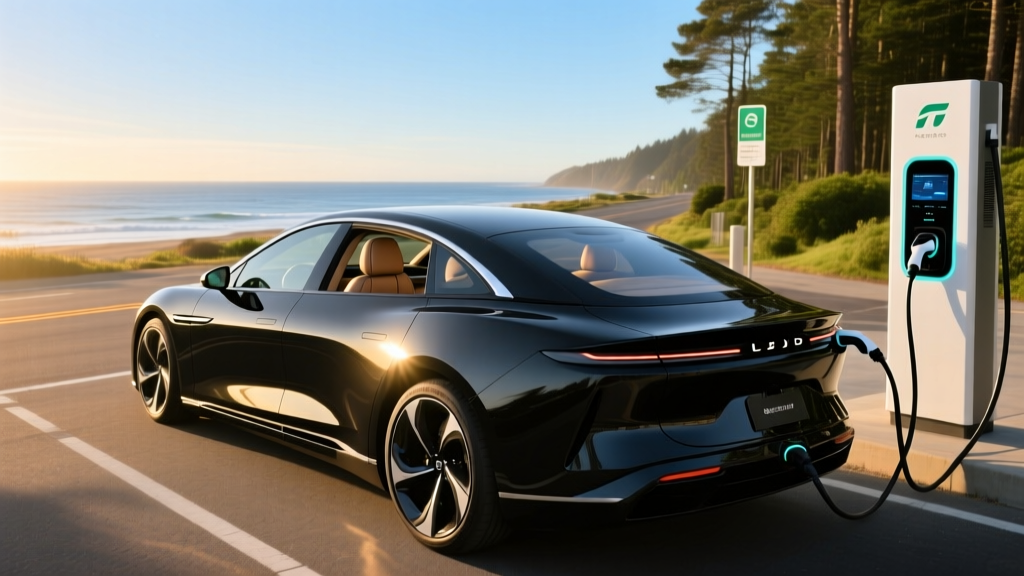
The Lucid Air Dream Edition remains one of the most talked-about luxury electric sedans ever produced. Originally launched as a limited-run halo model, it set the benchmark for EPA-rated range in a production vehicle and forced every legacy luxury automaker to rethink what an electric flagship could deliver. In this deep-dive review, we examine the Dream Edition's real-world usability — from highway range and cold-weather performance to DC fast-charging curves, interior practicality, and whether it still makes sense in today's luxury EV landscape.
Although the Dream Edition was a limited production run (approximately 520 units for the Performance variant and 520 for the Range variant), its technology platform underpins the current Lucid Air lineup, including the Grand Touring, Touring, and Pure trims still available new. Understanding the Dream Edition's capabilities gives buyers critical insight into what Lucid's engineering can deliver — and what to expect if you're considering a pre-owned Dream Edition or a new Grand Touring with similar specs.
| Specification | Dream Edition Range | Dream Edition Performance |
|---|---|---|
| EPA Range | 520 miles | 471 miles |
| Battery (usable) | 113 kWh (NMC) | 113 kWh (NMC) |
| Drivetrain | Dual-motor AWD | Dual-motor AWD |
| Horsepower | 933 hp | 1,111 hp |
| 0–60 mph | 2.7 seconds | 2.5 seconds |
| Top Speed | 168 mph | 168 mph |
| Max DC Fast Charge | 300 kW (peak) | 300 kW (peak) |
| 10–80% DC Charge | ~20 minutes | ~20 minutes |
| Level 2 Home Charge | 19.2 kW (~80 mi/hr) | 19.2 kW (~80 mi/hr) |
| MPGe (combined) | 131 MPGe | 110 MPGe |
| Efficiency | 26 kWh/100 mi | 30 kWh/100 mi |
| Cargo Volume | 32 cu ft (trunk + frunk) | 32 cu ft (trunk + frunk) |
| Original MSRP | $169,000 | $169,000 |
Range and Efficiency: Beyond the 520-Mile Sticker
The Lucid Air Dream Edition Range achieved an EPA-estimated 520 miles — the highest EPA range rating of any production EV at launch and a figure that still leads the segment. The Performance variant delivered 471 miles. These numbers come from a 113 kWh usable battery pack using 2170-format NMC (nickel manganese cobalt) cells supplied by LG Energy Solution and Samsung SDI, paired with Lucid's proprietary 900-volt electrical architecture and silicon-carbide inverters that minimize energy loss.
EPA 520 miles (Range) / 471 miles (Performance). In mixed real-world driving at 70 mph highway speeds in moderate temperatures (65–75°F), expect approximately 430–460 miles from the Range variant and 390–420 from the Performance variant. In cold weather (below 32°F), range drops 20–30%, yielding roughly 340–380 miles for the Range model. City driving with regenerative braking can push figures closer to EPA estimates. Lucid's efficiency — as low as 26 kWh/100 miles — is class-leading, meaning you get more miles per kWh than any comparable luxury sedan.
According to EPA data on fueleconomy.gov, the Dream Edition Range's combined MPGe of 131 translates to roughly 3.8 miles per kWh — a remarkable figure for a 5,200-pound luxury sedan with all-wheel drive. For context, the Tesla Model S Long Range achieves 120 MPGe combined, and the Mercedes-Benz EQS 450+ lands at 97 MPGe.
Lucid's Wonderland navigation system integrates range prediction with elevation data, weather, and traffic, providing real-time range estimates that proved highly accurate in owner reports. The thermal management system uses a heat pump and liquid cooling to precondition the battery, which is critical for both range preservation and charging speed.
Charging Speed: 900V Architecture in Practice
The Dream Edition's 900-volt battery architecture (compared to the more common 400V in most EVs) enables faster charging with less heat generation. Lucid quotes a peak DC fast-charge rate of 300 kW, but as with all EVs, peak rate is not sustained rate. Understanding the charge curve is essential for trip planning.
| Charging Level | Power / Rate | Speed (Miles Added) | Notes |
|---|---|---|---|
| Level 1 (120V) | 1.4 kW | ~4–5 miles/hour | Emergency/trickle only; 113 kWh pack takes 80+ hours |
| Level 2 (240V, 80A) | 19.2 kW | ~80 miles/hour | Full charge in ~6 hours; requires hardwired 100A circuit |
| Level 2 (240V, 48A) | 11.5 kW | ~48 miles/hour | Standard home charger; full charge in ~10 hours |
| DC Fast (peak) | 300 kW | ~300 miles in 20 min (10–80%) | Requires 350 kW+ station; battery preconditioned |
| DC Fast (150 kW station) | ~130–150 kW | ~130 miles in 20 min | Common at Electrify America and EVgo stations |
| DC Fast (50 kW station) | 50 kW | ~20 miles in 10 min | Older CHAdeMO/CCS stations; very slow for this pack |
The 10–80% charge time of approximately 20 minutes is achievable at a 350 kW Electrify America or Ionity station with the battery properly preconditioned. However, the charge curve tapers significantly above 80% — going from 80–100% can add another 25–30 minutes. For road trips, the optimal strategy is to charge from 10–80% at each stop, which aligns with natural rest breaks.
At home, the Dream Edition's 19.2 kW onboard charger is among the fastest in any production EV. Most homes will need a 100-amp dedicated circuit and hardwired Level 2 station (such as the Lucid Connected Home charger or a Grizzl-E Smart) to unlock this rate. On a standard 48-amp Level 2 circuit (NEMA 14-50 or hardwired), expect 11.5 kW — still fast enough for overnight replenishment of even a fully depleted pack. Note: kW (kilowatts) measures the rate of power delivery, while kWh (kilowatt-hours) measures total energy stored in the battery. A 19.2 kW charger delivers 19.2 kWh of energy per hour.
The Dream Edition uses a CCS1 connector for DC fast charging in North America. Lucid has confirmed NACS (Tesla Supercharger) adapter support for current Air models; Dream Edition owners should verify adapter compatibility with Lucid directly, as the earliest production units may require a firmware update.
Performance and Driving Dynamics
Both Dream Edition variants deliver supercar-rivaling acceleration from a dual-motor all-wheel-drive powertrain. The Performance variant's 1,111 horsepower and 2.5-second 0–60 mph time place it in the territory of the Bugatti Veyron, while the Range variant's 933 hp and 2.7-second sprint are hardly slow. Torque vectoring between the front and rear motors provides confident cornering, and the adaptive air suspension adjusts ride height and damping in real time.
The driving experience is defined by what Lucid calls "post-luxury" — effortless, quiet acceleration without the theatricality of a BMW M or Mercedes-AMG. The steering is precise but light, the brake-by-wire system blends regenerative and friction braking seamlessly, and the one-pedal driving mode (activated through the touchscreen) allows for aggressive regen that brings the car to a near-stop without touching the brake pedal.
At highway speeds, the Air Dream Edition is remarkably quiet. Lucid's aerodynamic efficiency (a drag coefficient of 0.197) reduces wind noise, and the absence of a combustion engine means only tire and suspension noise enter the cabin. The air suspension lowers the car at speed for improved efficiency and stability.
Interior, Technology, and Practicality
The Dream Edition's interior is finished in Nappa leather with open-pore wood trim and Alcantara headliner. Lucid offers a "DreamDrive Pro" ADAS suite with 32 sensors including a roof-mounted LiDAR unit, providing SAE Level 2 driver assistance (the driver must remain attentive and hands on or near the wheel at all times). This is not autonomous driving — it is an advanced driver-assist system comparable to Tesla Autopilot or GM Super Cruise in capability, though Lucid's system is less mature in terms of hands-free highway mapping.
Lucid DreamDrive Pro is an SAE Level 2 system. It provides adaptive cruise control, lane centering, and automatic lane changes, but the driver must remain fully engaged and supervise the system at all times. It is not a self-driving system. Only SAE Level 4 services like Waymo operate without a human driver.
The centerpiece of the dashboard is a 34-inch curved glass cockpit display that floats above the steering wheel, providing speed, range, navigation, and media information without a traditional instrument cluster binnacle. A lower 17-inch retractable touchscreen handles infotainment, climate controls, and vehicle settings. The system supports wireless Apple CarPlay and Android Auto, over-the-air updates, and a built-in streaming media platform.
Practicality is surprisingly strong for a sedan. The rear trunk offers 22.1 cubic feet, and the front trunk (frunk) adds approximately 10 cubic feet, for a combined 32 cubic feet — more cargo space than a Tesla Model S (28 cu ft combined) and competitive with many midsize SUVs. Rear legroom measures 37.6 inches, adequate for adults on longer trips, though the sloping roofline limits headroom for passengers over 6 feet tall.
Notable drawbacks include the absence of physical buttons for climate and volume (all controlled via touchscreen), a rear visibility compromise due to the narrow rear window, and an infotainment system that, while visually impressive, has drawn owner complaints about responsiveness and menu complexity compared to Tesla's interface.
Pricing, Tax Credits, and Ownership Costs
The Lucid Air Dream Edition carried an original MSRP of $169,000 (before destination) for both the Range and Performance variants. With all 1,040 units allocated and delivered by 2022, the Dream Edition is no longer available new. Pre-owned examples typically trade between $110,000 and $145,000 depending on mileage and condition, reflecting steep luxury-EV depreciation.
For buyers considering a new Lucid Air, the current lineup includes:
| Trim | MSRP (approx.) | §30D Credit Eligible? | Notes |
|---|---|---|---|
| Air Pure (RWD) | $69,900 | Potentially up to $7,500 | Must meet battery-sourcing, MSRP, and buyer income caps |
| Air Touring (AWD) | $87,400 | Potentially up to $7,500 | Below $55,000 sedan cap? No — sedan cap is $55K; exceeds limit |
| Air Grand Touring (AWD) | $125,600 | No — exceeds MSRP cap | Sedan MSRP cap under §30D is $55,000 |
| Air Dream Edition (used) | $110K–$145K (pre-owned) | Up to $4,000 (used EV credit) | Used §25E credit: max $4,000 or 30% of sale price; income caps apply |
Federal tax credit reality check: Under IRS §30D rules, new sedans must have an MSRP at or below $55,000 to qualify for the new clean vehicle credit. This effectively disqualifies every new Lucid Air trim from the $7,500 credit. The Air Pure's base MSRP exceeds this threshold. For pre-owned Dream Edition buyers, the §25E used EV credit offers up to $4,000 (or 30% of the sale price, whichever is less), subject to buyer income caps ($75,000 single / $150,000 married filing jointly) and a sale price cap of $25,000 — meaning most Dream Edition pre-owned purchases will not qualify due to the $25,000 price ceiling. Consult a tax professional for eligibility specifics.
Warranty and Long-Term Ownership
Lucid provides a competitive warranty package for the Air lineup:
- Basic Vehicle Warranty: 4 years / 50,000 miles
- Battery & Drive Unit Warranty: 8 years / 100,000 miles (covers defects and capacity loss below 70% State of Health)
- Roadside Assistance: 4 years / 50,000 miles
The 70% capacity retention threshold over 8 years is standard for the luxury EV segment (Tesla uses the same benchmark). NMC chemistry in the Dream Edition's pack has shown strong degradation data in early owner reports — most high-mileage Air vehicles report 3–5% capacity loss in the first 30,000 miles, with the curve flattening thereafter. Lucid's thermal management system, which actively cools and heats the battery, is a key factor in longevity.
For pre-owned Dream Edition buyers, verify the remaining battery warranty transfer (it follows the vehicle, not the original owner) and request a State of Health (SoH) readout from Lucid service. Insurance costs are elevated — expect $3,500–$5,000 annually depending on your profile, reflecting the vehicle's value and repair costs for aluminum body panels and specialized components.
Pros, Cons, and the Competition
- Class-leading EPA range (520 miles) and real-world efficiency
- 300 kW peak DC fast charging with 900V architecture
- Supercar acceleration (2.5 sec 0–60) in a luxury sedan
- Spacious trunk + frunk (32 cu ft combined)
- Stunning design and premium materials
- Over-the-air updates continue to improve the platform
- No longer available new; pre-owned supply is limited
- Steep depreciation (30–40% in first two years)
- Infotainment learning curve; no physical controls for climate
- DreamDrive Pro ADAS lags Tesla FSD and GM Super Cruise in coverage
- Narrow rear window limits visibility
- No federal tax credit eligibility at original or current pre-owned prices
Key competitors in the luxury electric sedan space include the Tesla Model S Plaid ($89,990, 396-mile EPA range, 1.99-sec 0–60), Mercedes-Benz EQS 580 ($120,050, 371-mile range), and BMW i7 xDrive60 ($119,300, 318-mile range). The Dream Edition out-ranges all of them significantly but trades at a premium on the pre-owned market. If range is your top priority and you can find a well-maintained example, the Dream Edition is unmatched. If you want a new vehicle with warranty certainty and broader service infrastructure, the Model S or EQS are more pragmatic choices.
- You prioritize maximum range above all else and drive 400+ miles regularly
- You want exclusivity — only 1,040 were built
- You have access to reliable Level 2 home charging (essential for a 113 kWh pack)
- You accept steeper depreciation and limited service centers
- You want a new vehicle with full warranty and current-generation ADAS
- You rely on public charging and need the Tesla Supercharger network
- You need a vehicle with strong resale value and broad dealer support
Frequently Asked Questions
What is the real-world range of the Lucid Air Dream Edition?
The EPA-estimated range is 520 miles (Range variant) and 471 miles (Performance variant). In real-world highway driving at 70 mph in moderate temperatures, expect 430–460 miles from the Range model. In freezing conditions, range drops to approximately 340–380 miles. City driving with regenerative braking can approach or slightly exceed EPA figures.
How fast does the Lucid Air Dream Edition charge?
On a 350 kW DC fast charger with a preconditioned battery, the Dream Edition peaks at 300 kW and charges from 10–80% in approximately 20 minutes. At home on a 19.2 kW Level 2 hardwired charger, it adds roughly 80 miles of range per hour, fully charging the 113 kWh pack in about 6 hours. On a standard 48-amp Level 2 (11.5 kW), a full charge takes around 10 hours.
Does the Lucid Air Dream Edition qualify for the federal EV tax credit?
As a new vehicle, the Dream Edition's $169,000 MSRP far exceeded the §30D sedan cap of $55,000, making it ineligible. For pre-owned purchases, the §25E used EV credit caps the qualifying sale price at $25,000 — also disqualifying the Dream Edition at current market values ($110K–$145K). No federal tax credit is realistically available for this vehicle. Always consult a tax professional and check current IRS guidelines.
Is the Lucid Air Dream Edition worth buying vs. a Tesla Model S or Mercedes EQS?
If maximum range and exclusivity are your top priorities and you can find a pre-owned example with a strong battery SoH, the Dream Edition is unmatched. However, the Tesla Model S offers a more mature Supercharger network, better ADAS (FSD Supervised), and stronger service infrastructure. The Mercedes EQS offers a more traditional luxury experience with broader dealer support. The Dream Edition is a collector-grade vehicle best suited for enthusiasts who value engineering achievement and range dominance.
What battery chemistry does the Dream Edition use, and how long will it last?
The Dream Edition uses NMC (nickel manganese cobalt) lithium-ion cells in 2170 format. NMC offers high energy density, which is essential for packing 113 kWh into a sedan. The battery is warranted for 8 years or 100,000 miles against capacity loss below 70% SoH. Early owner data suggests 3–5% degradation in the first 30,000 miles, with the rate slowing significantly thereafter. With proper thermal management (which the Air handles automatically), the pack should retain usable capacity well beyond 150,000 miles.
Can I charge a Lucid Air Dream Edition at a Tesla Supercharger?
Lucid has rolled out NACS adapter compatibility for newer Air models. Dream Edition owners should contact Lucid directly to confirm adapter support and any required firmware updates. The CCS1 port on the Dream Edition works natively with Electrify America, EVgo, ChargePoint, and other CCS networks across North America.