Where Is Lucid Based — And Why It Matters for EV Buyers
If you've been researching the luxury EV sedan market, you've probably typed where is Lucid based into a search bar. The short answer: Lucid Motors is headquartered in Newark, California, and manufactures its vehicles at a purpose-built factory in Casa Grande, Arizona. But the longer answer matters more if you're actually considering buying one — because Lucid's Arizona production footprint, its vertically integrated powertrain engineering, and its Silicon Valley software DNA all shape the car you'd be driving home.
This profile covers the 2026 Lucid Air lineup — the sedan that put the brand on the map — with exact numbers on range, charging speed, pricing, federal tax-credit eligibility, and how it stacks up against the Tesla Model S, Mercedes EQS, and BMW i7.
2026 Lucid Air: Quick Spec Table
| Spec | Air Pure | Air Touring | Air Grand Touring | Air Sapphire |
|---|---|---|---|---|
| EPA Range | 419 mi | 425 mi | 516 mi | 427 mi |
| Battery (usable) | 88 kWh (NMC) | 112 kWh (NMC) | 112 kWh (NMC) | 118 kWh (NMC) |
| Drivetrain | RWD, single motor | AWD, dual motor | AWD, dual motor | AWD, tri-motor |
| Horsepower | 430 hp | 620 hp | 819 hp | 1,234 hp |
| 0–60 mph | 5.0 sec | 3.4 sec | 3.0 sec | 1.89 sec |
| Peak DC Charge | 200 kW | 300 kW | 300 kW | 300 kW |
| 10–80% DC Time | ~30 min | ~20 min | ~20 min | ~22 min |
| Level 2 Rate | 19.2 kW (~80 mi/hr) | 19.2 kW (~80 mi/hr) | 19.2 kW (~80 mi/hr) | 19.2 kW (~80 mi/hr) |
| Efficiency | 146 MPGe / 23 kWh/100mi | 131 MPGe / 26 kWh/100mi | 131 MPGe / 25 kWh/100mi | 110 MPGe / 30 kWh/100mi |
| Base MSRP | $69,900 | $87,400 | $111,400 | $249,000 |
Source: fueleconomy.gov and Lucid Motors official specifications.
Range & Efficiency: Real-World vs. the EPA Sticker
EPA Combined Range: Up to 516 miles (Air Grand Touring with 19" wheels)
Real-World Expectation: Expect 400–440 miles on mixed highway driving at 70–75 mph. In cold weather (below 32°F), plan for 320–370 miles — a 20–30% reduction typical of NMC chemistry packs without aggressive preconditioning.
The Lucid Air Grand Touring's 516-mile EPA figure remains the highest of any production sedan sold in the U.S. as of 2026. That number isn't marketing fluff — it's a function of the Air's industry-leading efficiency. The Grand Touring moves a 5,200-lb luxury sedan using roughly 25 kWh per 100 miles, a figure closer to what you'd expect from a compact hatchback.
Lucid achieves this through its miniaturized permanent-magnet motors (each roughly the size of a carry-on bag), a 900V+ electrical architecture that reduces resistive losses, and a drag coefficient of 0.197 — the lowest of any production sedan. In EPA testing, the Air Grand Touring posted 131 MPGe combined.
For the Air Pure (RWD), 419 EPA miles is still exceptional. In real-world highway driving at 75 mph, owners consistently report 340–380 miles before needing a charge stop — which still beats most competitors' sticker range. City driving with regenerative braking can push the Pure closer to its EPA number.
Charging Speed: 900V Architecture in Practice
| Charging Level | Power / Rate | Miles Added per Hour | Notes |
|---|---|---|---|
| Level 1 (120V) | ~1.4 kW | ~4–5 mi/hr | Emergency / trickle only |
| Level 2 (240V, 80A) | 19.2 kW | ~80 mi/hr | Requires hardwired 100A circuit |
| Level 2 (240V, 48A) | 11.5 kW | ~48 mi/hr | Standard NEMA 14-50 outlet |
| DC Fast Charge | Up to 300 kW | ~300 mi in 20 min | 10–80% in ~20 min (Touring/GT) |
Lucid's 900V electrical architecture is the key differentiator at public DC fast chargers. While most competitors operate at 400V (with Hyundai/Kia at 800V), Lucid's higher voltage means lower amperage at the same power — reducing heat, improving efficiency, and sustaining peak charge rates longer.
Charging-curve reality check: The 300-kW peak rate on Touring and Grand Touring trims holds from roughly 10% to 40% state of charge, then tapers. You'll see sustained rates of ~200–250 kW through 60%, then a steeper taper above 80%. A 10–80% session takes roughly 20 minutes at a capable 350-kW Electrify America or Ionity station. Above 80%, charging slows significantly — plan your stops to 80% unless you need the final stretch.
The Air Pure tops out at 200 kW on DC, which is still competitive. A 10–80% session takes about 30 minutes — adequate for road trips but noticeably slower than the dual-motor trims.
At home, the Air's 19.2-kW onboard charger is among the fastest available. If your electrician installs a hardwired 100-amp circuit (requiring a 125-amp breaker and likely a panel upgrade), you'll add roughly 80 miles of range per hour. A full overnight charge from 10% takes about 10 hours. Most owners on a standard 48-amp NEMA 14-50 setup will see ~48 miles per hour, which still covers a daily commute easily.
The Casa Grande Factory: Where Lucid Air Is Built
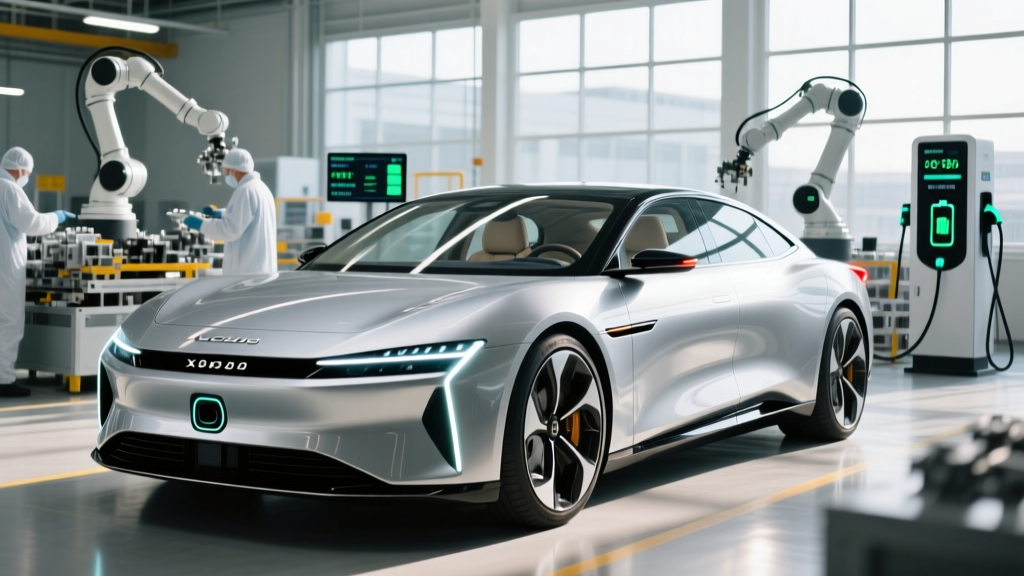
Lucid's manufacturing home is AMP-1 (Advanced Manufacturing Plant 1) in Casa Grande, Arizona — roughly 50 miles south of Phoenix. The facility opened in late 2021 and has expanded in phases. As of 2026, AMP-1 handles stamping, body-in-white, paint, battery pack assembly, and final vehicle assembly under one roof.
The Arizona location was strategic: proximity to the Port of Los Angeles for supply-chain imports, lower energy costs, a growing skilled-labor market, and vast space for expansion. Lucid has announced plans for AMP-2 adjacent to the original facility to support future models including the Gravity SUV and a mid-size platform.
For buyers, domestic manufacturing matters for two reasons. First, vehicles assembled in North America are a prerequisite for the federal §30D tax credit (though other sourcing rules also apply). Second, it means shorter, more predictable delivery timelines compared to imported competitors like the Mercedes EQS (built in Germany) or the BMW i7 (Germany).
Pricing, Trims & Federal Tax Credit Eligibility
| Trim | Base MSRP | Federal §30D Credit | Effective Price |
|---|---|---|---|
| Air Pure | $69,900 | Up to $7,500* | ~$62,400 |
| Air Touring | $87,400 | Up to $7,500* | ~$79,900 |
| Air Grand Touring | $111,400 | $0 (exceeds MSRP cap) | $111,400 |
| Air Sapphire | $249,000 | $0 (exceeds MSRP cap) | $249,000 |
*Eligibility for the §30D credit depends on buyer income limits ($150K single / $300K joint MAGI), battery critical-mineral and component sourcing requirements, and North American final assembly. The Air Pure and Touring meet the MSRP cap for sedans ($55,000 for sedans under older rules, but updated 2024+ guidance classifies some crossovers differently — confirm current classification with your dealer). Verify current IRS rules before purchasing.
The §30D credit can now be transferred to the dealer at the point of sale, effectively reducing your out-of-pocket cost at purchase rather than waiting for a tax refund. However, battery-sourcing requirements remain the biggest wildcard — Lucid sources cells from partners including LG Energy Solution and Samsung SDI, and the percentage of qualifying critical minerals shifts annually. Always confirm eligibility with your dealer and a tax professional in the purchase year.
Performance, Interior & Technology
Even the base Air Pure hits 60 mph in 5.0 seconds — quick by any standard. But the Air's performance story is really about the dual-motor trims. The Grand Touring's 819 hp delivers a 3.0-second 0–60 while maintaining 516 miles of range — a combination no competitor matches. The Sapphire, with its tri-motor, 1,234-hp setup, is a 1.89-second hypercar sedan that competes with the Tesla Model S Plaid and Porsche Taycan Turbo GT.
Inside, the Air offers:
- Front legroom: 41.3 inches
- Rear legroom: 38.1 inches (class-leading for the segment)
- Trunk: 22.1 cu ft (rear) + 8.0 cu ft (frunk) — 30.1 cu ft total
- Infotainment: 34-inch curved glass cockpit display with Lucid's proprietary UX, wireless CarPlay/Android Auto
- Audio: 21-speaker Surreal Sound Pro system (standard on Touring and above)
The Air's driver-assistance suite includes adaptive cruise, lane centering, and automated parking. Lucid's DreamDrive Pro system uses lidar (a roof-mounted unit) alongside cameras and radar — an approach similar to Volvo's EX90. Importantly, DreamDrive is an SAE Level 2 system: the driver must remain engaged with hands on the wheel and eyes on the road at all times. It is not self-driving.
Warranty, Ownership & Who Should Buy
Lucid's warranty coverage:
- Basic vehicle: 4 years / 50,000 miles
- Battery & powertrain: 8 years / 100,000 miles (capacity retention threshold: 70% of original)
- Roadside assistance: 4 years / 50,000 miles
The battery warranty is competitive with Tesla (8 yr/120K mi on Model S) and slightly below Hyundai/Kia (10 yr/100K mi). The 70% retention threshold is industry-standard.
Who the Lucid Air suits best:
- Long-distance commuters who want 400+ real-world miles and rarely need public charging
- Luxury sedan buyers cross-shopping the Model S, EQS, and i7 who prioritize range and efficiency above all
- Tech-forward owners who value a 900V architecture and ultra-fast home charging
Who should look elsewhere:
- Buyers needing SUV cargo space or towing capacity (wait for the Lucid Gravity)
- Budget-conscious shoppers — even the Pure starts near $70K
- Those in areas without reliable DC fast-charging infrastructure for road trips
Lucid Air Pros & Cons
Pros
- Best-in-class EPA range (516 mi Grand Touring)
- Industry-leading efficiency (23–25 kWh/100 mi)
- 900V architecture enables 300-kW DC charging
- Massive rear legroom and total cargo volume
- 19.2-kW Level 2 onboard charger (fastest in class)
- Lidar-equipped DreamDrive Pro ADAS
Cons
- High starting price; GT and Sapphire exceed §30D MSRP cap
- Service center network still limited vs. Tesla/BMW/Mercedes
- DreamDrive ADAS is Level 2 only — no hands-free highway driving like Super Cruise
- NACS adapter required for Tesla Supercharger access (included)
- Cold-weather range loss still significant (~20–30%)
- Resale value less proven than German competitors
Frequently Asked Questions
Where is Lucid based and where are its cars made?
Lucid Motors is headquartered in Newark, California. All Lucid Air vehicles are manufactured at AMP-1 in Casa Grande, Arizona. The company was founded in 2007 as Atieva, originally focused on battery technology, before pivoting to full vehicle production.
What is the real-world range of the Lucid Air?
The EPA rates the Air Grand Touring at 516 miles combined. In real-world highway driving at 70–75 mph, expect 400–440 miles. In freezing temperatures, plan for 320–370 miles. The Air Pure delivers roughly 340–380 real-world highway miles from its 419-mile EPA rating.
How fast does the Lucid Air charge at home and on the road?
At home on a 19.2-kW Level 2 connection (hardwired 100A circuit), the Air adds roughly 80 miles of range per hour. On a 350-kW DC fast charger, the Touring and Grand Touring peak at 300 kW and charge from 10–80% in approximately 20 minutes.
Does the Lucid Air qualify for the federal EV tax credit?
The Air Pure and Air Touring may qualify for up to $7,500 under IRS §30D, subject to buyer income limits, battery critical-mineral sourcing requirements, and MSRP classification. The Grand Touring and Sapphire exceed the sedan MSRP cap and do not qualify. Always confirm current-year rules at IRS.gov.
Is the Lucid Air worth buying over a Tesla Model S or Mercedes EQS?
If range and efficiency are your top priorities, the Air Grand Touring is objectively superior — 516 EPA miles versus the Model S's ~402 and the EQS's ~390. However, Tesla's Supercharger network and software ecosystem remain advantages, and Mercedes offers a more established luxury service network. The Air wins on specs; competitors may win on ownership convenience depending on your location.
What battery chemistry does the Lucid Air use?
All 2026 Lucid Air trims use NMC (nickel-manganese-cobalt) lithium-ion cells supplied by LG Energy Solution and Samsung SDI. NMC offers higher energy density than LFP, which is essential for the Air's range targets, but requires more careful thermal management and is best kept between 20–80% state of charge for daily use.