Is Lucid Going Bankrupt? The Question Every Prospective Buyer Is Asking
Search interest in "is Lucid going bankrupt" spiked repeatedly through 2025 and into 2026, and the concern is understandable. Lucid Motors has burned through billions of dollars in cash since launching the Air sedan, reported negative gross margins on a per-vehicle basis for most of its early production years, and seen its stock price fall over 90% from its 2021 SPAC-era highs. For a buyer committing $70,000+ to a luxury electric sedan, the company's long-term viability is not an abstract concern — it directly affects parts availability, software updates, resale value, and warranty service.
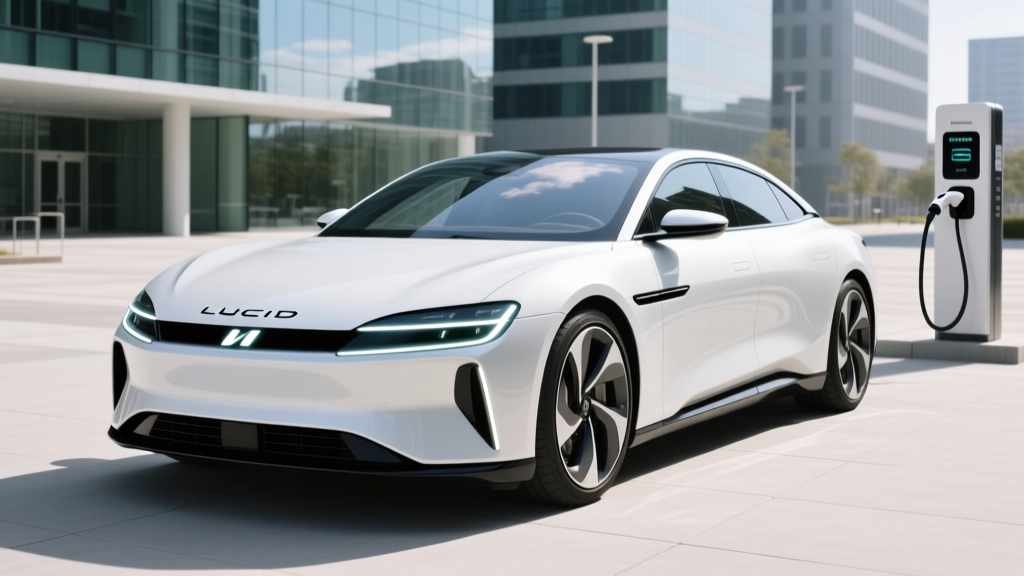
The short answer: Lucid is not currently bankrupt, and it has meaningful financial backing from Saudi Arabia's Public Investment Fund (PIF), which holds a majority stake and has injected billions in equity and debt. However, the company remains in a precarious position — low production volumes, ongoing cash burn, and fierce competition from Tesla, BMW, Mercedes-Benz, and Genesis mean Lucid's survival depends on executing the upcoming Gravity SUV launch and scaling production efficiently.
This review examines the 2026 Lucid Air lineup with that context in mind — because buying from a financially uncertain automaker requires a clear-eyed look at what you're actually getting.
Lucid's Financial Position: Backed But Not Safe
As of early 2026, Lucid's financial picture shows a company with deep-pocketed backing but persistent operational challenges:
- Majority owner: Saudi PIF owns approximately 60% of Lucid and has committed over $5 billion in cumulative investment through equity purchases and debt facilities.
- Cash burn: Lucid reported net losses exceeding $2 billion in 2024, with cash burn continuing into 2025 and 2026.
- Production volumes: Lucid produced approximately 8,400 vehicles in 2024 — far below its installed capacity of ~155,000 units annually at its Casa Grande, Arizona factory.
- Revenue: Automotive revenue remains under $1 billion annually, far from breakeven.
- Upcoming catalyst: The Lucid Gravity SUV (launching 2025–2026) is expected to drive higher volumes as it targets the larger luxury SUV market.
What this means for buyers: PIF backing makes a near-term bankruptcy filing unlikely, but Lucid could undergo restructuring, model line cuts, or service network changes if volumes don't improve. Warranty coverage is legally required to be honored, but a company under financial stress may have longer parts wait times or reduced service center availability.
2026 Lucid Air Lineup: Specs, Range, and Pricing at a Glance
| Spec | Air Pure | Air Touring | Air Grand Touring | Air Sapphire |
|---|---|---|---|---|
| Base MSRP | $69,900 | $87,400 | $125,600 | $249,000 |
| EPA Range | 410 mi | 425 mi | 516 mi | 427 mi |
| Battery (usable) | 88 kWh (NMC) | 112 kWh (NMC) | 112 kWh (NMC) | 118 kWh (NMC) |
| Drivetrain | RWD (single motor) | AWD (dual motor) | AWD (dual motor) | AWD (tri-motor) |
| Horsepower | 430 hp | 620 hp | 819 hp | 1,234 hp |
| 0–60 mph | 5.0 sec | 3.4 sec | 3.0 sec | 1.89 sec |
| Max DC Charge Rate | 220 kW | 300 kW | 300 kW | 300 kW |
| 10–80% DC Fast Charge | ~30 min | ~20 min | ~20 min | ~22 min |
| Level 2 (Home) Charge | 19.2 kW / ~75 mi/hr | 19.2 kW / ~75 mi/hr | 19.2 kW / ~75 mi/hr | 19.2 kW / ~75 mi/hr |
| Efficiency (EPA) | 146 MPGe (23 kWh/100mi) | 134 MPGe (25 kWh/100mi) | 131 MPGe (26 kWh/100mi) | 110 MPGe (30 kWh/100mi) |
| Battery/Powertrain Warranty | 8 yr / 100,000 mi | 8 yr / 100,000 mi | 8 yr / 100,000 mi | 8 yr / 100,000 mi |
Real-World Range: What the EPA Sticker Doesn't Tell You
EPA: 516 miles | Real-world highway (70 mph): ~410–440 miles | Cold weather (below 32°F): ~350–380 miles
The Lucid Air Grand Touring's 516-mile EPA rating is the highest of any production electric vehicle sold in the United States, verified by fueleconomy.gov. Lucid achieves this through a combination of factors: best-in-class aerodynamic drag coefficient (0.197 Cd for the Air), a high-capacity 112 kWh NMC lithium-ion battery pack, and remarkably efficient powertrain components designed in-house.
However, EPA range estimates use a mixed driving cycle with significant low-speed and city segments. In real-world testing:
- Highway driving at 70 mph: Expect 80–85% of EPA range, or roughly 410–440 miles in the Grand Touring. The Air's aerodynamic efficiency helps here — it loses less range at speed than boxier EVs.
- Cold weather (below 32°F / 0°C): Battery chemistry slows and cabin heating draws energy. Expect 65–75% of EPA range, or approximately 340–380 miles. The Air uses a heat pump for cabin heating, which reduces cold-weather losses compared to resistive heating systems.
- City/commuter driving: The Air's regenerative braking recovers significant energy in stop-and-go traffic. Expect close to or slightly above EPA range in mild-weather city driving.
The Air Pure's 410-mile EPA rating is equally impressive for a base trim, and its real-world highway range of approximately 330–350 miles still exceeds most competitors' EPA ratings outright.
Charging Speed: 900-Volt Architecture Delivers Real Gains
Lucid uses a 900-volt electrical architecture (compared to the more common 400V in older EVs), which enables faster DC fast charging at compatible stations. Here's what that looks like in practice:
| Charging Level | Power | Speed / Time | Notes |
|---|---|---|---|
| Level 1 (120V household) | ~1.4 kW | ~5 mi/hr | Emergency/trickle only; a full charge takes days |
| Level 2 (240V home, 80A) | 19.2 kW | ~75 mi/hr | Requires hardwired 100A circuit; ~6 hr for full charge on 112 kWh pack |
| DC Fast Charge (Touring/GT/Sapphire) | Up to 300 kW peak | ~20 min (10–80%) | Requires 350 kW station; charge curve tapers significantly above 80% |
| DC Fast Charge (Pure) | Up to 220 kW peak | ~30 min (10–80%) | Smaller pack; still fast on 150+ kW stations |
Charging curve reality: The 300 kW peak rate on Touring, Grand Touring, and Sapphire trims is achieved at roughly 10–30% state of charge (SoC) at a compatible 350 kW station (such as Electrify America's latest stalls). Above 50% SoC, the rate tapers to approximately 150 kW, and above 80% it drops further to under 50 kW. This taper is normal for NMC lithium-ion chemistry — the battery management system protects cell longevity by reducing charge current as the pack fills.
For context, adding 200 miles of range takes approximately 12–15 minutes at a 300 kW-capable station when starting at a low SoC. This is competitive with the Porsche Taycan and faster than the BMW i7, though Tesla's latest V4 Superchargers offer similar peak speeds for the Model S.
Home charging: Lucid supports up to 19.2 kW Level 2 charging via its onboard charger. This is among the fastest in the industry — but it requires a hardwired home charger on a dedicated 100-amp circuit. Many homes need an electrical panel upgrade to support this. Budget $1,500–$3,500 for a full Level 2 installation including panel work, per a licensed electrician's assessment. At a more common 48A/11.5 kW home charger, expect roughly 45 miles of range per hour of charging.
Performance, Interior, and Technology
Even the base Air Pure delivers 430 horsepower and a 5.0-second 0–60 mph time — brisk for a full-size luxury sedan. The dual-motor Touring and Grand Touring trims add all-wheel drive and escalate performance dramatically, while the tri-motor Sapphire's 1,234 hp and 1.89-second 0–60 time puts it in hypercar territory, rivaling the Tesla Model S Plaid and Rimac Nevera.
Interior space: The Air offers a surprisingly spacious cabin thanks to Lucid's miniaturized drive units, which free up interior volume.
- Front legroom: 45.3 inches
- Rear legroom: 45.2 inches (class-leading; exceeds the BMW 7 Series and Mercedes S-Class)
- Trunk: 32 cu ft (rear trunk) + 10 cu ft (front trunk/frunk) = 42 cu ft total
- Seating: 5 passengers standard; Executive Rear seating package available on Touring and above with reclining rear seats
Tech and infotainment: Lucid uses a 34-inch curved glass canopy display spanning the driver's instrument cluster and center stack. The interface is visually clean but has drawn criticism for burying some climate and vehicle controls in submenus. Wireless Apple CarPlay and Android Auto are standard. Over-the-air (OTA) software updates continue to add features.
Driver assistance: The Air comes equipped with Lucid's DreamDrive Pro ADAS suite, which includes adaptive cruise control, lane centering, automatic emergency braking, blind-spot monitoring, and a 3D surround-view camera. This is an SAE Level 2 system — meaning the driver must remain fully engaged with hands on the wheel and eyes on the road at all times. It is not autonomous driving. Lucid has not yet released a hands-free highway driving feature comparable to GM's Super Cruise or Ford's BlueCruise, though the hardware (including LiDAR on higher trims) suggests future capability.
Lucid DreamDrive Pro is an SAE Level 2 driver-assistance system. It does NOT drive the car autonomously. You must keep your hands on the steering wheel and supervise all driving decisions. Failure to do so risks accidents and is illegal in all 50 states. No consumer vehicle currently sold offers true self-driving capability (SAE Level 4+).
Pricing, Tax Credits, and Total Cost
Lucid Air pricing spans a wide range, from the accessible (in luxury-EV terms) Pure to the hypercar-priced Sapphire. Federal tax credit eligibility under IRS §30D is a critical consideration:
| Trim | MSRP | §30D MSRP Cap | Eligible for $7,500 Credit? | Effective Price (if eligible) |
|---|---|---|---|---|
| Air Pure | $69,900 | $55,000 (sedans) | No — exceeds sedan MSRP cap | $69,900 |
| Air Touring | $87,400 | $55,000 (sedans) | No — exceeds sedan MSRP cap | $87,400 |
| Air Grand Touring | $125,600 | $55,000 (sedans) | No — exceeds sedan MSRP cap | $125,600 |
| Air Sapphire | $249,000 | $55,000 (sedans) | No — exceeds sedan MSRP cap | $249,000 |
The tax credit situation is unfavorable for the Air. Under current §30D rules, the federal new clean vehicle credit is capped at $55,000 MSRP for sedans. Since every Air trim exceeds this threshold, no Lucid Air qualifies for the $7,500 federal tax credit. Additionally, buyer income caps ($150,000 single / $300,000 joint AGI) and critical-mineral/battery-component sourcing requirements would further restrict eligibility even if the MSRP were lower.
Some state-level incentives (such as California's CVRP or New York's Drive Clean rebate) may offer partial rebates, but these vary by jurisdiction and often have their own income and price caps. Check your state's official energy or DMV website for current programs.
5-Year Ownership Cost Estimate (Air Pure, 15,000 mi/yr):
- Purchase: $69,900 (no federal credit)
- Estimated electricity cost: ~$3,450 (at $0.15/kWh national average, 23 kWh/100mi)
- Insurance: ~$12,000–$15,000 (luxury EV premiums are elevated)
- Maintenance: ~$1,500 (EVs require far less routine maintenance than ICE vehicles)
- Estimated depreciation: ~$28,000–$35,000 (luxury EVs depreciate steeply; Lucid's brand uncertainty may worsen this)
- Total estimated 5-year cost: ~$87,000–$95,000
Should You Buy a Lucid Air — or Look Elsewhere?
The Air is genuinely one of the most impressive electric vehicles ever engineered. Its efficiency, range, interior space, and performance are legitimately class-leading. But buying a car is not just about the product — it's about the company behind it.
Choose the Lucid Air if:
- You want the longest-range EV on the market and regularly drive 300+ miles between charges
- Interior space and rear-seat comfort are top priorities (the Air's rear legroom beats every competitor)
- You value efficiency — the Air's kWh/mile is best-in-class for a full-size sedan
- You can absorb depreciation risk and are comfortable with Lucid's financial uncertainty
- You have reliable home Level 2 charging and access to DC fast chargers on your routes
Look at competitors if:
- You need the security of an established dealer and service network → BMW i7, Mercedes EQS
- You want a proven hands-free highway driving system → BMW i7 (with Highway Assistant)
- Resale value is a top concern → Tesla Model S (larger used market, broader service network)
- Budget is under $70,000 → Consider the Tesla Model S (starts ~$74,990) or wait for more affordable luxury EV sedans
- You need SUV practicality → Wait for the Lucid Gravity or consider the BMW iX, Mercedes EQS SUV
Pros, Cons, and the Bottom Line
- Best-in-class EPA range (up to 516 miles)
- Industry-leading efficiency (23 kWh/100mi on Pure)
- Massive rear legroom and cargo space for a sedan
- 900V architecture enables 300 kW DC fast charging
- Refined, quiet ride quality
- 19.2 kW Level 2 home charging capability
- Standard heat pump for cold-weather efficiency
- No federal tax credit eligibility (MSRP exceeds §30D cap)
- Limited and still-growing service center network
- Company financial uncertainty raises long-term support concerns
- Infotainment learning curve; some controls buried in menus
- No hands-free Level 2+ highway driving feature yet
- Insurance costs are above average for the segment
- Depreciation risk higher than established luxury brands
- Low production volumes may mean longer parts wait times
The bottom line: Lucid is not bankrupt today, and Saudi PIF backing provides a meaningful financial floor. But the company's future depends on scaling production and achieving profitability — outcomes that are far from guaranteed. The Air itself is an exceptional vehicle, arguably the best-engineered electric sedan on the market. Buying one requires weighing that product excellence against the risk of owning a car from a company whose long-term survival remains uncertain. For risk-tolerant buyers who prioritize range and efficiency above all else, the Air delivers. For those who value brand stability and service network breadth, the BMW i7 or Mercedes EQS remain safer bets.
Frequently Asked Questions
Is Lucid going bankrupt in 2026?
No. Lucid is not bankrupt. The company is majority-owned by Saudi Arabia's Public Investment Fund, which has invested over $5 billion and provides significant financial backing. However, Lucid continues to report large net losses and has not reached profitability. Its long-term viability depends on increasing production volumes with the Gravity SUV and reducing per-vehicle costs.
What is the real-world range of the Lucid Air?
The Lucid Air Grand Touring's EPA-rated range is 516 miles. In real-world highway driving at 70 mph, expect approximately 410–440 miles. In cold weather (below freezing), expect 340–380 miles. The Air Pure's 410-mile EPA rating translates to roughly 330–350 miles on the highway.
Does the Lucid Air qualify for the federal EV tax credit?
No. Under current IRS §30D rules, the federal new clean vehicle credit has a $55,000 MSRP cap for sedans. All Lucid Air trims start above $69,900, making them ineligible. Buyer income limits and battery sourcing requirements add further restrictions. Check IRS.gov for the latest rules.
How fast does the Lucid Air charge?
On a 350 kW-capable DC fast charger, the Air Touring, Grand Touring, and Sapphire can charge from 10% to 80% in approximately 20 minutes at peak rate (300 kW). The Air Pure peaks at 220 kW and takes about 30 minutes for the same range. At home on a Level 2 charger, the Air supports up to 19.2 kW (approximately 75 miles of range per hour), though this requires a dedicated 100A circuit.
Is the Lucid Air worth buying over the Tesla Model S or BMW i7?
The Air wins on range (516 mi vs. Model S's ~405 mi and i7's ~318 mi), efficiency, and rear-seat space. The Model S wins on Supercharger network access, service infrastructure, and brand longevity. The BMW i7 wins on dealer/service network, hands-free highway driving capability, and traditional luxury brand stability. Your choice depends on which of these factors matters most to you.
What happens to my Lucid warranty if the company goes under?
Under U.S. law, warranty obligations survive bankruptcy and become claims in the bankruptcy process. However, practical enforcement becomes difficult — parts availability, service centers, and software updates could be disrupted. Lucid's 8-year/100,000-mile battery and powertrain warranty is only as reliable as the company honoring it, which is why the PIF backing provides some (but not total) reassurance.
How does Lucid's service network compare to Tesla or BMW?
Lucid operates a limited network of service centers and mobile service vans, primarily in major metropolitan areas. As of 2026, Lucid has roughly 20+ service locations nationwide — far fewer than Tesla (200+ service centers) or BMW (400+ dealers with EV capability). If you live outside a major metro area, service access is a legitimate concern that should factor into your purchase decision.