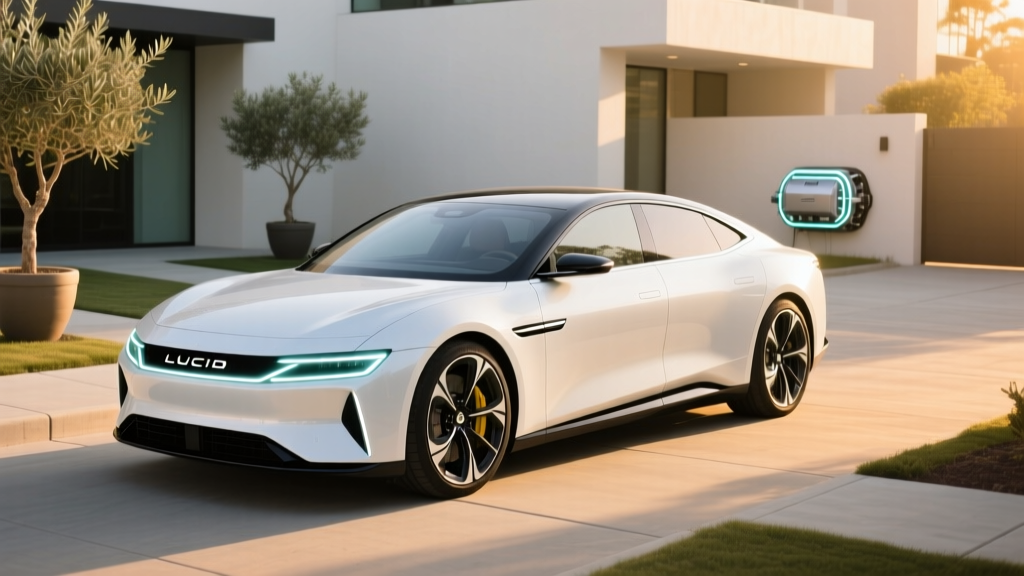
Lucid Motors entered 2025 under intense scrutiny. Production delays, supply-chain friction, and a luxury EV market cooling above $80,000 kept deliveries well below the company's original ambitions. For shoppers researching Lucid sales 2025 trends, the real story isn't just unit volume — it's what Lucid's pricing resets, trim reshuffling, and technology maturation mean if you're considering an Air sedan today.
This review evaluates the 2025/2026 Lucid Air lineup (Pure, Touring, Grand Touring, and Sapphire) on the metrics that matter to actual owners: real-world range, charging speed, ownership cost, tax-credit eligibility, and how it stacks up against the Tesla Model S, Mercedes EQS, and BMW i7.
2025 Lucid Air: Quick Verdict
The Air remains the efficiency and range benchmark in the luxury EV sedan segment. Its 900-volt architecture delivers class-leading DC fast-charge speeds, and the interior space punches well above its footprint. The trade-off: a still-maturing service network, a dealer-direct model that limits test-drive access in many states, and pricing that only recently became competitive after aggressive 2025 MSRP cuts. If you prioritize range-per-kWh and understated luxury over badge prestige, the Air Grand Touring is the sweet spot.
Full Lineup Specs at a Glance
| Spec | Air Pure | Air Touring | Air Grand Touring | Air Sapphire |
|---|---|---|---|---|
| Base MSRP | $69,900 | $77,900 | $94,900 | $249,000 |
| Drivetrain | RWD (single motor) | AWD (dual motor) | AWD (dual motor) | AWD (tri-motor) |
| Horsepower | 430 hp | 620 hp | 819 hp | 1,234 hp |
| 0-60 mph | 5.0 sec | 3.4 sec | 3.0 sec | 1.89 sec |
| Battery (usable) | 88 kWh (NMC) | 112 kWh (NMC) | 112 kWh (NMC) | 118 kWh (NMC) |
| EPA Range | 419 mi | 425 mi | 516 mi | 427 mi |
| MPGe (combined) | 146 MPGe | 140 MPGe | 131 MPGe | 110 MPGe |
| Efficiency | 23 kWh/100mi | 24 kWh/100mi | 26 kWh/100mi | 30 kWh/100mi |
| Max DC Charge | 200 kW | 250 kW | 250 kW | 250 kW |
| 10-80% DCFC | ~28 min | ~22 min | ~22 min | ~25 min |
| Level 2 (home) | 19.2 kW (~79 mi/hr) | 19.2 kW (~79 mi/hr) | 19.2 kW (~79 mi/hr) | 19.2 kW (~79 mi/hr) |
| Battery Warranty | 8 yr / 100,000 mi | 8 yr / 100,000 mi | 8 yr / 100,000 mi | 8 yr / 100,000 mi |
Real-World Range: What the EPA Sticker Doesn't Show
Lucid's efficiency engineering is genuinely best-in-class. The Air Grand Touring's 131 MPGe combined beats the Tesla Model S Long Range (~124 MPGe) and embarrasses the Mercedes EQS 580 (~97 MPGe). But EPA test cycles favor low-speed, temperate, no-HVAC driving.
In independent highway loop testing at sustained 75-80 mph, the Grand Touring typically delivers 4.0-4.2 mi/kWh, translating to roughly 440 miles from the 112 kWh usable pack. Cold weather (below 32°F) adds battery heating load and cabin HVAC draw — budget a 20-28% reduction unless you precondition while plugged in. The Pure RWD, with its lighter curb weight and no front motor drag, often matches or slightly beats its EPA number in suburban driving.
Charging Speed: 900V Architecture Pays Off
Lucid's 900-volt electrical architecture is one of the highest in production (matched only by Porsche Taycan/Audi e-tron GT and Hyundai Ioniq 5/6/Kia EV6 family). Higher voltage means more power at lower current, which reduces heat and sustains peak charge rates longer.
| Charging Method | Power | Miles Added | Notes |
|---|---|---|---|
| Level 1 (120V outlet) | ~1.4 kW | ~5 mi/hr | Emergency/trickle only |
| Level 2 (240V, 48A home) | 11.5 kW | ~48 mi/hr | Standard NEMA 14-50 install |
| Level 2 (240V, 80A home) | 19.2 kW | ~79 mi/hr | Requires 100A circuit, full panel capacity |
| DC Fast (350 kW Electrify America) | Peak 250 kW | ~200 mi in 15 min | Sustains ~220 kW to ~55% SoC, then tapers |
The 10-80% time of ~22 minutes for Touring/Grand Touring is competitive with Hyundai's E-GMP platform and notably quicker than the Tesla Model S (~27 minutes on V3 Superchargers, faster on V4). The caveat: you need a 350 kW-capable CCS or NACS charger to see peak rates. On 150 kW hardware, expect 10-80% in roughly 38-42 minutes.
Charge curve reality: Like all NMC packs, the Air's charge rate tapers sharply above 80% SoC. A 10-90% session takes closer to 40 minutes — plan road trips around 80% stops unless you have time to spare.
Lucid has committed to NACS (Tesla connector) adoption, with adapters available and native NACS ports on newer production. Access to Tesla's Supercharger network materially improves road-trip practicality for Air owners.
Performance and Drivetrain Character
Even the base Air Pure's 430 hp and 5.0-second 0-60 time outmuscle most gas-powered luxury sedans. The Grand Touring's 819 hp and 3.0-second sprint put it in supercar territory with four doors and a 22-cubic-foot trunk.
The Sapphire — Lucid's halo tri-motor variant — is a 1,234-hp, 1.89-second monster aimed squarely at the Tesla Model S Plaid. But at $249,000, it's a low-volume statement piece, not a volume seller. Most buyers are better served by the Grand Touring's blend of 516-mile range and 3.0-second acceleration.
Ride quality leans firm but controlled; the Air uses a multi-link front and rear suspension with available adaptive dampers. Road noise isolation is excellent. The steering is precise but light — enthusiasts may want more feedback, but grand-touring buyers won't complain.
Interior, Cargo, and Technology
The Air's cabin is spacious, aided by a 115.6-inch wheelbase and flat floor. Rear legroom measures 37.6 inches — more generous than the Porsche Taycan and comparable to the BMW 7 Series. Cargo volume is 22.1 cu ft combined (trunk + frunk), enough for four full-size suitcases plus carry-ons.
The 34-inch curved glass cockpit display is visually striking and runs Lucid's proprietary infotainment stack. Wireless CarPlay and Android Auto are supported. The available 21-speaker Surreal Sound system with Dolby Atmos is one of the best OEM audio implementations on the market.
Standout features: The glass canopy roof (standard on most trims) creates an airy cabin but can cause heat soak in southern summers — the available tinted variant is worth the upgrade. DreamDrive Pro ADAS uses 32 sensors including lidar, positioning it as SAE Level 2 (driver must remain engaged) with hands-on supervision required.
Drawbacks: The touchscreen-centric climate and media controls require more taps than physical buttons. Some owners report software latency on early-build 2023-2024 cars, though 2025 builds have improved responsiveness. Service center availability remains limited outside major coastal metros — mobile service covers some gaps but not all.
Pricing, Tax Credits, and Ownership Cost
Lucid's aggressive 2025 price cuts — the Pure dropped from its original $87,400 to $69,900 — reshaped the value equation. Here's how the math works with federal incentives:
| Trim | MSRP | Federal Credit | Effective Price | Eligibility Notes |
|---|---|---|---|---|
| Air Pure | $69,900 | Up to $7,500 | ~$62,400 | Under $55k sedan cap? NO — exceeds MSRP cap, credit unavailable under §30D as of 2025 rules |
| Air Touring | $77,900 | $0 | $77,900 | Exceeds $55,000 sedan MSRP cap |
| Air Grand Touring | $94,900 | $0 | $94,900 | Exceeds $55,000 sedan MSRP cap |
| Air Sapphire | $249,000 | $0 | $249,000 | Exceeds $55,000 sedan MSRP cap |
- The Air is classified as a sedan, subject to the $55,000 MSRP cap under current §30D rules (IRS source).
- Every Air trim exceeds this cap — no new Air currently qualifies for the $7,500 federal credit.
- Buyer income caps ($150k single / $300k joint) are moot if MSRP disqualifies the vehicle.
- Battery critical-mineral and North American sourcing rules are a secondary barrier.
- Point-of-sale transfer is available on eligible vehicles — but again, Air doesn't qualify.
- State/local incentives (California CVRP, Colorado, etc.) may still apply — check your jurisdiction.
- Used Air models (2+ years old) may qualify for the up-to-$4,000 used-EV credit if under $25,000 sale price and buyer income caps are met.
Total cost of ownership (5 years, Grand Touring, 15k mi/yr): Electricity at $0.15/kWh yields roughly $2,900 in energy cost vs. ~$9,500 for a comparable gas sedan at $3.50/gal and 25 MPG. Insurance runs higher than average (~$3,200-$4,000/yr) due to repair costs and aluminum body construction. Depreciation is the biggest wildcard — Lucid's residual values are less established than Tesla's or Porsche's, and early adopters may absorb steeper drops.
Air vs. Key Competitors
| Attribute | Lucid Air GT | Tesla Model S LR | Mercedes EQS 580 | BMW i7 xDrive50 |
|---|---|---|---|---|
| Base MSRP | $94,900 | $79,990 | $105,550 | $120,695 |
| EPA Range | 516 mi | 402 mi | 371 mi | 318 mi |
| MPGe (combined) | 131 | 124 | 97 | 86 |
| Max DC kW | 250 | 250 | 200 | 195 |
| 0-60 mph | 3.0 sec | 3.1 sec | 4.1 sec | 4.5 sec |
| Federal Credit | No | No | No | No |
| Supercharger Access | Yes (adapter/NACS) | Native | Yes (adapter) | Yes (adapter) |
The Air Grand Touring wins on range and efficiency by a decisive margin. The Model S wins on Supercharger network seamlessness, software maturity, and lower entry price. The EQS and i7 win on badge prestige, dealership service footprint, and traditional luxury materials. Your priority stack determines the winner.
Who the Lucid Air Suits Best
- Range and efficiency are your top priorities — the 516-mile GT is unmatched.
- You do frequent 300-400 mile road trips and value fewer charging stops.
- You want understated, tech-forward luxury without the German-badge premium.
- You have reliable home Level 2 charging and access to 350 kW DCFC corridors.
- You need a robust, nationwide dealer service network (BMW, Mercedes, Porsche win).
- You want the lowest entry price in a luxury EV sedan (Model S, or wait for Air Pure incentives).
- You prioritize brand cachet and resale predictability.
- You live in a region with sparse DC fast-charging infrastructure.
Pros and Cons
- Class-leading 516-mile EPA range (Grand Touring)
- Best-in-class efficiency (MPGe / kWh per 100mi)
- 900V architecture sustains high DC charge rates
- Spacious rear seat and generous 22.1 cu ft cargo
- Quiet, composed ride quality
- Dolby Atmos Surreal Sound system is outstanding
- NACS adapter unlocks Tesla Supercharger network
- No federal §30D credit due to $55k sedan MSRP cap
- Service center footprint still limited outside coastal metros
- Touchscreen-heavy UI lacks physical climate shortcuts
- Residual values less established than Tesla/Porsche
- Glass roof heat soak in hot climates without tint option
- Premium pricing even after 2025 cuts
Frequently Asked Questions
What is the real-world range of the Lucid Air Grand Touring?
Expect 420-460 miles in mixed highway driving at 70-75 mph, and 350-380 miles in sub-freezing weather. City and suburban driving with regen recovery can approach or exceed the 516-mile EPA figure.
How fast does the Lucid Air charge at home and on the road?
At home on a 48A Level 2 circuit, expect ~48 miles of range per hour. On a 350 kW DC fast charger, the Touring and Grand Touring peak at 250 kW and reach 10-80% in roughly 22 minutes, tapering sharply above 80% SoC.
Does the Lucid Air qualify for the federal EV tax credit?
No. Under current IRS §30D rules, sedans must have an MSRP under $55,000 to qualify. Every Air trim exceeds this cap. State incentives and the used-EV credit (on 2+ year old models under $25k) may still apply.
How does Lucid sales volume in 2025 affect ownership?
Lower sales volume means fewer service centers and potentially longer wait times for collision parts. On the positive side, Lucid has been more willing to negotiate pricing and offer lease incentives on slower-selling trims. Mobile service and over-the-air updates offset some infrastructure gaps.
Is the Lucid Air worth buying over the Tesla Model S?
If range, efficiency, and ride refinement top your list, yes. If software polish, Supercharger seamlessness, and lower entry price matter more, the Model S remains compelling. Test-drive both before deciding.
What's the battery warranty and expected longevity?
Lucid covers the battery and powertrain for 8 years or 100,000 miles, with a typical 70% capacity retention threshold. NMC chemistry in Lucid's thermal management system is expected to retain 85-90% state of health at 100,000 miles based on early fleet data, though long-term (200k+ mi) data is still accumulating.
Sources: fueleconomy.gov, Lucid Motors official specs, IRS §30D guidance.