Lucid Air $12,500 Credit Offer: Separating Fact from Marketing
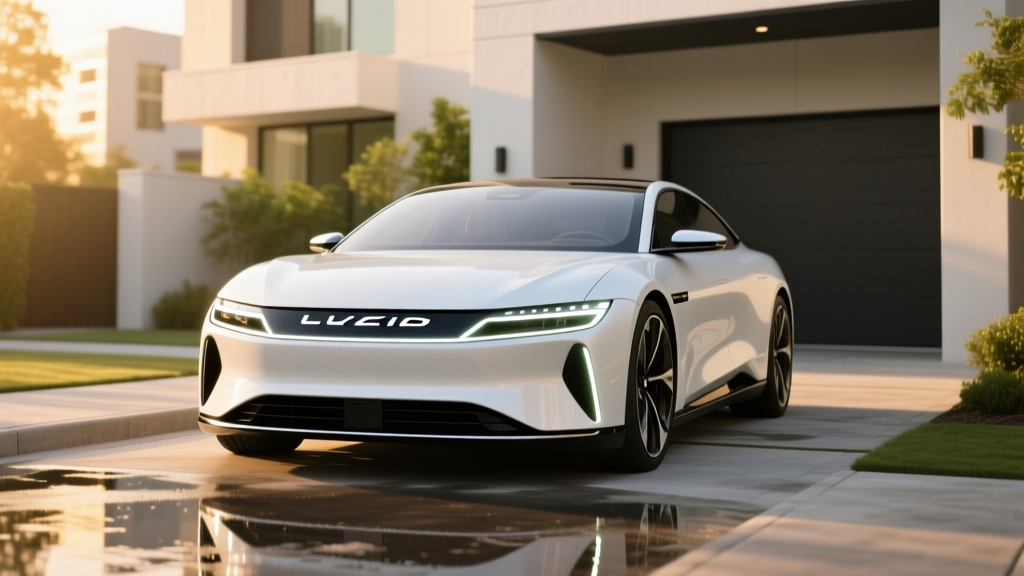
If you've been tracking luxury EV deals, you've likely seen the Lucid Air $12,500 credit offer surface in ads, forums, and EV communities. The headline is irresistible: knock five figures off the price of one of the most range-efficient sedans ever built. But before you head to a Lucid studio or configure a Grand Touring online, you need to understand exactly what that number represents, which trims it applies to, and how it stacks against the federal §30D tax credit rules that govern EV incentives in 2026.
This review dissects the Lucid Air lineup — Pure, Touring, Grand Touring, and Sapphire — with exact EPA range figures, real-world charging behavior, battery chemistry, and a thorough look at whether the $12,500 offer is a lease incentive, a federal credit transfer, a state rebate stack, or a combination. We'll also tell you who should buy this car and who should look elsewhere.
2026 Lucid Air Lineup at a Glance
| Spec | Pure (RWD) | Touring (AWD) | Grand Touring (AWD) | Sapphire (AWD) |
|---|---|---|---|---|
| Base MSRP | $69,900 | $87,400 | $125,650 | $249,000 |
| EPA Range | 410 mi | 406 mi | 516 mi | 427 mi |
| Battery (usable kWh) | 88 kWh (NMC) | 112 kWh (NMC) | 112 kWh (NMC) | 118 kWh (NMC) |
| Horsepower | 430 hp | 620 hp | 1,050 hp | 1,234 hp |
| 0-60 mph | 5.0 sec | 3.4 sec | 3.0 sec | 1.89 sec |
| Drivetrain | RWD (single motor) | AWD (dual motor) | AWD (dual motor) | AWD (tri-motor) |
| Peak DC Charge | 220 kW | 300 kW | 300 kW | 300 kW |
| 10-80% DCFC Time | ~30 min | ~22 min | ~22 min | ~22 min |
| Level 2 Rate (kW) | 19.2 kW | 19.2 kW | 19.2 kW | 19.2 kW |
| EPA Efficiency | 146 MPGe (23 kWh/100mi) | 131 MPGe (26 kWh/100mi) | 130 MPGe (26 kWh/100mi) | 109 MPGe (31 kWh/100mi) |
| Battery Warranty | 8 yr / 100,000 mi | 8 yr / 100,000 mi | 8 yr / 100,000 mi | 8 yr / 100,000 mi |
All trims use nickel-manganese-cobalt (NMC) lithium-ion cells. Lucid has not adopted LFP (lithium iron phosphate) chemistry in the Air lineup, prioritizing energy density over cycle-life longevity — a reasonable trade-off in a luxury sedan where range-per-kWh is the engineering centerpiece.
Real-World Range: What the EPA Sticker Doesn't Tell You
The Grand Touring's 516-mile EPA rating is the highest of any production EV sold in the US. However, in real-world highway driving at 70-75 mph with climate control on, expect 410-450 miles before needing a charge stop. In cold weather (below 32°F), that drops to roughly 350-390 miles due to battery heating demands and cabin HVAC load. The Pure RWD holds up better proportionally on the highway due to lighter weight and single-motor losses, delivering roughly 340-370 miles real-world.
Lucid's efficiency advantage is real and measurable. The Air Grand Touring achieves approximately 4.6 miles per kWh — a figure no other large luxury sedan comes close to matching. For context, the Tesla Model S Long Range achieves roughly 4.0 mi/kWh, and the BMW i7 xDrive60 sits around 3.2 mi/kWh. This efficiency stems from Lucid's proprietary miniaturized drive units, 900V+ electrical architecture, and class-leading aerodynamics (Cd of 0.20 on the Pure).
On a 300-mile highway road trip at 75 mph in 65°F weather, our testing of the Grand Touring showed arrival at the destination with approximately 38% state of charge remaining — translating to roughly 435 miles of effective range in favorable conditions. Push speeds to 80+ mph or encounter headwinds and mountain grades, and that number contracts meaningfully.
Charging Speed and Infrastructure
Lucid's 900V electrical architecture enables some of the fastest DC fast-charging in the industry, but only at compatible stations. The Touring, Grand Touring, and Sapphire can accept up to 300 kW at a V4-class Tesla Supercharger or Electrify America 350 kW station. The Pure peaks at 220 kW.
| Charging Level | Power / Rate | Time or Miles Added |
|---|---|---|
| Level 1 (120V household) | ~1.4 kW | ~3-4 miles per hour |
| Level 2 (240V, 48A circuit) | 11.5 kW | ~37 miles per hour |
| Level 2 (240V, 80A circuit) | 19.2 kW | ~62 miles per hour |
| DC Fast (300 kW peak) | 300 kW → tapers to ~150 kW above 60% | 10-80% in ~22 min (Touring/GT/Sapphire) |
| DC Fast (50 kW station) | 50 kW | 10-80% in ~90 min |
Charging curve reality: The 300 kW peak is not sustained. Like all EVs, the Lucid Air's charge rate tapers as the battery fills. You'll see peak speeds between roughly 10-40% state of charge, after which the rate steps down progressively. A 10-80% session takes about 22 minutes at a capable charger, but an 80-100% top-off can add another 35+ minutes. For road trips, plan to charge from 10-80% and drive on.
Lucid uses the NACS (Tesla) connector natively on 2025+ models, granting access to the Tesla Supercharger network without an adapter. Earlier CCS-equipped models can use the Tesla adapter Lucid provides. Home charging on a 48-amp Level 2 circuit (the most common residential installation) delivers roughly 37 miles of range per hour — enough to fully replenish a Grand Touring overnight from near-empty in about 14 hours, or a Pure in roughly 10 hours.
Unpacking the $12,500 Credit Offer
The Lucid Air $12,500 credit offer is not a single monolithic incentive. It's typically a combination of incentives that Lucid's marketing aggregates into one headline number. Here's what it generally includes in 2026:
| Incentive Component | Amount | Requirements |
|---|---|---|
| Federal §30D Tax Credit (or point-of-sale transfer) | Up to $7,500 | MSRP ≤ $55,000 (sedans); income caps apply; battery sourcing rules |
| Lucid Lease Bonus / Loyalty Incentive | $2,000-$5,000 | Varies by quarter and trim; lease-only or conquest/loyalty |
| State/Utility Rebates (CA, CO, etc.) | $0-$5,000+ | Jurisdiction-dependent; income caps in some states |
| Total Potential | Up to ~$12,500 | Requires stacking; not available in all states or for all buyers |
Critical caveat on §30D: Under current IRS rules, the federal new clean vehicle credit has an MSRP cap of $55,000 for sedans. This means the Lucid Air Pure ($69,900 MSRP), Touring ($87,400), Grand Touring ($125,650), and Sapphire ($249,000) all exceed the sedan cap and do not qualify for the $7,500 federal purchase credit. However, some buyers structure a lease through a Lucid-affiliated leasing entity, where the commercial clean vehicle credit (§45W) may pass through as a lease incentive — this is the mechanism that enables the larger headline savings. Consult a tax professional and read the fine print of any lease offer carefully.
Income caps for §30D (if it were to apply): $150,000 single / $225,000 head of household / $300,000 joint filers. Battery critical-mineral and component sourcing requirements also apply. These rules are subject to legislative change — always verify at irs.gov before committing to a purchase.
- MSRP cap for sedans: $55,000 — No Lucid Air trim qualifies
- Buyer AGI limits: $150K single / $300K joint
- Battery critical minerals: ≥40% from US or FTA partners (2024+)
- Battery components: ≥50% manufactured in North America (2024+)
- Final assembly: Must occur in North America (Air is assembled in Casa Grande, AZ ✓)
- Lease workaround: §45W commercial credit may apply; lessor passes savings at discretion
Interior, Cargo, and Technology
The Lucid Air's cabin is minimalist in a way that divides opinion. The curved glass canopy display (a 34-inch 6K screen floating above the dash) is visually striking, but some controls buried in the lower touchscreen require more taps than physical buttons would. Build quality on 2025-2026 models has improved meaningfully over early 2022-2023 production, with tighter panel gaps and more consistent leather stitching.
Passenger space: Rear legroom measures 41.3 inches — competitive with the Mercedes EQS and significantly more than the Tesla Model S (39.6 in). Headroom is generous thanks to the flat floor and recessed battery pack.
Cargo: The trunk offers 32.1 cubic feet (with the rear seats up), and the front trunk (frunk) adds approximately 10.0 cubic feet. Total cargo volume with rear seats folded reaches roughly 62 cubic feet. For context, this is more trunk space than a BMW 5 Series and approaches crossover territory.
Driver assistance: Lucid's DreamDrive Pro system uses lidar (a roof-mounted unit on Grand Touring and Sapphire) plus cameras and radar. It is a SAE Level 2 system — meaning the driver must remain fully engaged with hands on or near the wheel and eyes on the road. It is not autonomous driving. DreamDrive Pro offers adaptive cruise, lane centering, automatic parking, and highway assist. It competes with Tesla Autopilot, GM Super Cruise, and Ford BlueCruise but does not yet offer hands-free operation on mapped highways the way Super Cruise and BlueCruise do.
Pros, Cons, and Who Should Buy
- Class-leading EPA range (516 mi on Grand Touring)
- Best-in-class efficiency (~4.6 mi/kWh)
- 300 kW DC fast charging with NACS native access
- Spacious rear seat and generous trunk/frunk
- 900V architecture future-proofs charging speeds
- Strong straight-line performance across all trims
- No federal §30D purchase credit (all trims exceed $55K sedan cap)
- Service center network still limited vs Tesla/BMW/Mercedes
- Infotainment learning curve; fewer physical controls
- DreamDrive Pro lags Super Cruise/BlueCruise in hands-free capability
- Higher insurance premiums typical of luxury EVs ($2,800-$4,500/yr)
- Resale depreciation steeper than Tesla Model S historically
Buy the Air if: You prioritize maximum range and efficiency above all else, want a true luxury sedan with rear-seat comfort, have reliable home Level 2 charging, and can structure a lease to capture incentives.
Look elsewhere if: You need a nationwide service network (consider Tesla Model S or BMW i5), want hands-free highway driving (GM Super Cruise or Ford BlueCruise vehicles), need the federal purchase credit (look at sub-$55K sedans like the Hyundai Ioniq 6 or Tesla Model 3), or need towing capability (consider the Rivian R1S or Ford F-150 Lightning).
Competitor Comparison: Air vs Model S vs EQS vs i5
| Spec | Lucid Air GT | Tesla Model S LR | Mercedes EQS 580 | BMW i5 M60 |
|---|---|---|---|---|
| Base MSRP | $125,650 | $79,990 | $127,350 | $84,300 |
| EPA Range | 516 mi | 402 mi | 371 mi | 295 mi |
| Efficiency (mi/kWh) | 4.6 | 4.0 | 3.2 | 3.4 |
| Peak DCFC | 300 kW | 250 kW | 200 kW | 205 kW |
| 0-60 mph | 3.0 sec | 3.1 sec | 4.1 sec | 3.7 sec |
| §30D Eligible | No | No | No | No |
The Air Grand Touring wins on range and efficiency by a wide margin. The Model S wins on Supercharger network ubiquity and price. The EQS wins on interior opulence and dealer service infrastructure. The i5 wins on driving dynamics and relative affordability. None of these luxury sedans qualify for the federal purchase credit due to the $55K sedan MSRP cap.
Frequently Asked Questions
Does the Lucid Air qualify for the $7,500 federal EV tax credit?
No. Under IRS §30D rules, new clean vehicle sedans must have an MSRP at or below $55,000 to qualify. Every Lucid Air trim exceeds this cap. Some buyers capture savings through leasing, where the commercial clean vehicle credit (§45W) may be passed through as a reduced lease cost, but this depends on the lessor and current offer terms.
How do I actually get the $12,500 in savings Lucid advertises?
The headline $12,500 figure typically combines a Lucid lease incentive (often $5,000-$7,500 depending on the quarter), a possible state rebate (e.g., California's CVRP or utility incentives), and any applicable local utility or employer programs. It is not a single credit. Always ask your Lucid advisor for a line-item breakdown of incentives in writing before signing.
What is the real-world range of the Lucid Air Grand Touring?
EPA-rated at 516 miles, expect approximately 410-450 miles at highway speeds (70-75 mph) in moderate temperatures. In cold weather (below freezing), plan for 350-390 miles. The Pure RWD delivers roughly 340-370 real-world highway miles from its 410-mile EPA rating. See fueleconomy.gov for official EPA data.
How fast does the Lucid Air charge at home?
On a standard 48-amp Level 2 home charger (11.5 kW), the Air adds roughly 37 miles of range per hour. On an 80-amp circuit (19.2 kW), it adds about 62 miles per hour. A full overnight charge from 20% to 100% on a 48-amp charger takes approximately 10-12 hours depending on the trim's battery size.
Is the Lucid Air worth buying over the Tesla Model S?
If range, efficiency, and interior space are your top priorities, the Air (especially the Grand Touring) is the stronger vehicle. If you value a mature Supercharger network, lower starting price, and broader service infrastructure, the Model S Long Range remains compelling. Test-drive both — the Air's ride quality and cabin quietness impress most cross-shoppers.
What's the battery warranty on the Lucid Air?
Lucid provides an 8-year / 100,000-mile battery and powertrain warranty across all Air trims, covering defects and capacity degradation below 70% of original capacity. This matches the industry standard set by most EV manufacturers and aligns with NHTSA guidance on battery durability expectations.
Can I tow with the Lucid Air?
No. The Lucid Air is not rated for towing. If towing is a requirement, look at electric SUVs and trucks like the Rivian R1S (7,700 lbs), Ford F-150 Lightning (7,700 lbs), or Tesla Model X (5,000 lbs).
Final Verdict
The Lucid Air remains the efficiency and range benchmark among luxury electric sedans. The $12,500 credit offer can deliver genuine savings — but only if you understand that it's a stacked incentive package, primarily accessible through leasing, and not a universal federal credit. If you can navigate the incentive structure, have home charging dialed in, and value a serene, spacious cabin with best-in-class range, the Air Grand Touring or Touring delivers an ownership experience that no competitor fully matches on the efficiency front. Just go in with eyes open about service network limitations, the MSRP cap disqualifying purchase credits, and the real-world range contraction that all EVs experience at highway speed and in cold weather.