Why Anyone Would LS Swap a Tesla
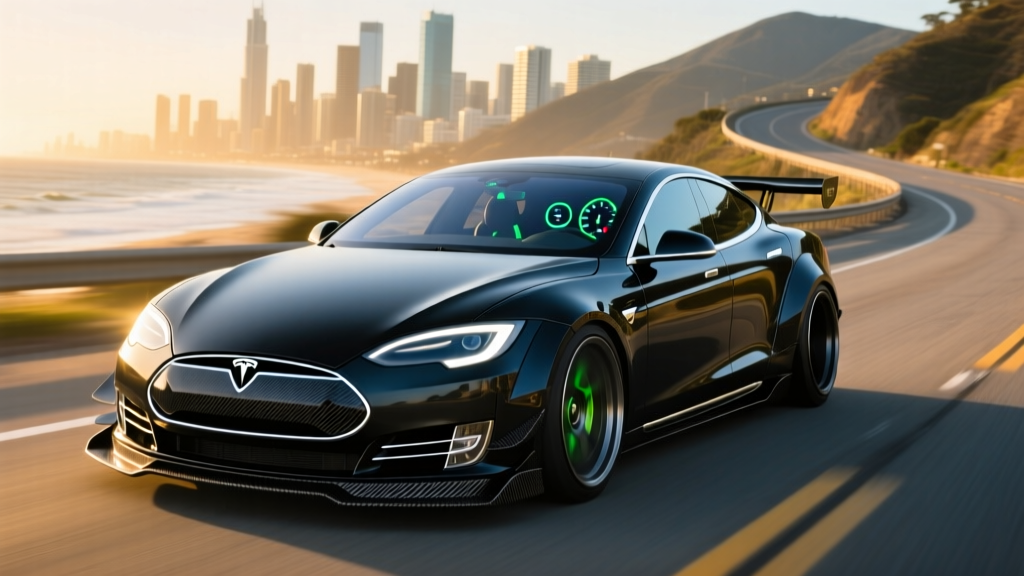
It sounds like automotive heresy: take one of the most efficient electric vehicles ever built, gut its drivetrain, and bolt in a GM LS V8. Yet the "LS swapped Tesla" has become one of the most talked-about builds in the custom car community — a collision of Silicon Valley engineering and hot-rod tradition that generates equal parts fascination and outrage.
The motivation varies. Some builders are chasing the aesthetic of a Tesla body with the visceral sound and mechanical simplicity of a pushrod V8. Others are working with salvage-title Teslas whose battery packs or drive units have failed beyond economical repair, and find that sourcing a used 5.3L LS engine and a manual transmission is cheaper than a Tesla-certified battery replacement. A few are simply doing it for the content — and the reaction.
This article is not a traditional EV review. You won't find an EPA range sticker or a Supercharger compatibility chart here, because an LS swapped Tesla is no longer an electric vehicle. It's a custom internal-combustion conversion built on a Tesla chassis. We'll examine the engineering realities, costs, legal implications, performance data, and whether this build path makes any practical sense compared to buying a conventional performance car — or simply keeping your Tesla electric.
What Exactly Is an LS Swapped Tesla?
An LS swapped Tesla typically starts as a Tesla Model 3 or Model S that has been stripped of its electric motor(s), inverter, and high-voltage battery pack. In their place, builders install a GM LS-family V8 engine — most commonly a 5.3L LM7 or 6.0L LQ4 sourced from a junkyard Silverado or Tahoe — paired with a manual or automatic transmission, a custom driveshaft, and a rear differential.
The LS engine family is the go-to choice because of its compact dimensions, enormous aftermarket support, lightweight aluminum block (on most variants), and junkyard availability for under $1,500. A complete LS swap kit — including engine mounts, wiring harness, ECU, and accessories — can be assembled for $5,000–$12,000 depending on the builder's ambition and whether the engine is stock or modified.
The conversion requires significant fabrication. Tesla's chassis was designed around a skateboard battery platform with no provisions for a longitudinal engine, transmission tunnel, or exhaust routing. Builders must fabricate custom motor mounts, cut through the floor pan for the transmission tunnel, install a fuel tank (often in the frunk space), route exhaust, add a cooling system with radiator, and integrate a standalone ECU like a Holley Terminator X or MegaSquirt.
The Engineering Realities and Major Challenges
The Tesla Model 3's unibody structure presents unique obstacles that don't exist when LS-swapping a Nissan 240SX or a BMW E30. Here are the core engineering challenges:
Weight Distribution and Chassis Balance
A Tesla Model 3 Long Range carries roughly 1,050 lbs of battery low in the chassis, giving it a near 50/50 weight distribution and a center of gravity around 18 inches. Removing the battery pack and drive unit eliminates approximately 1,200 lbs from the floor. The LS engine and transmission add roughly 500–600 lbs over the front axle. The result is a car that is significantly lighter overall (potentially 3,200 lbs vs. the stock 4,034 lbs) but front-heavy, with a higher center of gravity and fundamentally different handling dynamics.
No Transmission Tunnel
Tesla's platform has no transmission tunnel — the floor is flat. Running a driveshaft to a rear differential requires either cutting a channel through the floor structure (which compromises rigidity) or routing the driveshaft below the floor (which reduces ground clearance and requires custom crossmembers). Neither solution is elegant, and both require skilled welding and fabrication.
Electronics Integration
Tesla's vehicle systems — power steering, braking, climate control, infotainment, and body controls — communicate over a proprietary CAN bus network. Removing the high-voltage battery and drive unit throws errors across the system. Builders typically retain the 12V auxiliary system and use standalone controllers to keep basic functions operational, but features like regenerative braking, Tesla's mobile app connectivity, and Autopilot hardware become non-functional. The center touchscreen may remain for basic display purposes, but its integration with vehicle systems is severely limited without the original powertrain.
Cooling, Fuel, and Exhaust
An LS V8 generates substantially more heat than Tesla's electric drivetrain. Builders must install a front-mounted radiator with electric fans, an oil cooler, and potentially a transmission cooler — all in a front trunk area originally designed for storage. The fuel system requires an in-tank or inline fuel pump, fuel lines run to the engine, and a return line or dead-head regulator. Exhaust routing from a V8 through a chassis with no existing exhaust通道 requires custom headers, catalytic converters (if emissions-legal), and mufflers.
Performance Numbers: LS V8 vs. Stock Tesla
Here's where the comparison gets interesting — and where the LS swap's appeal becomes clearer to a certain type of enthusiast.
| Metric | LS Swapped Model 3 (5.3L, stock) | Model 3 RWD (2026) | Model 3 Long Range AWD (2026) | Model 3 Performance (2026) |
|---|---|---|---|---|
| 0–60 mph | ~5.5–6.0 sec (est.) | 5.8 sec | 4.2 sec | 2.9 sec |
| Horsepower | ~350 hp (at crank) | 271 hp | 346 hp | 510 hp |
| Torque (lb-ft) | ~380 (at crank) | 317 | 389 | 546 |
| Curb Weight (est.) | ~3,200 lbs | 3,862 lbs | 4,034 lbs | 4,065 lbs |
| Power-to-Weight | ~9.1 lbs/hp | 14.3 lbs/hp | 11.7 lbs/hp | 8.0 lbs/hp |
| Drivetrain | RWD (manual or auto) | RWD | AWD (dual motor) | AWD (dual motor) |
The LS swapped Model 3 won't beat a stock Performance model to 60 mph. Electric motors deliver instant torque with no traction-management drama, while a V8 through an open differential (Tesla's rear subframe wasn't designed for a limited-slip) will struggle to put power down. But the LS swap's power-to-weight ratio is genuinely impressive, and the driving experience — the sound, the mechanical engagement, the manual shifter — is something no stock Tesla can replicate.
With bolt-ons (long-tube headers, cam upgrade, intake, tune), a junkyard 5.3L can reliably produce 400–450 hp at the crank, dropping 0–60 times into the low 5-second range. Turbocharged builds pushing 600+ hp exist, but at that point the Tesla chassis is well beyond its design limits without significant reinforcement.
Cost Breakdown: What Does an LS Swapped Tesla Actually Cost?
This is where the reality check begins. An LS swapped Tesla is not a budget build, even when starting with a salvage-title donor car.
| Component | Budget Build | Quality Build |
|---|---|---|
| Salvage-title Tesla Model 3 (wrecked/battery failure) | $8,000–$14,000 | $14,000–$20,000 |
| LS engine (junkyard 5.3L LM7) | $800–$1,500 | $2,500–$5,000 (rebuilt/forged) |
| Transmission (T56 Magnum or 4L80E) | $1,500–$2,500 | $3,000–$5,000 |
| Standalone ECU + wiring harness | $1,500–$2,500 | $2,500–$4,000 |
| Custom fabrication (motor mounts, trans tunnel, crossmembers) | $3,000–$5,000 | $6,000–$12,000 |
| Cooling system (radiator, fans, hoses, oil cooler) | $800–$1,500 | $1,500–$3,000 |
| Fuel system (tank, pump, lines, injectors) | $600–$1,200 | $1,200–$2,500 |
| Exhaust (headers, cats, piping, mufflers) | $800–$1,500 | $2,000–$4,000 |
| Rear differential + axles + driveshaft | $1,500–$2,500 | $3,000–$5,000 |
| Electronics integration + 12V system | $500–$1,500 | $2,000–$4,000 |
| Labor (if not DIY — 200–400 hours at $75–$125/hr) | $0 (DIY) | $15,000–$50,000 |
| Total Estimated Cost | $19,000–$33,700 | $55,700–$114,500 |
A DIY builder with strong fabrication skills can complete the project for roughly $20,000–$35,000 all-in, assuming a salvage-title donor and a junkyard LS. But that's hundreds of hours of skilled labor, and the result is a one-off custom car with no warranty, no crash-test validation, and questionable legality depending on your state.
For context, a brand-new 2026 Tesla Model 3 Long Range AWD starts at approximately $42,490 before any incentives. A used Chevrolet Camaro SS (6.2L V8, 455 hp, 0–60 in 4.0 seconds) can be had for $25,000–$35,000 on the used market with full factory reliability, emissions compliance, and safety systems.
Legality, Registration, and the Tax Credit Question
Federal EV Tax Credit (§30D) — Absolutely Not
An LS swapped Tesla does not qualify for the IRS §30D federal EV tax credit. The vehicle no longer has an electric drivetrain, a battery pack, or any plug-in capability. It is, by every legal definition, a gasoline-powered custom vehicle. The up-to-$7,500 credit applies only to new qualifying plug-in electric vehicles meeting battery-sourcing, MSRP cap ($55,000 for sedans), and buyer income limits. None of that applies here.
Registration and Emissions
Registering an LS swapped Tesla is complicated and varies dramatically by state:
- California, New York, and CARB states: Removing an emissions-compliant electric drivetrain and installing a gasoline engine is essentially impossible to register legally for street use. You would need to certify the engine meets current emissions standards for the vehicle's model year — a process that costs tens of thousands of dollars in testing.
- Texas, Florida, and states without emissions testing: Registration is more achievable, typically through a rebuilt/salvage title inspection or a custom/kit car registration pathway. You'll still need to pass a VIN inspection and provide proof of insurance.
- Kit car / specially constructed vehicle (SPCNS) pathways: Some states allow registration of custom-built vehicles through a special process that may include a smog referee inspection (in California, via the Bureau of Automotive Repair), a state-assigned VIN, and proof of component sourcing.
Before starting any build, check your state's DMV requirements for engine swaps, salvage-title rebuilding, and specially constructed vehicles. Building a car you can't legally register is an expensive mistake.
Insurance
Standard insurers like GEICO or Progressive will generally not insure a custom LS-swapped vehicle under a normal policy. You'll need a specialty insurer (Hagerty, Grundy, American Modern) that covers modified and custom vehicles, and premiums will reflect the car's custom value and limited crash-test data. Expect $1,500–$3,000/year for agreed-value coverage on a $30,000–$40,000 build.
Who Is This Build Actually For?
Let's be direct: the LS swapped Tesla is not a rational transportation decision. It's a passion project, and it suits a very specific type of builder:
- The fabricator-enthusiast who has a well-equipped garage, welding skills, and 300+ hours of free time. This person builds for the process, not just the result.
- The content creator who understands that an LS-swapped Model 3 generates millions of views on YouTube and Instagram. The build is a marketing investment.
- The salvage-title opportunist who acquired a wrecked Tesla cheaply and views the LS swap as more affordable and reliable than attempting a high-voltage system repair.
- The V8 purist who loves Tesla's minimalist design but wants the sound, feel, and mechanical engagement that only a pushrod V8 can deliver.
If your goal is affordable, reliable daily transportation, this build fails on every metric. A stock Model 3 RWD at $38,990 (before any applicable credits) offers 363 miles of EPA range, near-zero maintenance, Supercharger access, and a 5.8-second 0–60 time — all with a full factory warranty and zero fabrication required.
LS Swapped Tesla vs. Alternatives: What Else Could You Buy?
| Vehicle | Approx. Price | 0–60 mph | HP | Key Advantage |
|---|---|---|---|---|
| 2026 Tesla Model 3 Performance | $54,990 | 2.9 sec | 510 | Warranty, Supercharger, tech |
| Used Camaro SS (2020–2024) | $25,000–$35,000 | 4.0 sec | 455 | Factory V8, reliable, emissions-legal |
| Used Mustang GT (2021–2024) | $28,000–$38,000 | 4.2 sec | 460 | Coyote V8, huge aftermarket |
| Used BMW M3 (F80, 2015–2018) | $30,000–$45,000 | 3.9 sec | 425 | 4-door practicality, handling |
| LS-swapped Nissan 240SX / S14 | $15,000–$25,000 | ~5.0 sec (est.) | 350+ | Proven swap platform, RWD, lightweight |
Every alternative above offers better reliability, legal compliance, insurance availability, and resale value than an LS swapped Tesla. The Tesla swap's only unique advantage is novelty — you'll have the only one at any car show.
The Verdict: Cool Project, Terrible Daily Driver
The LS swapped Tesla occupies a fascinating space in car culture. It represents the tension between the electric future and the internal-combustion past, executed by builders who refuse to accept that a Tesla chassis can only serve one purpose. As a weekend project, a show car, or a content piece, it has undeniable appeal.
As a rational vehicle purchase? It fails. You'll spend $20,000–$50,000+ to create a car that is slower than a stock Model 3 Performance, louder than any Tesla owner expects, potentially illegal in your state, uninsurable through standard carriers, and worth a fraction of its build cost at resale. The stock Tesla you sacrificed was a more capable car in nearly every measurable metric.
If you want a V8, buy a Camaro SS. If you want a Tesla, keep it electric. If you want both, park them next to each other in your garage. The LS swapped Tesla is best appreciated as entertainment — not transportation.
Pros of an LS Swapped Tesla
- Unique build — guaranteed attention at any car meet
- Significantly lighter than stock Tesla (~800 lbs weight reduction)
- V8 sound and mechanical engagement EVs can't replicate
- Cheap junkyard LS power (350+ hp for under $1,500)
- Strong YouTube/social media content potential
- Viable path for salvage-title Teslas with failed batteries
Cons of an LS Swapped Tesla
- Extremely complex fabrication — no bolt-on kits exist
- Not emissions-legal in most states; registration is difficult
- No federal or state EV tax credits apply
- Loses all Tesla tech: Autopilot, OTA updates, Supercharger, app
- Slower than a stock Model 3 Performance in most metrics
- Poor resale value — niche market for a one-off custom
- Insurance requires specialty carrier at higher premiums
- Compromised crash safety (original structure modified)
Frequently Asked Questions
Has anyone actually completed an LS swapped Tesla?
Yes. Several high-profile builds have been documented on YouTube and automotive forums. Notable examples include builds by channels like WhistlinDiesel and various independent fabricators. Most use a Model 3 as the donor chassis due to its lower salvage cost and simpler construction compared to the Model S.
Can you put a V8 in a Tesla Model S?
Technically yes, but the Model S is a significantly more complex build. It's heavier, uses an air suspension system, and has more integrated electronics. The larger engine bay offers slightly more room, but the aluminum-intensive construction makes fabrication more difficult. Most builders prefer the Model 3 for its simpler steel unibody.
How much does it cost to LS swap a Tesla?
A DIY LS swapped Tesla Model 3 build costs approximately $19,000–$34,000 including the salvage-title donor car, junkyard LS engine, transmission, fabrication, and all supporting systems. A professionally built example can exceed $80,000–$100,000 when labor is factored in.
Is an LS swapped Tesla street legal?
It depends entirely on your state. In emissions-exempt states, registration through a salvage-rebuilt or specially-constructed-vehicle pathway is possible. In California and CARB states, making the swap emissions-legal is extremely difficult and expensive. Always research your local DMV and emissions requirements before beginning a build.
Would it be faster to just keep the Tesla electric?
For straight-line acceleration, yes. A stock 2026 Model 3 Performance hits 60 mph in 2.9 seconds — faster than nearly any LS-swapped build could achieve without forced induction and drag-spec tires. The LS swap trades outright speed for sound, engagement, and mechanical character.
Does an LS swapped Tesla qualify for any EV incentives?
No. Once the electric drivetrain and battery are removed, the vehicle is classified as a gasoline-powered custom car. It does not qualify for the federal §30D EV tax credit, any state EV rebates, HOV lane access, or reduced electricity-rate programs. You'll pay full gas prices and full registration fees.