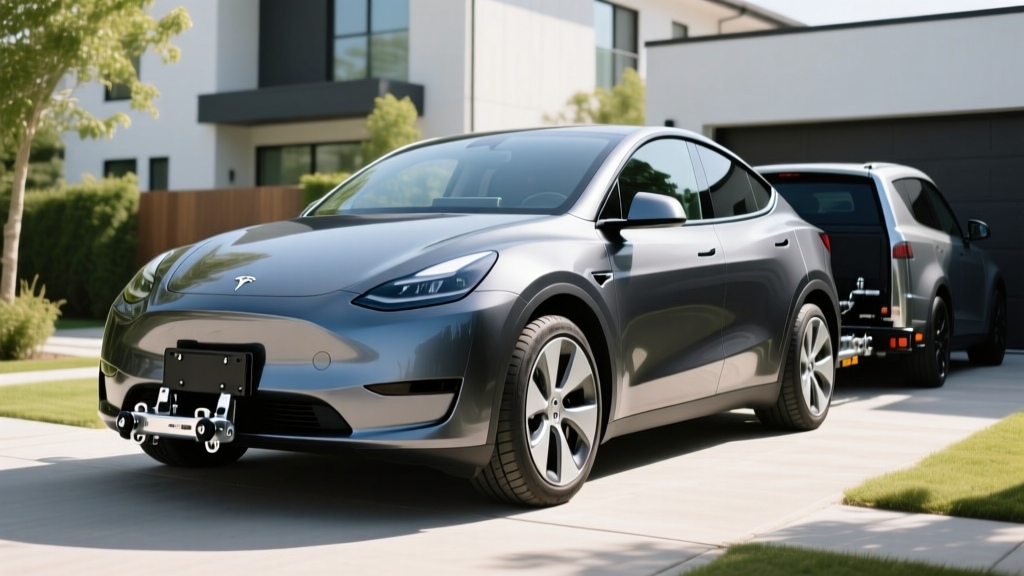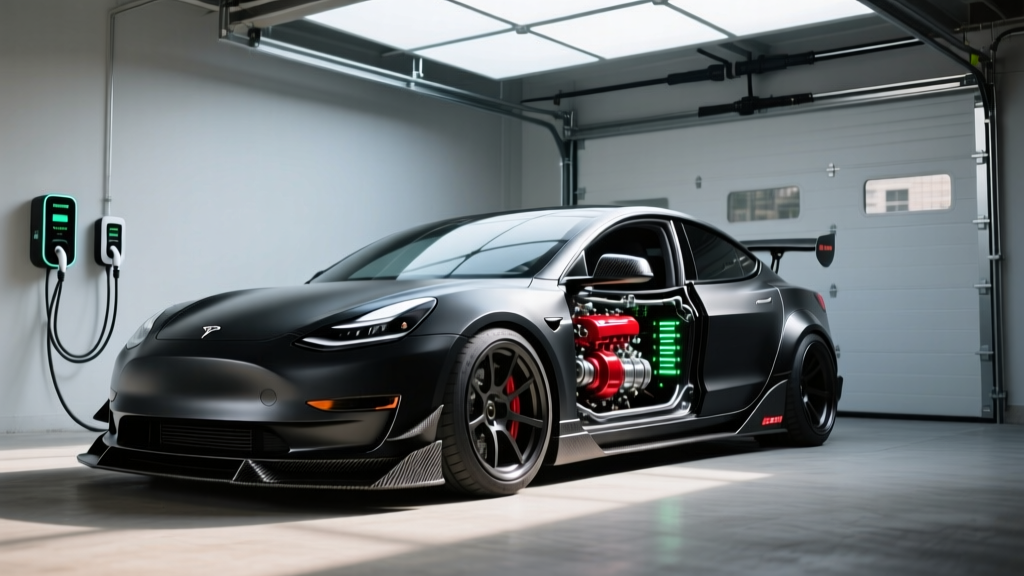
The LS Swap Tesla Trend: Why Enthusiasts Are Going the Wrong Direction
If you've spent any time in automotive forums or YouTube build channels, you've seen the provocative thumbnail: a Tesla Model 3 or Model S with its electric powertrain ripped out and a GM LS V8 dropped between the frame rails. The "LS swap Tesla" concept has become a meme in car culture — part rebellion against electrification, part genuine engineering curiosity. But in 2026, with Tesla's used prices at historic lows and the aftermarket EV ecosystem more mature than ever, does converting a purpose-built electric vehicle back to internal combustion actually make sense?
The short answer, for nearly every buyer and builder: no. But the long answer involves real engineering trade-offs, surprising cost realities, and a few edge cases where the idea isn't entirely absurd. This guide breaks down exactly what an LS swap Tesla conversion entails, what it costs, what you lose, and what you should consider instead.
What Does an LS Swap Tesla Conversion Actually Involve?
An LS swap refers to replacing a vehicle's original engine with one of General Motors' legendary LS-family small-block V8 engines — typically an LS1, LS2, LS3, or LS7 — prized for their compact dimensions, reliability, and massive aftermarket support. In a traditional LS swap, builders drop these engines into older Nissan 240SXs, Mazda Miatas, BMW E30s, or virtually any rear-wheel-drive chassis that can accept the torque.
Doing this to a Tesla is a fundamentally different challenge. A Tesla Model 3, for instance, wasn't designed around an engine bay. It was designed around a skateboard platform: a flat battery pack under the floor, a rear-mounted (or dual) electric motor, no transmission tunnel, no exhaust routing, no fuel tank location, and no radiator support. Here's what a conversion actually requires:
- Removing the battery pack: The Model 3 Long Range carries an ~82 kWh NMC lithium-ion pack weighing roughly 1,060 lbs. Removing it eliminates the vehicle's structural floor reinforcement.
- Removing the electric motor(s) and inverter: The rear permanent-magnet synchronous reluctance motor (or dual-motor setup) must come out, along with all high-voltage cabling.
- Fabricating an engine bay: The Model 3's "frunk" area has no radiator support, no engine mounts, and no structural crossmembers designed for a 400+ lb iron-block V8. Custom subframes and motor mounts must be fabricated.
- Adding a transmission: Teslas use a single-speed reduction gear. An LS V8 requires a multi-speed transmission (typically a T-56 Magnum 6-speed or a 4L80E automatic), which means fabricating a transmission tunnel through the battery compartment area.
- Fuel system: A fuel cell or custom fuel tank must be mounted, with fuel lines routed safely through a chassis never designed for flammable liquid.
- Exhaust routing: Headers, catalytic converters, and mufflers must be custom-fabricated through a floor pan designed to be sealed around a battery pack.
- Cooling system: A radiator, fans, and coolant routing must be engineered into a front end with no grille opening designed for airflow.
- Electronics integration: The Tesla's entire CAN bus system, instrument cluster, HVAC, and body control modules expect to communicate with an electric powertrain. Getting gauges, power steering, and climate control functional requires standalone aftermarket systems.
The Real Cost Breakdown: LS Swap Tesla vs. Stock EV
The financial argument against an LS swap Tesla becomes overwhelming once you total the parts and labor. Here's a realistic 2026 cost breakdown based on builder forums and fabrication shop quotes:
| Component / Service | Estimated Cost |
|---|---|
| Used Tesla Model 3 (2018-2023, salvage/high-mile) | $12,000 – $18,000 |
| LS3 crate engine (GM Performance, 430 hp) | $8,500 – $10,000 |
| T-56 Magnum 6-speed transmission | $3,200 – $3,800 |
| Custom engine subframe & motor mounts | $3,000 – $5,000 |
| Fuel cell, lines, pump, injectors | $1,500 – $2,500 |
| Custom exhaust fabrication | $2,000 – $3,500 |
| Cooling system (radiator, fans, plumbing) | $1,200 – $2,000 |
| Standalone ECU (Holley Terminator X or similar) | $1,500 – $2,200 |
| Wiring harness & electronics integration | $2,500 – $4,000 |
| Custom driveshaft & rear differential adapter | $1,500 – $2,500 |
| Labor (200-400 hours at $85-$120/hr) | $17,000 – $48,000 |
| Total Estimated Build Cost | $55,400 – $101,500 |
For context, a 2026 Tesla Model 3 Long Range AWD starts at approximately $42,380 MSRP, delivers 363 miles of EPA range, accelerates to 60 mph in 4.2 seconds, and qualifies for the full §30D federal tax credit of up to $7,500 (subject to income and sourcing requirements). After the credit, you're looking at roughly $34,880 — a fully functional, warrantied, daily-drivable vehicle that costs less than half the minimum LS swap build.
Performance Comparison: LS3 V8 vs. Tesla Electric Powertrain
The most common justification for an LS swap Tesla is performance. The argument goes: "An LS3 makes 430 horsepower, sounds incredible, and I can tune it to 500+ hp easily." That's true in isolation. But compare it to what you're removing:
| Metric | LS3 Swap (Est.) | Model 3 Long Range AWD | Model 3 Performance |
|---|---|---|---|
| Horsepower | 430 hp (stock LS3) | 384 hp | 510 hp |
| Torque | 424 lb-ft | 346 lb-ft | 546 lb-ft |
| 0-60 mph | ~5.0-5.5 sec (est.) | 4.2 sec | 2.9 sec |
| Drivetrain | RWD (custom) | Dual Motor AWD | Dual Motor AWD |
| Weight (est.) | ~3,600-3,800 lbs | 4,034 lbs | 4,065 lbs |
| EPA Range / Fuel Economy | N/A (~15-18 mpg est.) | 363 mi / 132 MPGe | 315 mi / 119 MPGe |
| Emissions Compliance | Non-compliant (off-road only) | Full 50-state legal | Full 50-state legal |
The reality is stark. Even with a 430 hp LS3, the swapped Tesla will likely be slower to 60 mph than a stock Model 3 Long Range — because the electric powertrain delivers instant torque with no traction-limited wheelspin, no shift interruptions, and a sophisticated all-wheel-drive system. The Model 3 Performance at 2.9 seconds is in supercar territory that no naturally aspirated LS3 can approach without forced induction.
Where the LS3 wins, of course, is sound, engagement, and the tactile thrill of a V8. That's subjective and valid — but it's an emotional argument, not a performance-per-dollar one.
Legal, Registration, and Insurance Reality
This is where most LS swap Tesla fantasies die. The EPA's vehicle emissions regulations and state-level smog laws make it effectively illegal to remove a certified zero-emission powertrain and replace it with an internal combustion engine for road use.
- EPA tampering: Under the Clean Air Act, removing an emissions-certified powertrain and replacing it with a non-certified one constitutes tampering. The EPA has actively pursued enforcement against shops performing diesel and EV deletions.
- State registration: California (CARB), New York, Colorado, and other states with strict emissions programs will not register a vehicle whose powertrain doesn't match its original certification. A Tesla VIN is registered as a zero-emission vehicle (ZEV); re-registering it as ICE requires a custom/assembled vehicle title in most states, which is a multi-month process with inspection requirements.
- Insurance: Most mainstream insurers will not cover a powertrain-swapped vehicle. Specialty insurers like Hagerty or Grundy American may offer agreed-value policies, but only for documented, professionally built vehicles — and premiums reflect the custom nature.
- Safety inspections: The Tesla Model 3 earned a 5-star NHTSA safety rating with its battery pack as a structural element. Removing 1,060 lbs of battery from the floor raises the center of gravity, alters crash dynamics, and eliminates the structural rigidity that contributed to that rating. No testing body has validated a swapped configuration.
What You Actually Lose in an LS Swap Tesla
Beyond legality and cost, you sacrifice the core advantages that made the Tesla desirable in the first place:
- Range and fuel cost: The Model 3 Long Range delivers 363 miles per charge at roughly $0.04-$0.06 per mile (home charging at $0.13/kWh national average). An LS3 at 16 mpg with $3.50/gallon fuel costs ~$0.22 per mile — a 4-5x increase in "fuel" cost.
- Maintenance: Electric powertrains have roughly 20 moving parts vs. 2,000+ in an ICE drivetrain. No oil changes, no timing chains, no exhaust leaks, no catalytic converter failures, no transmission fluid services.
- Over-the-air updates: Tesla's software stack, navigation, and Autopilot features are tied to the electric powertrain architecture. An LS swap renders most of this functionality inert.
- Tax credits and incentives: The §30D federal tax credit, state rebates, HOV lane access, and reduced registration fees all apply to the EV as certified. A swapped vehicle loses all of these.
- Resale value: A stock Tesla has a known market value. A custom-swapped vehicle has an audience of perhaps a few hundred buyers nationwide, and most will discount the build cost heavily.
The Better Alternative: Buy a Tesla, Buy an LS Car Separately
Here's the pragmatic enthusiast's solution that costs less and delivers more:
| Scenario | Total Cost | What You Get |
|---|---|---|
| LS Swap Tesla (minimum build) | $55,000+ | One non-street-legal vehicle, no warranty, questionable safety |
| 2026 Model 3 LR ($34,880 after credit) + 2002 Camaro Z28 LS1 ($8,000-$12,000) | $43,000-$47,000 | Daily-driver EV + dedicated V8 weekend car, both street-legal |
| 2026 Model 3 LR ($34,880) + C5 Corvette LS1 ($12,000-$16,000) | $47,000-$51,000 | EV daily + 350 hp V8 sports car, both fully functional and legal |
For less money than a single LS-swapped Tesla, you get a modern 363-mile EV for commuting (at pennies per mile) AND a purpose-built V8 machine designed from the factory to handle that power — with proper engine bays, cooling, exhaust routing, and safety structures.
The Rare Cases Where It Makes Sense
To be fair, there are narrow scenarios where an LS swap Tesla isn't completely irrational:
- Salvage-title Tesla with a destroyed battery and drivetrain: If you acquire a flood-damaged or collision-salvage Model 3 for $5,000-$7,000 with a non-functional battery (replacement cost: $12,000-$16,000+), the math shifts slightly. You're starting with a shell, not destroying a functional EV.
- Dedicated track car: For a drift car or time-attack build where emissions legality doesn't matter and you want the Model 3's aluminum-intensive chassis with V8 power, the swap has engineering merit.
- Content creation: YouTube builds generate revenue. An LS swap Tesla is click-worthy. As a business expense with entertainment ROI, it can justify itself.
- Art / statement builds: Some builds exist as commentary or art. The absurdity is the point.
Even in these cases, builders should understand they're creating a one-off show piece, not a practical vehicle.
Frequently Asked Questions
Has anyone actually completed an LS swap Tesla?
A few builders have attempted partial conversions, but no well-documented, fully completed, street-driven LS swap Tesla exists with verified performance data. Most projects stall at the fabrication stage due to the complexity of integrating the CAN bus electronics and structural concerns. Rich Rebuilds and similar YouTube channels have explored the concept, but completed running examples remain extremely rare.
Can you put a V8 in a Tesla Model S?
The Model S presents similar challenges to the Model 3 but at higher cost. The Model S battery pack is even larger (~100 kWh in Long Range trims), and the chassis is more complex with an adaptive air suspension system. The same legal, structural, and cost barriers apply — amplified by the higher starting cost of the donor vehicle.
What about the reverse: putting a Tesla motor into a classic car?
This is far more common and practical. Companies like EV West, Legacy Motorworks, and Lunaz offer Tesla-sourced or aftermarket EV drivetrain conversions for classic Porsches, Land Rovers, and muscle cars. These "EV swaps" retain the classic body while gaining electric propulsion — and they're generally more accepted by the enthusiast community because they add functionality rather than removing it.
Does an LS-swapped Tesla qualify for any tax credits?
No. The §30D federal EV tax credit applies only to new, certified battery-electric vehicles meeting specific battery sourcing, MSRP, and buyer income requirements. A converted vehicle with an ICE powertrain is no longer an EV and qualifies for zero electrification incentives. You'd also lose any state-level EV rebates, HOV lane stickers, and reduced electricity rates.
How much does a Tesla battery replacement cost vs. an LS swap?
As of 2026, a Tesla Model 3 battery replacement runs approximately $12,000-$16,000 at a service center. While expensive, this restores the vehicle to full factory function with warranty, compared to $55,000+ for an LS swap that produces a non-street-legal custom. Tesla's battery warranty covers 8 years / 120,000 miles (Long Range) with a 70% capacity retention threshold, meaning most owners will never need a replacement during the warranty period.
Is it legal to remove an electric motor and install a gas engine?
For off-road and closed-course use, there are generally no restrictions. For street use, federal EPA regulations prohibit tampering with a certified emissions system — and removing a zero-emission powertrain to install a combustion engine is explicitly considered tampering. State-level enforcement varies, but states with CARB-aligned emissions programs (CA, NY, CO, WA, OR, and others) will not register the vehicle for road use.
The Verdict: Keep the Tesla Electric, Buy a Separate V8
The LS swap Tesla is a fascinating thought experiment and a compelling YouTube thumbnail. But the engineering reality, cost analysis, legal barriers, and safety concerns make it one of the least practical modifications in automotive history. You'd spend $55,000-$100,000+ to create a slower, less reliable, non-street-legal vehicle with no warranty, compromised safety, and virtually no resale market.
If the sound and soul of a V8 calls to you — and it should, because the LS engine family is genuinely brilliant — the smart move in 2026 is to keep the Tesla as your daily EV (cheap to run, warrantied, legal, 363 miles of range) and buy a dedicated LS-powered car for weekends. A C5 Corvette, fourth-gen Camaro, or even a Fox-body Mustang with an LS swap will give you the visceral V8 experience for a fraction of the cost, in a chassis actually designed for it.
The future of enthusiast driving isn't either/or. It's both.