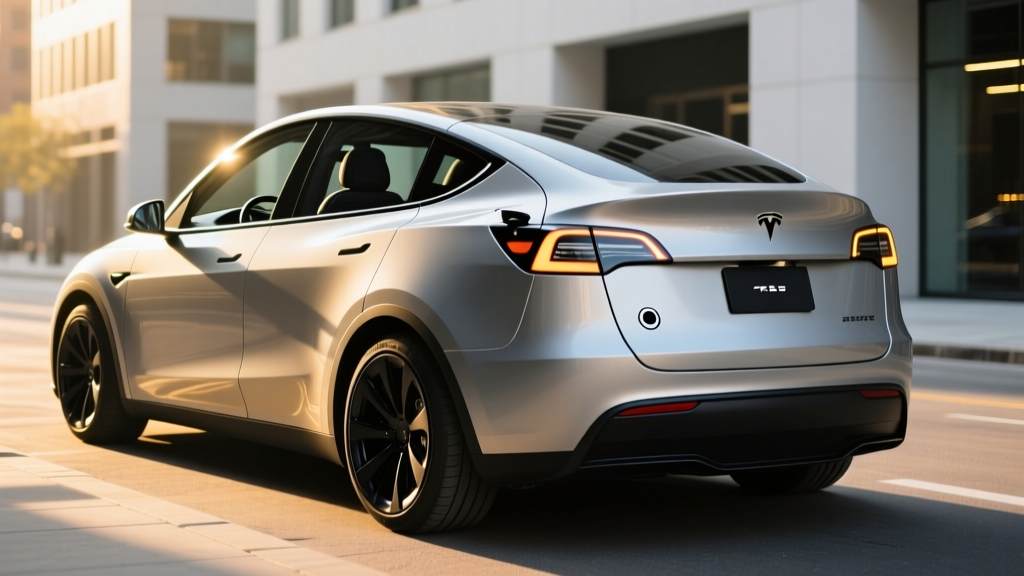
The Tesla Model Y has been the best-selling EV in America for years, but a growing niche of owners is chasing a different look and feel: the lowered Model Y. Whether through Tesla's occasional factory sport-suspension tweaks or, more commonly, aftermarket lowering springs and coilovers, dropping the ride height of a Model Y changes the vehicle's character in ways that go beyond aesthetics. This review examines what a lowered 2026 Model Y actually delivers in range, efficiency, charging behavior, and daily usability — and where the compromises land.
The 2026 Tesla Model Y: Baseline Specs Before the Drop
Before evaluating any lowered setup, it's essential to understand the stock platform. The 2026 Model Y continues on the refreshed "Juniper" architecture introduced for the 2025 model year, with updated styling, a ventilated front seat row, ambient lighting, and revised suspension tuning from Tesla's engineering team. Here's what the standard Long Range AWD variant brings to the table before any modifications:
| Spec | Value |
|---|---|
| EPA Range | 320 miles |
| Battery Capacity (usable) | ~78.1 kWh (NMC chemistry) |
| Drivetrain | Dual-motor AWD |
| Horsepower | 384 hp (combined) |
| 0–60 mph | 4.8 seconds |
| Peak DC Fast-Charge Rate | 250 kW (V3 Supercharger) |
| 10–80% DC Charge Time | ~25 minutes |
| Level 2 Home Charging | 11.5 kW (~44 mi/hr) |
| Efficiency (EPA) | 122 MPGe / 28 kWh/100 mi |
| Cargo Volume (rear seats up) | 30.2 cu ft |
| Cargo Volume (rear seats folded) | 72.1 cu ft |
| Rear Legroom | 41.6 inches |
| Battery & Drive Unit Warranty | 8 years / 120,000 miles |
| Base MSRP (Long Range AWD) | $48,990 |
For reference, the rear-wheel-drive Standard Range trim starts at $44,990 with an EPA range of 279 miles, while the Performance variant (where available) starts at $52,490 with 285 miles of range and a 3.5-second 0–60 time. Data sourced from fueleconomy.gov and Tesla's official specifications.
What Happens to Range When You Lower a Model Y?
This is the question every prospective lowered-Model-Y owner asks first. The answer is nuanced: lowering the car can marginally improve aerodynamic efficiency, but the real-world outcome depends heavily on the specific suspension setup, wheel/tire combination, and alignment changes that come with the drop.
Stock Long Range AWD: EPA 320 mi. Real-world highway driving at 70–75 mph typically yields 270–290 mi. In cold weather (below 32°F), expect 220–260 mi depending on cabin heating use and preconditioning habits.
Lowered (aftermarket springs, ~1–1.5" drop, stock wheels): No official EPA retest exists for aftermarket modifications. Aerodynamic drag reduction from a lower ride height may recover 1–3% efficiency on the highway — potentially 3–8 additional miles. However, if lowering is paired with wider aftermarket wheels or stickier tires (a common combo), rolling resistance increases can erase that gain entirely, netting a 2–5% loss versus stock.
Bottom line: A lowered Model Y on stock wheels and properly aligned will roughly match or slightly beat the stock EPA figure on the highway. A lowered Model Y on aggressive aftermarket wheels will likely drop to 295–310 mi EPA-equivalent, with real-world highway range of 250–275 mi.
The physics here are straightforward. A lower center of gravity reduces the frontal area and underbody turbulence, which matters at highway speeds where aerodynamic drag dominates energy consumption. But suspension geometry changes — particularly increased negative camber from lowering without corrective arms — can accelerate tire wear and slightly increase rolling resistance. If you lower the car, budget for an aftermarket camber-adjustment kit (roughly $200–$400) to keep tire wear even.
Charging Speed and Behavior: Does Lowering Affect It?
Suspension modifications don't alter the battery management system, thermal management, or charge controller, so a lowered Model Y charges identically to a stock one. What matters is understanding the actual charging experience:
| Charging Level | Power | Speed (Approx.) | Typical Use Case |
|---|---|---|---|
| Level 1 (120V household) | 1.4–1.9 kW | ~5–7 mi/hr | Emergency / overnight trickle |
| Level 2 (240V home Wall Connector) | 11.5 kW | ~44 mi/hr | Daily home charging; full charge in ~7 hr |
| DC Fast Charge (Tesla V3 Supercharger) | Peak 250 kW | 10–80% in ~25 min | Road trips; ~175 mi added in 15 min |
| DC Fast Charge (V4 Supercharger) | Peak 250+ kW (cable-dependent) | Similar to V3 for Model Y | Newer stations; future CCS/NACS compatibility |
A critical note on the DC fast-charging curve: the Model Y peaks at 250 kW only at low states of charge (roughly 5–25% SoC) and optimal battery temperature. Above 50% SoC, the rate tapers significantly — typically to 100–120 kW by 60% and below 50 kW past 85%. This means the advertised 10–80% time of ~25 minutes is realistic, but charging from 80–100% adds another 20+ minutes. For road-trip efficiency, plan stops around the 15–80% window.
Preconditioning the battery before arriving at a Supercharger (initiated automatically when you navigate to a charger in the Tesla nav system) remains essential. Without preconditioning, peak charge rates can drop to 120–150 kW, extending a 10–80% session to 35–40 minutes, especially in cold weather.
Ride Quality, Handling, and the Daily-Drive Reality
The stock 2026 Model Y Juniper refresh already rides notably better than the 2020–2024 models, thanks to revised damper tuning, additional sound deadening, and frequency-selective damping. So what happens when you lower it?
Aftermarket lowering springs (brands like Eibach, H&R, or Mountain Pass Performance) typically drop the car 0.8–1.5 inches. The result:
- Handling: Noticeably reduced body roll in corners. The Model Y's 4,400-lb curb weight feels more planted. Turn-in response sharpens, especially when paired with performance tires.
- Ride comfort: Firmness increases. On well-maintained highways, the difference is subtle. On broken pavement, speed bumps, and steep driveways, the reduced suspension travel becomes obvious. Scraping the front splitter or underbody on steep inclines is a real concern with drops exceeding 1.2 inches.
- Ground clearance: Stock Model Y ground clearance is approximately 6.6 inches. A 1.2-inch drop brings it to ~5.4 inches — comparable to a Toyota Camry. Manageable for most situations, but snow-accumulated roads, rough parking lots, and speed bumps demand attention.
- Noise: Lowering itself doesn't increase cabin noise, but many owners pair the drop with larger or wider wheels, which do increase road noise. The Juniper cabin is well-insulated, but 21-inch wheels with low-profile tires will transmit more surface texture than the stock 19-inch Gemini wheels.
Coilovers (adjustable height and damping, $1,500–$3,500 installed) offer more tuning flexibility and can actually match or improve stock ride quality if you invest in quality units (e.g., KW V3 or MPP Comfort). Budget coilovers under $800 typically degrade ride quality significantly.
Pricing, Tax Credits, and Total Modification Cost
Lowering a Model Y is an aftermarket modification, which means it doesn't change the vehicle's MSRP or its federal tax credit eligibility — but it does add to your real out-of-pocket cost. Here's the financial picture:
| Item | Cost / Value |
|---|---|
| Base MSRP (Long Range AWD) | $48,990 |
| Destination Fee | $1,390 |
| Common Options (FSD capability, paint, wheels) | $2,000–$10,000 |
| As-Tested Price (typical build) | $52,000–$58,000 |
| Federal §30D Tax Credit (if eligible) | Up to $7,500 (point-of-sale transfer available) |
| Effective Price After Max Credit | ~$44,880–$50,500 |
- MSRP Cap: SUVs/crossovers must be ≤ $80,000. The Model Y qualifies at all trims.
- Buyer Income Cap: Modified adjusted gross income ≤ $300,000 (joint), $225,000 (head of household), $150,000 (single). See IRS.gov §30D guidelines.
- Battery Sourcing: Critical minerals and battery component requirements phase in annually. Tesla's North American supply chain has generally met thresholds, but verify current-year compliance at purchase — rules tighten each year through 2030.
- Point-of-Sale Transfer: Buyers can transfer the credit to the dealer at purchase, reducing the out-of-pocket price directly rather than waiting for a tax refund.
- Important: Always confirm eligibility with a tax professional. Rules change, and individual circumstances vary.
Aftermarket lowering costs:
- Lowering springs (quality set): $300–$600, plus $200–$400 installation and alignment
- Coilovers (mid-range): $1,500–$2,500, plus $400–$800 installation and corner-weighting
- Camber correction arms (recommended): $200–$400
- Total realistic budget for a proper lowered setup: $700–$3,700
Tech, Driver Assistance, and Interior Highlights
The 2026 Model Y retains Tesla's minimalist interior and software-forward approach, with meaningful improvements from the Juniper refresh:
- Infotainment: 15.4-inch center touchscreen with a faster processor, improved navigation rendering, and a rear-seat 8-inch display for climate and media control.
- Driver Assistance: Standard Autopilot includes adaptive cruise control and lane-centering. Full Self-Driving (Supervised) remains a $8,000 option or $99/month subscription. This is SAE Level 2 automation — the driver must remain fully attentive with hands on the wheel at all times. It is not self-driving.
- Comfort: Ventilated front seats (new for Juniper), power-folding second row, acoustic glass, and ambient interior lighting.
- Unique features: Sentry Mode (360° parking surveillance), Dog Mode, Camp Mode, over-the-air updates that regularly add functionality, and the Tesla Supercharger network (17,000+ stalls in North America).
- No Apple CarPlay or Android Auto — Tesla's native system only.
- No physical instrument cluster; all driving info is on the center screen.
- Turn-signal stalks removed in the Juniper refresh — signals are on the steering wheel (polarizing among owners).
- FSD (Supervised) still requires active driver supervision and does not make the car autonomous.
- Insurance premiums for the Model Y run 15–30% higher than comparable crossovers, per industry data.
Pros, Cons, and Who Should Lower Their Model Y
Pros
- Reduced body roll and sharper cornering
- More aggressive, planted stance
- Potential 1–3% highway efficiency gain (with stock wheels)
- Access to Tesla's Supercharger network (most reliable in the US)
- 320 mi EPA range covers most commutes and road trips comfortably
- Strong over-the-air update cadence keeps the car current
- Generous cargo space (72.1 cu ft) for the segment
Cons
- Reduced ground clearance — scraping risk on driveways and speed bumps
- Firmer ride, especially on broken pavement
- Potential warranty complications if suspension issues arise
- Accelerated inner tire wear without camber correction
- No CarPlay; steering-wheel turn signals frustrate some drivers
- Insurance costs above segment average
- FSD is expensive and still Level 2 — not autonomous
Best suited for: The lowered Model Y makes the most sense for commuters and weekend drivers in areas with well-maintained roads who value handling and aesthetics over maximum ground clearance. It's a strong choice for solo drivers or couples without children who take occasional road trips. It's less ideal for families needing easy child-seat loading (the lower ride height makes ingress slightly harder), drivers in regions with heavy snow or rough roads, and anyone planning to tow (the Model Y's 3,500-lb tow rating doesn't change, but reduced suspension travel under load isn't ideal).
Frequently Asked Questions
Does lowering a Model Y void the warranty?
Under the Magnuson-Moss Warranty Act, Tesla cannot void your entire warranty simply because you installed aftermarket springs. However, if a suspension or drivetrain issue can be directly attributed to the modification (e.g., premature ball-joint wear from altered geometry), that specific claim may be denied. Powertrain and battery coverage (8 years/120,000 miles) is generally unaffected by a suspension drop.
How much does it cost to lower a Tesla Model Y?
A quality set of lowering springs with professional installation and alignment runs $500–$1,000 total. Coilovers range from $1,900–$3,300 installed. Add $200–$400 for camber correction arms, which are strongly recommended to prevent uneven tire wear.
Can I still use Tesla's automatic air suspension features after lowering?
The Model Y does not have air suspension — it uses conventional steel springs and passive dampers (unlike the Model S and Model X). Lowering is done by replacing the physical springs or installing coilovers. No electronic suspension features are lost.
Will a lowered Model Y fit on a standard car lift or jack?
Yes, but with less clearance. Standard floor jacks and lift arms may need low-profile adapters to reach the Model Y's designated jack points after a drop of 1 inch or more. Tesla's included tire-repair kit does not include a jack, so plan your emergency equipment accordingly.
Is the lowered Model Y worth it versus a Performance trim?
The Performance trim (where available in 2026) includes a factory sport suspension drop of roughly 0.5 inches, larger brakes, and 21-inch wheels. It's a more integrated solution with full warranty coverage. An aftermarket lower on a Long Range AWD gives you more drop and customization, but requires more diligence on alignment and tire wear. If you want a subtle drop with zero hassle, the Performance trim wins. If you want a more dramatic stance and are willing to manage the maintenance, aftermarket lowering on a Long Range is the more cost-effective route.