The Lowered Model 3 Question: Aesthetics vs. Everyday Livability
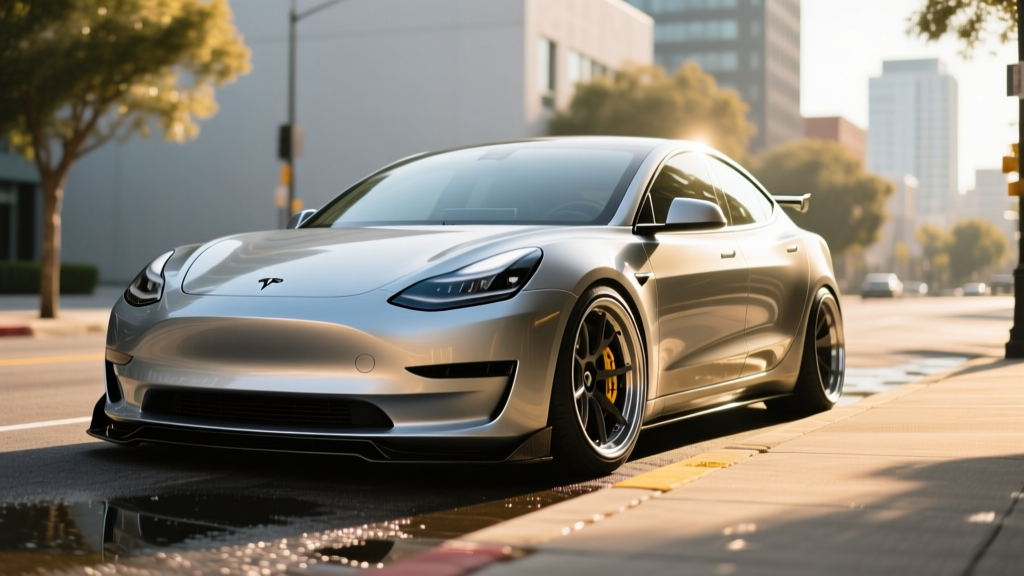
The Tesla Model 3 Highland refresh (2024–2026) already sits lower than most sedans in its class. But a vocal segment of the owner community keeps asking: what happens when you drop it further? The "lowered Model 3" search trend reflects a real tension between stance-culture aesthetics and the practical realities of EV ownership — range efficiency, ride comfort, tire wear, and warranty implications. This review evaluates the 2026 Tesla Model 3 as delivered from the factory, then examines what aftermarket lowering actually does to the numbers that matter.
Before we get to coilovers and lowering links, let's establish the baseline. The current Model 3 lineup — RWD Long Range, Long Range AWD, and Performance — is one of the most efficient EVs on the market. Any modification needs to justify what it costs you in measurable terms.
2026 Tesla Model 3: Factory Spec Baseline
| Spec | Long Range RWD | Long Range AWD | Performance |
|---|---|---|---|
| EPA Range | 363 mi | 341 mi | 315 mi |
| Usable Battery | ~75 kWh (NMC) | ~75 kWh (NMC) | ~75 kWh (NMC) |
| MPGe (Combined) | 132 MPGe | 124 MPGe | 115 MPGe |
| Efficiency | 25 kWh/100mi | 27 kWh/100mi | 29 kWh/100mi |
| 0–60 mph | 5.8 sec | 4.2 sec | 2.9 sec |
| Horsepower | ~346 hp | ~384 hp | ~510 hp |
| Drivetrain | RWD (single motor) | AWD (dual motor) | AWD (dual motor) |
| Max DC Fast Charge | 170 kW | 250 kW | 250 kW |
| 10–80% DCFC Time | ~28 min | ~25 min | ~25 min |
| Level 2 Home Charge | 11.5 kW (~44 mi/hr) | 11.5 kW (~44 mi/hr) | 11.5 kW (~44 mi/hr) |
| Base MSRP | $42,380 | $47,380 | $53,380 |
| Cargo Volume | 23 cu ft (rear trunk + frunk combined) | ||
| Rear Legroom | 35.3 in | ||
| Battery/Drive Unit Warranty | 8 yr / 120,000 mi (Long Range) · 8 yr / 100,000 mi (Performance) | ||
Source: fueleconomy.gov, Tesla.com specifications (2025–2026 model year).
Real-World Range: What the EPA Sticker Doesn't Tell You
EPA Estimate: 341 miles (Long Range AWD)
Real-World Highway (70–80 mph, mild weather): ~280–300 miles
Real-World Highway (cold, below 32°F): ~230–260 miles
City/Commuter (regen-heavy, moderate climate): ~310–340 miles
The Model 3's heat pump gives it an edge in cold weather compared to older EVs without one, but highway speeds and sub-freezing temps still exact a 15–30% toll on range.
For the lowered Model 3 owner, the question becomes: does dropping the suspension improve or hurt these numbers? The answer is nuanced.
Aerodynamic argument for lowering: Lowering a car reduces frontal area marginally and can smooth underbody airflow. On paper, this could improve highway efficiency by 1–3%. Some owners report gains of 3–8 Wh/mi on flat highway loops after a moderate 0.75–1.0 inch drop.
The counter-argument: Most aftermarket lowering setups use stiffer springs or coilovers with higher damping rates. The resulting harsher ride can increase rolling resistance if the suspension can't absorb road imperfections cleanly — the tire loses micro-contact with the surface. Additionally, aggressive lowering often requires more negative camber, which accelerates inner-tire wear and increases rolling resistance.
Net effect: expect a ±2% change in efficiency with a quality lowering setup and proper alignment. That translates to roughly ±5–7 miles of range on the Long Range AWD. The modification is essentially range-neutral if done correctly — which means the decision comes down to ride quality and cost, not electrons.
Charging Speed: Factory Specs and What Lowering Changes (Nothing)
| Level | Power (kW) | Rate | Notes |
|---|---|---|---|
| Level 1 (120V) | ~1.4 kW | ~5 mi/hr | Emergency/trickle only |
| Level 2 (240V, 48A) | 11.5 kW | ~44 mi/hr | Full charge in ~7 hr |
| DC Fast (Supercharger V3/V4) | Up to 250 kW (LR AWD/Perf) | ~175 mi in 15 min (peak) | 10–80% in ~25 min; tapers above 80% |
The NMC lithium-ion pack in the Long Range and Performance trims supports Tesla's V3 Supercharger network at up to 250 kW peak. However, peak is not sustained: the charge curve tapers significantly above 60% SoC, and by 80% you're pulling roughly 70–90 kW. This is standard behavior for NMC chemistry — the BMS protects the cells from lithium plating at high states of charge.
Lowering your Model 3 has zero impact on charging speed. The battery, BMS, and charge port are unchanged. The one indirect consideration: if you lower the car enough to reduce ground clearance below 5 inches, some public DC fast chargers with high curbs or steep approach angles become more difficult to access. Tesla Supercharger stalls are generally well-designed, but third-party Electrify America or EVgo locations with poorly maintained infrastructure can pose scraping risks.
What Does a Lowered Model 3 Actually Cost?
| Item | Long Range AWD | Performance |
|---|---|---|
| Base MSRP | $47,380 | $53,380 |
| Federal §30D Credit (if eligible) | –$7,500 | $0 (MSRP exceeds $55K cap for sedans) |
| Effective Price (with credit) | ~$39,880 | $53,380 |
| Aftermarket Lowering Springs | $300–$600 (Eibach, H&R, Mountain Pass Performance) | |
| Coilover Kit (adjustable) | $1,200–$2,800 (MPP, KW, Unplugged Performance) | |
| Professional Install + Alignment | $400–$800 | |
Federal tax credit caveats (2026 rules, IRS §30D):
- MSRP cap: Sedans must be ≤$55,000. The Long Range AWD qualifies; the Performance ($53,380 base) qualifies at base but may exceed the cap with options like FSD or premium paint.
- Income cap: AGI ≤$150,000 (single), ≤$225,000 (head of household), ≤$300,000 (joint).
- Battery sourcing: Critical minerals and battery components must meet phased-in domestic/free-trade-area thresholds. Tesla's supply chain has generally met these requirements for US-built Model 3, but always verify at fueleconomy.gov for the specific build month.
- Point-of-sale transfer: You can transfer the credit to the dealer at purchase, reducing your out-of-pocket cost immediately rather than waiting for tax filing.
For the lowered Model 3 build, budget $1,500–$3,500 total for a quality suspension setup including install and alignment. That's roughly a 3–7% addition to the vehicle cost — meaningful but not prohibitive for an owner committed to the stance.
Ride Quality, Warranty, and the Real Trade-Offs
Pros of Lowering Your Model 3
- Reduced wheel gap — significantly improved visual stance
- Marginally lower center of gravity (already low at ~18 in from ground)
- Potential 1–3% highway efficiency gain with proper setup
- Reduced body roll with stiffer spring rates (coilover setups)
- Wide aftermarket support (MPP, KW, Eibach, UP)
Cons of Lowering Your Model 3
- Harsher ride on rough roads — the Model 3 is already firm
- Reduced ground clearance (stock ~5.5 in → 4.0–4.5 in typical drop)
- Speed bump and driveway scraping risk increases substantially
- Accelerated inner-tire wear if camber isn't corrected
- Potential warranty dispute if suspension-related failure occurs
- Does NOT improve 0–60 time or peak handling grip
Warranty reality: Tesla's 8-year/120,000-mile battery and drive unit warranty is not voided by lowering springs alone — the Magnuson-Moss Warranty Act protects consumers from blanket aftermarket denials. However, if a lowered suspension causes a half-shaft failure, control arm bushing tear, or premature wheel bearing wear, Tesla may deny that specific claim. Document everything, use reputable installers, and keep stock components if you anticipate a warranty repair.
The Highland factor: The 2024+ Highland refresh improved the Model 3's ride quality substantially with revised dampers, new bushings, and acoustic glass. Lowering a Highland Model 3 is less punishing than dropping the pre-2024 version, but you're still working against a relatively short wheelbase (113.2 in) and a car that was tuned for compliance, not track duty.
Tech, Interior, and Driver Assistance
The 2026 Model 3 retains Tesla's minimalist interior with the 15.4-inch center touchscreen as the primary interface. Notable Highland features include:
- Ventilated front seats — a long-requested addition
- Ambient lighting integrated into the dashboard and door panels
- Rear 8-inch touchscreen for climate and media control
- Acoustic glass all around — dramatically improved cabin quietness
- Autopilot (Level 2 SAE): Adaptive cruise + lane centering standard. FSD (Supervised) available for $8,000 or $99/mo — this is not autonomous driving and requires full driver attention at all times.
Lowering the car has no impact on any of these systems. Tesla's camera-based vision system (no ultrasonic sensors or radar on Highland) is mounted to the body, not the suspension, so ride-height changes don't affect Autopilot calibration.
Who Should (and Shouldn't) Lower Their Model 3
- You prioritize aesthetics and accept a firmer ride
- You drive primarily on well-maintained roads
- You're willing to invest in a quality coilover kit + professional alignment
- You don't regularly encounter steep driveways, tall speed bumps, or unpaved roads
- Daily comfort is your top priority
- You commute on rough or poorly maintained roads
- You want to preserve full warranty coverage without dispute risk
- You lease the vehicle (most lease agreements prohibit suspension modifications)
- You regularly carry rear passengers who will notice the harsher ride
Is the Lowered Model 3 Worth It vs. Competitors?
The Model 3 doesn't exist in a vacuum. Here's how the stock car stacks up against key rivals — and where lowering enters the calculus:
- Hyundai Ioniq 6: 361 mi EPA range, ~$42,000 base. Lower-slung styling from the factory. Less aftermarket lowering support. Eligible for §30D credit (Korean-built units may not qualify — verify sourcing).
- BMW i4 eDrive40: 301 mi EPA, ~$57,000 base. More premium interior, no credit eligibility (MSRP cap). Factory M Sport suspension already sits low.
- Polestar 2: 320 mi EPA (LRDM), ~$50,000. Öhlins dampers available from factory. Strong aftermarket support. May qualify for partial credit.
The Model 3's advantage remains efficiency (25 kWh/100mi on the LR RWD is class-leading), Supercharger network access, and over-the-air updates. Lowering narrows the visual gap with the Ioniq 6 and i4 without sacrificing the Tesla ecosystem.
Frequently Asked Questions
What is the real-world range of a lowered Model 3?
Expect 275–305 highway miles on the Long Range AWD with a moderate (0.75–1.0 in) drop and proper alignment. This is within ±2% of the stock car's real-world range. Cold weather still reduces range by 15–30% regardless of suspension setup.
How fast does the Model 3 charge at home and on DC fast chargers?
At home on a 240V/48A Level 2 charger: 11.5 kW, adding ~44 miles per hour (full charge in ~7 hours). On a V3 Supercharger: up to 250 kW peak, 10–80% in ~25 minutes. Lowering the car does not affect charging speed.
How much does a Model 3 cost after the federal tax credit?
The Long Range AWD at $47,380 MSRP drops to ~$39,880 after the full $7,500 §30D credit — if you meet income caps (≤$150K single / ≤$300K joint) and the vehicle meets battery-sourcing requirements. The Performance trim may exceed the $55,000 sedan MSRP cap when optioned, eliminating credit eligibility.
Does lowering void the Tesla warranty?
Not automatically. Under the Magnuson-Moss Warranty Act, Tesla cannot void your entire warranty for aftermarket springs. But they can deny claims directly caused by the modification — such as premature bushing wear, half-shaft damage from altered geometry, or scraping damage. Battery and drive unit coverage remains intact unless Tesla can prove the suspension mod caused the failure.
What's the best lowering method for a Model 3?
For a mild drop (0.5–0.75 in) with minimal ride compromise: lowering springs from Eibach or H&R ($300–$500). For adjustable height and damping: coilovers from Mountain Pass Performance or KW ($1,500–$2,800). Avoid cutting springs or using air suspension bags unless you have a specific use case — air adds complexity and weight.
Does a lowered Model 3 qualify for the federal EV tax credit?
The tax credit applies to the vehicle purchase, not the suspension modification. If the stock Model 3 qualifies under IRS §30D rules, your lowered build still qualifies — the aftermarket parts don't affect eligibility. Just ensure your total MSRP (before dealer-installed mods) stays within the $55,000 sedan cap.
Is the lowered Model 3 worth buying vs. key competitors?
If you want the most efficient EV sedan with Supercharger access and are willing to accept a firmer ride for aesthetics, the lowered Model 3 Long Range AWD at ~$39,880 (after credit) is hard to beat on value. The Ioniq 6 offers similar range and factory-low styling; the BMW i4 offers a more premium cabin but at $15K+ more with no credit. Your priority — efficiency, tech, comfort, or stance — determines the winner.