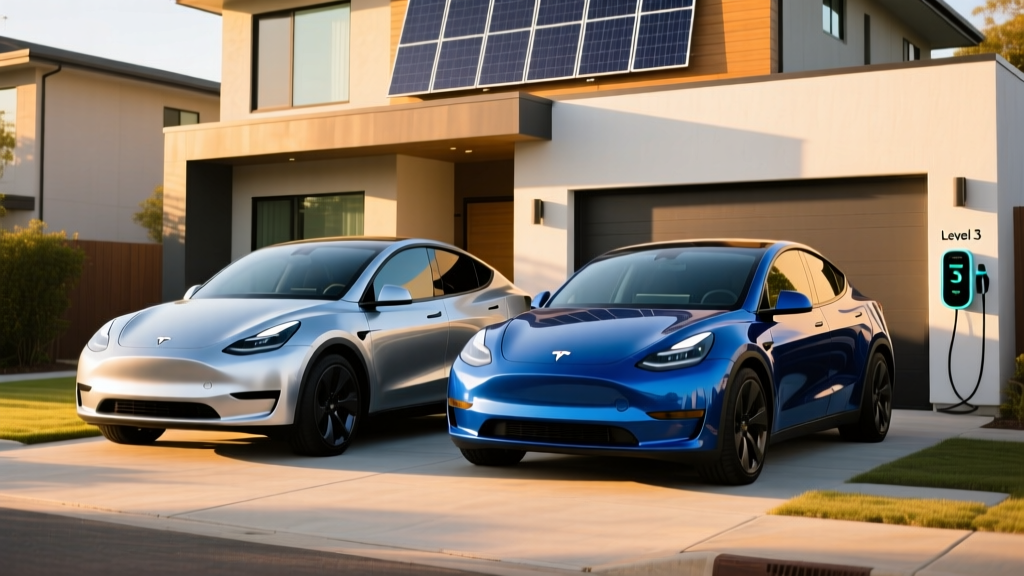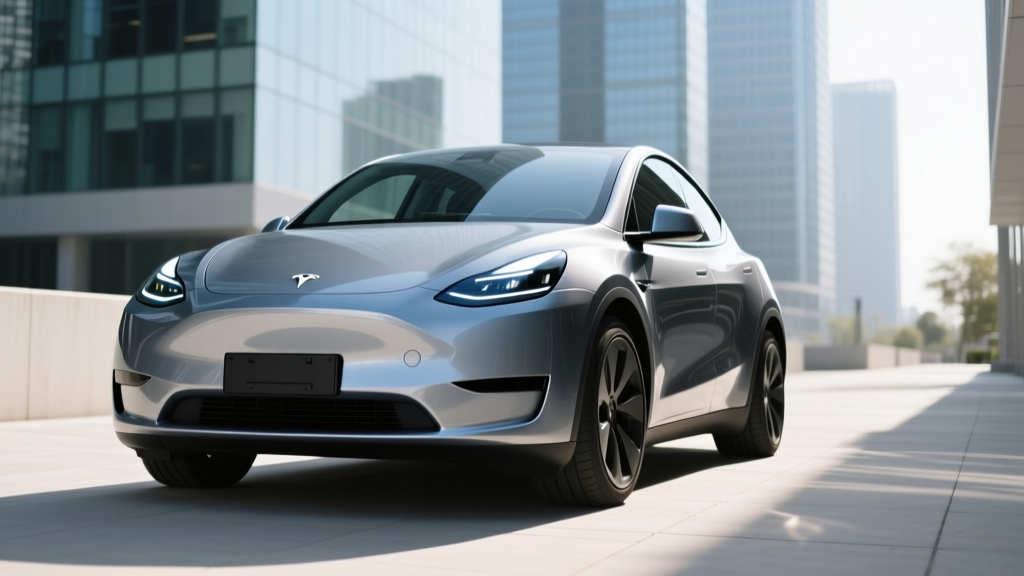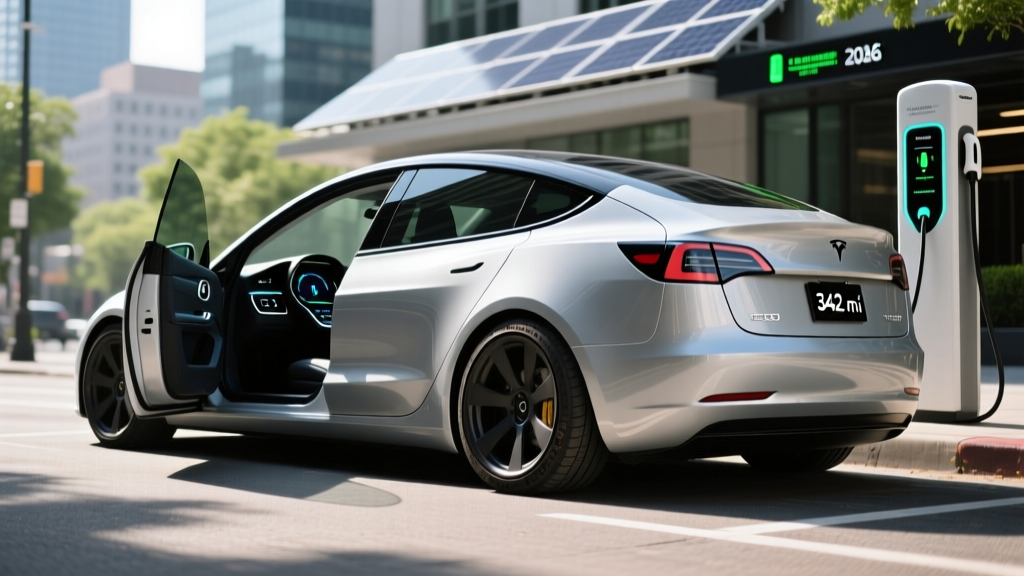
The Tesla Model 3 Highland refresh (introduced late 2023 and refined through 2026) already sits lower and sleeker than its predecessor. But a growing community of owners is taking it further — installing aftermarket lowering springs, coilovers, or adjustable air-ride kits to drop the ride height another 1.0 to 1.5 inches. The search term lowered Tesla Model 3 reflects a genuine buyer question: does dropping the car hurt range, efficiency, or daily usability — or is it a pure aesthetic upgrade with minimal penalty?
This review uses the 2026 Tesla Model 3 Long Range AWD as the baseline (the most common trim owners lower), then layers in the real-world data on what suspension modifications actually do to your numbers. We'll cover EPA range, charging, pricing, tax credits, and the specific trade-offs of going low.
Range Reality Check
EPA Estimated Range: 363 miles (Long Range AWD, stock)
Real-World Expectation: ~300-330 miles highway at 70 mph; ~240-270 miles in sub-30°F cold weather. A 1.0-1.5" drop with performance springs typically costs 1-3% efficiency (~5-12 miles) due to increased rolling resistance from added negative camber and stiffer damping. Aggressive fitment with stretched tires or excessive negative camber can push losses to 5%+.
2026 Model 3 Long Range: The Baseline Specs
Before we talk modifications, here's what you're starting with. The 2026 Model 3 Long Range AWD remains Tesla's efficiency benchmark in the compact electric sedan segment.
| Specification | 2026 Model 3 Long Range AWD (Stock) |
|---|---|
| EPA Range | 363 miles |
| Battery (Usable) | ~79 kWh (NMC chemistry) |
| Drivetrain | Dual-motor AWD |
| Horsepower | ~346 hp (combined) |
| 0-60 mph | 4.2 seconds |
| MPGe (Combined) | 134 MPGe |
| Efficiency | 25 kWh/100 mi |
| Cargo (Trunk + Frunk) | 23 cu ft trunk + 3.1 cu ft frunk |
| Rear Legroom | 35.3 inches |
| Base MSRP | $47,740 (before delivery) |
| Battery Warranty | 8 years / 120,000 miles (70% retention) |
The NMC (nickel manganese cobalt) pack is chosen here for its higher energy density over LFP — critical for hitting the 363-mile target in a relatively compact sedan chassis. Tesla's thermal management system, including a heat pump standard on all trims, keeps degradation modest; most owners report 5-8% loss over 50,000 miles based on fleet data.
What Lowering Actually Does to Range and Efficiency
The most common question from buyers researching a lowered Tesla Model 3 is whether the range penalty is real. The answer is nuanced and depends on how you lower the car.
Lowering Method Comparison
| Method | Typical Drop | Cost Range | Efficiency Impact | Ride Quality |
|---|---|---|---|---|
| OEM-style lowering springs (Eibach, H&R) | 0.8"-1.2" | $400-$700 | -1% to -3% (~5-12 mi) | Firmer, 10-15% stiffer |
| Coilovers (KW, Bilstein, MPP) | 1.0"-2.0" adjustable | $1,800-$3,500 | -2% to -5% (~8-18 mi) | Adjustable damping; can match or improve OEM |
| Air suspension (AccuAir, Air Lift) | Adjustable 0"-3" | $4,000-$7,000+ | Variable; minimal at stock height | Best of both worlds; adds 40-60 lbs |
The efficiency losses come from three sources: increased negative camber (which scrubs the tire contact patch), stiffer spring rates that transmit more road vibration into the chassis (increasing parasitic losses marginally), and in the case of air suspension, the weight and parasitic draw of the compressor. For most owners on quality lowering springs, the range loss is within the noise of normal driving variation — you likely won't notice it on a commute, but you will on a 300-mile road trip where you arrive with 15 miles less buffer.
Cold-weather range loss compounds independently: expect 20-30% reduction below 20°F regardless of suspension setup, due to battery chemistry limits and cabin heating demands. A lowered car doesn't make this worse, but it doesn't help either.
Charging: DC Fast and Home Level 2 Speeds
Lowering the car has zero impact on charging speed — your charge curve is a function of the battery management system, not suspension geometry. Here's what the 2026 Model 3 Long Range delivers:
| Charging Level | Power / Rate | Speed (Miles Added) | Notes |
|---|---|---|---|
| Level 1 (120V household) | ~1.4 kW | ~3-5 mi/hr | Emergency/trickle only |
| Level 2 (240V, 48A Wall Connector) | 11.5 kW | ~44 mi/hr | Full charge in ~7.5 hrs |
| DC Fast Charge (V3 Supercharger) | Peak 250 kW | ~175 mi in 15 min | 10-80% in ~25 min; tapers above 80% |
| DC Fast Charge (V4 Supercharger) | Peak 250-350 kW* | ~200+ mi in 15 min | *Model 3 architecture caps at ~250 kW sustained |
The 250 kW peak on V3 Superchargers is sustained roughly from 10-45% state of charge, then tapers progressively. Expect 10-80% in about 25 minutes under ideal conditions (battery preconditioned via navigation routing to a Supercharger). Above 80%, the charge rate drops sharply to protect the NMC cells — this is normal and not unique to Tesla. For daily charging, Tesla recommends limiting to 80% to maximize long-term battery health; the 100% setting should be reserved for road trips.
On a home Level 2 Tesla Wall Connector (hardwired, 60A circuit, 48A continuous), you'll add roughly 44 miles per hour of charging. A full overnight charge from 20% to 80% takes about 5-6 hours. Installation typically runs $800-$2,000 depending on panel proximity and whether your electrical service needs a 200A upgrade (consult a licensed electrician for your specific situation).
Pricing, Trims, and Federal Tax Credit Eligibility
The 2026 Model 3 is available in three primary trims. Here's the pricing landscape and where the IRS §30D federal tax credit fits in:
| Trim | Base MSRP | Federal Credit (Potential) | Effective Price* |
|---|---|---|---|
| Rear-Wheel Drive (LFP, ~60 kWh) | $38,990 | Up to $7,500 | ~$31,490 |
| Long Range AWD (NMC, ~79 kWh) | $47,740 | Up to $7,500 | ~$40,240 |
| Performance AWD | $54,990 | Up to $7,500 | ~$47,490 |
*Effective price assumes full $7,500 credit eligibility. Actual credit depends on meeting all §30D requirements.
§30D Tax Credit Eligibility Checklist
The federal EV tax credit is not automatic. To qualify for the full $7,500, you must satisfy all of the following (rules current as of 2026; always verify with the IRS or a tax professional):
- MSRP Cap: Sedan — must be $55,000 or below (all Model 3 trims qualify)
- Buyer Income Cap: AGI ≤ $150,000 single / $225,000 head of household / $300,000 joint
- Critical Minerals: ≥ 60% of battery critical minerals sourced from US or FTA partners (partial $3,750)
- Battery Components: ≥ 75% of battery components manufactured/assembled in North America (partial $3,750)
- Point-of-Sale Transfer: Credit can be applied at purchase to reduce out-of-pocket cost immediately
Tesla has historically met the battery component requirement for US-built Model 3s, but critical minerals sourcing varies by production batch and can shift quarter to quarter. Check fueleconomy.gov for the current credit status of the specific VIN you're considering. Never assume the full $7,500 without verification.
Tech, Interior, and the Lowered-Car Practicality Question
The 2026 Model 3 Highland interior carries over Tesla's minimalist approach: a single 15.4-inch center touchscreen controls everything, a rear 8-inch screen serves passengers, and ventilated front seats are now standard on Long Range and above. The ambient lighting strip and acoustic glass (laminated on all windows for the Highland) make this one of the quietest cabins in the segment at highway speed.
Autopilot comes standard with Traffic-Aware Cruise Control and Autosteer (SAE Level 2 — you must remain engaged and supervising at all times). Full Self-Driving (Supervised) is a $8,000 add-on or $99/month subscription; it adds automatic lane changes, traffic light recognition, and city street navigation, but remains Level 2 and is not a substitute for an attentive driver.
For lowered-car owners, the practical concerns are specific:
Lowering Clearance Realities
Stock Model 3 ground clearance is ~5.5 inches. A 1.2-inch drop puts you at ~4.3 inches — comparable to a Porsche 911. This means:
- Speed bumps and steep driveways require approach-angle awareness
- Rubbing on full lock or under heavy load is possible with aggressive drops
- Speed bumps at parking-lot speeds become a real concern with coilovers set below 1.5"
- Tesla's warranty covers the battery and drive unit, but suspension modifications can void coverage on related components (bushings, control arms, half-shafts if angles are extreme)
Air suspension with a lift function mitigates most of these issues but adds cost, weight, and maintenance complexity.
Who Is the Lowered Tesla Model 3 For?
The lowered Model 3 isn't a single buyer profile — it's an owner choice layered onto an already capable EV. Here's how the use cases break down:
Choose a Lowered Model 3 If:
- You prioritize aesthetics and handling feel over maximum range buffer
- Your daily commute is under 100 miles round-trip (range loss is immaterial)
- You live in an area with well-maintained roads and minimal snow/ice buildup
- You're willing to invest $2,000-$4,000 in quality coilovers with adjustable damping to preserve ride quality
- You garage the car (protecting lowered components from road salt and pothole damage)
Keep It Stock If:
- You regularly drive 250+ miles between charges on road trips
- You deal with steep driveways, speed bumps, or unpaved roads daily
- You want to preserve full factory warranty coverage on all suspension-adjacent components
- You live in a region with harsh winters and frequent road-salt use (lowered cars scrape packed snow/ice)
Pros and Cons: The Honest Summary
Pros
- 363-mile EPA range is best-in-class for a compact sedan (stock)
- 250 kW DC fast charging; Supercharger network access is the most reliable public network in the US
- Excellent efficiency: 134 MPGe combined / 25 kWh/100mi
- Highland interior is materially quieter and more refined than pre-2024 Model 3
- Strong resale value; Tesla's over-the-air updates continue to add features
- Lowering on quality springs/coilovers improves turn-in response and reduces body roll noticeably
Cons
- Lowering costs 1-5% range depending on setup (~5-18 miles real-world)
- Ground clearance drops to sports-car territory; daily scraping risk on poor infrastructure
- Suspension mods may partially void Tesla warranty on related components
- Rear seat legroom (35.3") is tight for taller passengers vs. Hyundai Ioniq 6 or BMW i4
- No physical stalks — turn signals are on the steering wheel (love it or hate it)
- FSD remains Level 2; marketing name implies more capability than delivered
Competitor Check: Is the Model 3 Still the Move?
Against the Hyundai Ioniq 6 SE Long Range (361-mile EPA, ~$42,000), the Model 3 trades a few miles of range for significantly faster DC charging (Ioniq 6 peaks at ~240 kW but with a smaller 77.4 kWh pack, so 10-80% times are similar at ~18 min). The Ioniq 6 is less commonly lowered due to its already low-slung design and softer aftermarket support.
The BMW i4 eDrive40 (307-mile EPA, ~$57,000) costs substantially more but offers a more traditional luxury interior and better rear-seat space. It's also a popular lowering candidate, but at a higher entry price.
For pure value-per-mile-of-range, the stock Model 3 Long Range AWD at ~$40,240 after the federal credit (if eligible) remains difficult to beat. The decision to lower is aesthetic and handling-driven, not economic — and that's fine, as long as you go in with eyes open about the trade-offs.
Frequently Asked Questions
Does lowering a Tesla Model 3 void the warranty?
Lowering springs or coilovers do not automatically void the entire warranty, but Tesla can deny claims on suspension components, bushings, half-shafts, or even the battery if they determine the modification contributed to a failure. The Magnuson-Moss Warranty Act protects you from blanket denials, but the burden of proof can be frustrating. Keep your OEM springs and be prepared to reinstall them if a major warranty claim arises.
How much range do I actually lose with a lowered Model 3?
On quality lowering springs (0.8"-1.2" drop, minimal camber change), expect 1-3% loss — roughly 5-12 miles off the 363-mile EPA figure. Aggressive coilover setups with excessive negative camber or stretched tires can push this to 5%+ (18+ miles). For most commuters, this is negligible; for road-trippers, it's meaningful.
What's the best lowering method for daily driving?
For daily-driven cars, quality coilovers with adjustable damping (KW V3, MPP Comfort, or Bilstein B14) offer the best balance. You can set a moderate 1.0" drop, tune the damping to match or beat OEM ride quality, and retain adjustability. Avoid cheap, non-adjustable coilovers — they typically degrade ride quality significantly and offer no tuning recourse.
Does the 2026 Model 3 qualify for the full $7,500 federal tax credit?
The Model 3 meets the MSRP cap (under $55,000 for sedans), but the full $7,500 depends on critical minerals sourcing and battery component manufacturing requirements that can shift. Check the specific VIN on fueleconomy.gov or with your Tesla advisor before committing. The point-of-sale transfer option lets you apply the credit at purchase if eligible.
Can I still use Tesla Superchargers with a lowered Model 3?
Yes — lowering has no impact on charging hardware or network access. The only consideration is physical clearance at Supercharger stalls with high curbs or steep approach angles, which is rare but worth noting at unfamiliar locations.
Is the Model 3 Long Range better than the Performance for lowering?
The Long Range is the more popular choice for lowering because its softer factory tune benefits more from upgraded coilovers, and the range buffer (363 mi) absorbs the efficiency penalty better than the Performance trim (315 mi EPA). The Performance already has sport-tuned suspension and larger wheels, so the incremental improvement from lowering is smaller.