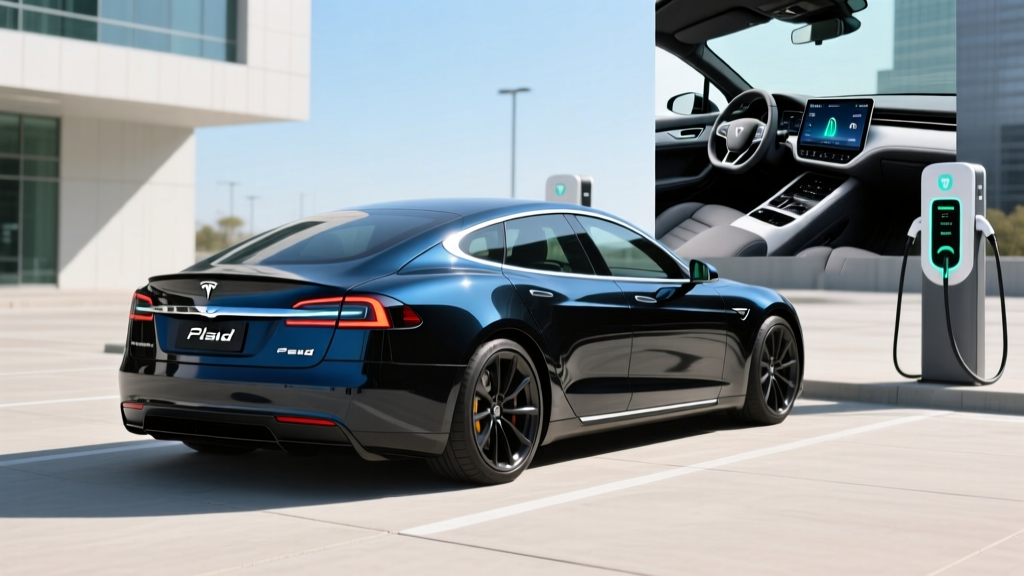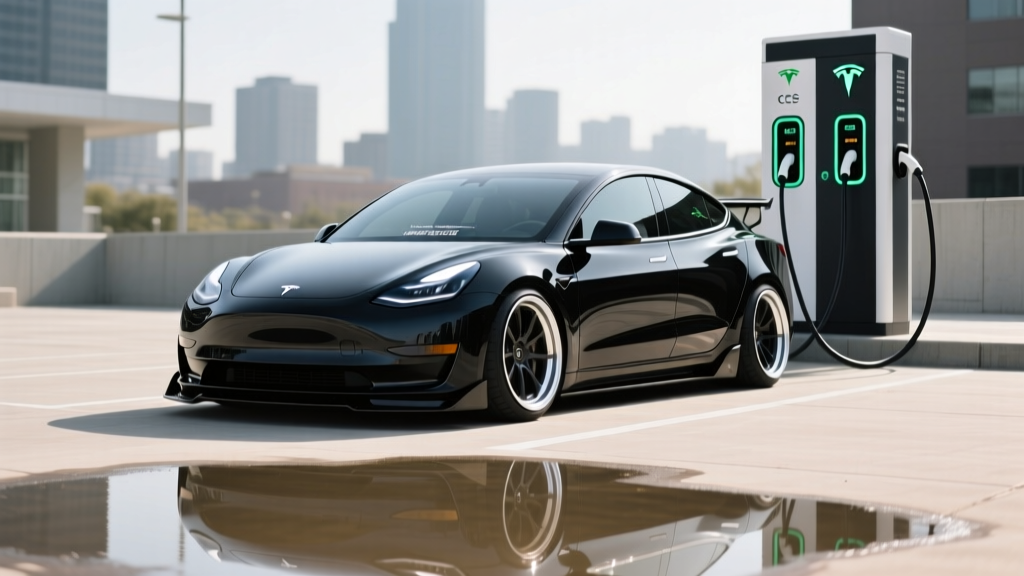
The factory Tesla Model 3 Performance is already one of the quickest, best-handling sedans under $60,000. But a growing subset of owners are taking it further—lowering their cars with aftermarket coilovers or lowering springs to sharpen the stance and, in some cases, the aerodynamics. If you're searching for what a lowered Tesla actually does to range, ride, charging access, and daily usability, this deep-dive is for you.
This review uses the 2026 Tesla Model 3 Performance (Highland refresh) as the baseline vehicle, then layers in the real-world effects of a typical 1.0–1.5-inch drop using quality aftermarket components (e.g., Mountain Pass Performance, Unplugged Performance, or KW coilovers). We'll cover the numbers that matter: EPA vs real-world range, DC fast-charging curves, efficiency deltas, tax credit implications, and whether a lowered setup is a net gain or a compromise you'll regret on the first potholed commute.
2026 Tesla Model 3 Performance: Baseline Specs
Before we talk about what lowering changes, here's the stock 2026 Model 3 Performance, which Tesla continues to sell with dual motors, a 79 kWh (usable) NMC lithium-ion battery, and the updated Highland interior. The Performance trim gets the track-tuned adaptive suspension, 20-inch wheels, and the rear diffuser that debuted with the 2024 refresh.
| Spec | Value |
|---|---|
| EPA range | 315 miles |
| Battery (usable) | ~79 kWh, NMC chemistry |
| Drivetrain | Dual-motor AWD |
| Horsepower | 510 hp (combined) |
| 0–60 mph | 2.9 seconds |
| Top speed | 163 mph |
| EPA efficiency | 113 MPGe / 30 kWh/100mi |
| Max DC fast charge | 250 kW peak (V3 Supercharger) |
| 10–80% DC time | ~25 minutes |
| Level 2 home rate | 11.5 kW (~44 mi/hr) |
| Cargo volume | 23 cu ft (trunk) + 3.1 cu ft (frunk) |
| Rear legroom | 35.3 inches |
| Base MSRP | $54,990 (before destination) |
| Battery warranty | 8 years / 120,000 miles |
Data sourced from fueleconomy.gov and Tesla's official spec pages. These are the numbers we'll be comparing against once the car drops an inch closer to the pavement.
What Does Lowering a Tesla Actually Change?
Lowering a Model 3 isn't just cosmetic—though the visual transformation is undeniable. A quality 1.0–1.5-inch drop on coilovers (not cut springs, please) produces measurable effects across four categories:
Aerodynamic Efficiency
Lower ride height reduces frontal area and underbody airflow turbulence. Owners consistently report a 2–4% efficiency improvement at highway speeds (70–80 mph) on level ground, measured via the car's own Wh/mi readout over repeated loops. On a 315-mile EPA car, that translates to roughly 6–12 extra miles of real-world highway range. It's not transformative, but it's not nothing either—especially on long road trips where every kWh counts.
Handling & Ride Quality
This is where the trade-off lives. Quality coilovers (KW V3, Mountain Pass Performance, or similar) with adjustable damping can actually improve the Performance model's already firm ride by allowing you to dial in compression and rebound separately. Cheap lowering springs on stock adaptive dampers, however, tend to produce a crashy, under-damped ride that magnifies every expansion joint.
Ground Clearance & Access
The stock Model 3 Performance sits at approximately 5.5 inches of ground clearance. A 1.2-inch drop takes you to ~4.3 inches—lower than most sports coupes. Steep driveways, tall speed bumps, and angled parking-garage entrances become planning exercises. A front axle lift kit (available from Unplugged Performance and others for ~$2,500) mitigates this substantially, raising the nose ~1.5 inches at the push of a button for obstacles.
Suspension Geometry & Tire Wear
Lowering any car introduces negative camber. Without an alignment correction (aftermarket camber arms or adjustable top mounts), expect accelerated inner-tire wear. Budget $400–$600 for adjustable rear camber arms and a proper alignment post-installation.
Real-World Range: Lowered 2026 Model 3 Performance
EPA estimate (stock): 315 miles
Real-world highway (stock, 75 mph, 70°F): ~275–285 miles
Real-world highway (lowered 1.2", same conditions): ~280–295 miles (aero benefit)
Real-world highway (lowered, 30°F winter): ~220–240 miles
City/mixed driving (lowered): ~295–310 miles
Cold-weather range loss of 15–25% is typical for NMC packs without consistent preconditioning. The Model 3's heat pump helps, but highway speeds in sub-freezing temps remain the worst-case efficiency scenario regardless of ride height.
Charging Speed: Does Lowering Affect It?
No. Lowering the car has zero impact on the battery's charge acceptance rate or the thermal management system. The 2026 Model 3 Performance charges identically whether stock or dropped. Here's what you can expect:
| Charging Method | Power (kW) | Speed (mi/hr added) | Notes |
|---|---|---|---|
| Level 1 (120V outlet) | ~1.4 kW | ~5 mi/hr | Emergency/trickle only |
| Level 2 (240V, 48A) | 11.5 kW | ~44 mi/hr | Full overnight charge in ~7 hrs |
| DC Fast (V3 Supercharger) | 250 kW peak | ~170 mi in 15 min | 10–80% in ~25 min |
| DC Fast (CCS adapter, 350 kW station) | ~200–230 kW sustained | ~150 mi in 15 min | Tapers significantly above 80% |
Charging curve reality check: The 250 kW peak only holds from roughly 10–30% State of Charge (SoC). By 50%, you're seeing ~180 kW. By 80%, it drops to ~80 kW. This is normal for NMC chemistry and Tesla's battery management strategy. Plan road-trip stops around the 10–80% window; charging from 80–100% adds another 20+ minutes for relatively few miles.
One practical note for lowered owners: some older Supercharger stalls with high curbs or steep approach angles may require care when pulling in at a sharp angle. The charge port location (rear driver side) remains unchanged and fully accessible.
Pricing, Tax Credits & Total Cost
The 2026 Model 3 Performance starts at $54,990 before the $1,390 destination fee, bringing the out-the-door base to roughly $56,380 before state taxes and registration. Add common options—Ultra Red paint ($2,000), white interior ($1,000), FSD (Supervised) transfer or subscription—and you're looking at $58,000–$60,000 for a well-equipped build.
Federal Tax Credit Eligibility (§30D)
The Model 3 Performance qualifies for the $7,500 federal EV tax credit under current IRS §30D rules, but eligibility depends on three factors that vary by buyer:
- MSRP cap: Sedans must be under $55,000 MSRP. The Model 3 Performance at $54,990 clears this by $10. However, adding certain packages may push the effective MSRP above the cap—confirm with your tax professional.
- Income cap: Modified AGI must not exceed $150,000 (single), $225,000 (head of household), or $300,000 (married filing jointly).
- Battery sourcing: As of 2026, both critical minerals and battery component requirements must be met (phased percentages increase annually). Tesla's North American supply chain currently satisfies these thresholds for the Model 3, per IRS qualified vehicle lists.
- Point-of-sale transfer: You can now transfer the credit to the dealer at purchase, reducing your out-of-pocket by $7,500 immediately rather than waiting for tax filing.
| Configuration | MSRP | After §30D Credit | Lowering Mod Cost | All-In |
|---|---|---|---|---|
| Base Performance | $54,990 | $47,490 | — | $47,490 |
| Performance + UPP lowering springs | $56,990 | $49,490 | $800–$1,200 | $50,290–$50,690 |
| Performance + KW V3 coilovers | $56,990 | $49,490 | $2,800–$3,500 | $52,290–$52,990 |
| Performance + coilovers + front lift | $56,990 | $49,490 | $5,000–$6,000 | $54,490–$55,490 |
Note: Aftermarket modifications do not affect §30D eligibility, which is based on the vehicle's MSRP at time of sale. Consult a tax professional for your specific situation. Credit rules are current for 2026 and subject to legislative change.
Who Is a Lowered Tesla Model 3 Performance For?
Choose a Lowered Model 3 Performance If:
- You prioritize handling precision and are willing to invest in quality coilovers with adjustable damping
- Your daily routes have well-maintained roads and minimal steep driveways
- You want a subtle aero efficiency gain on highway commutes (2–4%)
- The visual stance matters to you and you've budgeted for supporting mods (alignment, camber arms, possible front lift)
- You understand this is a lifestyle modification, not a pure performance upgrade
Skip the Lowering (Keep Stock) If:
- You regularly encounter rough roads, tall speed bumps, or steep garage ramps
- You prioritize ride comfort for passengers on long trips
- You want to preserve factory warranty coverage on suspension components without question
- You're leasing the vehicle (most lease agreements prohibit permanent modifications)
Pros & Cons of a Lowered Tesla Model 3
Pros
- 2–4% highway efficiency improvement (6–12 mi extra range)
- Lower center of gravity reduces body roll in corners
- Dramatically improved visual stance
- Quality coilovers can improve ride over stock when tuned correctly
- No impact on charging speed, battery health, or powertrain warranty
- Track Mode (Performance trim) pairs well with a lowered setup for track days
Cons
- Reduced ground clearance (~4.3" typical) requires careful route planning
- Cheap lowering springs degrade ride quality significantly
- Camber-induced tire wear without correction ($400–$600 fix)
- Front lift kit recommended for daily drivability ($2,500+)
- May void suspension-related warranty claims at Tesla's discretion
- Resale pool narrows—many used buyers prefer stock
How It Compares: Lowered Model 3 vs. Key Competitors
If you're cross-shopping a lowered Tesla against other performance EVs in this price bracket, here's the honest comparison:
| Spec | Model 3 Perf (lowered) | BMW i4 M50 | Hyundai Ioniq 6 Limited | Polestar 2 LRDM |
|---|---|---|---|---|
| EPA range | 315 mi | 227 mi | 361 mi | 276 mi |
| 0–60 mph | 2.9 sec | 3.7 sec | 5.1 sec | 4.1 sec |
| Price (after credit) | ~$50K | ~$62K (limited credit) | ~$42K | ~$48K |
| Charging (10–80%) | ~25 min | ~31 min | ~18 min | ~28 min |
| Aftermarket support | Excellent | Limited | Growing | Moderate |
The Model 3 Performance remains the best balance of speed, range, charging infrastructure, and aftermarket ecosystem. The Ioniq 6 beats it on efficiency and range but can't match the acceleration or Supercharger network. The i4 M50 offers superior interior materials but at a significant price premium with limited §30D credit eligibility.
Warranty & Long-Term Ownership
Tesla covers the Model 3's battery and drive units for 8 years / 120,000 miles (whichever comes first) with a minimum 70% capacity retention threshold. The basic vehicle warranty is 4 years / 50,000 miles.
Critical for lowered owners: Tesla's warranty does not cover suspension components that fail due to aftermarket modifications. If your lowered car develops a knocking strut or premature bushing wear, expect a warranty denial on those specific parts. However, lowering the car does not void the battery, motor, or electronics warranty—those remain fully covered regardless of ride height. This is consistent with the Magnuson-Moss Warranty Act, which prevents blanket warranty voiding from aftermarket parts unless the manufacturer can prove the part caused the failure.
For peace of mind, keep all stock suspension components in case you need to revert for a warranty service visit or resale.
Frequently Asked Questions
What is the real-world range of a lowered Tesla Model 3 Performance?
Expect 280–295 miles on the highway at 75 mph in moderate temperatures—slightly better than the stock 275–285 miles due to reduced aerodynamic drag. In winter at highway speeds, plan for 220–240 miles regardless of ride height. City and mixed driving can approach the EPA 315-mile figure.
How fast does a lowered Tesla Model 3 charge?
Identical to stock: 250 kW peak DC fast charging (10–80% in ~25 minutes at a V3 Supercharger) and 11.5 kW on Level 2 home charging (~44 miles per hour). Lowering the car has no effect on the battery or charging system.
How much does a lowered Tesla Model 3 Performance cost after tax credits?
The 2026 Model 3 Performance starts at $54,990 and qualifies for the $7,500 federal §30D credit (subject to income and MSRP caps), bringing the effective price to ~$47,490 before modifications. Quality lowering setups add $800 (springs) to $6,000+ (coilovers with front lift).
Is a lowered Tesla worth it vs. keeping it stock?
For enthusiasts who value handling, stance, and a small efficiency gain—and who drive on well-maintained roads—yes, with quality coilovers. For daily commuters on rough roads or those who lease, the stock adaptive suspension is the better choice.
Does a lowered Tesla Model 3 qualify for the federal EV tax credit?
Yes. The §30D credit is based on the vehicle's MSRP at time of sale, not aftermarket modifications. The Model 3 Performance at $54,990 falls under the $55,000 sedan cap. Verify your income eligibility and battery sourcing status on IRS.gov.
Will lowering my Tesla void the warranty?
It may void coverage on suspension components specifically, but not on the battery, motors, or electronics. Under the Magnuson-Moss Warranty Act, Tesla cannot blanket-void your entire warranty—only deny claims directly caused by the modification.
What's the best way to lower a Tesla Model 3?
Quality adjustable coilovers (KW V3, Mountain Pass Performance) with a post-install alignment and camber correction offer the best ride/handling balance. Avoid cheap lowering springs on stock dampers—they produce a harsh, under-damped ride. Budget $3,000–$4,500 for a complete, properly sorted setup.