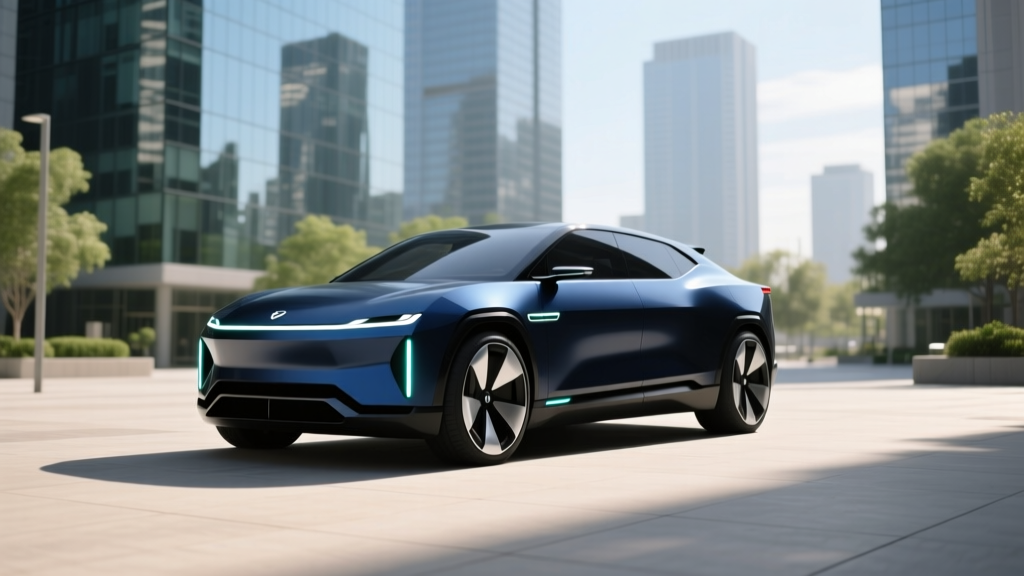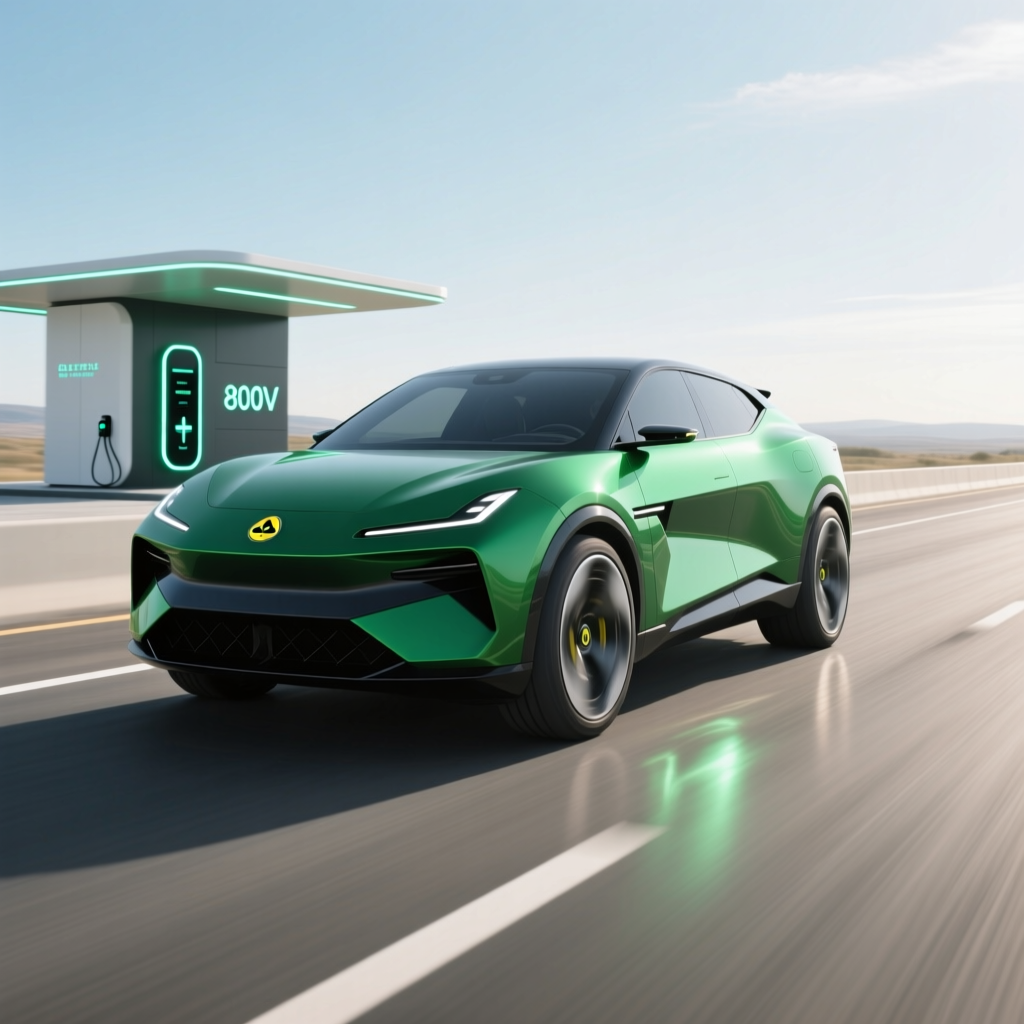
The automotive world is filled with brands that have undergone radical transformations, but few pivots are as striking as the one executed by Lotus. Historically defined by Colin Chapman’s philosophy of “simplify, then add lightness,” the British marque has now embraced the heavy, high-riding, and hyper-connected era of electrification. The result is the Lotus Eletre, a vehicle the company boldly categorizes as a “hyper SUV.” It is a machine that seemingly defies the brand’s lightweight heritage while attempting to translate its legendary chassis dynamics into a 5,800-pound electric luxury cruiser.
In this comprehensive review, we dissect the Lotus Eletre to determine if it truly earns the “hyper” moniker. From its cutting-edge 800-volt charging architecture and advanced active aerodynamics to its hypercar-inspired cabin and mind-bending cornering capabilities, we explore every facet of this electric SUV. If you are cross-shopping the upper echelons of the market, be sure to check out our curated list of the best luxury electric SUVs to see how the Eletre stacks up against rivals from Porsche, BMW, and Tesla.
Vehicle Overview: Redefining the Lotus DNA
The Lotus Eletre is built on the brand’s Electric Premium Architecture (EPA), a highly modular skateboard platform designed specifically for high-performance electric vehicles. Available in a standard dual-motor configuration and the more aggressive Eletre R, the SUV produces anywhere from 603 horsepower to a staggering 905 horsepower. Despite its massive footprint and substantial curb weight, Lotus engineers have utilized a suite of advanced chassis technologies to mask the vehicle’s mass, delivering a driving experience that feels remarkably agile and responsive.
Visually, the Eletre is a masterpiece of aerodynamic porosity. Rather than simply smoothing out the bodywork to reduce drag, Lotus has carved channels and vents through the vehicle’s architecture, allowing air to pass through the car rather than just around it. This design ethos, combined with active aerodynamic elements like a deployable rear spoiler and active front grille shutters, results in an exceptionally low drag coefficient for an SUV of its size. It is a bold, polarizing design that firmly plants the Eletre in the ultra-luxury performance segment.
Real-World Range & Efficiency
Range anxiety is a common concern for buyers transitioning to electric vehicles, especially when purchasing a high-performance SUV with massive wheels and powerful dual motors. The Lotus Eletre is equipped with a substantial 112 kWh usable battery pack, providing a robust foundation for long-distance travel. According to EPA ratings and global WLTP testing cycles, the standard Eletre achieves an estimated range of up to 315 miles, while the more powerful Eletre R sees a slight reduction, hovering around the 300-mile mark due to its stickier tires and more aggressive power delivery.
However, manufacturer estimates only tell half the story. In independent EV range tests, the Eletre has demonstrated remarkable efficiency for its class, particularly at highway speeds. The vehicle’s active aerodynamics play a crucial role here. At higher speeds, the active rear spoiler adjusts its angle to optimize downforce and minimize drag, while the flush door handles and camera-based side mirrors (where legally permitted) eliminate unnecessary turbulence.
During real-world mixed driving conditions, owners can expect to see between 260 and 290 miles of range before needing to seek out a charger, depending on ambient temperatures and driving style. The regenerative braking system is highly customizable, offering multiple levels of aggression. While it doesn’t quite offer a true one-pedal driving experience that brings the car to a complete, held stop without touching the brake pedal, the blending between the regen and the physical friction brakes is seamless, ensuring smooth deceleration and maximizing energy recapture in urban environments.
Charging Speed & Infrastructure
Where the Lotus Eletre truly flexes its technological muscles is in its charging capabilities. The SUV utilizes an advanced 800-volt electrical architecture, a feature that places it among the fastest charging EVs on the market. This high-voltage system allows for significantly thinner, lighter wiring harnesses within the vehicle while enabling massive thermal efficiency and rapid energy transfer.
When connected to a 350 kW DC fast charger, the Eletre can accept a peak charging rate that facilitates a 10% to 80% State of Charge (SoC) in approximately 20 minutes. What makes the Eletre’s charging curve particularly impressive is its ability to sustain high charging speeds for a longer duration compared to competitors that quickly taper off after reaching 50% SoC. Lotus’s sophisticated thermal management system actively preconditions the battery when a charging station is routed in the navigation system, ensuring the cells are at the optimal temperature to accept maximum current upon arrival.
For home charging and destination charging, the Eletre supports up to 22 kW of AC charging, which is double the standard 11 kW onboard charger found in many rival EVs. This means that with the appropriate hardwired home charging setup, owners can replenish the massive 112 kWh battery from empty to full in roughly six hours, making overnight top-ups incredibly convenient.
Interior Technology & Luxury
Stepping into the cabin of the Lotus Eletre is a sensory experience that completely shatters any preconceived notions of traditional, spartan Lotus interiors. The design theme is “lightness,” not just in weight, but in visual weight. The dashboard features a floating design, with a distinct separation between the upper instrument panel and the lower console, creating an airy, spacious environment. Materials are a mix of sustainable microfibers, Alcantara, and exposed carbon fiber, blending hypercar aggression with high-end luxury.
The centerpiece of the cabin is a massive 15.1-inch OLED infotainment screen that sits proudly on the dash. When not in use, or when the driver desires a more minimalist, focused environment, the screen can fold flat into the dashboard. The infotainment system is powered by the Unreal Engine, providing stunning, video-game-quality 3D graphics for the vehicle’s digital twin and navigation maps. Over-the-air (OTA) updates ensure the system remains current with the latest features and UI improvements.
Audio enthusiasts will appreciate the available KEF Reference sound system. Featuring 23 speakers and 2,160 watts of power, it utilizes KEF’s signature Uni-Q technology, where the tweeter is mounted in the acoustic center of the midrange cone, creating a single point source for sound. The result is an incredibly wide, immersive soundstage that makes the cabin feel like a private concert hall, even at highway speeds where Noise, Vibration, & Harshness (NVH) levels are exceptionally well-managed.
Furthermore, the Eletre features a stunning 55-inch Augmented Reality Head-Up Display (AR HUD). This system projects navigation instructions, speed, and advanced driver-assistance system (ADAS) data directly onto the windshield, overlaying directional arrows onto the actual road ahead, which drastically reduces the need for the driver to take their eyes off the tarmac.
Driving Dynamics & Performance
The true test of any vehicle wearing the Lotus badge is how it handles a twisting ribbon of asphalt. The Eletre employs a highly complex system known as the Lotus 6D Chassis Control. This integrated system simultaneously manages the adaptive air suspension, Continuous Damping Control (CDC), active rear steering, and the 48-volt active anti-roll bars. The result is an SUV that actively defies the laws of physics.
When attacking a canyon road, the active anti-roll bars instantly stiffen to eliminate body roll, keeping the chassis remarkably flat through high-G corners. The active rear steering system can turn the rear wheels by up to 3.5 degrees in the opposite direction of the front wheels at low speeds, shrinking the turning circle and making the large SUV feel as nimble as a compact hatchback. At higher speeds, the rear wheels turn in phase with the front wheels, enhancing high-speed stability and lane-change responsiveness. For a deeper dive into how this compares to German engineering, read our Porsche EV comparisons.
The steering is heavily assisted, as is necessary for a vehicle of this mass, but it is remarkably precise and well-weighted in the sportier drive modes. The all-wheel-drive system features torque vectoring, capable of sending power to individual wheels to pull the car through the apex of a corner. In the top-tier Eletre R, the 905 horsepower and 726 lb-ft of torque propel the SUV from 0 to 60 mph in a mind-warping 2.9 seconds. Yet, it is the braking performance that truly astounds; despite its weight, the massive Brembo calipers and regenerative blending bring the Eletre to a halt with repeated, fade-free confidence.
Ownership Costs & Value
Purchasing a luxury hyper SUV is an exercise in indulgence, and the ownership costs reflect its premium positioning. The initial purchase price places the Eletre firmly in the territory of high-end European luxury. Depreciation is a factor that buyers of ultra-luxury EVs must consider, as the rapid pace of battery technology and software advancements can impact residual values. However, Lotus’s exclusivity and the Eletre’s unique design may help it hold value better than more mass-produced luxury EVs.
Maintenance costs are generally lower than internal combustion equivalents, as there are no oil changes, spark plugs, or transmission fluid flushes required. Brake pad wear is also significantly reduced thanks to the aggressive regenerative braking system. Insurance premiums, however, will be notably high due to the vehicle’s performance capabilities, expensive carbon fiber body panels, and advanced sensor suites. Prospective buyers should also consult our EV tax credit guides to understand current regional incentives that may offset the initial capital outlay.
Pros & Cons
Pros:
- Exceptional chassis dynamics that mask the vehicle’s heavy curb weight.
- Lightning-fast 800V DC charging capabilities with excellent thermal management.
- Stunning, hypercar-inspired interior with top-tier sustainable materials.
- Class-leading aerodynamic porosity and active aero features.
- Immersive KEF Reference audio system and massive AR Head-Up Display.
Cons:
- High starting price and potentially steep insurance premiums.
- Lack of a true one-pedal driving mode that holds the car at a complete stop.
- Heavy steering feel in certain comfort-oriented drive modes.
- Deployable LiDAR sensors, while advanced, add visual clutter to the roofline.
Lotus Eletre Key Specifications
| Specification | Lotus Eletre (Standard) | Lotus Eletre R |
|---|---|---|
| Battery Capacity | 112 kWh (Usable) | 112 kWh (Usable) |
| Powertrain | Dual Motor AWD | Dual Motor AWD (Performance Tuned) |
| Horsepower | 603 hp | 905 hp |
| Torque | 524 lb-ft | 726 lb-ft |
| 0-60 mph | 4.5 seconds | 2.9 seconds |
| Top Speed | 160 mph | 165 mph |
| Estimated Range | ~315 miles | ~300 miles |
| Max DC Charging | 350 kW (800V) | 350 kW (800V) |
Frequently Asked Questions
Is the Lotus Eletre a true sports car successor?
While the Eletre is an SUV and cannot replicate the raw, unfiltered feedback of a mid-engine Lotus sports car like the Emira or the historic Elise, it is a spiritual successor in terms of engineering philosophy. Lotus has prioritized handling, steering precision, and chassis balance above all else. The 6D Chassis system allows the Eletre to corner with a level of flatness and agility that is simply unprecedented for a vehicle of its size and weight, making it a true driver’s car in the luxury EV space.
How does the Eletre’s 800V charging compare to Tesla’s Supercharger network?
The Lotus Eletre’s 800-volt architecture allows it to accept peak charging rates of up to 350 kW, which is theoretically faster than the peak rates currently offered at most V3 Tesla Superchargers (which cap around 250 kW). However, real-world charging speed depends heavily on the available infrastructure. When plugged into a next-generation 350 kW+ public charger, the Eletre will outpace most Tesla models in 10-80% charging times, provided the battery is properly preconditioned.
What is the purpose of the deployable LiDAR sensors on the roof?
The Eletre is equipped with deployable LiDAR sensors hidden within the roofline that pop up when the advanced driver-assistance systems (ADAS) or autonomous driving features are engaged. LiDAR provides highly accurate, 3D mapping of the vehicle’s surroundings, functioning flawlessly in low-light conditions, heavy rain, or fog where traditional optical cameras might struggle. This hardware prepares the vehicle for future over-the-air software updates that will enable higher levels of semi-autonomous highway and urban driving.
How does the active rear steering improve the driving dynamics?
Active rear steering is a game-changer for large, heavy SUVs. At low speeds, such as when navigating tight city streets or parking lots, the rear wheels turn in the opposite direction of the front wheels, effectively shortening the wheelbase and drastically reducing the turning radius. At highway speeds, the rear wheels turn in the same direction as the front wheels, acting like a virtual extension of the wheelbase. This provides immense stability during high-speed lane changes and sweeping cornering, making the Eletre feel incredibly planted and secure.
Is the Lotus Eletre eligible for EV tax incentives?
Eligibility for federal and regional EV tax incentives varies widely based on current legislation, the vehicle’s manufacturing origin, and the buyer’s specific tax situation. Because the Eletre is manufactured in Wuhan, China, it may not qualify for certain North American federal tax credits that require domestic battery sourcing and assembly. However, local state rebates, luxury EV incentives, and corporate leasing loopholes may still provide financial benefits. We recommend consulting a tax professional and reviewing our comprehensive EV incentive guides for the most accurate, up-to-date information.
The Lotus Eletre is a triumph of modern automotive engineering, proving that the transition to electrification does not require the sacrifice of driving pleasure. By combining hypercar aesthetics, cutting-edge 800V charging technology, and a chassis that dances on the edge of physics, Lotus has successfully redefined what a luxury performance SUV can be.