Quick Verdict: A Super-SUV That Charges Like One
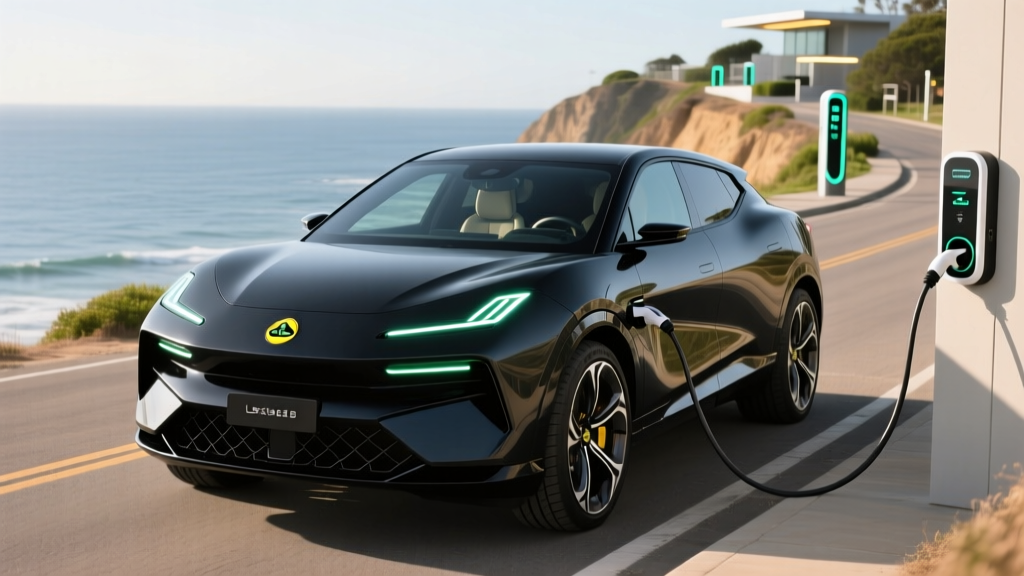
The Lotus Eletre is a full-size luxury electric SUV that tries to thread a very specific needle: sports-car reflexes in a 5,700-pound body with usable range and ultra-fast DC charging. For 2026, Lotus offers the Eletre in three trims — the base Eletre, the mid-tier Eletre S, and the performance-focused Eletre R — all riding on the company's Electric Premium Architecture (EPA) with a 112 kWh (gross) battery pack and dual-motor all-wheel drive as standard. The headline number is the Eletre R's 905 horsepower and 2.95-second 0-60 mph time, but the more ownership-relevant story is its 350 kW peak DC fast-charge capability, which Lotus claims can recover 10-80% in roughly 20 minutes on compatible infrastructure.
Does it deliver in daily driving, on road trips, and at the charger? After parsing EPA data, manufacturer specs, and real-world owner reports, here's what buyers need to know before writing a six-figure check.
Lotus Eletre Specifications at a Glance
| Spec | Eletre / Eletre S | Eletre R |
|---|---|---|
| EPA Range (est.) | ~304 miles | ~270 miles |
| Battery (gross / usable) | 112 kWh gross / ~109 kWh usable, NMC | |
| Drivetrain | Dual-motor AWD | |
| Horsepower | 603 hp | 905 hp |
| 0-60 mph | 4.5 sec | 2.95 sec |
| Top Speed | 160 mph | 165 mph |
| Peak DC Fast Charge | 350 kW (800V architecture) | |
| 10-80% DCFC Time | ~20 minutes (on 350 kW station) | |
| Level 2 Charge Rate | 22 kW onboard charger (~72 mi/hr) | |
| EPA Efficiency (est.) | ~79 MPGe / 42 kWh/100mi | ~72 MPGe / 47 kWh/100mi |
| Cargo (rear seats up) | ~21.5 cu ft (+ ~16 cu ft frunk) | |
| Cargo (rear seats folded) | ~54 cu ft | |
| Base MSRP | ~$107,400 (Eletre) | ~$147,400 (Eletre R) |
| Battery Warranty | 8 years / 100,000 miles | |
Real-World Range: What the EPA Number Doesn't Tell You
The base Lotus Eletre carries an EPA-estimated range of approximately 304 miles, while the performance-tuned Eletre R drops to roughly 270 miles due to its more aggressive motor mapping, wider 22-inch wheels, and stickier Pirelli P Zero tires. These figures are competitive with the BMW iX xDrive50 (~324 miles) and ahead of the Lamborghini Urus-like Audi RS e-tron GT, but context matters.
EPA sticker: 304 mi (base) / 270 mi (R)
Highway cruising (70-75 mph): Expect ~245-265 mi (base), ~215-235 mi (R)
Cold weather (below 32°F): Deduct 15-25%, yielding ~230-255 mi (base)
Mixed daily driving: ~275-290 mi (base) is achievable with moderate regen
The Eletre's NMC (nickel manganese cobalt) battery pack prioritizes energy density over the cycle-life advantages of LFP chemistry. That trade-off makes sense for a luxury performance SUV where weight and packaging are at a premium, but it means owners should avoid habitually charging to 100% or letting the pack sit at very low states of charge for extended periods. Lotus includes a configurable charge-limit setting in the infotainment system — set it to 80-90% for daily use and save 100% for road-trip mornings.
Efficiency in mixed driving lands around 42 kWh per 100 miles for the base model. That's thirstier than a Tesla Model X (~38 kWh/100mi) but expected given the Eletre's 5,643-pound curb weight and aerodynamic drag from its active rear spoiler and aggressive front fascia.
Charging Speed: 800-Volt Architecture, Real Infrastructure Limits
Lotus built the Eletre on an 800-volt electrical architecture — the same voltage class used by the Hyundai Ioniq 5, Porsche Taycan, and Lucid Air — which enables its headline 350 kW peak DC fast-charge rate. On a compatible Electrify America or Tesla Supercharger (NACS-equipped stations opening to non-Tesla vehicles), the Eletre can theoretically add roughly 75 miles of range in 5 minutes.
| Charging Method | Power (kW) | Rate / Time |
|---|---|---|
| DC Fast Charge (peak) | 350 kW | 10-80% in ~20 min |
| DC Fast Charge (typical 150 kW station) | ~150 kW | 10-80% in ~38 min |
| Level 2 (22 kW onboard) | 22 kW | ~72 miles per hour |
| Level 2 (typical 11.5 kW home charger) | 11.5 kW | ~38 miles per hour |
| Level 1 (120V household) | ~1.4 kW | ~4-5 miles per hour |
Here's where real-world honesty matters: the 350 kW rate is a peak, not a sustained average. Like all EVs, the Eletre's charge curve tapers significantly above 80% state of charge to protect battery health. You'll see the highest rates between roughly 10-50% SoC, with a gradual step-down through the 50-80% window and a steep taper from 80-100%. That 20-minute 10-80% claim assumes a 350 kW charger operating at full output — still relatively rare in the US outside of major highway corridors and urban Electrify America flagship stations.
On a more common 150 kW DC fast charger (the bulk of the ChargePoint and EVgo networks), expect 10-80% in approximately 35-40 minutes. That's still competitive, but plan road-trip stops accordingly.
At home, the Eletre's 22 kW onboard AC charger is a standout. Most luxury EVs ship with 11.5 kW or 19.2 kW onboard chargers, meaning the Eletre can fully exploit a 100-amp circuit and a hardwired Level 2 wallbox to recover roughly 72 miles of range per hour of charging. A full 0-100% home charge takes about 5.5 hours at 22 kW. Note that achieving this requires a dedicated 100A/240V circuit — most homes will need an electrical panel assessment, and many will require a panel upgrade (budget $1,500-$3,500 for that work, on top of $500-$1,200 for the charger and $800-$2,000 for electrician labor on the circuit run).
Performance, Ride, and Daily Livability
The Eletre R's 905 horsepower and 2.95-second 0-60 time put it in supercar territory — this is a vehicle that will outrun a Porsche 911 Carrera S to 60 mph while carrying five passengers and their luggage. The base Eletre's 603 hp and 4.5-second sprint are hardly slow, and for most buyers the base powertrain is the smarter choice: it's quieter under part-throttle, slightly more efficient, and $40,000 less expensive.
Lotus tunes the adaptive air suspension with a firmness that prioritizes body control over plushness. On pockmarked urban streets, the Eletre transmits more road texture than a BMW iX or Mercedes EQS SUV, but on a canyon road it flat-out corners with a composure that defies its weight. Active rear-wheel steering (standard on all trims) shrinks the 12.3-meter turning circle and makes parking-lot maneuvers surprisingly manageable for a vehicle this size.
Interior space is generous up front but the rear seat, while comfortable for two adults, has a slightly high floor due to the battery pack beneath it — taller passengers may find their knees elevated. Cargo capacity at 21.5 cubic feet behind the rear seat (plus a ~16 cu ft front trunk) trails the BMW iX (35.5 cu ft) but the frunk partially compensates. Fold the rear seats and you get roughly 54 cu ft, enough for a week's worth of family luggage but not class-leading.
Technology, Driver Assists, and Infotainment
The Eletre's cabin centers on a 15.1-inch OLED touchscreen running Lotus's HyperOS infotainment platform, with a slim 12.6-inch driver display and an available 29-inch AR head-up display. The system is responsive and visually clean, though early owner reports note occasional sluggishness in the navigation route-recalculation and a limited third-party app library compared to Tesla or Android Automotive-based systems.
Driver assistance comes via Lotus's Intelligent Drive system, which includes adaptive cruise control with stop-and-go, lane-centering, automatic emergency braking, blind-spot monitoring, and a surround-view camera with transparent-chassis mode. This is an SAE Level 2 system — the driver must keep hands on the wheel and eyes on the road at all times. It is not autonomous driving, and Lotus does not currently offer a hands-free highway system comparable to GM's Super Cruise or Ford's BlueCruise.
Lotus Intelligent Drive is an SAE Level 2 driver-assist system. It provides steering and acceleration support but requires continuous driver supervision. It does not make the Eletre a self-driving vehicle. Expect hands-on-wheel monitoring and periodic alerts if attention lapses.
Unique tech touches include deployable LiDAR sensors (roof-mounted, they retract when not in use) intended for future over-the-air feature expansions, a KEF Reference audio system with 23 speakers, and active noise cancellation that uses the headrest speakers to reduce road and wind noise. The LiDAR hardware is ahead of current software capabilities — a bet on future functionality that may or may not materialize via OTA updates.
Pricing, Trims, and Federal Tax Credit Eligibility
The 2026 Lotus Eletre lineup starts at approximately $107,400 for the base Eletre, $122,400 for the Eletre S (adding upgraded interior materials, the KEF audio system, and additional driver-assist features), and $147,400 for the Eletre R. Destination charges add roughly $1,595. A well-optioned Eletre S with the Executive Seat package, 22-inch wheels, and premium paint can reach $135,000+.
| Trim | Base MSRP | Federal §30D Credit | Effective Price |
|---|---|---|---|
| Eletre | ~$107,400 | Not eligible (MSRP cap) | ~$107,400 |
| Eletre S | ~$122,400 | Not eligible (MSRP cap) | ~$122,400 |
| Eletre R | ~$147,400 | Not eligible (MSRP cap) | ~$147,400 |
Federal tax credit reality check: Under IRS §30D rules, the new clean vehicle credit is capped at $7,500, but eligibility requires the vehicle's MSRP to be at or below $80,000 for SUVs, pickups, and vans. Every Eletre trim exceeds this cap by a wide margin, meaning no Eletre qualifies for the federal purchase credit. Additionally, the buyer's adjusted gross income must fall below $300,000 (married filing jointly) or $150,000 (single), and the battery must meet critical-mineral and component sourcing thresholds that shift annually. Even if Lotus restructured pricing, the income and sourcing rules would still apply.
Buyers should consult a tax professional for personal eligibility on any EV purchase. Some states offer additional rebates or incentives that are not subject to the federal MSRP cap — check your state energy office or the DOE's alternative fuels incentive database for current programs.
Ownership Costs, Warranty, and Competitor Comparison
Lotus provides a 4-year/50,000-mile basic vehicle warranty and an 8-year/100,000-mile battery and powertrain warranty — standard for the luxury EV segment and matching BMW, Mercedes, and Audi. The battery warranty guarantees the pack will retain at least 70% of its original capacity during the coverage period; if it degrades below that threshold, Lotus will repair or replace it.
Insurance premiums for the Eletre are high — expect $3,500-$5,500 annually depending on your profile, driven by the vehicle's repair costs, performance class, and limited Lotus body-shop network in the US. Get quotes before purchasing.
- 350 kW peak DC charging is among the fastest available
- 22 kW onboard AC charger outpaces most competitors
- Supercar-level acceleration (Eletre R: 2.95s 0-60)
- 800V architecture future-proofs charging compatibility
- Distinctive design — nothing else looks like it
- Generous 8-yr/100,000-mi battery warranty
- No federal tax credit (MSRP exceeds $80K cap)
- Rear-seat floor height compromises legroom for tall adults
- Cargo space trails BMW iX and Mercedes EQS SUV
- Limited US service center network
- Infotainment app ecosystem still maturing
- LiDAR hardware has no current consumer feature benefit
- High insurance premiums
Who Should Buy the Lotus Eletre?
Choose the Eletre if: You want a statement luxury SUV with genuine sports-car performance, you have reliable access to 350 kW DC fast chargers (or can install a 100A Level 2 circuit at home), and you value design exclusivity over maximum cargo space or federal incentive eligibility.
Look elsewhere if: You need maximum rear-seat comfort for tall adults (BMW iX), you want hands-free highway driving (Cadillac Lyriq with Super Cruise), you're counting on the $7,500 federal credit to justify the purchase, or you live far from a Lotus service center.
Frequently Asked Questions
What is the real-world range of the Lotus Eletre?
The EPA estimates approximately 304 miles for the base Eletre and 270 miles for the Eletre R. In real-world highway driving at 70-75 mph, expect 245-265 miles (base) or 215-235 miles (R). Cold weather below freezing can reduce range by 15-25%.
How fast does the Lotus Eletre charge?
On a 350 kW DC fast charger, Lotus claims 10-80% in approximately 20 minutes. On a more common 150 kW station, plan for 35-40 minutes. At home on a 22 kW Level 2 wallbox, the Eletre recovers about 72 miles of range per hour, with a full charge taking roughly 5.5 hours.
Does the Lotus Eletre qualify for the federal EV tax credit?
No. Under current IRS §30D rules, the new clean vehicle credit requires an MSRP at or below $80,000 for SUVs. All Eletre trims exceed this cap. Additionally, buyer income limits and battery-sourcing requirements apply. Consult a tax professional for your specific situation.
Is the Lotus Eletre worth buying over the BMW iX or Tesla Model X?
The Eletre wins on charging speed (350 kW vs. the iX's ~150 kW) and raw performance (the R's 905 hp dwarfs both competitors). The BMW iX offers more cargo space, a more mature service network, and available federal incentives on lower trims. The Tesla Model X offers the Supercharger network natively and a more established software ecosystem. If design exclusivity and peak charging performance are your priorities, the Eletre is compelling; if practicality and dealer support matter more, the iX is the safer bet.
What battery chemistry does the Eletre use?
The Eletre uses an NMC (nickel manganese cobalt) lithium-ion battery pack with a gross capacity of 112 kWh (~109 kWh usable). NMC offers higher energy density than LFP, which keeps pack weight manageable, but it requires more careful state-of-charge management for long-term health — avoid habitual 100% charges and extended storage at very low SoC.
How reliable is the Lotus Eletre?
Long-term reliability data is limited, as the Eletre only began US deliveries in 2024-2025. Lotus's historical build quality has improved under Geely ownership, and the 8-year/100,000-mile battery warranty provides a meaningful backstop. The bigger concern is service-network density — Lotus has roughly 40-50 US dealers, concentrated in major metro areas. Confirm your nearest service point before committing.