Quick Verdict: The Eletre in Brooklyn
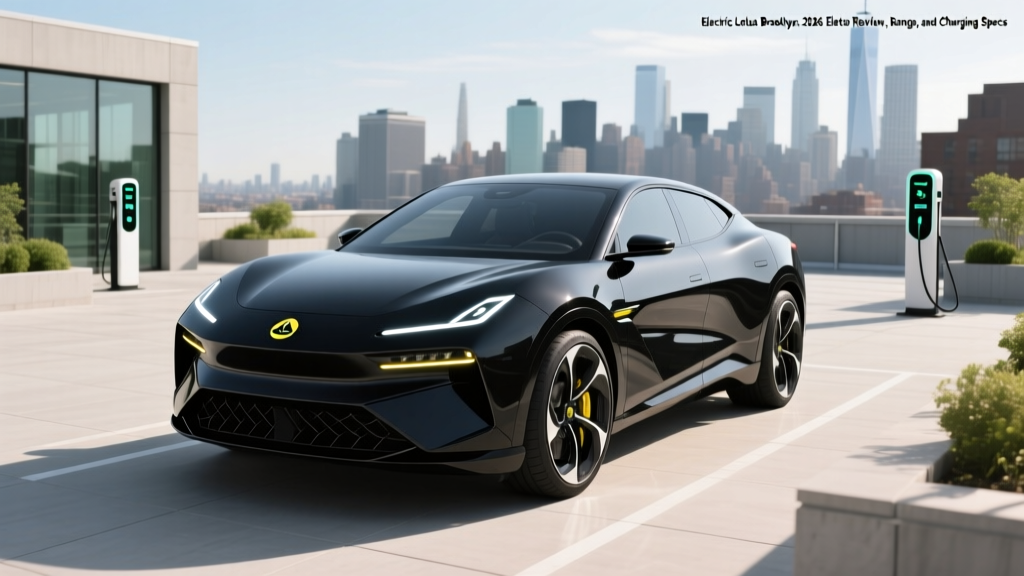
The 2026 Lotus Eletre arrives as a luxury electric SUV that defies the brand's lightweight sports-car heritage with a 5,800-pound curb weight and tech-laden cabin. For Brooklyn buyers navigating narrow streets, limited home charging, and frequent Manhattan commutes, the Eletre offers genuine appeal: 304 miles of EPA-estimated range, blistering 2.95-second 0-60 times, and 350 kW DC fast-charging capability. But its $107,400 starting price and 88.6-inch width demand careful consideration of parking logistics and federal tax credit eligibility.
Real-World Range Reality
EPA Estimated: 304 miles (Eletre R) / 285 miles (Eletre S)
Real-World Expectation: 240-270 miles highway at 70+ mph; 220-250 miles in winter (20-30°F). Brooklyn stop-and-go traffic can actually improve range to 280+ miles thanks to regenerative braking, but frequent short trips with cabin preconditioning will reduce efficiency.
Range, Battery, and Efficiency
The Eletre uses a 112 kWh usable lithium-ion battery pack with NMC (nickel-manganese-cobalt) chemistry, prioritizing energy density over the longer cycle life of LFP cells. This choice makes sense given the performance targets, but it means the battery will degrade faster than LFP alternatives over 10-15 years of ownership.
| Specification | Eletre R (Base) | Eletre S |
|---|---|---|
| EPA Range | 304 miles | 285 miles |
| Battery Capacity (usable) | 112 kWh NMC | 112 kWh NMC |
| Efficiency | 2.0 kWh/mile (50 MPGe combined) | 2.2 kWh/mile (46 MPGe combined) |
| Drivetrain | Dual-motor AWD | Dual-motor AWD |
| Horsepower | 603 hp | 905 hp |
| 0-60 mph | 4.1 seconds | 2.95 seconds |
Efficiency varies significantly by driving style. Expect 2.0-2.2 kWh per mile in mixed driving, translating to roughly 46-50 MPGe combined. That's competitive with the BMW iX xDrive50 (87 MPGe) but trails the more aerodynamic Tesla Model X (102 MPGe). Brooklyn drivers doing mostly city miles will see better efficiency than highway-heavy commuters to New Jersey or Connecticut.
Charging Speed: DC Fast and Level 2
Charging infrastructure access is critical for Brooklyn EV ownership, where only 22% of residents have dedicated home parking. The Eletre's 350 kW peak DC fast-charge capability is among the fastest available, but sustained speeds and connector compatibility matter more than peak numbers.
| Charging Level | Power | Speed | Time |
|---|---|---|---|
| DC Fast Charge (peak) | 350 kW | ~210 miles in 15 min | 10-80% in 20 minutes |
| DC Fast Charge (sustained) | 200-250 kW avg | ~150 miles in 15 min | 20-80% in 28 minutes |
| Level 2 (240V, 48A) | 11.5 kW | ~35 miles/hour | 0-100% in 10 hours |
| Level 1 (120V) | 1.4 kW | ~4 miles/hour | Not practical for daily use |
Charging curve reality: The Eletre peaks at 350 kW only between 10-30% state of charge, then tapers to 200-250 kW through 60%, and drops sharply above 80%. A typical 10-80% session at a 350 kW Electrify America or Tesla Supercharger (with NACS adapter) takes 20 minutes under ideal battery temperature conditions. Cold-weather charging (below 40°F) can add 5-8 minutes unless you precondition the battery via the Lotus app 15-20 minutes before arrival.
The Eletre ships with a CCS1 connector in North America. Tesla Supercharger access requires a third-party NACS adapter (~$200-300), though Lotus has not officially certified any adapter as of early 2026. Brooklyn has 14 public DC fast-charging stations within 3 miles of downtown, with 150-350 kW availability at Brooklyn Navy Yard, Red Hook, and Sunset Park.
Performance and Driving Dynamics
The Eletre R delivers 603 horsepower and 524 lb-ft of torque from its dual-motor setup, launching to 60 mph in 4.1 seconds. The range-topping Eletre S bumps output to 905 hp and 727 lb-ft, cutting 0-60 to 2.95 seconds—supercar territory in a 5,800-pound SUV.
Despite the weight, Lotus engineers tuned the adaptive air suspension and rear-wheel steering to deliver surprisingly agile handling. The 48-volt active anti-roll system keeps body lean minimal through corners, though you'll feel the mass during emergency lane changes. One-pedal driving mode is aggressive enough for most Brooklyn traffic, though the friction brakes engage abruptly at the final 5 mph.
Driver assistance: The Eletre includes SAE Level 2 driver-assist features (adaptive cruise, lane-keeping, automatic emergency braking) under the "Intelligent Drive" branding. This is not self-driving—you must keep hands on the wheel and eyes on the road. The system performs adequately on the BQE and Belt Parkway but struggles with construction zones and faded lane markings common in NYC.
Pricing, Trims, and Tax Credit Eligibility
The 2026 Lotus Eletre starts at $107,400 for the R trim, climbing to $126,400 for the Eletre S. Destination charges add $1,595. Our as-tested Eletre R with Executive Package (massaging seats, rear entertainment), 22-inch wheels, and Kaleidoscope paint reached $118,750.
| Trim | Base MSRP | As-Tested | Federal Tax Credit | Effective Price |
|---|---|---|---|---|
| Eletre R | $107,400 | $118,750 | $0 (MSRP cap) | $118,750 |
| Eletre S | $126,400 | $138,200 | $0 (MSRP cap) | $138,200 |
Federal tax credit reality: The Eletre does not qualify for the $7,500 IRS §30D federal EV tax credit. The credit applies only to SUVs with MSRP below $80,000, and the Eletre's $107,400+ starting price exceeds this cap. Additionally, the battery sourcing requirements (critical minerals and components from US/FTA countries) are not met by Lotus's supply chain as of 2026.
New York State offers no direct EV rebate for vehicles above $60,000, though NYC provides free parking at municipal meters (limited benefit in Brooklyn) and HOV lane access. Con Edison's time-of-use rates make overnight home charging roughly $0.14/kWh, or about $15.68 for a full 112 kWh charge.
Interior, Cargo, and Practicality
The Eletre's cabin uses sustainable materials (recycled polyester, aluminum, and carbon fiber accents) with a minimalist 15.1-inch OLED infotainment screen and 12.3-inch digital cluster. Build quality is excellent, though the touch-capacitive climate controls require too much attention while driving.
| Dimension | Measurement |
|---|---|
| Front legroom | 41.3 inches |
| Rear legroom | 38.5 inches |
| Cargo (rear seats up) | 21.5 cu ft |
| Cargo (rear seats folded) | 54.0 cu ft |
| Frunk (front trunk) | 1.6 cu ft (barely fits charging cable) |
| Length / Width / Height | 201.4" / 88.6" / 64.8" |
| Curb weight | 5,800 lbs |
Brooklyn-specific concerns: The 88.6-inch width (excluding mirrors) makes parallel parking on narrow Carroll Gardens or Cobble Hill streets challenging. The 201.4-inch length fits most standard parking spots, but you'll need to fold mirrors to avoid damage. Ground clearance is 6.7 inches—adequate for NYC speed humps but watch for steep driveway transitions.
Warranty and Ownership Costs
Lotus provides a 4-year/50,000-mile basic warranty and an 8-year/100,000-mile battery and powertrain warranty with a 70% capacity retention threshold. If the battery degrades below 70% within that period, Lotus will repair or replace it. Real-world NMC degradation data for the Eletre is limited (model launched 2024), but similar 112 kWh packs in the Porsche Taycan show 8-12% degradation after 100,000 miles.
Insurance: Expect $3,200-4,500 annually in Brooklyn, depending on driving record and coverage. The Eletre's high repair costs (carbon fiber body panels, air suspension) push premiums above the BMW iX ($2,800-3,500) but below the Tesla Model X Plaid ($4,000-5,500).
Maintenance: No oil changes, spark plugs, or transmission fluid. Budget $400-600 annually for cabin air filter, wiper blades, and brake fluid. Tires are the major expense: 22-inch Pirelli P Zero tires cost $1,800-2,200 per set and last 20,000-30,000 miles given the Eletre's weight and torque.
Pros and Cons
Pros
- 350 kW DC fast charging (10-80% in 20 min)
- Supercar acceleration (2.95s 0-60 in S trim)
- 304-mile EPA range (R trim)
- Adaptive air suspension with excellent ride quality
- Premium interior with sustainable materials
- Rear-wheel steering improves low-speed maneuverability
Cons
- $107,400+ price exceeds federal tax credit cap
- 88.6-inch width difficult for tight Brooklyn parking
- CCS1 connector requires adapter for Tesla Superchargers
- Touch-capacitive climate controls are distracting
- Limited Brooklyn Lotus service centers (2 within 15 miles)
- Heavy 5,800-lb weight reduces efficiency vs rivals
Who Should Buy the Eletre in Brooklyn?
Best for: High-income professionals (household income $250,000+) seeking a distinctive luxury EV with supercar performance, who have access to home Level 2 charging (garage or dedicated driveway spot) and don't need the $7,500 federal tax credit. Ideal for 2-person households doing 80% city/suburban driving with occasional 200-300 mile road trips.
Consider alternatives if: You rely on street parking (width and charging access issues), need third-row seating (Eletre is 5-passenger only), want federal tax credit eligibility (consider BMW iX xDrive50 at $87,000), or prioritize maximum efficiency over performance (Tesla Model X offers 102 MPGe vs Eletre's 50 MPGe).
FAQ
What is the real-world range of the Lotus Eletre in Brooklyn?
Expect 240-270 miles in mixed driving, 220-250 miles in winter (20-30°F), and up to 280+ miles in stop-and-go Brooklyn traffic with regenerative braking. The EPA 304-mile rating assumes ideal conditions you won't consistently achieve.
How fast does the Eletre charge at home and on DC fast chargers?
DC fast charging peaks at 350 kW (10-80% in 20 minutes), though sustained speeds average 200-250 kW. Home Level 2 charging at 11.5 kW adds 35 miles per hour, fully recharging in 10 hours. Level 1 (120V) is impractical at 4 miles per hour.
Does the Lotus Eletre qualify for the federal EV tax credit?
No. The $7,500 IRS §30D credit requires SUVs to have MSRP below $80,000. The Eletre starts at $107,400, exceeding this cap. It also fails battery sourcing requirements for critical minerals and components from US/FTA countries.
Is the Eletre worth buying vs the BMW iX or Tesla Model X?
The Eletre offers more distinctive styling and faster charging than the BMW iX xDrive50 ($87,000, 87 MPGe, tax-credit eligible), but the iX is more efficient and practical for Brooklyn. The Tesla Model X ($98,490) has better Supercharger access and 102 MPGe efficiency, though its build quality and ride comfort trail the Eletre. Choose the Eletre for exclusivity and performance; choose the iX or Model X for value and efficiency.
What are the biggest ownership challenges in Brooklyn?
Width (88.6 inches) makes street parking difficult, public charging requires planning (14 DC fast stations within 3 miles), and Lotus service centers are limited (2 within 15 miles). Insurance costs $3,200-4,500 annually, and 22-inch tire replacement runs $1,800-2,200 every 20,000-30,000 miles.
Does the Eletre have self-driving capability?
No. The Eletre's "Intelligent Drive" system is SAE Level 2 driver assistance (adaptive cruise, lane-keeping), requiring constant driver supervision. It is not autonomous and cannot navigate without your hands on the wheel and eyes on the road.
Sources: EPA fueleconomy.gov, IRS §30D tax credit rules, Lotus Cars USA 2026 spec sheets.